
Four lines for asking permission
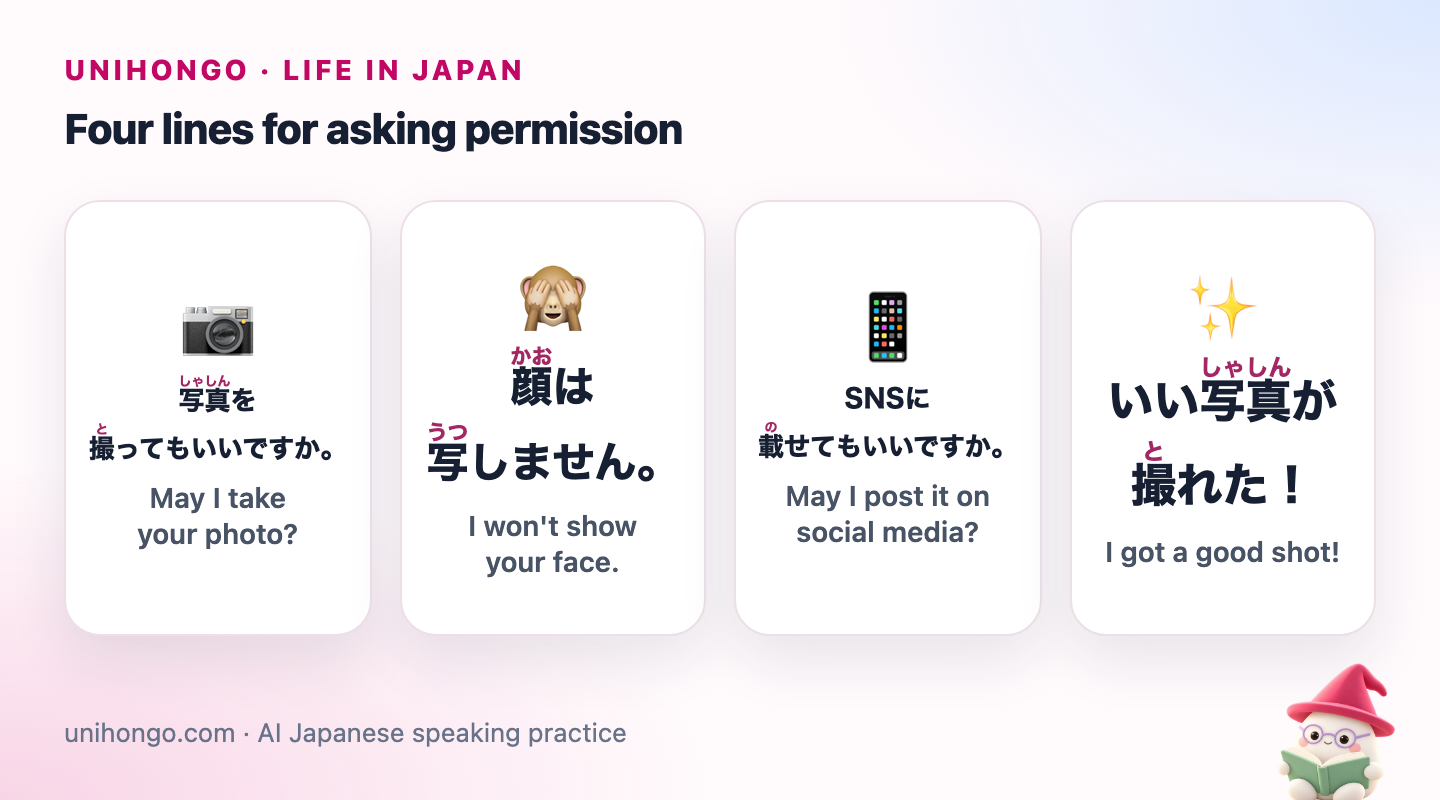
The core request uses te mo ii desu ka, the pattern for asking permission: totte mo ii desu ka, is it all right if I take one? Japanese people are often happy to be photographed when asked, especially shopkeepers proud of their shop, but many will want to know where the photo will go. Saying it before they ask removes their worry.
Kao wa utsushimasen uses utsusu, to capture in a photo, and the contrast particle wa: I won't show your face, though I may show your hands or your shop. SNS (エスエヌエス) is the normal Japanese word for social media.
| Japanese | Romaji | Meaning |
|---|---|---|
| 写真を撮ってもいいですか。 | Shashin o totte mo ii desu ka. | May I take your photo? |
| 顔は写しません。 | Kao wa utsushimasen. | I won't show your face. |
| SNSに載せてもいいですか。 | Esu enu esu ni nosete mo ii desu ka. | May I post it on social media? |
| いい写真が撮れた! | Ii shashin ga toreta! | I got a good shot! |
| 手元だけ撮らせてください。 | Temoto dake torasete kudasai. | Let me photograph just your hands. |
The full exchange with a stranger
A good portrait request has four steps: a greeting, a sincere compliment, the request, and an explanation. Compliment something specific: the shop, the tools, the way the light falls. Then ask. If they hesitate, offer an easier option, such as photographing only their hands or the shop from outside. Show them the photo afterwards; most people enjoy seeing it, and it builds trust for the next photographer.
| Japanese | Romaji | Meaning |
|---|---|---|
| すみません、素敵なお店ですね。 | Sumimasen, suteki na omise desu ne. | Excuse me, what a lovely shop. |
| 写真が趣味なんです。 | Shashin ga shumi na n desu. | Photography is my hobby. |
| お仕事中のところを一枚撮らせていただけませんか。 | Oshigotochū no tokoro o ichimai torasete itadakemasen ka. | Could I take one photo of you at work? (very polite) |
| 自分のブログに載せたいんですが。 | Jibun no burogu ni nosetai n desu ga. | I'd like to put it on my blog. |
| 撮った写真、見ますか。 | Totta shashin, mimasu ka. | Would you like to see the photo? |
| よかったら、写真を送りましょうか。 | Yokattara, shashin o okurimashō ka. | If you like, shall I send you the photo? |
Torasete itadakemasen ka is the humble causative: may I be allowed to take. It sounds very polite and respectful. Te mo ii desu ka is perfectly fine for most situations; use the humble version with older people, craftspeople or anyone at work.
When the answer is no
In Japan a direct no is rare. People may say chotto... with a pause, laugh and say hazukashii (I'm embarrassed), or wave their hand in front of their face. All of these mean no. Do not push or ask a second time. Thank them warmly and, if it seems welcome, ask to photograph something else instead.
| Japanese | Romaji | Meaning |
|---|---|---|
| 店主:ちょっと… | Tenshu: Chotto... | Shop owner: Well, that's a bit... |
| 店主:恥ずかしいから。 | Tenshu: Hazukashii kara. | Shop owner: I'm too shy. |
| あなた:わかりました。失礼しました。 | Anata: Wakarimashita. Shitsurei shimashita. | You: I understand. Sorry to bother you. |
| あなた:お店の外だけ撮ってもいいですか。 | Anata: Omise no soto dake totte mo ii desu ka. | You: May I photograph just the outside of the shop? |
Second-hand camera shops
Tokyo, Osaka and other large cities have many used camera shops, from big chains to tiny specialist stores packed with old lenses. Staff are usually knowledgeable, and they are used to customers asking to handle items. Ask before you touch anything in a glass case. The words below cover most conversations about a used lens or body.
| Japanese | Romaji | Meaning |
|---|---|---|
| このレンズを見せてもらえますか。 | Kono renzu o misete moraemasu ka. | Could I see this lens? |
| カメラにつけてみてもいいですか。 | Kamera ni tsukete mite mo ii desu ka. | May I try it on my camera? |
| カビやくもりはありますか。 | Kabi ya kumori wa arimasu ka. | Is there any fungus or haze? |
| 保証はついていますか。 | Hoshō wa tsuite imasu ka. | Does it come with a warranty? |
| Word in romaji | Meaning | When you hear it |
|---|---|---|
| chūko | Used, second-hand | On labels and in shop names |
| ichiganrefu | DSLR | Single-lens reflex camera |
| mirāresu | Mirrorless camera | Very common now |
| tanshōten | Prime lens | A lens with one focal length |
| jōtai | Condition | Shops often grade items by condition |
| kabi | Fungus | Mould inside old lenses; check with a light |
| hoshō | Warranty | Ask how long it lasts |
Talking settings with other photographers
Photo walks, camera clubs and popular sunset spots are full of people happy to talk gear. Japanese photography talk is heavy with loanwords, so you may know more than you think. Focal lengths are given in millimetres, read as miri. A fast lens is akarui renzu, a bright lens. Wide open is kaihō, and stopping down is shiboru.
| Japanese | Romaji | Meaning |
|---|---|---|
| 何ミリのレンズですか。 | Nan miri no renzu desu ka. | What focal length is that lens? |
| 開放で撮っています。 | Kaihō de totte imasu. | I'm shooting wide open. |
| ボケがきれいですね。 | Boke ga kirei desu ne. | The bokeh is beautiful. |
| フィルムですか、デジタルですか。 | Firumu desu ka, dejitaru desu ka. | Film or digital? |
| 夕方の光がいいですね。 | Yūgata no hikari ga ii desu ne. | The evening light is great. |
| どこかおすすめの撮影スポットはありますか。 | Dokoka osusume no satsuei supotto wa arimasu ka. | Do you know any good photo spots? |
Satsuei (撮影) is the formal word for photographing or filming. You will see it in the phrase satsuei kinshi, photography prohibited, at temples, museums and some shops. Respect it even when nobody is watching.
Scenario: a portrait in an old shopping street
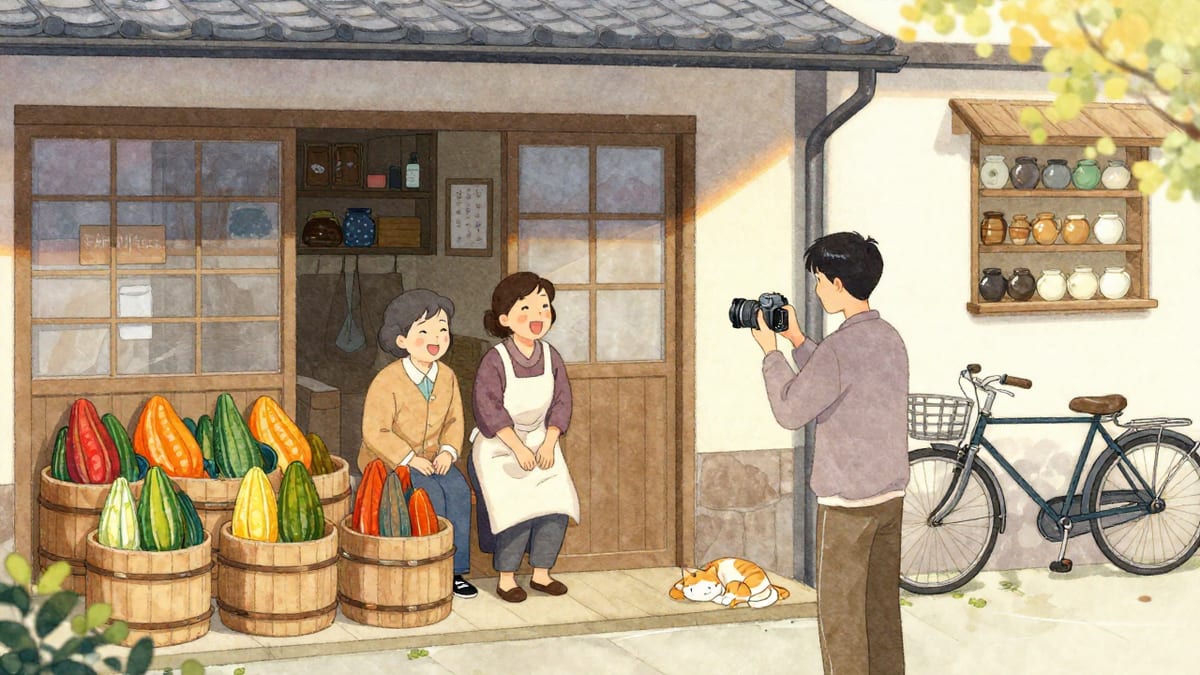
Late afternoon in an old shōtengai. A woman in her sixties is arranging pickles in wooden barrels outside her family's shop, and the low sun falls across her hands. You stop, compliment the shop, and ask. She laughs, says she is not dressed for it, then agrees if you photograph her working. Afterwards you show her the screen, and she calls her husband over to look.
| Japanese | Romaji | Meaning |
|---|---|---|
| あなた:こんにちは。漬物、おいしそうですね。 | Anata: Konnichiwa. Tsukemono, oishisō desu ne. | You: Hello. The pickles look delicious. |
| あなた:お仕事中の写真を撮ってもいいですか。 | Anata: Oshigotochū no shashin o totte mo ii desu ka. | You: May I take a photo of you working? |
| 店主:えー、こんな格好だけど、いいの? | Tenshu: Ē, konna kakkō da kedo, ii no? | Owner: Oh, dressed like this? Are you sure? |
| あなた:はい、そのままが素敵です。 | Anata: Hai, sono mama ga suteki desu. | You: Yes, you look lovely just as you are. |
| 店主:じゃあ、どうぞ。 | Tenshu: Jā, dōzo. | Owner: Well then, go ahead. |
| あなた:ありがとうございます。見てください。 | Anata: Arigatō gozaimasu. Mite kudasai. | You: Thank you. Take a look. |
Temples, festivals and places with photo rules
Many places in Japan have their own photography rules, and they are usually stricter indoors than outdoors. Temple halls, museums, some gardens and many small shops do not allow photos inside, while the grounds outside are often fine. Festivals are generally open to photographers, but participants are busy and sometimes in a sacred role, so do not step into the procession or block the route. Tripods, sankyaku, are banned in many crowded spots, and drones need permission almost everywhere.
When there is no clear rule, ask a staff member or the person in charge. The questions are simple, and asking shows respect that people notice.
| Japanese | Romaji | Meaning |
|---|---|---|
| ここは撮影できますか。 | Koko wa satsuei dekimasu ka. | Is photography allowed here? |
| フラッシュは使いません。 | Furasshu wa tsukaimasen. | I won't use the flash. |
| 三脚を使ってもいいですか。 | Sankyaku o tsukatte mo ii desu ka. | May I use a tripod? |
| 動画も撮っていいですか。 | Dōga mo totte ii desu ka. | May I film video too? |
| 中は撮影禁止です。 | Naka wa satsuei kinshi desu. | No photography inside. |
At a festival, the best portraits often come after the main event, when performers are resting and happy to chat. A compliment on the costume or the drumming, followed by your request, works far better than a camera pushed into a busy moment.
Common mistakes
- Using toru (take) when you mean be in the photo. To appear in a photo is utsuru: watashi wa utsuritakunai, I don't want to be in it.
- Saying boke on its own outside photography talk. It can sound like calling someone an idiot.
- Asking after you have already taken the photo. Ask first; asking later feels like an apology, not a request.
- Forgetting to mention online use. Many people are fine with a photo for you, but not one posted publicly.