
The eve in four phrases
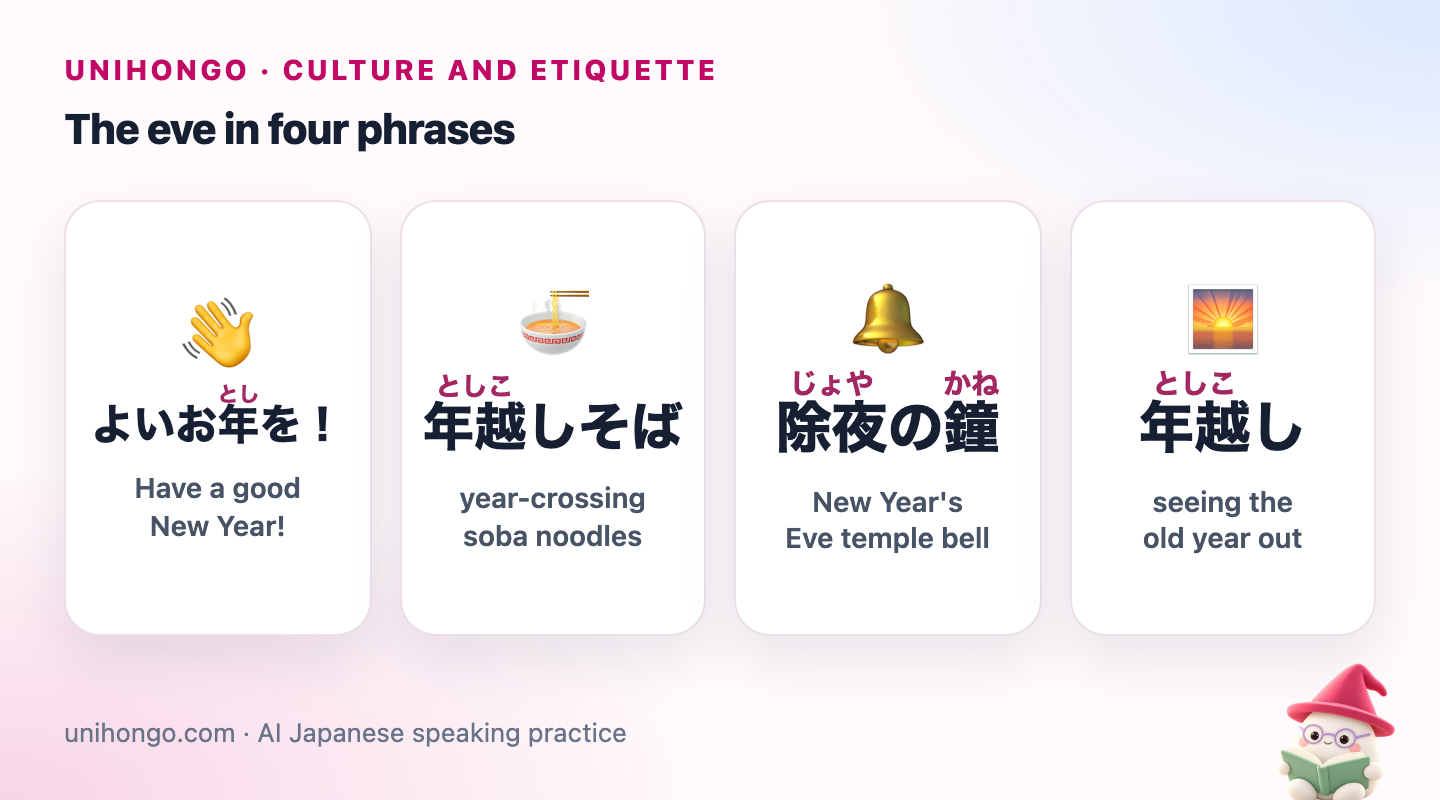
These four lines carry you through 31 December. The first is the goodbye you say to everyone before the New Year. The others name the noodles, the bells and the moment the old year turns into the new one.
| Japanese | Romaji | Meaning |
|---|---|---|
| よいお年を! | Yoi otoshi o! | Have a good New Year! |
| 年越しそば | toshikoshi soba | year-crossing soba noodles |
| 除夜の鐘 | joya no kane | New Year's Eve temple bell |
| 年越し | toshikoshi | seeing the old year out |
Ōsōji: finishing the big clean
Before the New Year, many households do ōsōji (大掃除), the big clean, to welcome the New Year god, toshigami, into a clean home. Families scrub kitchen fans, wipe windows and clear out cupboards, and offices and schools do their own version before the holidays. Many people finish by the 30th, so the 31st is for cooking and resting, but plenty of families are still cleaning on the afternoon of Ōmisoka.
New Year decorations such as kadomatsu and kagami mochi usually go up before the eve. Putting them up on the 31st is often avoided and called ichiya kazari, one-night decorating, which is considered disrespectful to the god; not every family minds.
| Japanese | Romaji | Meaning |
|---|---|---|
| 大掃除、終わった? | Ōsōji, owatta? | Have you finished the big clean? (casual) |
| 換気扇がまだなんです。 | Kankisen ga mada nan desu. | I haven't done the kitchen fan yet. |
| 何か手伝おうか。 | Nanika tetsudaō ka. | Shall I help with something? (casual) |
| やっと片付きました。 | Yatto katazukimashita. | It's finally all tidy. |
Saying goodbye to the year
In the last days of December, every farewell comes with two phrases: thanks for this year, then good wishes for the next. Kotoshi mo osewa ni narimashita means thank you for everything this year too, and it is the polite way to close the year with a colleague, teacher, neighbour or shopkeeper. Yoi otoshi o is short for yoi otoshi o omukae kudasai, please welcome a good New Year.
| Japanese | Romaji | Meaning |
|---|---|---|
| 今年もお世話になりました。 | Kotoshi mo osewa ni narimashita. | Thank you for everything this year too. |
| よいお年をお迎えください。 | Yoi otoshi o omukae kudasai. | Please have a good New Year. (formal) |
| よいお年を! | Yoi otoshi o! | Have a good New Year! (everyday) |
| また来年! | Mata rainen! | See you next year! (casual) |
Many workplaces hold their last working day of the year, shigoto osame (仕事納め), a few days before Ōmisoka, so the office version of this goodbye usually comes before the 31st. On the eve itself you will say yoi otoshi o to shop staff, neighbours you pass on the street and friends on the phone. With close friends and family, a casual jā, yoi otoshi o, well then, have a good one, is warm and natural.
Toshikoshi soba and the evening at home
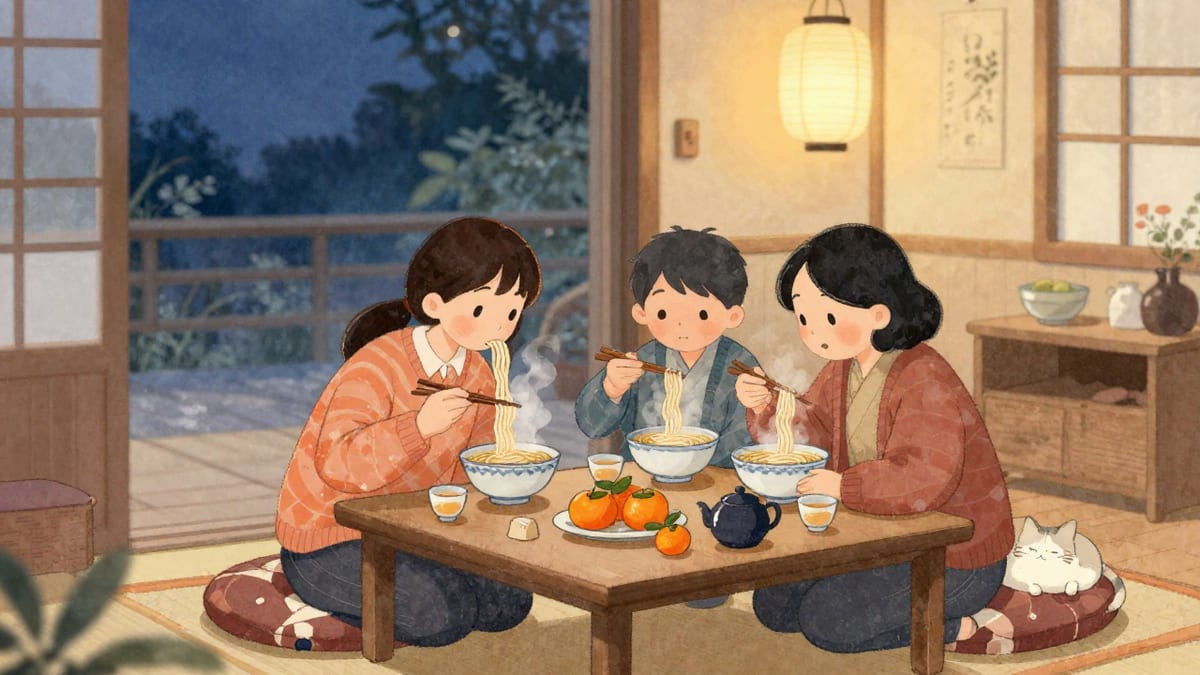
Toshikoshi soba is the one fixed dish of the evening. Families eat it for dinner or as a late snack before midnight, hot in broth or cold with dipping sauce, with toppings such as tempura prawns, spring onions or herring in some regions. One common explanation is that long noodles stand for a long life; another is that soba breaks easily, so it cuts off the troubles of the old year. Many people say you should finish it before midnight, but family habits differ.
Many households also watch a long year-end music show on TV in which famous singers form two teams, red and white, and compete in a friendly way; people call it Kōhaku (紅白), red and white. Others watch comedy specials or sports, and the debate over the remote control is part of the tradition.
| Japanese | Romaji | Meaning |
|---|---|---|
| そろそろ年越しそばにしようか。 | Sorosoro toshikoshi soba ni shiyō ka. | Shall we have the year-end soba soon? (casual) |
| 温かいのと冷たいの、どっちがいい? | Atatakai no to tsumetai no, dotchi ga ii? | Hot or cold, which do you want? (casual) |
| 紅白、見る? | Kōhaku, miru? | Are we watching the red-and-white show? (casual) |
| 今年もあっという間だったね。 | Kotoshi mo atto iu ma datta ne. | This year flew by too, didn't it? (casual) |
Midnight: bells, countdowns and the switch
Around midnight, many Buddhist temples ring their great bells: joya no kane. At many temples the bell is struck 108 times, traditionally linked to the 108 worldly desires, bonnō (煩悩), with the final strike around or just after midnight. Some temples let visitors queue to strike it; others do not, and a few have changed the timing. Some people walk to a shrine right after midnight for the first visit of the year, hatsumōde (初詣).
Young people in cities may go to countdown events, but at home the countdown is often just the family watching the clock on TV. At midnight the greetings switch instantly.
| Japanese | Romaji | Meaning |
|---|---|---|
| あと十秒! | Ato jūbyō! | Ten seconds to go! |
| 五、四、三、二、一! | Go, yon, san, ni, ichi! | Five, four, three, two, one! |
| あけましておめでとう! | Akemashite omedetō! | Happy New Year! (casual) |
| 今年もよろしく! | Kotoshi mo yoroshiku! | Here's to another year together! (casual) |
| 鐘の音が聞こえるね。 | Kane no oto ga kikoeru ne. | You can hear the bells, can't you? |
Mini dialogue: a phone call before midnight
| Japanese | Romaji | Meaning |
|---|---|---|
| もしもし、今何してる? | Moshimoshi, ima nani shiteru? | Friend: Hi, what are you doing now? |
| 家族とそばを食べてるよ。 | Kazoku to soba o tabeteru yo. | You: Eating soba with the family. |
| いいね。今年もいろいろありがとう。 | Ii ne. Kotoshi mo iroiro arigatō. | Friend: Nice. Thanks for everything this year. |
| こちらこそ。よいお年を! | Kochira koso. Yoi otoshi o! | You: Thank you too. Have a good New Year! |
| うん、よいお年を!また来年! | Un, yoi otoshi o! Mata rainen! | Friend: Yeah, happy New Year! See you next year! |
The first sunrise, and common mistakes
Some people stay up, or get up very early, to see hatsuhinode (初日の出), the first sunrise of the year, from a beach, a hill or a rooftop. It is a quiet, cold and beautiful way to end the night.
| Japanese | Romaji | Meaning |
|---|---|---|
| 初日の出を見に行こう。 | Hatsuhinode o mi ni ikō. | Let's go and see the first sunrise. (casual) |
| 寒いけど、きれいだね。 | Samui kedo, kirei da ne. | It's cold, but it's beautiful. (casual) |
- Saying akemashite omedetō before midnight. Before the New Year, it is always yoi otoshi o.
- Saying yoi otoshi o on 1 January. After midnight, switch greetings.
- Expecting a party. Many Japanese people spend the evening quietly with family; ask what your hosts usually do.
- Calling Ōmisoka a holiday. It is not a public holiday, though many workplaces are already closed.