
The four big reactions
These four lines cover most moments of disbelief. Shinjirarenai is the literal I can't believe it, from shinjiru, to believe. Uso deshō, literally that's a lie, right?, is the everyday no way among friends. Maji de, seriously?, is younger and slangier. Arienai, that can't be, leans towards outrage.
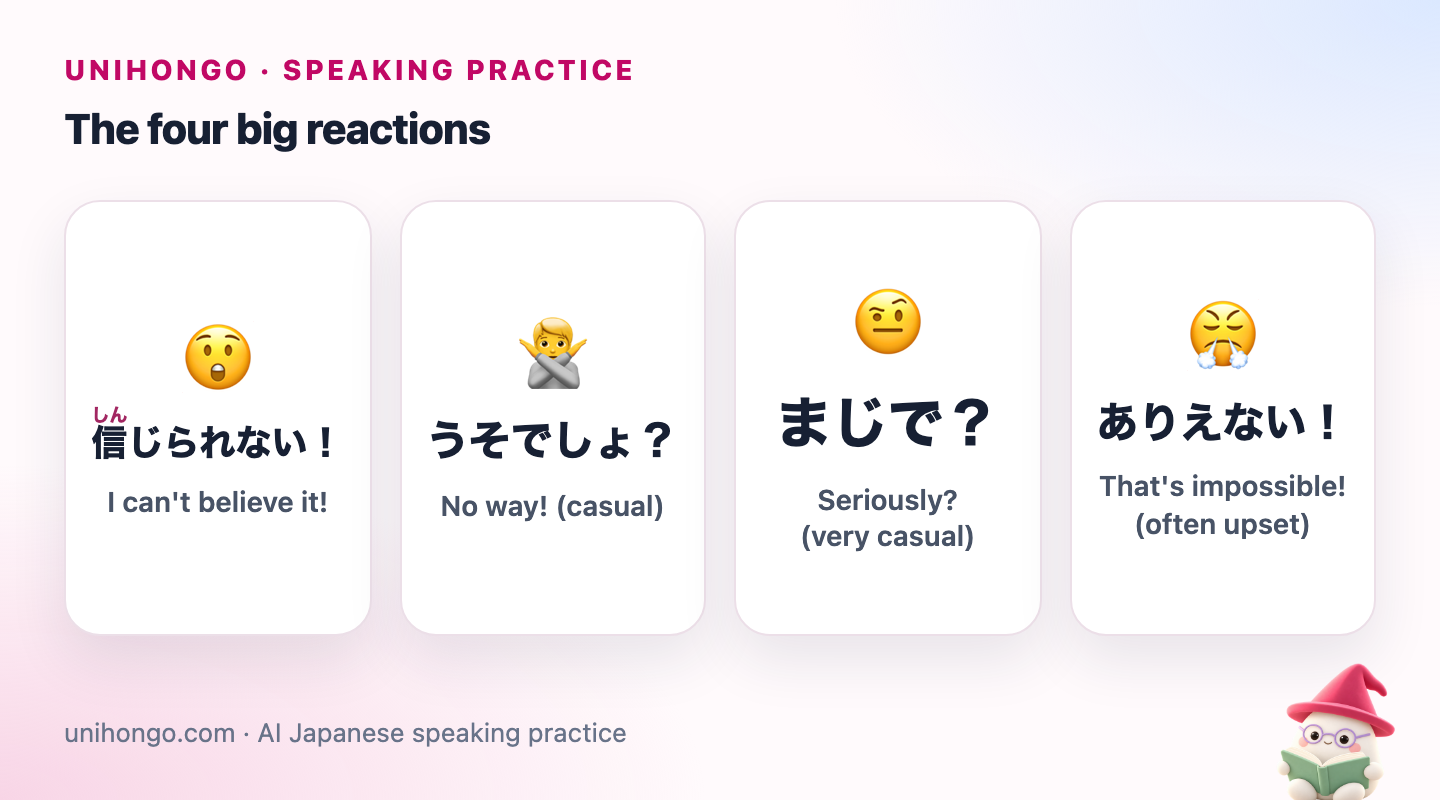
| Japanese | Romaji | Meaning |
|---|---|---|
| 信じられない! | Shinjirarenai! | I can't believe it! |
| うそでしょ? | Uso desho? | No way! (casual) |
| まじで? | Maji de? | Seriously? (very casual) |
| ありえない! | Arienai! | That's impossible! (often upset) |
Pitch and length carry as much meaning as the words. A short, rising uso? asks is that true?, while a long, falling usooo sounds like a groan. Listen to how Japanese friends react and copy the music as well as the words.
Shinjirarenai: good news and bad news
Shinjirarenai is the potential negative of shinjiru: I can't believe. It works for a dream come true and for a shock, and your voice and the next line show which. Rising and bright, followed by sugoi, it is joy. Slow and low, followed by daijōbu?, it is sympathy. The polite form shinjiraremasen exists, but in polite conversation people more often say odorokimashita, I was surprised.
| Japanese | Romaji | Meaning |
|---|---|---|
| 信じられない!すごい! | Shinjirarenai! Sugoi! | I can't believe it! Amazing! |
| 信じられない…大丈夫? | Shinjirarenai... Daijōbu? | I can't believe it... Are you OK? |
| まだ信じられません。 | Mada shinjiraremasen. | I still can't believe it. (polite) |
| 驚きました。 | Odorokimashita. | I was surprised. (polite) |
| 夢みたい。 | Yume mitai. | It's like a dream. |
Shinjirarenai can also be a complaint about someone's behaviour: ano hito, shinjirarenai, that person is unbelievable. Context makes the meaning clear, which is one more reason to add a warm follow-up when the news is good.
Uso, maji and masaka: casual surprise
Uso is said all day among friends, at good news and bad, and nobody hears it as an accusation. Uso deshō or the shorter uso desho asks for confirmation; uso! alone is a gasp. Maji is slang for serious or real; maji de? is seriously?, and maji ka is a rougher variant used mostly by men. Masaka means surely not, and it fits when something you thought impossible turns out true.
Our separate guides on uso and on maji explain their other uses, such as maji with adjectives for really. For reactions, remember the level: these are for friends, family and close coworkers.
| Japanese | Romaji | Meaning |
|---|---|---|
| うそ!本当に? | Uso! Hontō ni? | No way! Really? |
| まじで?すごいじゃん! | Maji de? Sugoi jan! | Seriously? That's awesome! |
| まさか、本当に? | Masaka, hontō ni? | Surely not, really? |
| まさか優勝するとは思わなかった。 | Masaka yūshō suru to wa omowanakatta. | I never imagined they'd actually win. |
When the news turns out to be a joke, the reaction flips to relief: mō, bikkuri shita!, you gave me a fright!, or nan da, uso ka, oh, so you were kidding. Uso can also be a delighted tease: if a friend gives you the last cake, uso, hontō ni? sounds thrilled.
Arienai and mezurashii: outrage and rarity
Arienai, from aru, to exist, means that cannot exist. Its default use is exasperation: an absurd price, a rude driver, a parcel delivered to the wrong city. Young people also use it as praise, arienai kurai oishii, unbelievably delicious, but say it carefully, because the first thing listeners hear is irritation.
Mezurashii, unusual, is the gentle surprise at something rare. If your always-punctual coworker is late, mezurashii ne is natural; shinjirarenai would sound like a scandal.
| Japanese | Romaji | Meaning |
|---|---|---|
| この値段はありえない。 | Kono nedan wa arienai. | This price is ridiculous. |
| ありえないくらいおいしい! | Arienai kurai oishii! | Unbelievably delicious! |
| 田中さんが遅刻なんて、珍しいね。 | Tanaka-san ga chikoku nante, mezurashii ne. | Tanaka late? That's unusual. |
| 珍しいですね。 | Mezurashii desu ne. | That's rare, isn't it? (polite) |
Mezurashii also works as a light compliment for something unusual and nice: mezurashii omiyage desu ne, what an unusual souvenir. It shows interest without any of the drama of shinjirarenai.
Which reaction fits whom
Choosing well comes down to two questions: who is talking, and is the news good or bad? This table sums up the safe choices.
| Reaction | Formality | Good news | Bad news |
|---|---|---|---|
| Shinjirarenai | Casual | Yes, bright voice | Yes, low voice |
| Uso deshō / uso! | Casual, friends | Yes | Yes |
| Maji de? | Very casual, young | Yes | Yes, among close friends |
| Arienai | Casual | Sometimes, as slang | Yes, for outrage |
| E, hontō desu ka | Polite | Yes | Yes |
| Odorokimashita | Polite | Yes | Yes |
In polite Japanese, the surprise is usually carried by the voice: a drawn-out ē? followed by hontō desu ka is enough to sound amazed without slang.
A spoken exchange: big news from a classmate
A classmate from your evening Japanese course tells you after class that they are moving to Japan next month. React with disbelief, congratulate them, and then ask questions, which is what makes the reaction feel warm.
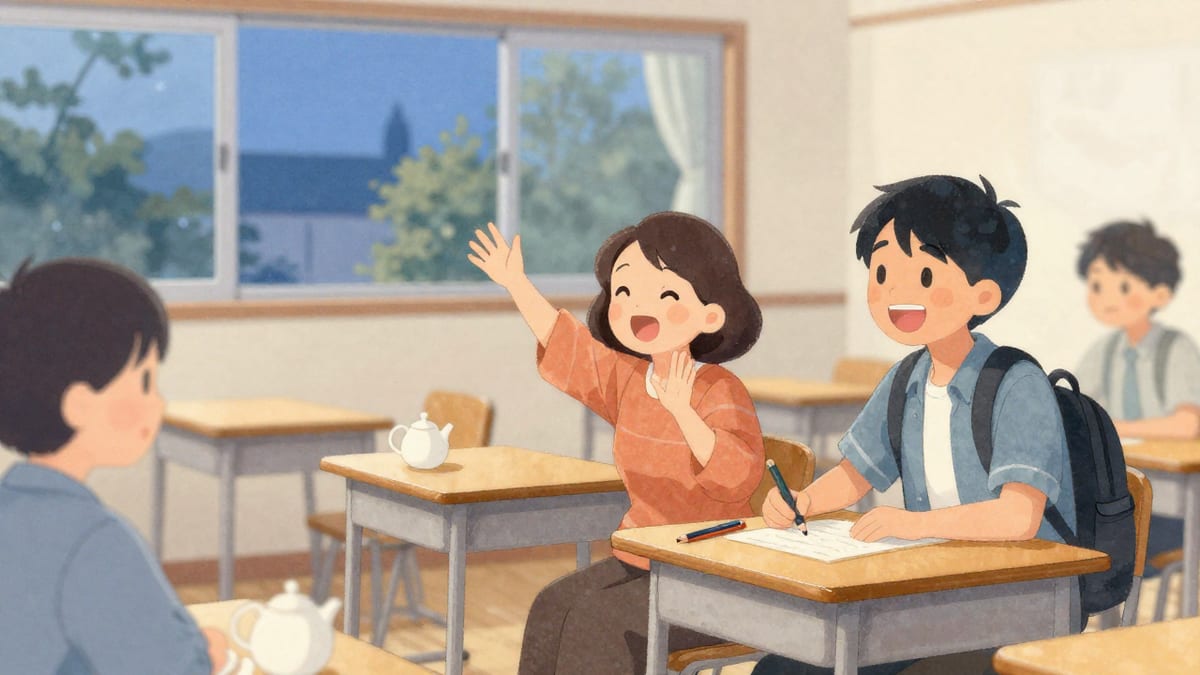
| Japanese | Romaji | Meaning |
|---|---|---|
| 実は、来月日本に引っ越すことになったんだ。 | Jitsu wa, raigetsu Nihon ni hikkosu koto ni natta n da. | Classmate: Actually, I'm moving to Japan next month. |
| うそでしょ?本当に? | Uso desho? Hontō ni? | You: No way! Really? |
| 本当だよ。東京で働くの。 | Hontō da yo. Tōkyō de hataraku no. | Classmate: Really. I'll be working in Tokyo. |
| 信じられない!おめでとう! | Shinjirarenai! Omedetō! | You: I can't believe it! Congratulations! |
| 先週決まったんだ。まだ実感がなくて。 | Senshū kimatta n da. Mada jikkan ga nakute. | Classmate: It was decided last week. It doesn't feel real yet. |
| すごいね。どこに住むの? | Sugoi ne. Doko ni sumu no? | You: Amazing. Where will you live? |
Mada jikkan ga nai, it doesn't feel real yet, is the natural thing to say about a big change in your own life. If someone says it to you, answer with sō da yo ne, I bet, and ask about their plans.
Bad news: from disbelief to sympathy
When the news is bad, the first reaction can still be disbelief, but the second line has to turn to the person. Shinjirarenai followed by daijōbu? or taihen datta ne, that must have been hard, shows that you are shocked for them, not entertained by the story. Avoid maji de and arienai here unless you are very close, because they can sound like excitement.
With colleagues and acquaintances, the polite pattern is sō nan desu ka, is that so?, said slowly, followed by a short expression of sympathy. For serious news, such as an illness or a death in the family, keep your reaction quiet and simple and let the other person decide how much to say.
| Japanese | Romaji | Meaning |
|---|---|---|
| 信じられない。大変だったね。 | Shinjirarenai. Taihen datta ne. | I can't believe it. That must have been awful. |
| そうなんですか。大変でしたね。 | Sō nan desu ka. Taihen deshita ne. | Is that so? That must have been hard. (polite) |
| 何か手伝えることある? | Nani ka tetsudaeru koto aru? | Is there anything I can do? |
| 無理しないでね。 | Muri shinaide ne. | Take care of yourself. |
Common mistakes
- Saying uso to a teacher or customer. It is friendly among peers but sounds like doubt upward; say hontō desu ka.
- Using arienai for good news by default. It usually sounds annoyed.
- Stopping at the reaction. Without omedetō or daijōbu, the other person cannot tell how you feel.
- Saying shinjiranai. That means I don't believe it (I doubt you), not I can't believe it.
If you freeze, a long ē? with wide eyes is a perfectly natural Japanese reaction on its own, and it buys you a second to find the right words.