

Choose a speaking action that fits the situation
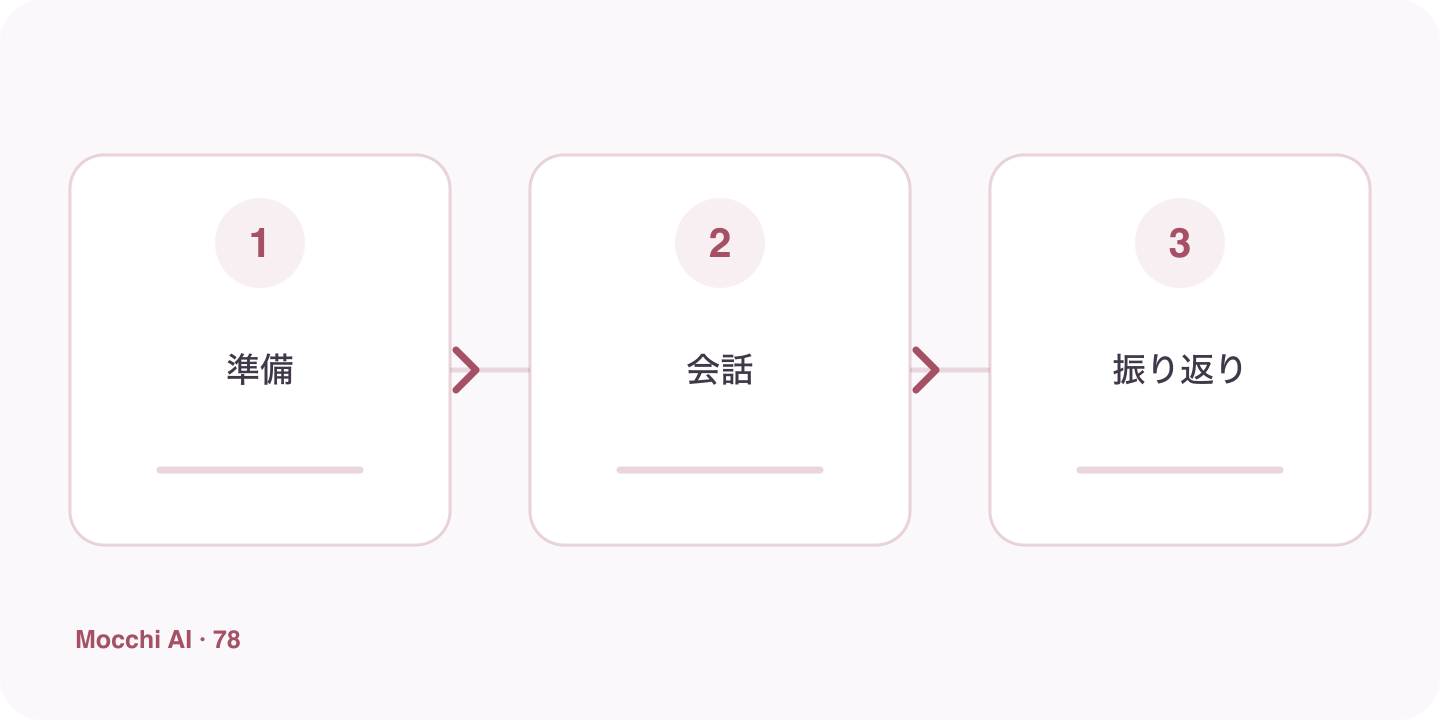
A café scene can involve ordering, asking a question, responding to a choice, or requesting repetition. Pick one action for the first session and tell Mocchi your approximate level. The topic alone does not define the skill. A useful preparation step explains what you will try to do when the other speaker takes a turn.
Keep the target small enough to notice during the conversation. If you plan to practice every grammar point from the week at once, attention may be divided before you can retrieve the first response. One clear action makes the later review more specific.
Prepare a request and a repair phrase
Pair a useful line with a way to recover when you miss the reply. For example, これをお願いします can start a simple request, while もう一度お願いします keeps the exchange open when you need repetition. Ask Mocchi to explain the phrases, then use them as support rather than a script that dictates every turn.
| Japanese | Romaji | Meaning |
|---|---|---|
| これをお願いします。 | Kore o onegaishimasu. | This one, please. |
| もう一度お願いします。 | Mō ichido onegaishimasu. | Once more, please. |
Open the speaking practice and check the available options
Use the relevant AI Sensei recommendation or open the speaking page and choose a suitable topic. Select an available teacher and the options appropriate to your account. The preparation chat does not bypass plan limits or turn a previewed teacher into an unlocked session. Keep the learning goal steady if you need to choose another accessible option.
Let an unexpected turn reveal the useful gap
During the exchange, attempt a response before returning to a prepared line. If you cannot understand or answer, use a repair phrase and note the difficulty. Was the problem a word, a grammar form, listening speed, or retrieving a response aloud? That observation gives Mocchi a much better follow-up than a general report that the conversation felt hard.
Connect the result to the next small review
Bring one non-sensitive phrase or described obstacle back to the chat and ask for a short explanation and a new example. Then return to a related spoken situation later. This creates a practical loop between personal context, preparation, actual speaking, and review. Mocchi's value is in helping those steps fit together, while your spoken attempts supply the evidence for what to practice next.