
Why a plain thank-you can sound odd
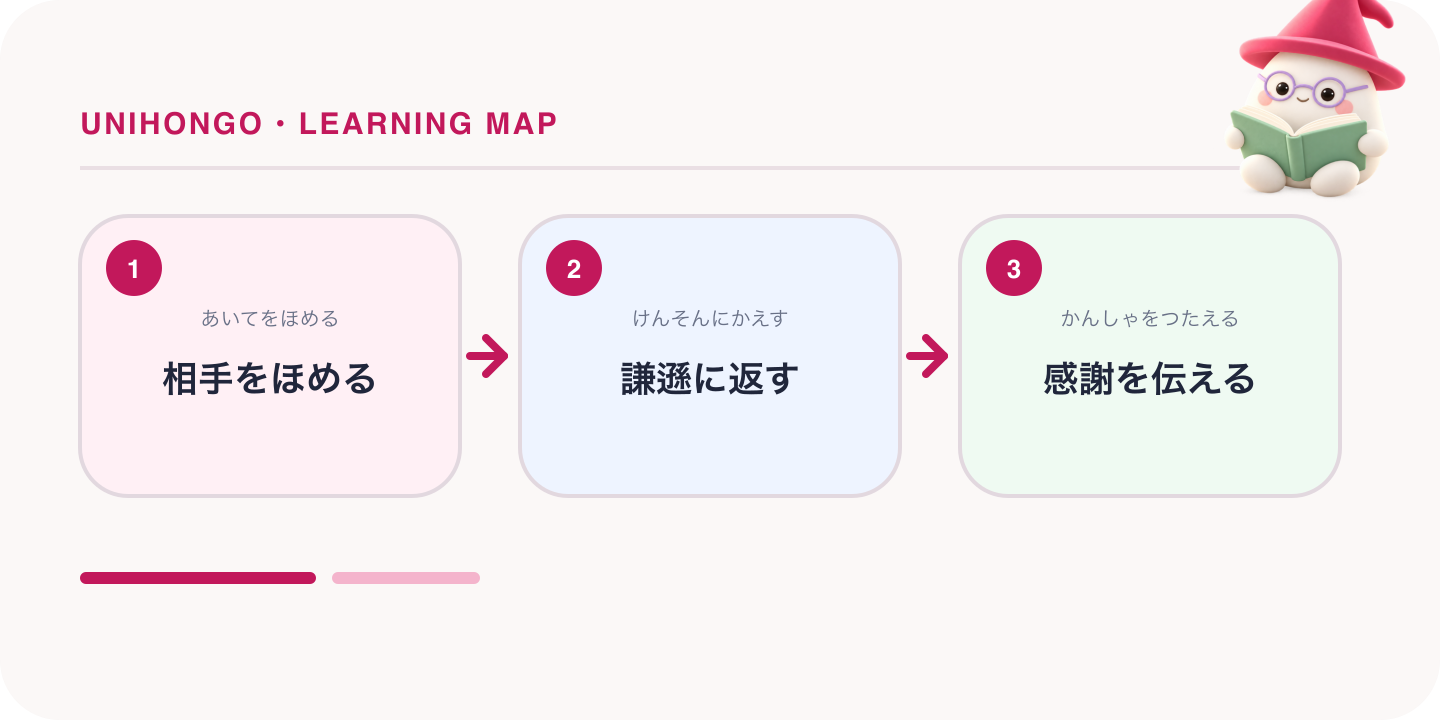
In Japanese conversation, a compliment raises the other person, and the traditional reply lowers yourself a little so that the two of you end up level again. Answering praise with a plain arigatō skips that step and can sound, to some ears, as if you agree that you deserve it. The deflection is not a lie and nobody hears it as one; it is a move in a familiar exchange, and the person who gave the compliment will usually repeat it or soften it, at which point you can smile and let it stand.
The set phrases are short. Ieie is the all-purpose wave of the hand, sonna koto nai desu says it is not like that, madamada desu says you still have a long way to go, and tondemonai desu is a stronger, more formal version. Among friends the casual zenzen or sonna koto nai yo does the same job. The learner mistake is to argue: a long, earnest denial forces the other person to insist several times, which is tiring for both of you. One short deflection is enough.
| Japanese | Romaji | Meaning |
|---|---|---|
| いえいえ、そんなことないです。 | Ieie, sonna koto nai desu. | Oh no, not at all. |
| まだまだです。 | Madamada desu. | I still have a long way to go. |
| とんでもないです。 | Tondemonai desu. | Not at all. (formal) |
| いえ、皆さんのおかげです。 | Ie, minasan no okage desu. | No, it is thanks to everyone. |
| 全然そんなことないよ。 | Zenzen sonna koto nai yo. | No way, not at all. (casual) |
The shift toward simple thanks
Attitudes are changing, and in most cities a younger colleague or friend who says arigatō to a compliment sounds warm rather than arrogant. Many people now find heavy self-deprecation a little old-fashioned, and some actively prefer a direct thanks because it makes the compliment feel received. The reliable middle ground, which works for almost any age and setting, is thanks plus a hedge: arigatō gozaimasu, ureshii desu, or sō itte itadakete ureshii desu, which thanks the person for saying it rather than claiming the praise is true.
In business settings the hedge becomes more formal. Kyōshuku desu conveys that you feel almost undeserving, and hagemi ni narimasu says the praise will spur you on, which is a graceful way to accept encouragement from a senior. Among close friends a surprised e, hontō? arigatō is completely natural. Match the register of the person who complimented you and you will rarely go wrong.
| Japanese | Romaji | Meaning |
|---|---|---|
| ありがとうございます。嬉しいです。 | Arigatō gozaimasu. Ureshii desu. | Thank you. That makes me happy. |
| そう言っていただけて嬉しいです。 | Sō itte itadakete ureshii desu. | I am glad to hear you say that. |
| ありがとうございます。励みになります。 | Arigatō gozaimasu. Hagemi ni narimasu. | Thank you. That is encouraging. |
| 恐縮です。 | Kyōshuku desu. | That is very kind of you. (formal, business) |
| えっ、本当?ありがとう。 | E, hontō? Arigatō. | Really? Thanks. (casual) |
Complimenting work and skill
For skill, the everyday word is jōzu, often with the polite prefix as o-jōzu, and it works well among equals and toward juniors: e ga o-jōzu desu ne, you are good at drawing. Sugoi is the general-purpose word for impressive, and it becomes a real compliment when you follow it with a question, because asking how someone learned shows you are interested rather than simply being polite. Sasuga, which means roughly just what I would expect from you, is warm between peers and encouraging to a junior.
Specific beats general every time. Kono purezen, wakariyasukatta desu, this presentation was easy to follow, tells the person what worked, and they can answer it. Sugoi on its own gets a deflection and a dead end. Expect a reply such as iyaiya, madamada renshū-chū desu, and treat it as your cue to ask one follow-up question, not to repeat the praise.
| Japanese | Romaji | Meaning |
|---|---|---|
| 絵がお上手ですね。 | E ga o-jōzu desu ne. | You are good at drawing. |
| すごいですね。どうやって覚えたんですか? | Sugoi desu ne. Dō yatte oboeta n desu ka? | That is impressive. How did you learn it? |
| さすがですね。 | Sasuga desu ne. | That is just like you. (peers, juniors) |
| このプレゼン、すごく分かりやすかったです。 | Kono purezen, sugoku wakariyasukatta desu. | This presentation was really easy to follow. |
| いやいや、まだまだ練習中です。 | Iyaiya, madamada renshū-chū desu. | Oh no, I am still practising. (reply) |
Complimenting appearance and belongings safely
The safe target is a choice the person made: a colour, a bag, a new haircut, a pair of glasses. The key verb is niau, to suit, because sono iro, yoku niatte imasu ne praises the decision rather than the body. Noticing a haircut is a classic friendly opener, and asking where something was bought is a natural follow-up that most people enjoy answering. The usual reply plays the item down: it was cheap, it is old, it was a gift. Accept that and move on.
Comments on weight, height, skin or age are risky even when kind, and in a workplace repeated remarks about a colleague's appearance can be unwelcome whatever the intent. In most offices a compliment on a tie or a jacket once in a while is fine; a daily comment is not. Among friends, kawaii and kakkoii are the casual words for cute and cool and are used freely about clothes, phones and shoes.
| Japanese | Romaji | Meaning |
|---|---|---|
| その色、よく似合っていますね。 | Sono iro, yoku niatte imasu ne. | That colour really suits you. |
| 髪、切りました?いいですね。 | Kami, kirimashita? Ii desu ne. | Did you have your hair cut? It looks good. |
| そのバッグ、素敵ですね。どこで買ったんですか? | Sono baggu, suteki desu ne. Doko de katta n desu ka? | That bag is lovely. Where did you get it? |
| ありがとうございます。これ、実は安かったんですよ。 | Arigatō gozaimasu. Kore, jitsu wa yasukatta n desu yo. | Thank you. Actually it was cheap. (reply) |
| 今日の服、かわいいね。 | Kyō no fuku, kawaii ne. | Your outfit is cute today. (casual) |
Complimenting a child or a colleague's effort
Praise for a child usually goes to the parent, and the parent is expected to deflect: uchi no ko wa, our child is, followed by a small complaint about behaviour at home. Do not take the deflection literally or argue with it. Speaking to the child directly, casual forms are normal: jōzu da ne, ganbatta ne, and erai ne, which praises good behaviour. Children are also the one audience where sugoi on its own is perfect.
For a colleague, the compliment that means most is often not about talent at all but about effort and usefulness. Tasukarimashita, that was a real help, tells someone their work mattered, and ganbarimashita ne recognises the effort behind a result. Pair either with otsukaresama deshita and you have the workplace compliment that everyone understands. The reply usually credits the team, and that is fine; nobody expects you to contest it.
| Japanese | Romaji | Meaning |
|---|---|---|
| お子さん、しっかりしていますね。 | O-ko-san, shikkari shite imasu ne. | Your child is so grown up. |
| いえいえ、家ではわがままなんですよ。 | Ieie, ie de wa wagamama nan desu yo. | Oh no, at home they are a handful. (parent's reply) |
| 上手だね。頑張ったね。 | Jōzu da ne. Ganbatta ne. | That is great. You worked hard. (to a child) |
| 資料の準備、助かりました。 | Shiryō no junbi, tasukarimashita. | Getting the materials ready was a real help. |
| 頑張りましたね。お疲れ様でした。 | Ganbarimashita ne. Otsukaresama deshita. | You worked hard on that. Well done. |
| いえ、皆さんに手伝ってもらったので。 | Ie, minasan ni tetsudatte moratta node. | No, I had help from everyone. (reply) |
The nihongo ga jōzu desu ne situation
Every learner hears it, often after a single konnichiwa. Nihongo ga o-jōzu desu ne is usually a friendly way of acknowledging that you made an effort, and sometimes a way of filling a pause, rather than an assessment of your level. Treating it as either an insult or a serious verdict misses the point. The reply that sounds most natural is the same modest line Japanese speakers use about their own skills: ieie, madamada desu. It takes two seconds and signals that you know how the exchange works.
If you prefer to accept, thank them and add that you are still studying, then move the conversation on with something specific: keigo is hard, pronunciation is a struggle, you have been learning for two years. A question back, such as asking whether they speak English, turns the moment into small talk instead of a review of your Japanese. Whatever you do, keep it short. A speech about why the compliment was given makes everyone uncomfortable.
| Japanese | Romaji | Meaning |
|---|---|---|
| 日本語がお上手ですね。 | Nihongo ga o-jōzu desu ne. | Your Japanese is very good. |
| いえいえ、まだまだです。 | Ieie, madamada desu. | Oh no, I still have a long way to go. |
| ありがとうございます。まだ勉強中です。 | Arigatō gozaimasu. Mada benkyō-chū desu. | Thank you. I am still studying. |
| そう言っていただけると嬉しいです。敬語が難しいです。 | Sō itte itadakeru to ureshii desu. Keigo ga muzukashii desu. | It is nice of you to say so. Keigo is hard. |
| 発音はまだ自信がないんです。 | Hatsuon wa mada jishin ga nai n desu. | I am still not confident about my pronunciation. |
Complimenting food and a home
Oishii is the base word for delicious and it is never wrong, but a cook hears it a hundred times. What lands is a detail: the seasoning is just right, the simmered dish has absorbed the flavour, the rice is perfect. Ajitsuke, seasoning, and aji ga shimite iru, the flavour has soaked in, are two phrases that mark you out as someone who actually tasted the food. The host's reply, o-kuchi ni atte yokatta desu, I am glad it suits your taste, is the polite acceptance you will hear in return.
For a home, praise the atmosphere rather than the size or value: bright, calm, a lovely view, a nice room. The host will usually deflect with an apology about the space being small or old, and a single reassurance is enough. A separate guide on visiting a Japanese home covers the full visit from the door to the thank-you message; the compliments themselves are short and best delivered once, early, with a smile.
| Japanese | Romaji | Meaning |
|---|---|---|
| おいしいです。味付けがちょうどいいですね。 | Oishii desu. Ajitsuke ga chōdo ii desu ne. | It is delicious. The seasoning is just right. |
| この煮物、味が染みていますね。 | Kono nimono, aji ga shimite imasu ne. | This simmered dish is so full of flavour. |
| お口に合ってよかったです。 | O-kuchi ni atte yokatta desu. | I am glad you like it. (host) |
| 素敵なお部屋ですね。 | Suteki na o-heya desu ne. | What a lovely room. |
| いえいえ、狭くてすみません。 | Ieie, semakute sumimasen. | Oh no, sorry it is so small. (host) |
What not to compliment
Most compliment trouble comes from a few predictable areas. Bodies, age, money and rank are the ones to avoid, and a surprised tone is the delivery to avoid, because surprise implies you expected less. The list below is not a set of rules so much as the places where a kind intention most often lands badly, and each has an easy alternative.
- Weight and body shape. Yasemashita ne, you have lost weight, can be heard as a health worry or as a hint that you had been watching. Praise the outfit instead.
- Age. Wakaku miemasu ne, you look young, tells a colleague you were thinking about their age. Leave it unsaid unless they raise it.
- Price and value. Asking what a home, a watch or a gift cost turns a compliment into an appraisal. Ask where it came from, not how much.
- A superior's ability. Jōzu, erai and yoku dekimashita are words a senior uses about a junior, and they sound patronising the other way round.
- Surprise at a foreigner. Nihonjin mitai, you are like a Japanese person, is meant well but rarely received well. Praise the skill, not the resemblance.
- Repetition. One compliment on a colleague's appearance is friendly; the same one every morning is not. Vary the target or stop.
Complimenting a superior without sounding evaluative
The problem with praising a manager or a teacher is that most compliment words are grades, and grading is something the senior person does. Jōzu desu ne to your boss sounds like a teacher marking homework, however sincere it is. The fix is to stop describing them and start describing yourself: what you learned, what you understood, how you felt. Benkyō ni narimashita, I learned a lot, is the standard line after a presentation or a piece of advice, and it works in almost every workplace and classroom.
Wakariyasukatta desu, it was easy to follow, is safe because it reports your experience rather than their ability, and yatto rikai dekimashita, I finally understood, credits them for the result. For something that genuinely moved you, kanmei o ukemashita, I was deeply impressed, is formal and heartfelt. Sonkei shite imasu, I respect you, is strong and should be saved for moments that deserve it, such as a farewell or a thank-you at the end of a project. Keep sasuga for peers, where its slightly familiar warmth belongs.
| Japanese | Romaji | Meaning |
|---|---|---|
| 大変勉強になりました。 | Taihen benkyō ni narimashita. | I learned a great deal. |
| 先生のお話、とても分かりやすかったです。 | Sensei no o-hanashi, totemo wakariyasukatta desu. | Your talk was very easy to follow. |
| 部長のご説明で、やっと理解できました。 | Buchō no go-setsumei de, yatto rikai dekimashita. | Thanks to your explanation, I finally understood. |
| 感銘を受けました。 | Kanmei o ukemashita. | I was deeply impressed. (formal) |
| いつも尊敬しています。 | Itsumo sonkei shite imasu. | I have great respect for you. |
Compliment and reply at a glance
| Compliment | Modest reply | Simple thanks |
|---|---|---|
| Nihongo ga o-jōzu desu ne. | Ieie, madamada desu. | Arigatō gozaimasu. Mada benkyō-chū desu. |
| Sono fuku, niatte imasu ne. | Sonna koto nai desu yo. | Arigatō gozaimasu. Ureshii desu. |
| Purezen, wakariyasukatta desu. | Iyaiya, minasan no okage desu. | Arigatō gozaimasu. Hagemi ni narimasu. |
| Ryōri ga o-jōzu desu ne. | Ieie, kantan na mono desu. | Arigatō gozaimasu. O-kuchi ni atte yokatta desu. |
| Suteki na o-uchi desu ne. | Ieie, furui n desu yo. | Arigatō gozaimasu. Yukkuri shite itte kudasai. |
| O-ko-san, shikkari shite imasu ne. | Ie de wa wagamama nan desu yo. | Arigatō gozaimasu. Sō itte moraete ureshii desu. |
| E ga o-jōzu desu ne. | Madamada renshū-chū desu. | Arigatō gozaimasu. Sō itte itadakete ureshii desu. |
| Kami, kirimashita? Ii desu ne. | Chotto kirisugimashita. | Arigatō gozaimasu. Kizuite kurete ureshii desu. |
Both columns of replies are correct, and which one you use depends on the person in front of you more than on any rule. With an older host or a formal colleague, lead with the modest reply. With a friend, a classmate or a younger colleague, the simple thanks sounds natural and warm. Practise both until switching between them is a choice rather than a scramble.