

Why Japanese says it happened rather than I decided
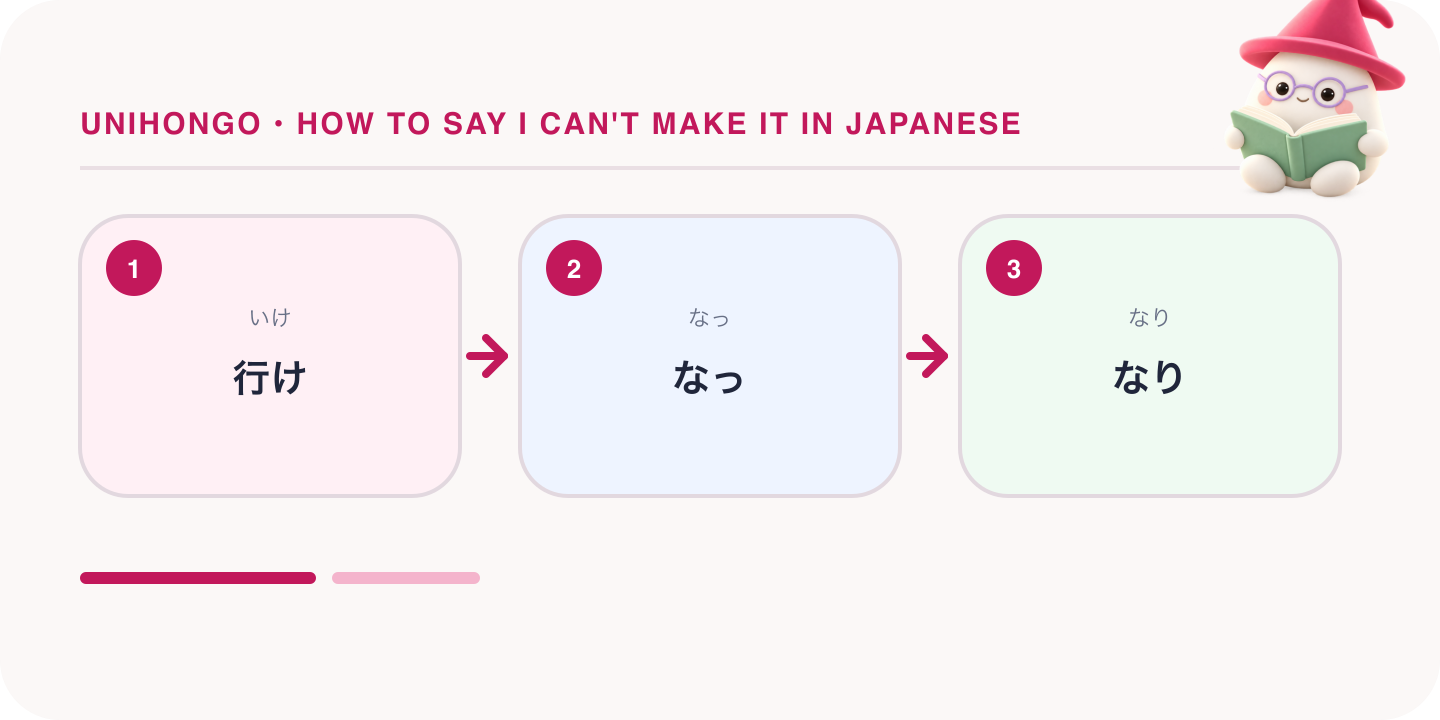
The first thing to learn is not a phrase but a habit of grammar. In English you say I can't come, with yourself as the subject who cannot. In Japanese the most natural version is ikenaku natta, which means something like it has come about that I cannot go. The verb naru, to become, turns your refusal into a change of circumstances, and that small shift makes the sentence far softer. The person is not being rejected; the situation has changed.
This is why the plain ikanai, I won't go, and even ikemasen, I can't go, sound abrupt in most situations. They are grammatical, but they present the refusal as your position. When learners are told their Japanese sounds cold, this is often the reason. Adding natta or narimashita fixes it in a single syllable or two.
The same pattern carries the other common verbs: sanka dekinaku narimashita, I've become unable to take part, and tsugō ga waruku natta, my circumstances have become bad, which avoids naming the activity at all.
| Japanese | Romaji | Meaning |
|---|---|---|
| ごめん、行けなくなった。 | Gomen, ikenaku natta. | Sorry, I can't make it any more. |
| すみません、行けなくなりました。 | Sumimasen, ikenaku narimashita. | Sorry, I'm no longer able to come. |
| 都合が悪くなってしまって。 | Tsugō ga waruku natte shimatte. | My schedule has fallen through. |
| 参加できなくなりました。 | Sanka dekinaku narimashita. | I've become unable to take part. |
| 急に予定が入ってしまって。 | Kyū ni yotei ga haitte shimatte. | Something suddenly came up. |
With friends: short, warm and not too formal
Among friends the ladder starts low. Gomen, ikenaku natta is the core, and most people add a quick reason and a way to make it up. Being too polite here is its own mistake: mōshiwake gozaimasen to a friend sounds like a customer service script and can feel like you are putting distance between you.
If you are declining an invitation rather than cancelling something already agreed, sono hi wa chotto is the classic. It means that day is a bit, and the missing end of the sentence is understood. Friends may push for a reason as a joke, and you can give one or simply say chotto yōji ga atte, I've got something on.
| Japanese | Romaji | Meaning |
|---|---|---|
| 金曜日?その日はちょっと。 | Kin'yōbi? Sono hi wa chotto. | Friday? That day's a bit tricky. |
| ごめん、今日行けなくなっちゃった。 | Gomen, kyō ikenaku nacchatta. | Sorry, I can't make it today after all. |
| 直前でごめん。 | Chokuzen de gomen. | Sorry it's so last minute. |
| ちょっと用事があって。 | Chotto yōji ga atte. | I've got something on. |
| 次は絶対行くから。 | Tsugi wa zettai iku kara. | I'll definitely come next time. |
| 来週なら空いてるよ。 | Raishū nara aiteru yo. | I'm free next week, though. |
At work: the polite and business rungs
With colleagues, the same content moves up one rung: sumimasen replaces gomen, narimashita replaces natta, and the reason is stated more neutrally. Sumimasen, ashita no uchiawase, ikenaku narimashita is the plain polite version, and it is the sentence you will say most often in an office. If the person is senior, or the event is important, swap sumimasen for mōshiwake arimasen.
Tsugō ga waruku narimashite is the phrase for when you want to be polite without naming what went wrong. The -mashite ending is the formal continuative and signals that an apology or explanation follows. It is the phrase to use with a client, a professor or a manager, and it pairs naturally with mōshiwake arimasen ga in front of it.
The top rung is for phone calls and meetings with people outside the company. Here you use humble verbs: ukagau for going to see someone, sanka sasete itadaku for taking part. Honjitsu wa ukagaenaku narimashita, I have become unable to visit today, or kondo no kai wa kesseki sasete itadakimasu, I will be absent from the upcoming meeting, sound formal because they are. You will not need them with close colleagues, but you will recognise them when someone says them to you.
| Japanese | Romaji | Meaning |
|---|---|---|
| すみません、明日の打ち合わせ、行けなくなりました。 | Sumimasen, ashita no uchiawase, ikenaku narimashita. | Sorry, I can't make tomorrow's meeting any more. |
| 申し訳ありませんが、都合が悪くなりまして。 | Mōshiwake arimasen ga, tsugō ga waruku narimashite. | I'm very sorry, but my schedule has become difficult. |
| 本日は伺えなくなりました。 | Honjitsu wa ukagaenaku narimashita. | I have become unable to visit today. |
| 今度の会は欠席させていただきます。 | Kondo no kai wa kesseki sasete itadakimasu. | I will be absent from the upcoming meeting. |
| せっかくですが、その日は先約がありまして。 | Sekkaku desu ga, sono hi wa sakiyaku ga arimashite. | It's kind of you, but I have a prior engagement that day. |
| 急で申し訳ありません。 | Kyū de mōshiwake arimasen. | I apologise for the short notice. |
Giving a reason or leaving it out
Japanese is comfortable with unstated reasons, and this surprises learners who feel they owe an explanation. Sono hi wa chotto and tsugō ga waruku natte both work with nothing after them. If someone asks why, a vague answer is accepted: yōji ga atte, I have something on, or shigoto de, because of work. Nobody expects the details, and pressing for them would be seen as intrusive.
That said, a short reason is friendly and often makes the refusal feel less like a rejection. The safest reasons are ones outside your control: sakiyaku, a prior engagement; shigoto ga nagabiite, work has run over; kazoku no yōji, a family matter; taichō ga warukute, I'm not feeling well. Reasons that sound like a preference, such as tsukareta, I'm tired, are fine with friends and unwise with a boss.
| Japanese | Romaji | Meaning |
|---|---|---|
| ちょっと用事があって。 | Chotto yōji ga atte. | I've got something on. (no detail) |
| 先約がありまして。 | Sakiyaku ga arimashite. | I have a prior engagement. |
| 仕事が長引いてしまって。 | Shigoto ga nagabiite shimatte. | Work has run over. |
| 家族の用事が入ってしまって。 | Kazoku no yōji ga haitte shimatte. | A family matter has come up. |
| 体調が悪くて、今日は難しそうです。 | Taichō ga warukute, kyō wa muzukashisō desu. | I'm not feeling well, so today looks difficult. |
Offering another time
A cancellation without an alternative feels like a closed door in any language, and in Japanese the follow-up is nearly part of the phrase. Among friends, the shape is mata kondo, again some other time, followed by a concrete suggestion. Among colleagues, the polite shape is a question about the other person's convenience: go-tsugō no yoi hi o oshiete kudasai, please tell me a day that suits you, or betsu no hi ni shite itadakemasu ka, could we make it another day.
The word kawari ni, instead, introduces a specific swap: kawari ni raishū no getsuyōbi wa ikaga desu ka, how about next Monday instead. With friends, nara after a day means if it's that day: doyōbi nara ikeru, I can go if it's Saturday. Offer the time yourself when you cancelled something already agreed; ask for the other person's preference when you are declining an invitation.
| Japanese | Romaji | Meaning |
|---|---|---|
| また今度、誘ってくれる? | Mata kondo, sasotte kureru? | Will you invite me again some other time? |
| 土曜日なら行けるよ。 | Doyōbi nara ikeru yo. | I can make it if it's Saturday. |
| 代わりに来週の月曜日はいかがですか。 | Kawari ni raishū no getsuyōbi wa ikaga desu ka. | How about next Monday instead? |
| 別の日にしていただけますか。 | Betsu no hi ni shite itadakemasu ka. | Could we make it another day? |
| ご都合のよい日を教えてください。 | Go-tsugō no yoi hi o oshiete kudasai. | Please let me know a day that suits you. |
| また改めてご連絡します。 | Mata aratamete go-renraku shimasu. | I'll be in touch again to rearrange. |
The register ladder at a glance
The rows below run from casual to formal. Each one carries the same message; the difference is who can hear it without feeling that you were either too cold or too stiff.
| Phrase | Reading | Register | Use with |
|---|---|---|---|
| 行けなくなった | ikenaku natta | casual | close friends, family |
| その日はちょっと | sono hi wa chotto | casual to polite | anyone, declining an invitation |
| 行けなくなっちゃった | ikenaku nacchatta | casual, regretful | friends, on the day |
| 行けなくなりました | ikenaku narimashita | polite | colleagues, acquaintances |
| 都合が悪くなりまして | tsugō ga waruku narimashite | polite, formal | managers, clients, teachers |
| 参加できなくなりました | sanka dekinaku narimashita | polite | events, classes, meetings |
| 伺えなくなりました | ukagaenaku narimashita | humble | visits to clients or seniors |
| 欠席させていただきます | kesseki sasete itadakimasu | humble, formal | formal meetings, ceremonies |
| せっかくですが | sekkaku desu ga | polite opener | declining any invitation |
| 急で申し訳ありません | kyū de mōshiwake arimasen | polite apology | last-minute cancellations |
Notice that only two rows are openers or apologies; the rest are the news itself. A complete cancellation usually takes one opener, one news sentence and one offer, in that order.
Putting it together: three complete cancellations
Here are three full exchanges built from the pieces above. Read them aloud and notice the rhythm: apology, change of circumstances, alternative.
- To a friend on the day: Gomen, kyō ikenaku nacchatta. Shigoto ga nagabiite shimatte. Raishū nara aiteru kara, mata sasotte.
- To a colleague two days before: Sumimasen, kin'yōbi no nomikai, ikenaku narimashita. Kazoku no yōji ga haitte shimatte. Tsugi wa zehi sanka shimasu.
- To a client by phone: Mōshiwake arimasen. Ashita wa tsugō ga waruku narimashite, ukagaenaku narimashita. Kawari ni raishū no getsuyōbi wa ikaga deshō ka.
- Declining a boss's invitation: Sekkaku desu ga, sono hi wa sakiyaku ga arimashite. Mata zehi sasotte kudasai.
Each of these takes under ten seconds to say. The pause before the alternative is where Japanese speakers usually bow slightly or lower their voice, which is why a cancellation sounds gentle even when the words are plain.
Mistakes that make a cancellation sound cold
The most common error is the flat ikimasen or ikenai desu with no natta. It is understood, but it lands as a refusal rather than a regret. The second is skipping the opener: a cancellation that starts with the news, especially at work, sounds like an announcement. The third is over-explaining. A long, detailed reason can make the listener feel obliged to respond to it, when a short one and an apology would have closed the matter.
- Ikimasen with no natta or narimashita: sounds like a decision, not a regret
- Starting with the news instead of sumimasen or sekkaku desu ga
- Explaining at length when yōji ga atte would do
- Mōshiwake gozaimasen to a close friend: too distant
- Gomen to a client or manager: too familiar
- Cancelling with no alternative and no mata kondo
If you realise mid-sentence that the register is wrong, simply restart with the correct opener. Japanese listeners hear this self-correction as care, not as a stumble.