
Four questions that make you useful
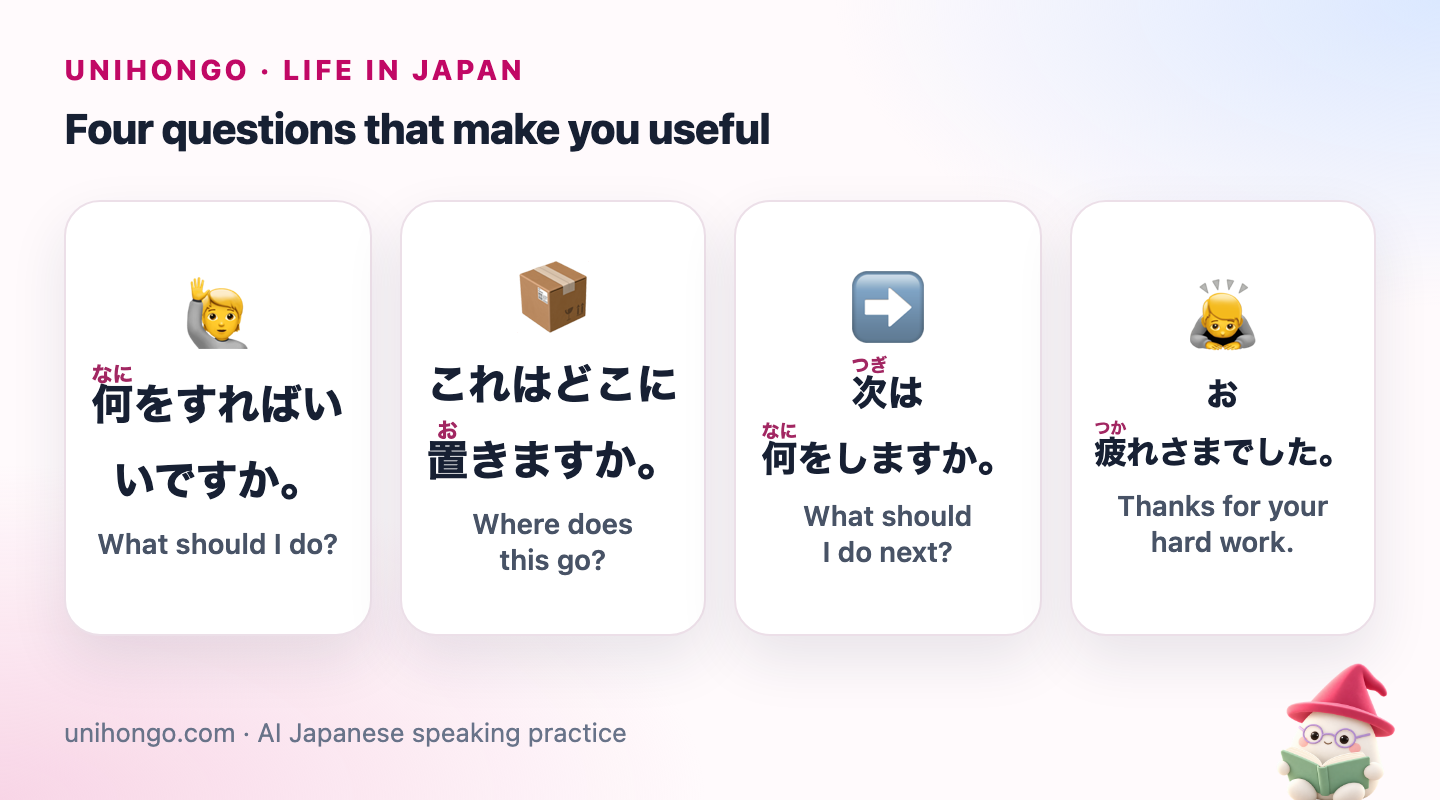
On the day, organisers are busy and instructions are short. These four lines keep you working and show that you are paying attention. Nani o sureba ii desu ka uses the ba conditional with ii: literally, if I do what, will it be good? It is the standard polite way to ask for a task.
Kore wa doko ni okimasu ka and tsugi wa nani o shimasu ka keep the work moving, and otsukaresama deshita closes it. None of these will sound strange from a beginner.
| Japanese | Romaji | Meaning |
|---|---|---|
| 何をすればいいですか。 | Nani o sureba ii desu ka. | What should I do? |
| これはどこに置きますか。 | Kore wa doko ni okimasu ka. | Where does this go? |
| 次は何をしますか。 | Tsugi wa nani o shimasu ka. | What should I do next? |
| お疲れさまでした。 | Otsukaresama deshita. | Thanks for your hard work. |
| 手伝いましょうか。 | Tetsudaimashō ka. | Shall I help? |
Finding and signing up
Volunteer opportunities are usually advertised with the word boshū (募集), recruitment. Many cities have a volunteer centre, borantia sentā, often run by the local social welfare council, which matches people to activities. When you apply by email, phone or a form, say what you want to do and be open about your Japanese level. Some activities register you for volunteer insurance, borantia hoken; the organiser will tell you if this is needed.
| Japanese | Romaji | Meaning |
|---|---|---|
| ボランティアに参加したいです。 | Borantia ni sanka shitai desu. | I'd like to volunteer. |
| 外国人でも参加できますか。 | Gaikokujin demo sanka dekimasu ka. | Can foreigners take part too? |
| 日本語はまだ勉強中ですが、大丈夫ですか。 | Nihongo wa mada benkyōchū desu ga, daijōbu desu ka. | I'm still learning Japanese; is that all right? |
| 何を持っていけばいいですか。 | Nani o motte ikeba ii desu ka. | What should I bring? |
| 集合時間と場所を教えてください。 | Shūgō jikan to basho o oshiete kudasai. | Please tell me the meeting time and place. |
Benkyōchū, currently studying, is better than heta desu (I'm bad). It sounds positive and tells people to speak a little more simply without making the conversation about your limitations.
The morning briefing: words you will hear
Most events begin with a short talk from the organiser. It covers the plan, safety and timing, and often includes self-introductions. The words below come up again and again. If you miss something, ask the person next to you afterwards; that is also a good way to start talking.
| Japanese | Romaji | Meaning |
|---|---|---|
| 今日はよろしくお願いします。 | Kyō wa yoroshiku onegai shimasu. | I look forward to working with you today. |
| 熱中症に気をつけてください。 | Netchūshō ni ki o tsukete kudasai. | Please be careful of heatstroke. |
| 三つの班に分かれます。 | Mittsu no han ni wakaremasu. | We'll split into three groups. |
| Word in romaji | Meaning | Where it comes up |
|---|---|---|
| shūgō | Gathering, meeting point | Shūgō wa kuji: we gather at nine |
| uketsuke | Reception desk | Sign in here when you arrive |
| han | Group, team | You may be put into teams |
| gunte | Cotton work gloves | Often handed out for cleanups |
| bunbetsu | Sorting rubbish | Burnable, plastic, cans and bottles |
| kyūkei | Break | Drink water during breaks |
| kaisan | Dispersal, end | The official end of the event |
Taking instructions and confirming
The most professional thing you can do is repeat an instruction back. Japanese uses desu ne for this: you state what you understood and invite a yes. If you did not catch something, ask for it again or ask for a demonstration. Answer instructions with hai, wakarimashita, or the slightly more casual ryōkai desu, which many groups use.
| Japanese | Romaji | Meaning |
|---|---|---|
| これをあそこに運ぶんですね。 | Kore o asoko ni hakobu n desu ne. | So I carry this over there, right? |
| 燃えるゴミはこの袋ですね。 | Moeru gomi wa kono fukuro desu ne. | Burnable rubbish goes in this bag, right? |
| もう一度お願いします。 | Mō ichido onegai shimasu. | Once more, please. |
| やって見せてもらえますか。 | Yatte misete moraemasu ka. | Could you show me how? |
| はい、わかりました。 | Hai, wakarimashita. | Yes, understood. |
| 了解です。 | Ryōkai desu. | Got it. |
Small talk while you work
Volunteers chat while they work, and you will be asked where you are from and why you joined. Short, positive answers are best. Asking locals about the area is a natural way to continue: people enjoy talking about their town.
| Japanese | Romaji | Meaning |
|---|---|---|
| よく参加されるんですか。 | Yoku sanka sareru n desu ka. | Do you often take part? |
| 地域の役に立ちたくて。 | Chiiki no yaku ni tachitakute. | I wanted to be useful to the community. |
| この辺は長いんですか。 | Kono hen wa nagai n desu ka. | Have you lived around here long? |
| 昔はもっと人が多かったんですか。 | Mukashi wa motto hito ga ōkatta n desu ka. | Were there more people here in the past? |
Sanka sareru uses the respectful passive form of sanka suru. It is a polite way to ask about someone else's actions, especially an older volunteer. You can also simply say yoku sanka shimasu ka.
Scenario: a beach cleanup
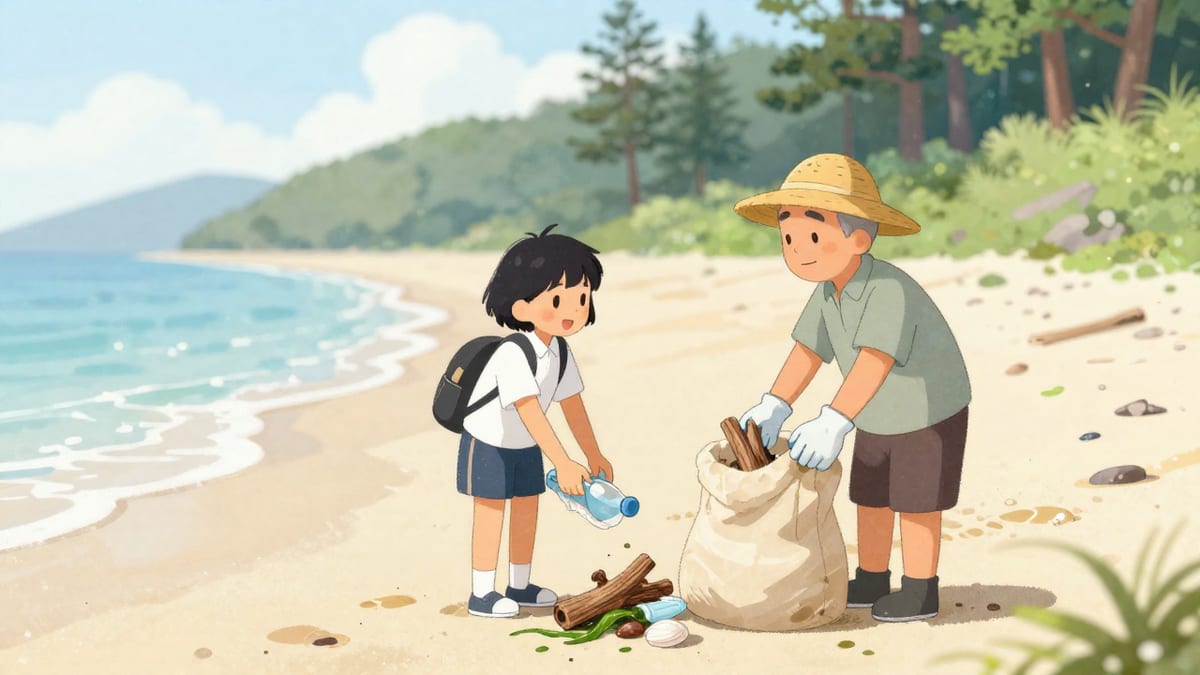
A Saturday morning in early summer, already warm enough that the organisers remind everyone to drink water. About thirty people have gathered on a small beach: retirees, families, students and a few foreign residents. After the briefing, you are handed gunte and a bag and paired with a local man in his sixties. You work along the tide line, and the conversation goes from bags to the history of the beach.
| Japanese | Romaji | Meaning |
|---|---|---|
| リーダー:この袋はペットボトル用です。 | Rīdā: Kono fukuro wa petto botoru yō desu. | Leader: This bag is for plastic bottles. |
| あなた:わかりました。網はどうしますか。 | Anata: Wakarimashita. Ami wa dō shimasu ka. | You: Got it. What about fishing nets? |
| リーダー:大きいものは、あそこに集めてください。 | Rīdā: Ōkii mono wa, asoko ni atsumete kudasai. | Leader: Gather big items over there. |
| 地元の人:どこから来たんですか。 | Jimoto no hito: Doko kara kita n desu ka. | Local: Where are you from? |
| あなた:オーストラリアです。海が好きなので。 | Anata: Ōsutoraria desu. Umi ga suki na node. | You: Australia. I love the sea. |
| 全員:お疲れさまでした! | Zen'in: Otsukaresama deshita! | Everyone: Thanks for your hard work! |
At the end, many groups take a photo and some share drinks or snacks. Mata sanka shimasu, I'll join again, said to the organiser as you leave, is the best possible thank-you.
Disaster relief and longer-term volunteering
After earthquakes, floods and typhoons, local volunteer centres for disaster relief, saigai borantia sentā, are often set up to organise helpers. If you want to help, follow the official information from the local government or the centre rather than going on your own. Volunteers are usually expected to be self-sufficient, jiko kanketsu: bringing their own food, water, gloves and suitable clothes, and arranging their own transport and accommodation. Some centres accept only local residents at first, and requirements change from disaster to disaster.
For longer-term involvement, many towns have regular activities such as reading to children, teaching in community Japanese classes, helping at events for older residents or maintaining parks. Joining the same group every month is one of the most reliable ways to build real friendships in a new place.
| Japanese | Romaji | Meaning |
|---|---|---|
| 災害ボランティアに参加したいんですが。 | Saigai borantia ni sanka shitai n desu ga. | I'd like to volunteer for disaster relief. |
| 受付はどこでしていますか。 | Uketsuke wa doko de shite imasu ka. | Where is registration being done? |
| 必要な持ち物はありますか。 | Hitsuyō na mochimono wa arimasu ka. | Is there anything I need to bring? |
| 毎月参加できる活動はありますか。 | Maitsuki sanka dekiru katsudō wa arimasu ka. | Are there activities I can join every month? |
| 英語を教えるのも手伝えます。 | Eigo o oshieru no mo tetsudaemasu. | I can also help by teaching English. |
Offering a skill you have, such as English, cooking, music or design, often turns a one-off volunteer into a valued member of the group. Say what you can do simply and let the organiser decide where it fits.
Common mistakes
- Saying ryōkai desu to senior organisers. Hai, wakarimashita is the safe reply to anyone.
- Apologising for your Japanese repeatedly. Mention it once, then just ask questions.
- Waiting silently after finishing a task. Ask tsugi wa nani o shimasu ka.
- Leaving without saying goodbye. Thank the organiser and say otsukaresama deshita to the people near you.