
Four ways to play in the snow
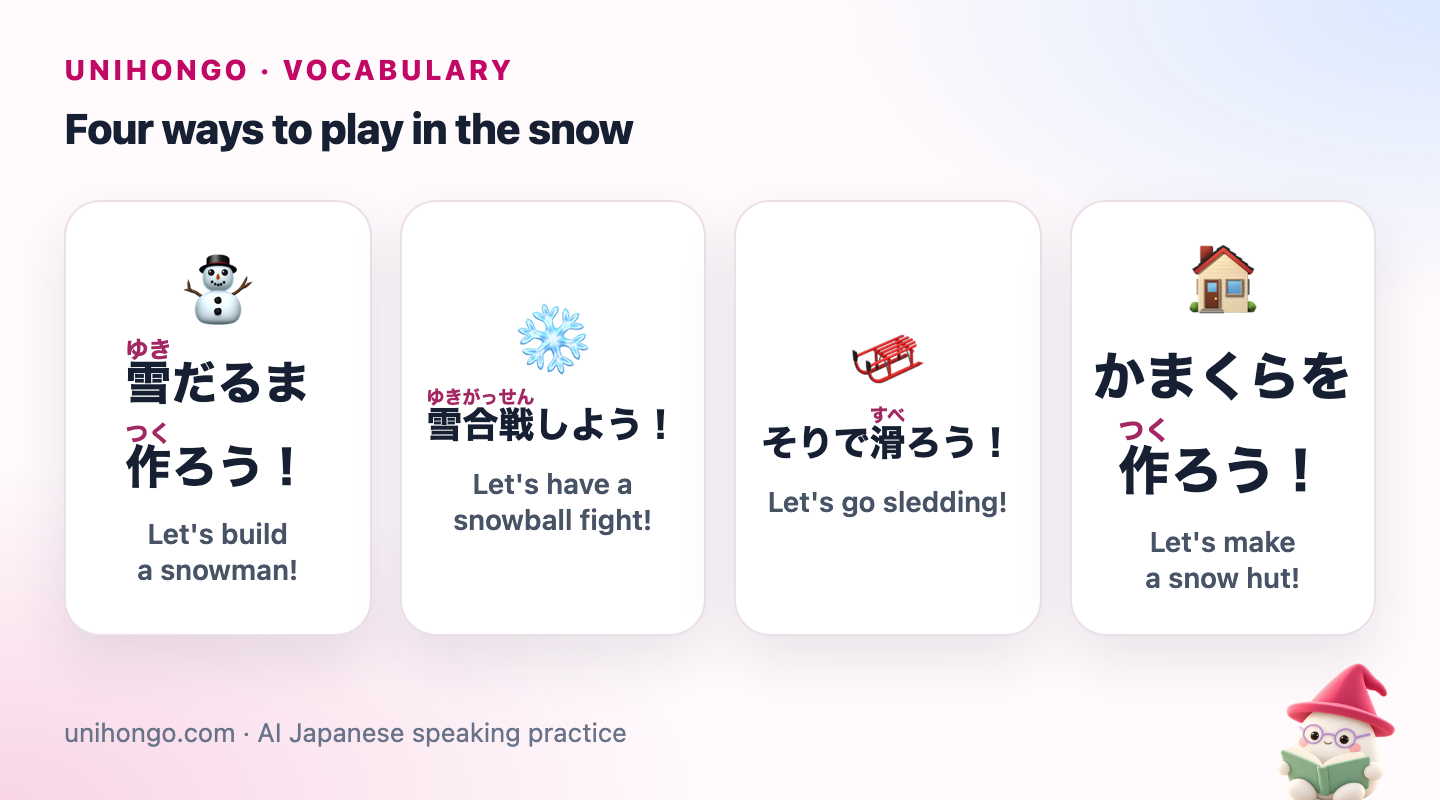
Each card is a suggestion in the volitional form, the -ō ending that means let's. It is casual and friendly, the way friends, siblings and parents talk in the snow. Learn the four activities as whole sentences and you can start any snow game with one shout.
| Japanese | Romaji | Meaning |
|---|---|---|
| 雪だるま作ろう! | Yukidaruma tsukurō! | Let's build a snowman! |
| 雪合戦しよう! | Yukigassen shiyō! | Let's have a snowball fight! |
| そりで滑ろう! | Sori de suberō! | Let's go sledding! |
| かまくらを作ろう! | Kamakura o tsukurō! | Let's make a snow hut! |
Building a yukidaruma, step by step
The word yukidaruma comes from the daruma doll, a round, red figure with no arms or legs. That is why the classic Japanese snowman has two parts, a body and a head, and often no arms. Many people today make three-ball snowmen too, and stick arms are common in children's drawings, so either is fine.
The verbs are the useful part. You roll a small ball to make it grow, put the head on top, and decorate the face with whatever you have: pebbles, charcoal, leaves, a carrot or a bucket for a hat.
| Japanese | Romaji | Meaning |
|---|---|---|
| 雪玉を転がす | yukidama o korogasu | to roll a snowball |
| どんどん大きくなるね。 | Dondon ōkiku naru ne. | It's getting bigger and bigger. |
| 頭をのせよう。 | Atama o noseyō. | Let's put the head on. |
| 石で目をつける | ishi de me o tsukeru | to make eyes with pebbles |
| にんじんの鼻 | ninjin no hana | a carrot nose |
| バケツを帽子にしよう。 | Baketsu o bōshi ni shiyō. | Let's use a bucket as a hat. |
| 雪だるまが溶けちゃった。 | Yukidaruma ga tokechatta. | The snowman has melted. |
Notice the ending in tokechatta. The casual -chatta form, from -te shimatta, adds a feeling of regret or surprise, like oh no, it melted. You will hear it constantly from children in the snow, and from adults whose snowman did not survive a sunny afternoon.
Good snow, bad snow
Not all snow is good for play, and Japanese has words for the difference. Light, powdery snow, konayuki, is beautiful but falls apart in your hands; people describe it as sarasara, dry and loose. Big, wet flakes, botan yuki, make heavy, sticky snow that is perfect for snowmen and snowballs. Fresh, untouched snow is shinsetsu, and half-melted slush is described as bechabecha.
Children often test the snow by squeezing a handful to see if it holds together, katamaru.
| Japanese | Romaji | Meaning |
|---|---|---|
| 粉雪 | konayuki | powder snow |
| ぼたん雪 | botan yuki | big, wet snowflakes |
| 新雪 | shinsetsu | fresh snow |
| さらさらで固まらない。 | Sarasara de katamaranai. | It's too powdery to hold together. |
| 今日の雪はよく固まるね。 | Kyō no yuki wa yoku katamaru ne. | Today's snow packs really well. |
| べちゃべちゃだね。 | Bechabecha da ne. | It's all slushy. |
Yukigassen: the snowball fight
A snowball fight starts with teams and ends with someone giving up. Children split into two sides, build a stock of snowballs, and shout warnings and complaints throughout. Hitting the face is generally against the unwritten rules, and saying so is part of the game.
In some snowy towns, yukigassen is even played as an organised sport with teams, flags, shelters and set rules. For everyday play, a few shouts are all you need.
| Japanese | Romaji | Meaning |
|---|---|---|
| 二チームに分かれよう。 | Ni chīmu ni wakareyō. | Let's split into two teams. |
| 雪玉をたくさん作っておこう。 | Yukidama o takusan tsukutte okō. | Let's make lots of snowballs first. |
| いくよ! | Iku yo! | Here it comes! |
| 当たった! | Atatta! | Got you! / I got hit! |
| 顔はなしね! | Kao wa nashi ne! | No faces, OK? |
| 降参! | Kōsan! | I give up! |
Sledding on the nearest slope
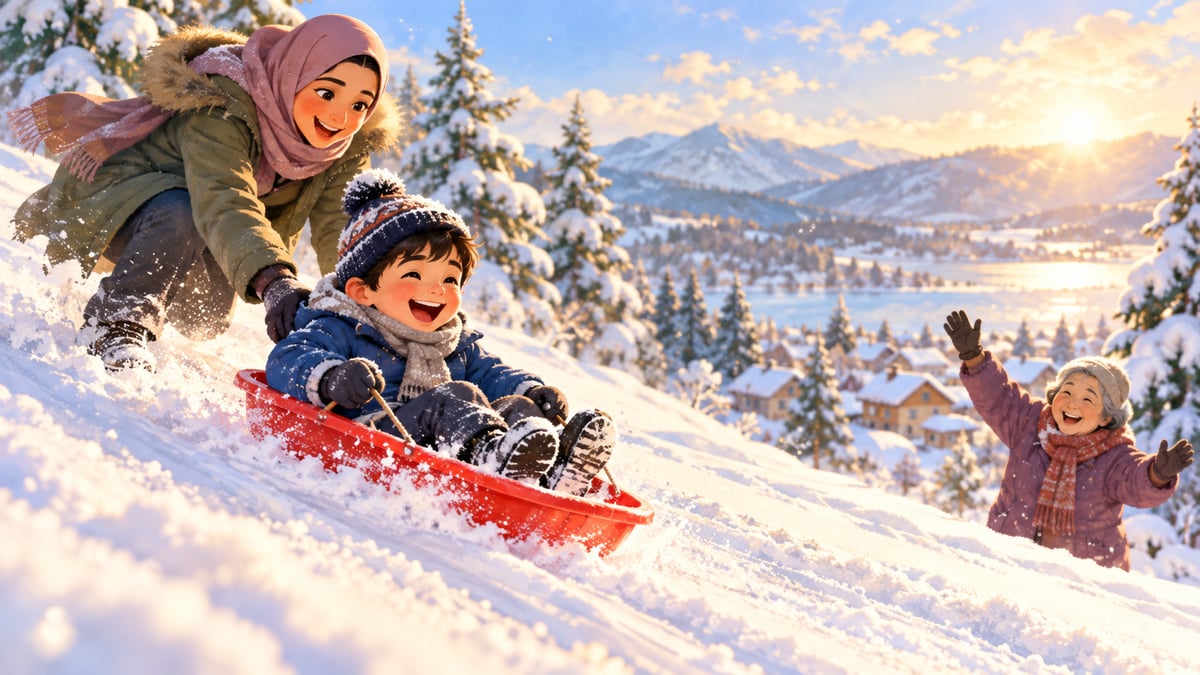
Sori asobi, sledding, needs only a slope and a plastic sled, and in snowy areas you will see families on every small hill after a fresh fall. The words are about taking turns, going fast and stopping safely. Parents shout warnings, children shout for a push, and someone always ends up in a snowdrift.
Ski resorts often have a separate area for sleds, and some do not allow sleds on the main slopes, so look for the family area.
| Japanese | Romaji | Meaning |
|---|---|---|
| そり滑り | sori suberi | sledding |
| 押して! | Oshite! | Push me! |
| 次、ぼくの番! | Tsugi, boku no ban! | My turn next! (a boy speaking) |
| 速い!止まらない! | Hayai! Tomaranai! | So fast! I can't stop! |
| 前に人がいるよ、危ない! | Mae ni hito ga iru yo, abunai! | There's someone in front, watch out! |
| もう一回! | Mō ikkai! | One more time! |
Kamakura and snow rabbits
Two snow crafts are especially Japanese. A kamakura is a dome-shaped snow hut, hollowed out from a big mound of packed snow. In snowy regions, children make small ones in their gardens, and some towns hold kamakura festivals; the one in Yokote, Akita, is the best known and is usually held in mid-February. Visitors sit inside, warm up and are sometimes offered sweet drinks or rice cakes.
A yuki usagi, snow rabbit, is a small oval of snow shaped like a crouching rabbit, often placed on a tray or a garden wall. Traditionally, the ears are two green leaves, often from the nandina shrub, and the eyes are two red berries.
| Japanese | Romaji | Meaning |
|---|---|---|
| かまくらの中は意外と暖かい。 | Kamakura no naka wa igai to atatakai. | It's surprisingly warm inside a kamakura. |
| 雪うさぎ | yuki usagi | a snow rabbit |
| 葉っぱで耳を作る | happa de mimi o tsukuru | to make the ears from leaves |
| 赤い実で目をつける | akai mi de me o tsukeru | to give it red berries for eyes |
Gear, cold hands and coming back inside
Snow play ends the same way everywhere: wet gloves, red noses and a hot drink. These are the words for the gear and the aftermath. Shimoyake, chilblains, is the itchy, swollen skin on fingers and toes that some people get after long hours in the cold, and Japanese parents warn children about it often.
| Japanese | Romaji | Meaning |
|---|---|---|
| 手袋がびしょびしょ。 | Tebukuro ga bishobisho. | My gloves are soaking wet. |
| 長靴 | nagagutsu | rubber boots |
| 鼻が真っ赤だよ。 | Hana ga makka da yo. | Your nose is bright red. |
| しもやけになるよ。 | Shimoyake ni naru yo. | You'll get chilblains. |
| 雪を払ってから入ってね。 | Yuki o haratte kara haitte ne. | Brush the snow off before you come in. |
| あったかいココア飲もう。 | Attakai kokoa nomō. | Let's have some hot cocoa. |
| ただいま!雪だるま、できたよ。 | Tadaima! Yukidaruma, dekita yo. | Child: I'm home! We finished the snowman. |
| おかえり。わあ、びしょびしょだね。 | Okaeri. Wā, bishobisho da ne. | Parent: Welcome back. Wow, you're soaked. |
| 楽しかった!明日もやりたい。 | Tanoshikatta! Ashita mo yaritai. | Child: That was fun! I want to do it again tomorrow. |
| じゃあ、手袋を乾かしておこうね。 | Jā, tebukuro o kawakashite okō ne. | Parent: Then let's dry your gloves for tomorrow. |
Common mistakes and loanwords
- Saying sunōman for a snowman in everyday talk. It is understood, but yukidaruma is the natural word.
- Using utsu, to hit or shoot, for throwing snowballs. The verb is nageru, to throw; being hit is ataru.
- Mixing sori (sled) with suki (like) or sukī (ski). Sori has a short o and a light r.
- Saying yuki ga takusan furimashita when you mean the snow has settled. For settled snow, use tsumoru: yuki ga tsumotta.
- Assuming kamakura means the city of Kamakura. Same sound, different word; the snow hut is usually written in hiragana.
- Loanwords you will hear in the snow: sukī, sunōbōdo, sukī uea (ski wear) and gurōbu (gloves for sport). Native words: sori, tebukuro, nagagutsu, yukidama.
Snow words, flashcards and a quick game
Ask Mocchi to make flashcards for the snow play words in this post with /create-flashcards, choosing photos that match each one: a snowman, a sled, a soggy glove. Then load your own deck into Kotoba Tank, where you hear a word and hit the right one, or Mocchi Flight, where you guide Mocchi through the right word gates. Mocchi follows your reviews with spaced repetition and remembers which snow words you keep missing, so they return just before you forget them.