
The four words of every competition
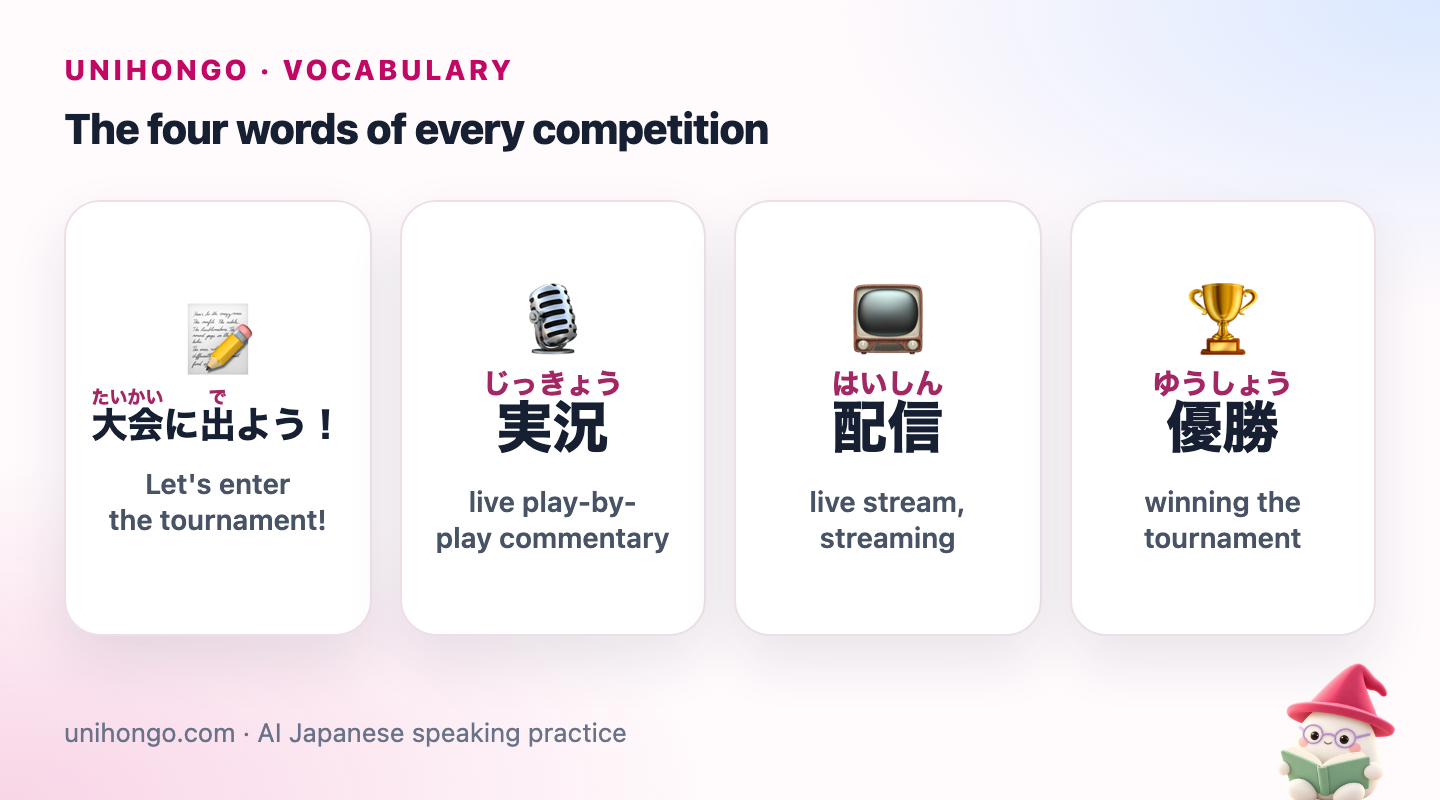
Esports tournaments use the same native vocabulary as traditional sport in Japan. A taikai is any tournament or competition. Jikkyō is the live commentary, and haishin is the stream that carries it. Yūshō, winning the whole tournament, is the word every team wants to hear, and yūshō omedetō! is the classic congratulation.
| Japanese | Romaji | Meaning |
|---|---|---|
| 大会に出よう! | Taikai ni deyō! | Let's enter the tournament! |
| 実況 | jikkyō | live play-by-play commentary |
| 配信 | haishin | live stream, streaming |
| 優勝 | yūshō | winning the tournament |
| 大会 | taikai | tournament, competition |
| 優勝おめでとう! | Yūshō omedetō! | Congratulations on the win! |
Taikai ni deru, to go out to a tournament, is the natural verb for entering or playing in one. Sanka suru, to participate, is the more formal choice on sign-up pages.
From qualifier to final
Tournament stages are named with native words that you will also hear for school sports and national championships. Learn them as a ladder: yosen, the qualifiers; honsen, the main event; junkesshō, the semi-final; and kesshō, the final. Coming second is jun'yūshō, runner-up.
| Japanese | Romaji | Meaning |
|---|---|---|
| 予選を突破しました! | Yosen o toppa shimashita! | We got through the qualifiers! |
| 決勝に進出 | kesshō ni shinshutsu | advancing to the final |
| 準優勝でした。 | Jun'yūshō deshita. | We came second. |
| 一回戦で負けちゃった。 | Ikkaisen de makechatta. | We lost in the first round. (casual) |
| オフライン大会 | ofurain taikai | in-person tournament |
| Stage | Japanese | Note |
|---|---|---|
| Qualifiers | yosen | Often online; yosen toppa means getting through |
| Main event | honsen | The tournament proper |
| Group stage | guruppu sutēji | Loanword, used as in English |
| Semi-final | junkesshō | jun means quasi or semi |
| Final | kesshō | kesshōsen is the final match |
| Runner-up | jun'yūshō | Second place in the tournament |
Ofurain taikai, offline tournament, means an event where players meet at a venue. The opposite is onrain taikai. Kaijō is the venue, and kansen is watching a match, so kaijō de kansen suru is watching live at the venue.
The broadcast: commentary, streams and clips
Japanese esports broadcasts are a big part of the culture, and their vocabulary appears all over social media. Besides jikkyō and kaisetsu, you will see haishinsha, streamer; shichōsha, viewers; and dōsetsu, short for dōji setsuzoku, the number of people watching at the same time. Ākaibu is the saved recording of a stream, and kirinuki are short clips cut from it.
Viewers react in the chat with short comments. Kami purei, god play, praises an incredible move, and the slang sugē is a casual, excited form of sugoi.
| Japanese | Romaji | Meaning |
|---|---|---|
| 解説 | kaisetsu | expert analysis, the analyst |
| 配信者 | haishinsha | streamer |
| 視聴者 | shichōsha | viewers |
| 同接 | dōsetsu | concurrent viewers |
| 切り抜き | kirinuki | clip from a stream |
| 神プレイ! | Kami purei! | God-tier play! |
| アーカイブで見ます。 | Ākaibu de mimasu. | I'll watch the recording. |
Describing a match
Match reports use a small set of words for how a game went. Sessen is a close match, asshō is a crushing win, and gyakuten is a comeback, one of the most exciting words in Japanese commentary. Ninzū yūri, a numbers advantage, comes up constantly in team shooters and battle games.
Tachimawari, literally moving around, is a very common word for a player's positioning and decision-making, and eimu is aim. A player with good tachimawari is in the right place at the right time.
| Japanese | Romaji | Meaning |
|---|---|---|
| 接戦 | sessen | close match |
| 圧勝 | asshō | crushing win |
| 大逆転! | Daigyakuten! | Huge comeback! |
| 人数有利 | ninzū yūri | numbers advantage |
| 立ち回りがうまい。 | Tachimawari ga umai. | Their positioning is great. |
| エイムがすごい。 | Eimu ga sugoi. | Their aim is incredible. |
Umai, skilful, is the everyday word for being good at a game; jōzu is also fine but sounds a little more formal. Among friends, umai is what you will hear.
Fighting games have a few words of their own. Kakugē is the short form of kakutō gēmu, fighting game, and taisen, a head-to-head match, is used for one-on-one games of every kind. Casual community meetups, where players gather just to play and chat, are often called kōryūkai, exchange gatherings, or ofukai, offline meetups.
Team calls in a competitive match
Voice chat in a ranked or tournament match uses short casual lines, said fast. They are plain forms and commands, which would sound blunt in daily life but are normal and expected in a match. Teammates often add onegai, please, to soften a request, especially with people they have just met.
When you meet new teammates, start with a polite greeting before the match and keep the calls short and clear during it. Long sentences in the middle of a fight help nobody.
| Japanese | Romaji | Meaning |
|---|---|---|
| 一人やった! | Hitori yatta! | One down! |
| あと一人! | Ato hitori! | One left! |
| 引いて! | Hiite! | Fall back! |
| 詰めよう! | Tsumeyō! | Let's push in! |
| カバーお願い! | Kabā onegai! | Cover me, please! |
| ごめん、やられた。 | Gomen, yarareta. | Sorry, I got taken out. |
| ナイス! | Naisu! | Nice! |
Yarareta, the passive of yaru, means I got got: an opponent took you out. It is the standard thing to say when you are eliminated, and gomen in front of it is a friendly apology to your team.
At an in-person event
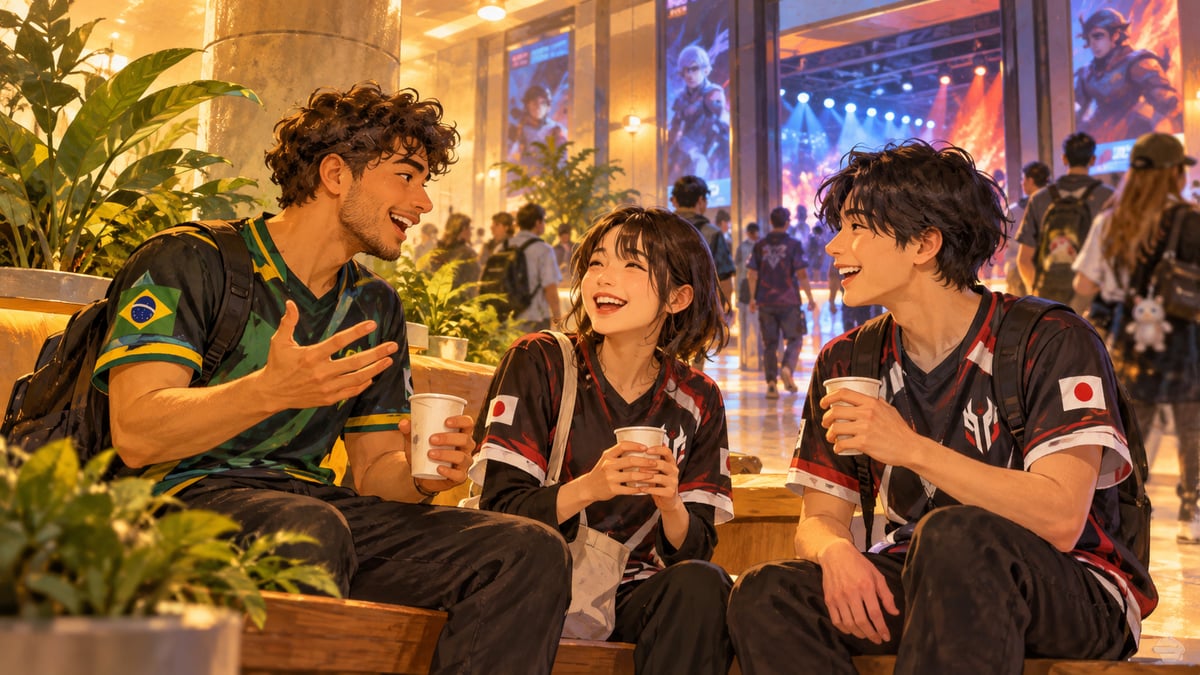
Offline tournaments and viewing events bring the community together. The atmosphere is often warm and enthusiastic, and fans cheer for both sides. If you go, the conversation with other fans is easy to start: who are you cheering for, and did you see that play?
| Japanese | Romaji | Meaning |
|---|---|---|
| どのチームを応援していますか。 | Dono chīmu o ōen shite imasu ka. | Which team are you supporting? |
| さっきの逆転、見ました? | Sakki no gyakuten, mimashita? | Did you see that comeback just now? |
| 会場の雰囲気がすごいですね。 | Kaijō no fun'iki ga sugoi desu ne. | The atmosphere in the venue is amazing. |
| 初めて会場で観戦します。 | Hajimete kaijō de kansen shimasu. | It's my first time watching live at a venue. |
Fair play and slang to recognise
Online chat in any language can get rough, and Japanese has its own vocabulary for it. Aori is taunting or provoking, bōgen is abusive language, and senpan is the harsh slang for the player blamed for a loss. Recognise these words so you understand what is happening, but do not use them. Many tournaments have rules against abusive language.
The respectful habits are simple: greet your team, thank them, and end the match with otsukaresama deshita, win or lose. Many players also type the English abbreviation for good game.
| Japanese | Romaji | Meaning |
|---|---|---|
| よろしくお願いします。 | Yoroshiku onegai shimasu. | Let's have a good game. (start of a match) |
| お疲れさまでした。 | Otsukaresama deshita. | Good game, thanks for playing. |
| 煽り | aori | taunting (avoid) |
| 暴言 | bōgen | abusive language (avoid) |
Learn commentary Japanese with Mocchi
Catch one line from a Japanese match broadcast and paste it to Mocchi with /explain. Mocchi splits it into words, names each particle and pattern and gives the meaning, so a fast commentator line becomes something you can say yourself. It remembers the words you looked up and can quiz you on them later with /review.
For listening speed, turn the team calls and tournament words into flashcards and play them in Listen & Pick, where you hear Japanese and choose the right answer: close to the split-second listening of a real match.
Common learner mistakes
- Saying shōri for winning a tournament. Shōri is a victory in one match; yūshō is winning the whole event.
- Using match calls like hiite! outside the game. They are blunt commands in daily life.
- Using senpan or aori words as jokes with new teammates. They can easily offend.
- Mixing up jikkyō and kaisetsu. One describes the action, the other explains it.
- Skipping the greeting before a match with strangers. A short yoroshiku onegai shimasu sets a friendly tone.