
What boketto means
Boketto is a mimetic word, one of the many Japanese words that describe a state through sound. It pictures someone whose eyes are open but whose mind is somewhere else. You use it with suru to make a verb, or with a verb such as tatsu, to stand, to say how someone is doing it.
Because it describes how someone looks from the outside, boketto is often used about other people: a student staring out of the classroom window, someone standing in the kitchen while the kettle boils over. About yourself, bōtto is the more usual choice.
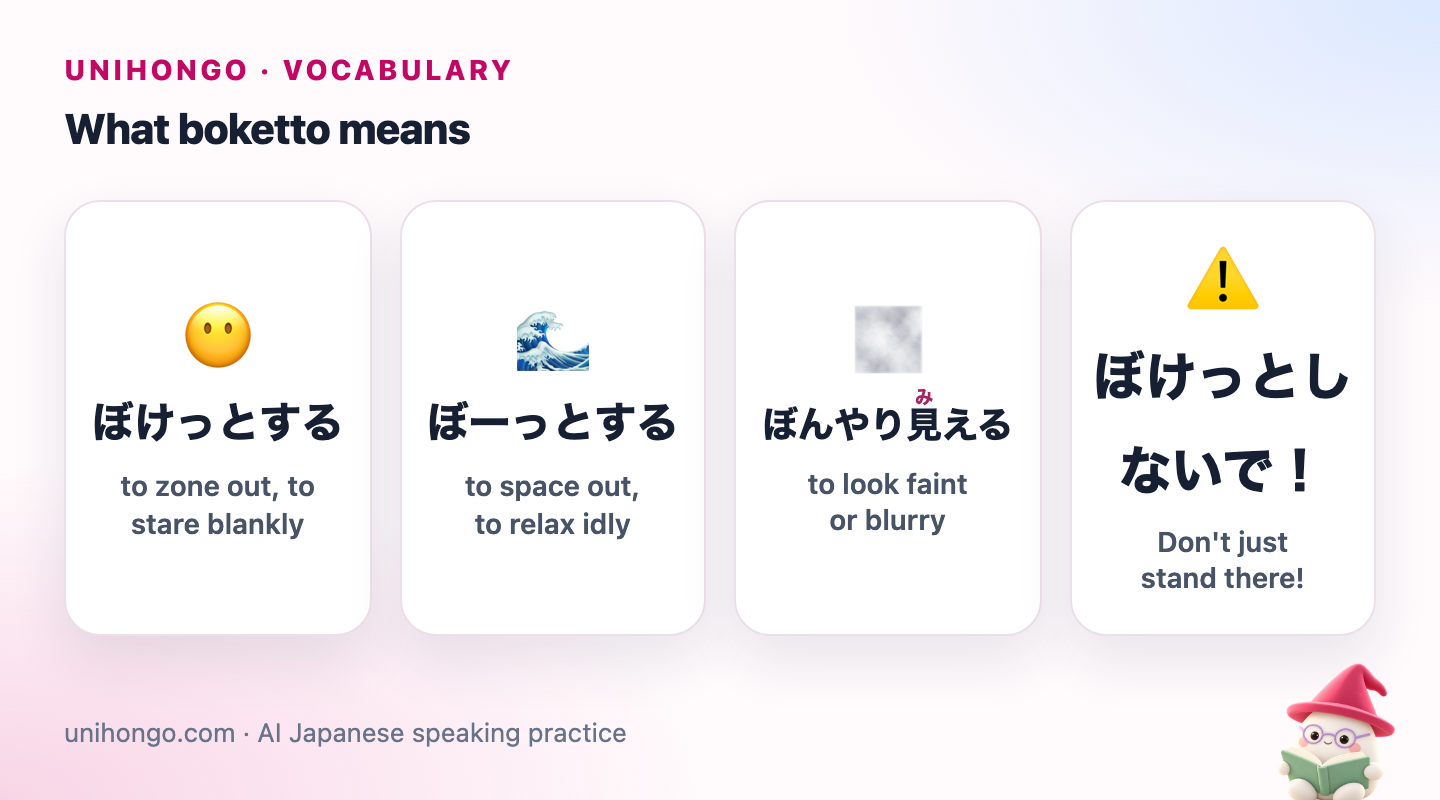
The same feeling is expressed by three closely related words. Here are the four lines that capture the whole picture.
| Japanese | Romaji | Meaning |
|---|---|---|
| ぼけっとする | boketto suru | to zone out, to stare blankly |
| ぼーっとする | bōtto suru | to space out, to relax idly |
| ぼんやり見える | bon'yari mieru | to look faint or blurry |
| ぼけっとしないで! | Boketto shinaide! | Don't just stand there! |
Boketto, bōtto and bon'yari
All three can describe a person who is not paying attention, but each has its own centre. If you learn only one, learn bōtto: it is the most common, the least judgemental and the one you need for tiredness and illness.
| Japanese | Romaji | Meaning |
|---|---|---|
| 授業中にぼけっとしていた。 | Jugyōchū ni boketto shite ita. | I was zoning out during class. |
| ちょっとぼーっとしてた。 | Chotto bōtto shiteta. | I was spacing out a bit. (casual) |
| 遠くに山がぼんやり見える。 | Tōku ni yama ga bon'yari mieru. | Mountains are faintly visible in the distance. |
| 子供のころのことはぼんやり覚えている。 | Kodomo no koro no koto wa bon'yari oboete iru. | I vaguely remember my childhood. |
| Word | Main feeling | Also used for |
|---|---|---|
| boketto | Looking vacant, a bit dazed | Standing around uselessly (criticism) |
| bōtto | Spacing out, mind blank | A foggy head from fever or no sleep |
| bon'yari | Absent-minded, dreamy | Faint, blurred shapes or memories |
Doing nothing on purpose
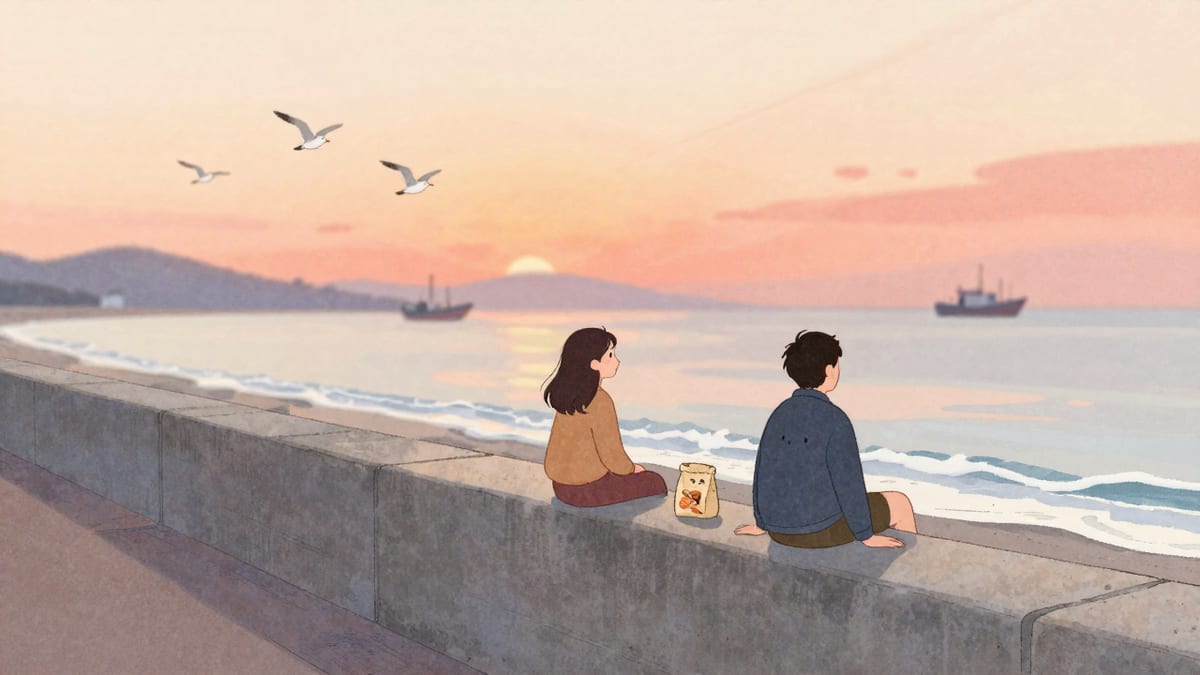
The image that made boketto famous abroad is the relaxed one: sitting by the sea, on a veranda or in a park, mind empty, time passing. In everyday speech this is usually bōtto, and many Japanese people say it with real pleasure, because a busy life makes a quiet hour feel precious. Bōtto suru jikan, time to space out, is something people say they need.
Some writing abroad presents boketto as a kind of Japanese mindfulness. It is a pleasant image, but most Japanese speakers would not call it a practice; it is simply switching off. If you want a positive word for slowing down on purpose, nonbiri suru, to take it easy, is the everyday choice.
If you want to tell a friend how you spent a lazy weekend, these lines sound natural and positive.
| Japanese | Romaji | Meaning |
|---|---|---|
| 海を見ながらぼーっとするのが好き。 | Umi o minagara bōtto suru no ga suki. | I love spacing out while watching the sea. |
| 休みの日はぼーっと過ごしたい。 | Yasumi no hi wa bōtto sugoshitai. | On my day off, I want to do nothing at all. |
| 週末は家でぼーっとしていました。 | Shūmatsu wa ie de bōtto shite imashita. | I just relaxed at home over the weekend. (polite) |
| たまにはぼーっとする時間も大事だよ。 | Tama ni wa bōtto suru jikan mo daiji da yo. | Time to do nothing matters too, now and then. |
| 温泉でのんびりしたい。 | Onsen de nonbiri shitai. | I want to take it easy at a hot spring. |
Don't just stand there: the critical side
Boketto is the word most likely to come with a sigh. Parents use it with children, older siblings with younger ones, and friends with each other when someone is daydreaming while there is work to do. Nani boketto shiteru no? is literally what are you zoning out for, and it means come on, pay attention.
Between close people it is everyday banter. Said to a colleague or a stranger it would sound bossy, so keep it for family and friends, and use a softer chotto, tetsudatte moraeru? when you need help.
| Japanese | Romaji | Meaning |
|---|---|---|
| ぼけっとしてないで手伝って。 | Boketto shitenaide tetsudatte. | Don't just stand there, help me. (casual) |
| 何ぼけっとしてるの? | Nani boketto shiteru no? | What are you staring into space for? (casual) |
| ごめん、ぼーっとしてた。 | Gomen, bōtto shiteta. | Sorry, I was miles away. (casual) |
| すみません、ぼんやりしていました。 | Sumimasen, bon'yari shite imashita. | I'm sorry, I wasn't paying attention. (polite) |
When your head feels foggy
Bōtto is also the everyday word for the cloudy, slow feeling of a fever, jet lag, too little sleep or a very hot day. You will hear it at clinics and pharmacies, and it is a useful word to describe symptoms. Bon'yari works here too, especially in polite speech.
| Japanese | Romaji | Meaning |
|---|---|---|
| 熱で頭がぼーっとします。 | Netsu de atama ga bōtto shimasu. | My head feels foggy from the fever. |
| 寝不足でぼーっとしている。 | Nebusoku de bōtto shite iru. | I'm out of it from lack of sleep. |
| ぼーっとしてて、駅を乗り過ごした。 | Bōtto shitete, eki o norisugoshita. | I was spacing out and missed my stop. |
| 朝はいつもぼんやりしています。 | Asa wa itsumo bon'yari shite imasu. | I'm always half asleep in the morning. |
Careful with boke and bokeru
Boketto sounds close to the verb bokeru and the noun boke, and many speakers feel a family link, but these words have uses of their own. Bokeru describes a photo that is out of focus, which is harmless. In comedy, boke is the funny one in a manzai duo, the partner who says silly things, while the tsukkomi corrects them.
Bokeru is also used for forgetfulness or confusion, especially in old age, and calling someone boke can be a real insult; in some regions, especially in Kansai, it is also used in rough banter. As a learner, keep boke for photos and comedy.
| Japanese | Romaji | Meaning |
|---|---|---|
| 写真がぼけている。 | Shashin ga bokete iru. | The photo is out of focus. |
| ボケとツッコミ | boke to tsukkomi | the funny one and the straight man |
| 時差ぼけがひどい。 | Jisaboke ga hidoi. | My jet lag is terrible. |
Jisaboke, jet lag, is an everyday word and perfectly safe: it literally means the fogginess of a time difference.
Mini dialogue: caught spacing out
| Japanese | Romaji | Meaning |
|---|---|---|
| ねえ、聞いてる? | Nē, kiiteru? | Friend: Hey, are you listening? |
| あ、ごめん。ちょっとぼーっとしてた。 | A, gomen. Chotto bōtto shiteta. | You: Oh, sorry. I was spacing out a bit. |
| 疲れてるんじゃない? | Tsukareteru n ja nai? | Friend: Aren't you tired? |
| うん、昨日あまり寝てなくて。 | Un, kinō amari netenakute. | You: Yeah, I didn't sleep much last night. |
| じゃあ、今日は早く帰ってぼーっとしなよ。 | Jā, kyō wa hayaku kaette bōtto shina yo. | Friend: Then go home early and just do nothing. |
Hear the long vowel with Mocchi
Paste Boketto shitenaide tetsudatte into Mocchi with /explain. Mocchi splits it into chunks, names the te form and the shinaide pattern, and gives the meaning, and it keeps a note of any part you ask about twice, so a later quiz checks it.
Then open the pronunciation coach and pick a long-vowel drill. Hearing the stretched ō in bōtto next to a short vowel, slowed down, and seeing your own score helps you say bōtto, not botto, which sounds like a different word.
Common learner mistakes
- Using boketto to apologise. Say gomen, bōtto shiteta; boketto sounds like a judgement.
- Telling a colleague boketto shinaide. It is family-and-friends language; at work, ask for help directly and politely.
- Shortening bōtto to botto. The long vowel matters, so hold the ō.
- Using boke as a cute word for someone sleepy. It can be hurtful; use nemui or bōtto shite iru instead.
- Expecting boketto to mean meditation. It is closer to switching off than to a mindful practice.