
Komaru meaning: stuck, at a loss, inconvenienced
Komaru describes being in a position where something is not working and you are not sure what to do. It covers small problems, such as a jammed printer, and bigger ones, such as having nowhere to stay. The cause is usually marked with -te or de: ame de komatta, I was stuck because of the rain.
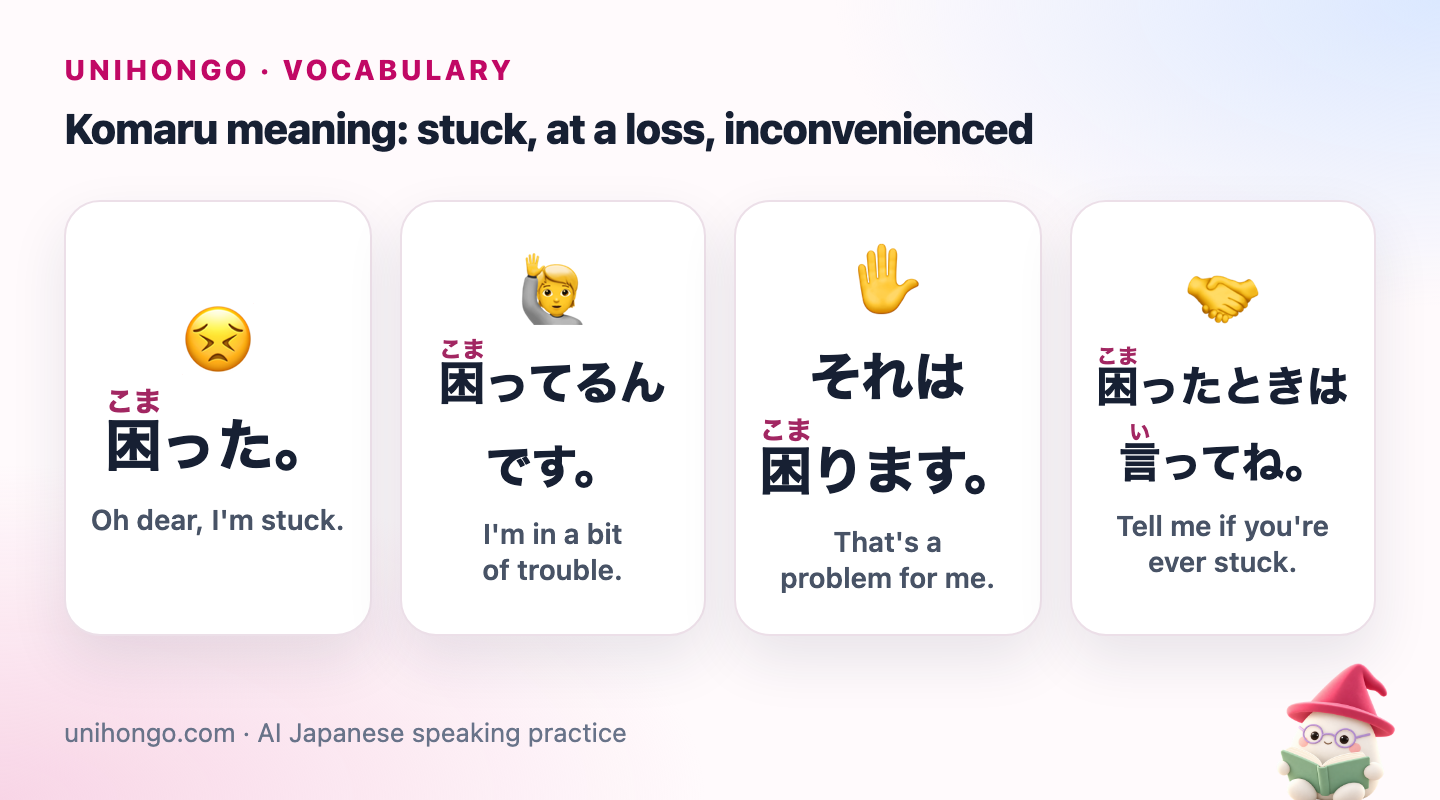
These four lines show the shape of the word in daily life: a mutter, a request, a refusal and an offer.
| Japanese | Romaji | Meaning |
|---|---|---|
| 困った。 | Komatta. | Oh dear, I'm stuck. |
| 困ってるんです。 | Komatteru n desu. | I'm in a bit of trouble. |
| それは困ります。 | Sore wa komarimasu. | That's a problem for me. |
| 困ったときは言ってね。 | Komatta toki wa itte ne. | Tell me if you're ever stuck. |
The first two are about you, the third is about what someone else is doing, and the fourth is about helping. One verb covers all four sides of a problem.
Komatta and komatta nā: thinking aloud
Like dō shiyō, komatta is often said to yourself. It is quieter and calmer: less panic, more sigh. Komatta nā, with a long, falling nā, is the classic mutter of someone scratching their head over a problem. People nearby may well hear it and ask if you are all right, which is part of how it works.
Komatta na is also used for gentle exasperation with someone: komatta ko da ne, what a handful of a child.
| Japanese | Romaji | Meaning |
|---|---|---|
| 困ったなあ。 | Komatta nā. | What a pickle. |
| 困ったな、傘を忘れた。 | Komatta na, kasa o wasureta. | Oh dear, I forgot my umbrella. |
| どうしよう、困った。 | Dō shiyō, komatta. | What do I do? I'm stuck. |
| どうしたんですか。 | Dō shita n desu ka. | Passer-by: Is something wrong? |
Komatteru n desu: asking for help without demanding
When you need help from a stranger, a neighbour or staff, describing your trouble is often softer than asking directly. The pattern is: sumimasen, then the problem in -te form, then komatteru n desu or the more polite komatte iru n desu. The n desu explains your situation and invites the listener to offer help, so you rarely need to add please help me.
| Japanese | Romaji | Meaning |
|---|---|---|
| すみません、ちょっと困っているんですが… | Sumimasen, chotto komatte iru n desu ga... | Excuse me, I'm in a bit of trouble... |
| 鍵が開かなくて困ってるんです。 | Kagi ga akanakute komatteru n desu. | My key won't work and I'm stuck. |
| 道がわからなくて困っています。 | Michi ga wakaranakute komatte imasu. | I'm lost and not sure what to do. |
| 何かお困りですか。 | Nanika okomari desu ka. | Staff: Is there anything I can help with? |
Nanika okomari desu ka is the polite question staff and helpful strangers use. Okomari is the respectful form of komari, so you will hear it but never use it about yourself.
Sore wa komarimasu: the polite, firm no
Komarimasu about someone else's action is a polite way to say please don't. It avoids a direct command, but the meaning is unmistakable. Shop staff, landlords and neighbours use it, and so can you, for example if a delivery is left in the wrong place or someone wants to change a plan at the last minute.
Say it calmly, with chotto to soften it and a reason to make it fair. It is strong enough that you should not use it for small preferences.
| Japanese | Romaji | Meaning |
|---|---|---|
| ここに置かれると困ります。 | Koko ni okareru to komarimasu. | Please don't leave things here. |
| 今から変更は、ちょっと困ります。 | Ima kara henkō wa, chotto komarimasu. | Changing it now would be difficult for us. |
| 急に言われても困ります。 | Kyū ni iwarete mo komarimasu. | You can't just spring that on me. |
Offering help: komatta toki wa
The kindest use of komaru is an offer. Komatta toki wa itte ne, tell me when you are stuck, is something Japanese friends, coworkers and neighbours say to newcomers, and it is meant sincerely. Nanika komatta koto ga attara, if anything ever troubles you, is a slightly fuller version.
| Japanese | Romaji | Meaning |
|---|---|---|
| 何か困ったことがあったら、いつでも言ってください。 | Nanika komatta koto ga attara, itsudemo itte kudasai. | If anything comes up, just tell me any time. |
| 困ったときはお互い様だよ。 | Komatta toki wa otagaisama da yo. | We all need help sometimes. |
| ありがとうございます。心強いです。 | Arigatō gozaimasu. Kokorozuyoi desu. | Thank you. That's reassuring. |
Otagaisama means it is the same for both of us. The phrase komatta toki wa otagaisama is a well-known saying about helping each other, and it is a lovely thing to say when you help someone yourself.
Komaru and its neighbours, plus common mistakes
| Word | What it describes | Example situation |
|---|---|---|
| komaru (困る) | Being stuck or inconvenienced | Your key will not turn |
| taihen (大変) | How hard or serious something is | A lost passport, a busy week |
| nayamu (悩む) | Worrying over a choice or problem | Deciding whether to change jobs |
| mendō (面倒) | Something tiresome or a hassle | Filling in forms again |
- Using komaru for physical pain or illness. Use itai, it hurts, or kimochi ga warui, I feel sick.
- Saying komatte imasu to a friend's feelings. I'm troubled by what you said sounds formal and cold; say chotto kizutsuita, that hurt a bit, if that is what you mean.
- Confusing komatta hito, a difficult person, with a person in trouble. For the second, say komatte iru hito.
- Using sore wa komarimasu for minor preferences, which sounds harsh. Say ... no hō ga ii n desu ga, I'd prefer ..., instead.
Komaru for dilemmas and awkward questions
Komaru does not always mean something has gone wrong. It also describes being torn between options or not knowing how to respond. Dotchi mo ii kara komaru means they are both good, so I'm stuck. Henji ni komaru means not knowing how to answer, for example when someone asks a question that is too personal or a compliment is too big.
A komatta kao, a troubled face, is the look of someone who does not want to say no directly. Learning to read it is as useful as learning the word.
| Japanese | Romaji | Meaning |
|---|---|---|
| どっちもいいから困るなあ。 | Dotchi mo ii kara komaru nā. | They're both good, so I'm torn. |
| その質問は、答えに困りますね。 | Sono shitsumon wa, kotae ni komarimasu ne. | That's a hard question to answer. |
| 彼は困った顔をしていた。 | Kare wa komatta kao o shite ita. | He had a troubled look on his face. |
| そんなに褒められると困ります。 | Sonna ni homerareru to komarimasu. | You're embarrassing me with all that praise. |
The last line is a modest, slightly shy reaction to a big compliment. Here komaru is not a complaint; it shows you do not know what to do with so much praise.
Mini dialogue: your key is stuck
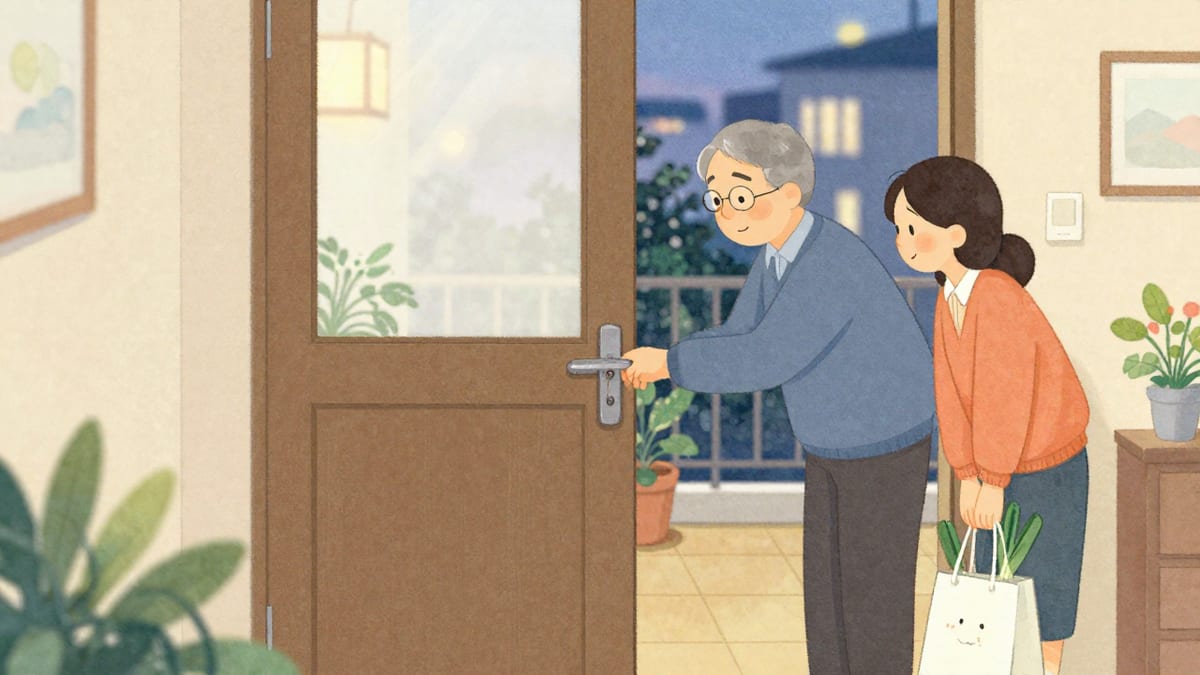
You come home late, and your key turns halfway and then stops. The neighbour next door, whom you have greeted a few times, is just coming out. You explain your trouble with komaru and let them help.
| Japanese | Romaji | Meaning |
|---|---|---|
| あの、すみません。 | Ano, sumimasen. | You: Um, excuse me. |
| 鍵が回らなくて、困ってるんです。 | Kagi ga mawaranakute, komatteru n desu. | You: My key won't turn, and I'm stuck. |
| ああ、それは困りましたね。 | Ā, sore wa komarimashita ne. | Neighbour: Oh, that's a nuisance. |
| このドア、少し持ち上げると開きますよ。 | Kono doa, sukoshi mochiageru to akimasu yo. | Neighbour: Lift this door a little and it opens. |
| あ、開きました!助かりました。 | A, akimashita! Tasukarimashita. | You: Oh, it opened! You saved me. |
| 困ったときは、いつでもどうぞ。 | Komatta toki wa, itsudemo dōzo. | Neighbour: Any time you're stuck. |