
What anshin means
Anshin describes a heart that has stopped worrying. It can be the sudden relief when good news arrives, or a steady feeling of trust, such as knowing your child is with a good teacher. It works as a noun, a suru verb and a na-adjective.
You will also meet anshin in advertising and on packaging, because businesses want customers to feel at ease: anshin shite otsukai itadakemasu, you can use it with confidence, is a typical line. It is the same feeling, offered as a promise.
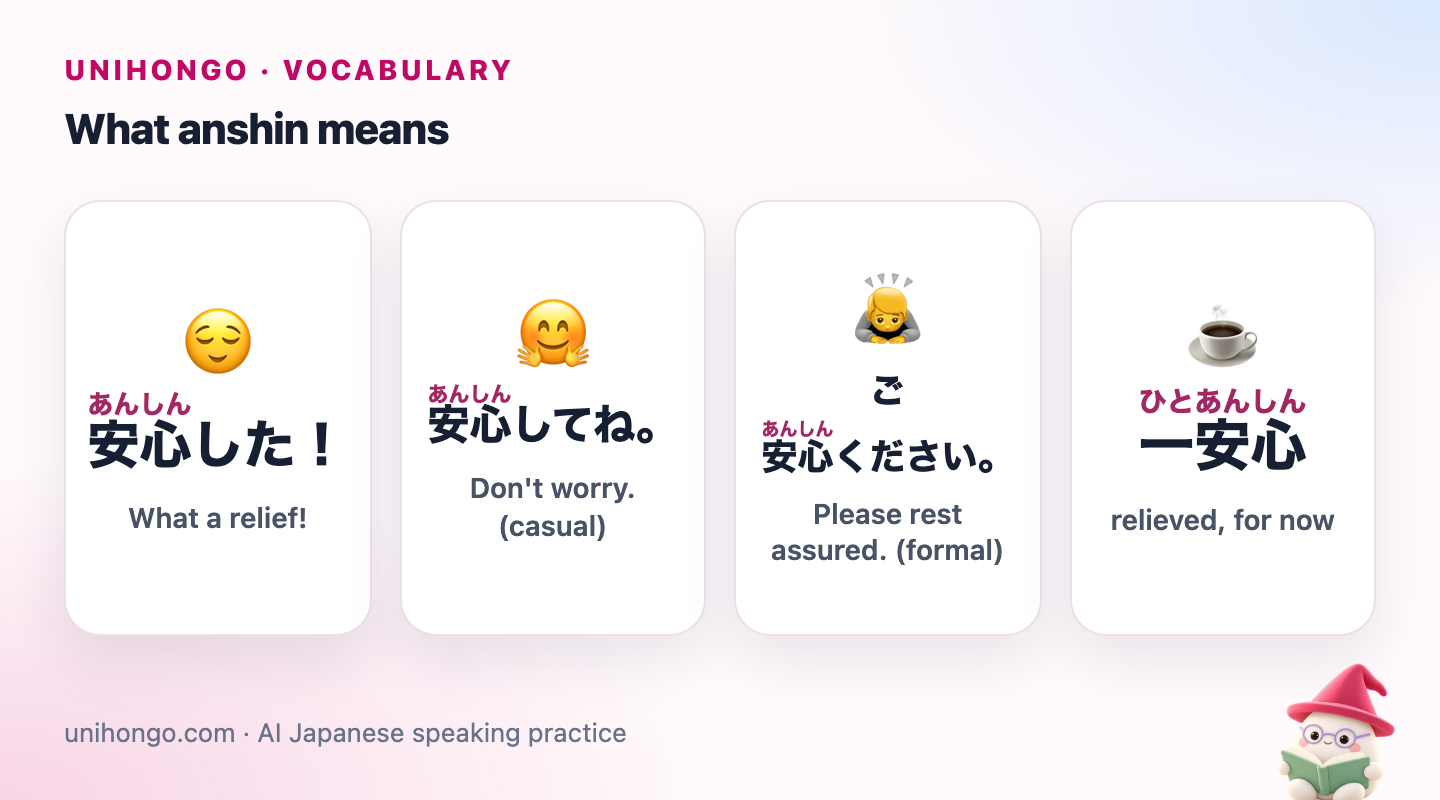
These four lines are the ones you will use and hear most.
| Japanese | Romaji | Meaning |
|---|---|---|
| 安心した! | Anshin shita! | What a relief! |
| 安心してね。 | Anshin shite ne. | Don't worry. (casual) |
| ご安心ください。 | Go anshin kudasai. | Please rest assured. (formal) |
| 一安心 | hitoanshin | relieved, for now |
The kanji and the three grammar shapes
安 means calm or peaceful, and also cheap in yasui, while 心 is heart. As a verb, anshin suru means to feel relieved or at ease. As a na-adjective, anshin da describes something that gives peace of mind, such as a reliable shop or a well-lit street. And anshinkan, the sense of security, is a common noun in reviews and advertising.
| Japanese | Romaji | Meaning |
|---|---|---|
| 結果を聞いて安心しました。 | Kekka o kiite anshin shimashita. | I was relieved to hear the results. |
| この店なら安心だ。 | Kono mise nara anshin da. | If it's this shop, I can trust it. |
| 駅から近いので安心です。 | Eki kara chikai node anshin desu. | It's close to the station, so I feel at ease. |
| 安心感がある。 | Anshinkan ga aru. | It gives you a sense of security. |
| 安心して使えます。 | Anshin shite tsukaemasu. | You can use it with peace of mind. |
Anshin versus anzen
This is the pair learners mix up most. Anzen (安全) is safety as a fact: a place, a product or a procedure is safe. Anshin is the feeling. A place can be anzen and still not make you feel anshin, for example a quiet street at night in a new city. Businesses often promise both in one phrase, anshin anzen or anzen anshin.
| Japanese | Romaji | Meaning |
|---|---|---|
| この地域は安全です。 | Kono chiiki wa anzen desu. | This area is safe. |
| 安全だけど、夜一人だと安心できない。 | Anzen da kedo, yoru hitori da to anshin dekinai. | It's safe, but alone at night I don't feel at ease. |
| 安心・安全な食材 | anshin anzen na shokuzai | safe and trustworthy ingredients |
| Word | What it describes | Example |
|---|---|---|
| anzen (安全) | Objective safety | A safe area, a safe product |
| anshin (安心) | The feeling of being at ease | Relief, trust, peace of mind |
| anshin anzen | Safe and reassuring together | A common phrase in services and food |
Reassuring someone, from casual to formal
When someone is worried, anshin gives you a gentle way to calm them. With friends and family, anshin shite or the even softer daijōbu da yo is enough. With colleagues, add desu yo or kudasai. In customer service, staff use go anshin kudasai, with the honorific go, and you will hear it at banks, hotels and clinics.
Reassurance sounds kindest with a reason: tell people why they can relax, not only that they should.
At a clinic, staff may say anshin shite kudasai ne before a test or an injection, with a soft ne that makes it gentle. A natural reply is a thank-you, and if you feel better, you can say so.
| Japanese | Romaji | Meaning |
|---|---|---|
| 大丈夫だよ、安心して。 | Daijōbu da yo, anshin shite. | It's fine, don't worry. (casual) |
| 心配しないで。 | Shinpai shinaide. | Don't worry. (casual) |
| もう予約しましたから、安心してください。 | Mō yoyaku shimashita kara, anshin shite kudasai. | I've already booked it, so don't worry. (polite) |
| お荷物はこちらでお預かりしますので、ご安心ください。 | Onimotsu wa kochira de oazukari shimasu node, go anshin kudasai. | Staff: We'll keep your luggage, so please rest assured. |
| ありがとうございます。少し安心しました。 | Arigatō gozaimasu. Sukoshi anshin shimashita. | Thank you. I feel a little better now. |
Saying you are relieved
When someone shares their relief with you, share it back: yokatta ne, I'm glad, or hontō ni yokatta desu ne in polite speech. If you had been worried about them, add watashi mo anshin shimashita, I'm relieved too. A flat sō desu ka in reply can sound cold.
Anshin shita is the everyday way to say you are relieved, often with a reason before it in the te form. Hotto shita, from the sound of a sigh, is just as common and even more casual. Yokatta, that's good, often comes with both. Hitoanshin is the relief of the first step: one worry is gone, but the matter is not finished.
| Japanese | Romaji | Meaning |
|---|---|---|
| 無事に着いて安心した。 | Buji ni tsuite anshin shita. | I'm relieved you arrived safely. |
| 財布が見つかって、ほっとした。 | Saifu ga mitsukatte, hotto shita. | I found my wallet, what a relief. |
| よかった、安心しました。 | Yokatta, anshin shimashita. | Oh good, I'm so relieved. (polite) |
| 一次試験に受かって、一安心です。 | Ichiji shiken ni ukatte, hitoanshin desu. | I passed the first exam, so I can relax for now. |
The opposite feelings: fuan, shinpai and yudan
Fuan (不安) is anxiety, the absence of anshin, and like anshin it works as a noun and a na-adjective: fuan na kimochi is an uneasy feeling, and fuan ni naru is to start feeling anxious. Shinpai (心配) is worry about something specific, often about another person. And there is a warning built into the language: feeling too relaxed can become yudan, carelessness, which is why people say it is too early to feel relieved.
| Japanese | Romaji | Meaning |
|---|---|---|
| 新しい仕事が不安です。 | Atarashii shigoto ga fuan desu. | I'm anxious about my new job. |
| 母が心配しています。 | Haha ga shinpai shite imasu. | My mother is worried. |
| 安心するのはまだ早いよ。 | Anshin suru no wa mada hayai yo. | It's too early to relax. (casual) |
| 油断しないでね。 | Yudan shinaide ne. | Don't let your guard down. (casual) |
Mini dialogue: after the doctor's appointment
| Japanese | Romaji | Meaning |
|---|---|---|
| 病院、どうだった? | Byōin, dō datta? | Friend: How did it go at the hospital? |
| ただの風邪だって。 | Tada no kaze datte. | You: They said it's just a cold. |
| よかった!安心したよ。 | Yokatta! Anshin shita yo. | Friend: Oh good! I'm so relieved. |
| 心配かけてごめんね。 | Shinpai kakete gomen ne. | You: Sorry for making you worry. |
| ううん。ゆっくり休んでね。 | Uun. Yukkuri yasunde ne. | Friend: Not at all. Get some good rest. |
Settle anshin and anzen with Mocchi
Ask Mocchi to /quiz you on anshin versus anzen with ten short sentences. Mocchi explains each answer, keeps track of the pair if you keep mixing it up, and folds a quick check into your next review so it does not drift back.
Then open Sentence Builder and put the chunks of Onimotsu wa kochira de oazukari shimasu node, go anshin kudasai in order. Building the polite reassurance piece by piece makes the long formal line feel much less scary.
Common learner mistakes
- Saying anzen desu when you mean you feel relieved. Use anshin shimashita for the feeling.
- Using go anshin kudasai with friends. It is customer-service language and sounds stiff among friends.
- Forgetting the reason. Anshin shite kudasai alone can sound empty; add why with kara or node.
- Answering someone's relief with a plain sō desu ka. Share the feeling with yokatta desu ne.
- Using anshin for calm in general. If you mean someone is calm by nature, use ochitsuite iru.
- Missing hitoanshin. It is the precise word for relief after the first hurdle, and it sounds very natural.