
Nantoka naru meaning: somehow, it becomes okay
Nantoka (なんとか, 何とか) means somehow or one way or another: there is no clear method yet, but a result will be reached. Naru means to become. Nantoka naru, then, is it will become something workable: it'll work out.
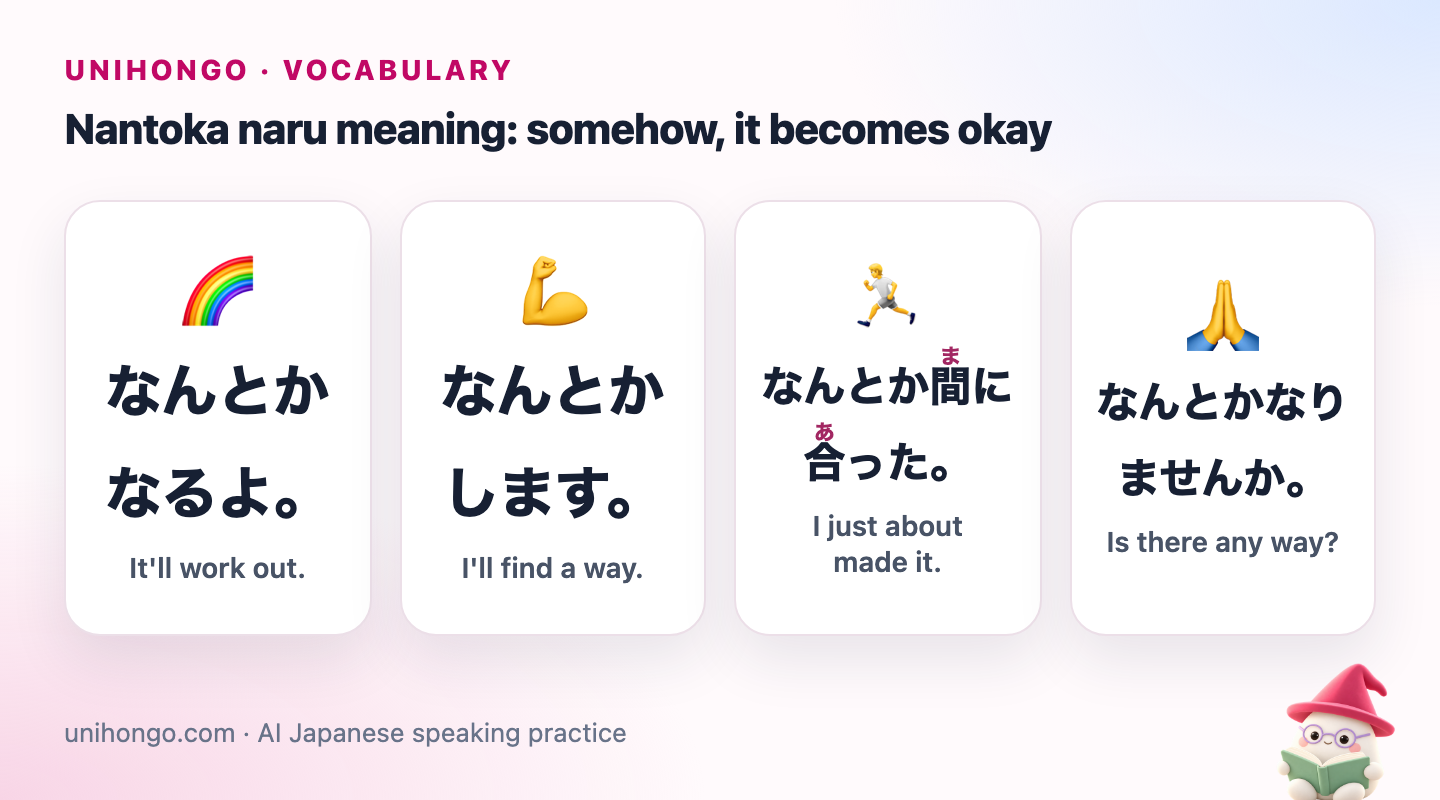
Swap the verb or the tense and you get the rest of the family. These four lines are the ones you will hear most.
| Japanese | Romaji | Meaning |
|---|---|---|
| なんとかなるよ。 | Nantoka naru yo. | It'll work out. |
| なんとかします。 | Nantoka shimasu. | I'll find a way. |
| なんとか間に合った。 | Nantoka maniatta. | I just about made it. |
| なんとかなりませんか。 | Nantoka narimasen ka. | Is there any way? |
Naru describes things working out by themselves; suru describes you making them work. That small switch, from naru to suru, changes the message from don't worry to leave it to me.
Nantoka naru as reassurance and as a motto
Among friends, nantoka naru yo is a gentle way to calm someone down. It does not deny the problem; it says the problem is survivable. Nantoka naru sa, with the casual sa, sounds breezy and is often used about your own situation. Mā, nantoka naru deshō, well, I suppose it'll work out, is a relaxed, slightly resigned version.
Many people describe nantoka naru as their life motto, and the phrase is often linked to an easy-going outlook. Like any motto, it suits some situations better than others.
| Japanese | Romaji | Meaning |
|---|---|---|
| 大丈夫、なんとかなるって。 | Daijōbu, nantoka naru tte. | It's fine, it'll work out, I'm telling you. |
| まあ、なんとかなるでしょう。 | Mā, nantoka naru deshō. | Well, I'm sure it'll work out. |
| 人生、なんとかなるさ。 | Jinsei, nantoka naru sa. | Life works out somehow. |
| なんとかなると思うよ。 | Nantoka naru to omou yo. | I think it'll be okay. |
Nantoka suru: 'I'll manage it'
With suru, nantoka becomes an active promise. Nantoka suru yo, I'll sort it out, takes responsibility in a casual way, and nantoka shimasu is the polite version used at work. Nantoka shite! turns it around into a demand: do something!
In business, nantoka shimasu sounds committed but vague. Colleagues may appreciate the spirit but still ask how. If you can, follow it with what you will do and when.
| Japanese | Romaji | Meaning |
|---|---|---|
| 私がなんとかするよ。 | Watashi ga nantoka suru yo. | I'll sort it out. |
| 明日までになんとかします。 | Ashita made ni nantoka shimasu. | I'll get it done by tomorrow somehow. |
| お願い、なんとかして! | Onegai, nantoka shite! | Please, do something! |
| なんとかしないと。 | Nantoka shinai to. | I have to do something about it. |
Nantoka with a past tense: just about made it
Put nantoka before a verb in the past, and it tells a story of narrow success: it was hard, it nearly went wrong, but you managed. This is the use you will hear most in everyday chat, about trains, deadlines, exams and money. It is modest, because it credits the result to luck and effort rather than skill.
Nantoka yatte(i)masu, I'm getting by, is a classic modest answer to how are things?
| Japanese | Romaji | Meaning |
|---|---|---|
| 終電になんとか間に合った。 | Shūden ni nantoka maniatta. | I just made the last train. |
| 試験、なんとか合格しました。 | Shiken, nantoka gōkaku shimashita. | I managed to pass the exam. |
| 仕事はなんとか終わった。 | Shigoto wa nantoka owatta. | I somehow finished the work. |
| おかげさまで、なんとかやってます。 | Okagesama de, nantoka yattemasu. | Thanks for asking, I'm getting by. |
Okagesama de literally thanks the listener and everyone else for their support. Together with nantoka yattemasu, it is a humble, warm answer that suits neighbours, colleagues and older people.
Nantoka narimasen ka: the polite plea
When the official answer is no, nantoka narimasen ka asks gently whether there might be a way after all. You hear it at hotel desks, ticket counters and offices, often after an apology. Nantoka naranai deshō ka is softer still. Soko o nantoka, literally that part, somehow, is a pleading phrase used when you know you are asking a lot.
Use it with respect. Explain your situation first, accept the answer if it is still no, and thank the person either way.
| Japanese | Romaji | Meaning |
|---|---|---|
| 今日、なんとか泊まれませんか。 | Kyō, nantoka tomaremasen ka. | Is there any way I could stay tonight? |
| なんとかならないでしょうか。 | Nantoka naranai deshō ka. | Might there be some way? (very polite) |
| そこをなんとか、お願いします。 | Soko o nantoka, onegai shimasu. | I know it's hard, but please. |
| 無理を言ってすみません。 | Muri o itte sumimasen. | Sorry for asking so much. |
Nantoka as 'so-and-so' and common mistakes
Nantoka also fills a gap where a word has slipped your mind, like whatsit or so-and-so in English. Tanaka nantoka-san is Mr Tanaka something-or-other, and ... toka nantoka is or something like that at the end of a quote.
| Japanese | Romaji | Meaning |
|---|---|---|
| 田中なんとかさんから電話があったよ。 | Tanaka nantoka-san kara denwa ga atta yo. | A Mr Tanaka-something phoned you. |
| 忙しいとかなんとか言ってた。 | Isogashii toka nantoka itteta. | He said he was busy or something. |
- Saying nantoka naru about your own unfinished work to a boss. It sounds like you are not worried enough. Nantoka shimasu, plus a plan, is better.
- Confusing nantoka with nantonaku. Nantoka is somehow, managing; nantonaku is for no particular reason.
- Using nantoka narimasen ka as your first sentence. Explain the situation and apologise first, then ask.
- Saying nantoka naru before a friend has finished explaining a serious worry. Listen first; reassurance that comes too early can sound dismissive.
Nantoka narisō, nantoka naranai: will it work out?
Nantoka naru also changes shape to show how hopeful you are. Nantoka narisō means it looks like it will work out, a cautious good-news update. Nantoka naranai? asks whether there is any way, in casual speech. Dō ni mo naranai, nothing will help, is the gloomy opposite.
If a friend reassures you with nantoka naru yo and you are not convinced, you can push back gently: sō kantan ni iu kedo, easy for you to say. Said with a smile, it is friendly; said flatly, it shows you feel dismissed.
| Japanese | Romaji | Meaning |
|---|---|---|
| なんとかなりそう。 | Nantoka narisō. | Looks like it'll work out. |
| これ、なんとかならない? | Kore, nantoka naranai? | Is there any way to fix this? |
| もうどうにもならないよ。 | Mō dō ni mo naranai yo. | There's nothing we can do now. |
| 簡単に言うけどさ。 | Kantan ni iu kedo sa. | Easy for you to say. |
Mini dialogue: the exam is tomorrow
Your friend has an important exam tomorrow and is convinced it will go badly. You listen, remind them of their effort, and reassure them with nantoka naru.

| Japanese | Romaji | Meaning |
|---|---|---|
| 明日の試験、絶対だめだ… | Ashita no shiken, zettai dame da... | Friend: Tomorrow's exam is going to be a disaster... |
| そんなことないよ。毎日勉強してたじゃん。 | Sonna koto nai yo. Mainichi benkyō shiteta jan. | You: No way. You've studied every day. |
| でも、まだ覚えてないところがあって。 | Demo, mada oboete nai tokoro ga atte. | Friend: But there are still bits I haven't learned. |
| 今日は早く寝なよ。 | Kyō wa hayaku nena yo. | You: Get to bed early tonight. |
| あんなにがんばったんだから、なんとかなるよ。 | Anna ni ganbatta n da kara, nantoka naru yo. | You: You worked so hard, it'll work out. |
| うん、ありがとう。がんばる。 | Un, arigatō. Ganbaru. | Friend: Okay, thanks. I'll do my best. |