
Baiku, ōtobai and jitensha
The first surprise for English speakers is that baiku means a motorbike. If you tell a Japanese friend baiku de kimashita, they will picture you arriving with an engine and a helmet. A bicycle is jitensha, often shortened to chari or charinko in casual speech. Ōtobai, from auto bicycle, is the older word for motorcycle and still appears in news reports and official documents. Nirinsha (二輪車), two-wheeled vehicle, is the word on licences and road rules.
| Japanese | Romaji | Meaning |
|---|---|---|
| ツーリング行こう! | Tsūringu ikō! | Let's go for a ride! |
| バイクで来ました。 | Baiku de kimashita. | I came by motorbike. |
| 自転車で来ました。 | Jitensha de kimashita. | I came by bicycle. |
| 二輪車 | nirinsha | two-wheeled vehicle (official) |
Types of bike and licence classes
Bikes in Japan are grouped by engine size in cc, said shīshī: gojū shīshī, hyaku nijūgo shīshī, nihyaku gojū shīshī, yonhyaku shīshī. The groups matter for licences, for whether you may ride on an expressway (machines of 125 cc or less are not allowed), and for inspections. Riders also use the size words below in conversation, often as a shorthand for what kind of rider you are.
Licences are taken at a driving school, kyōshūjo (教習所), or tested directly at a licence centre. The table summarises the main classes; rules have been revised in recent years, so treat it as an overview and check the official sources.
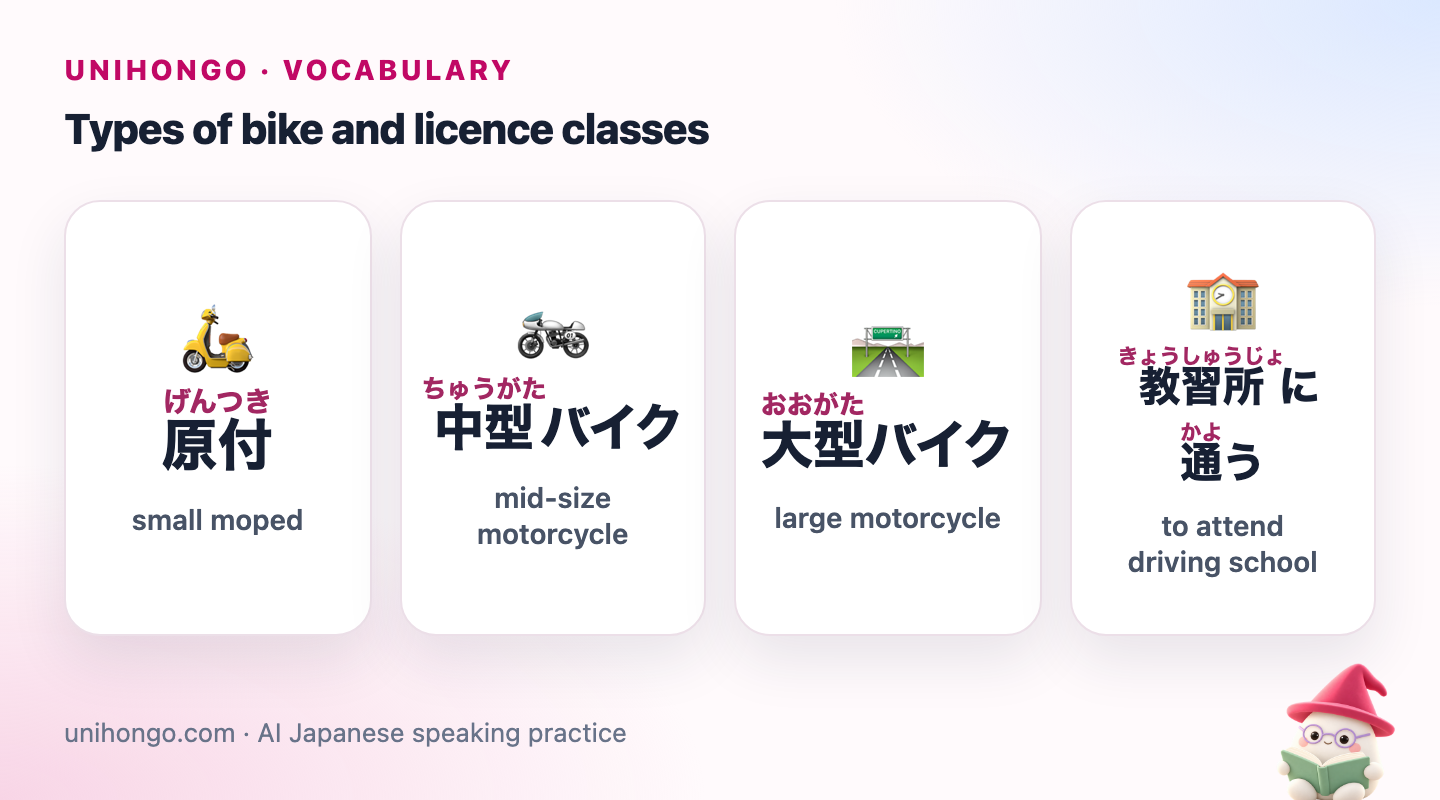
| Japanese | Romaji | Meaning |
|---|---|---|
| 原付 | gentsuki | small moped |
| 中型バイク | chūgata baiku | mid-size motorcycle |
| 大型バイク | ōgata baiku | large motorcycle |
| 教習所に通う | kyōshūjo ni kayou | to attend driving school |
| 免許を取りたいです。 | Menkyo o toritai desu. | I want to get my licence. |
| 大型二輪の免許を持っています。 | Ōgata nirin no menkyo o motte imasu. | I have a large motorcycle licence. |
| Licence or class | Japanese | Covers (overview) |
|---|---|---|
| Moped | gentsuki menkyo (原付免許) | Small mopeds, traditionally up to 50 cc; rules revised recently |
| Small motorcycle | kogata gentei futsū nirin | Up to 125 cc; not allowed on expressways |
| Standard motorcycle | futsū nirin (普通二輪) | Up to 400 cc |
| Large motorcycle | ōgata nirin (大型二輪) | Over 400 cc |
Gear and the main parts
Most parts and gear are katakana and easy to guess once you hear them, though the pronunciation can surprise you: burēki (brake), kuratchi (clutch) and akuseru (accelerator), which riders also use for the throttle. A few native words are just as common: kagi (鍵), the key; amagu (雨具), rain gear; and the counter dai (台), used for all vehicles. Riding gear is a big topic in Japan, where summers are hot and humid and many riders own separate mesh jackets for summer and warm jackets for winter.
| Japanese | Romaji | Meaning |
|---|---|---|
| ヘルメット | herumetto | helmet |
| グローブ | gurōbu | riding gloves |
| プロテクター | purotekutā | body armour, protectors |
| 雨具 | amagu | rain gear |
| エンジン | enjin | engine |
| ブレーキ | burēki | brake |
| クラッチ | kuratchi | clutch |
| チェーン | chēn | chain |
| タイヤの空気圧 | taiya no kūkiatsu | tyre pressure |
| バイクを二台持っています。 | Baiku o nidai motte imasu. | I own two motorbikes. |
Maintenance, inspections and problems
Regular maintenance is mentenansu, and a check-up at a shop is tenken (点検). Bikes over 250 cc must pass the official vehicle inspection, shaken (車検), at regular intervals, which is a common topic among riders because of the time and cost. Smaller bikes do not need shaken, which is one reason the 250 cc class is popular. For a breakdown, start with the symptom and add the place it happened.
| Japanese | Romaji | Meaning |
|---|---|---|
| オイル交換をお願いします。 | Oiru kōkan o onegai shimasu. | An oil change, please. |
| 来月、車検です。 | Raigetsu, shaken desu. | My bike's inspection is next month. |
| パンクしてしまいました。 | Panku shite shimaimashita. | I got a flat tyre. |
| エンジンから変な音がします。 | Enjin kara hen na oto ga shimasu. | There's a strange noise from the engine. |
| エンジンがかからないんです。 | Enjin ga kakaranai n desu. | The engine won't start. |
| バッテリーが上がったかもしれません。 | Batterī ga agatta kamo shiremasen. | The battery might be flat. |
Note batterī ga agaru, literally the battery goes up, which means it has gone flat. It surprises learners because agaru usually means to rise. Panku, from puncture, is the word for any flat tyre.
Touring, mountain passes and roadside stations
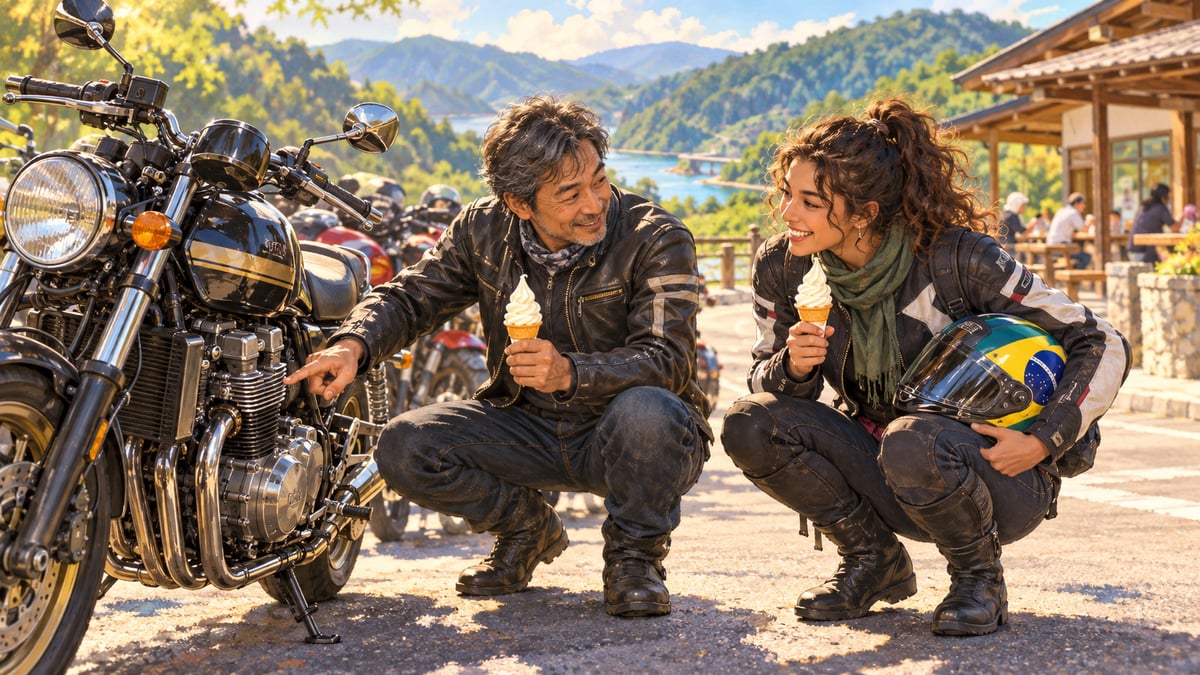
Tsūringu (ツーリング), touring, is any leisure ride, from an afternoon loop to a week on the road. Riders shorten it in compounds: sorotsū is a solo ride and masutsū, from mass touring, is a group ride. Popular destinations are tōge (峠), mountain passes with winding roads and views, kaigan sen, coastal roads, and the michi no eki where riders park side by side and compare bikes.
One piece of rider culture that visitors notice is the wave. Some riders greet oncoming bikes with a raised hand or a peace sign, and in rider slang this greeting is often called yaē (ヤエー). Not everyone does it, and it is never required, but a friendly wave back is always fine when it is safe.
| Japanese | Romaji | Meaning |
|---|---|---|
| 週末、峠を走りに行く。 | Shūmatsu, tōge o hashiri ni iku. | This weekend I'm riding the mountain passes. |
| ソロツーが好きです。 | Sorotsū ga suki desu. | I like riding solo. |
| 道の駅で休憩しよう。 | Michi no eki de kyūkei shiyō. | Let's take a break at the roadside station. |
| かっこいいバイクですね。排気量は? | Kakkoii baiku desu ne. Haikiryō wa? | You: That's a great bike. What's the engine size? |
| ニーゴーです。軽くて乗りやすいですよ。 | Nīgō desu. Karukute noriyasui desu yo. | Rider: It's a 250. It's light and easy to ride. |
| どこから来たんですか。 | Doko kara kita n desu ka. | You: Where did you ride from? |
| 気をつけて! | Ki o tsukete! | Ride safe! |
Fuel and parking
Petrol stations are gasorin sutando, casually gasosuta. Many are serufu (self-service), where you choose the fuel and pay at a machine, and others have staff who fill up for you. Petrol comes as regyurā (regular) and haioku (high-octane premium); keiyu (軽油) is diesel, which you should never put in a petrol bike. Mantan (満タン) means a full tank.
Parking is the other daily challenge. Many city car parks do not accept motorcycles, and bicycle parking may not allow them either. Look for spaces marked for motorcycles, baiku chūshajō (バイク駐車場), and do not leave your bike on the pavement.
| Japanese | Romaji | Meaning |
|---|---|---|
| レギュラー満タンでお願いします。 | Regyurā mantan de onegai shimasu. | A full tank of regular, please. |
| ハイオクを十リットル。 | Haioku o jū rittoru. | Ten litres of premium. |
| 空気入れはありますか。 | Kūkiire wa arimasu ka. | Do you have an air pump? |
| この辺にバイクを停められる場所はありますか。 | Kono hen ni baiku o tomerareru basho wa arimasu ka. | Is there somewhere around here I can park a motorbike? |
| ここはバイク駐車禁止です。 | Koko wa baiku chūsha kinshi desu. | Motorbike parking is not allowed here. |
Common learner mistakes
- Saying baiku when you mean a bicycle. In Japanese it is always motorised; say jitensha or chari.
- Counting bikes with tsu or hon. Vehicles take dai: baiku ga nidai arimasu.
- Saying only gasorin o kudasai at a staffed pump. The attendant will ask which kind, so say regyurā or haioku, then mantan or an amount.
- Thinking yaē is a rule. It is a friendly custom among some riders, not an obligation.
- Riding a small motorcycle onto an expressway. Machines of 125 cc or less are not allowed there.
- Using surinuke as a neutral word. It means filtering between cars, and many drivers see it negatively; know the rules before you try it.
Gear up your bike words with Mocchi
Ask Mocchi: I ride a 250 cc motorbike. Make me ten flashcards for parts and problems, then quiz me on them next week. Mocchi creates the cards, lets you pick a photo for each, and reviews them with you using spaced repetition. It also remembers that you ride, so later chats and quizzes can use bike examples.
Then write a short note for a repair shop about a noise from your engine and send it with /correct: Mocchi fixes the Japanese and explains why each change sounds more natural, ready for your next visit to the shop.