
What dasai means in one minute
Dasai is an i-adjective meaning uncool, unfashionable, tacky, dorky or lame. It covers two areas. The first is style: clothes, shoes, hair, logos, product designs, band names, anything that looks dated or cheap. The second is behaviour: making excuses, blaming others, showing off, or failing in an embarrassing way.
It is casual. Friends, siblings and classmates use it, often with a laugh. It is milder than uzai or kimoi, but it still judges someone's taste, so it can sting.
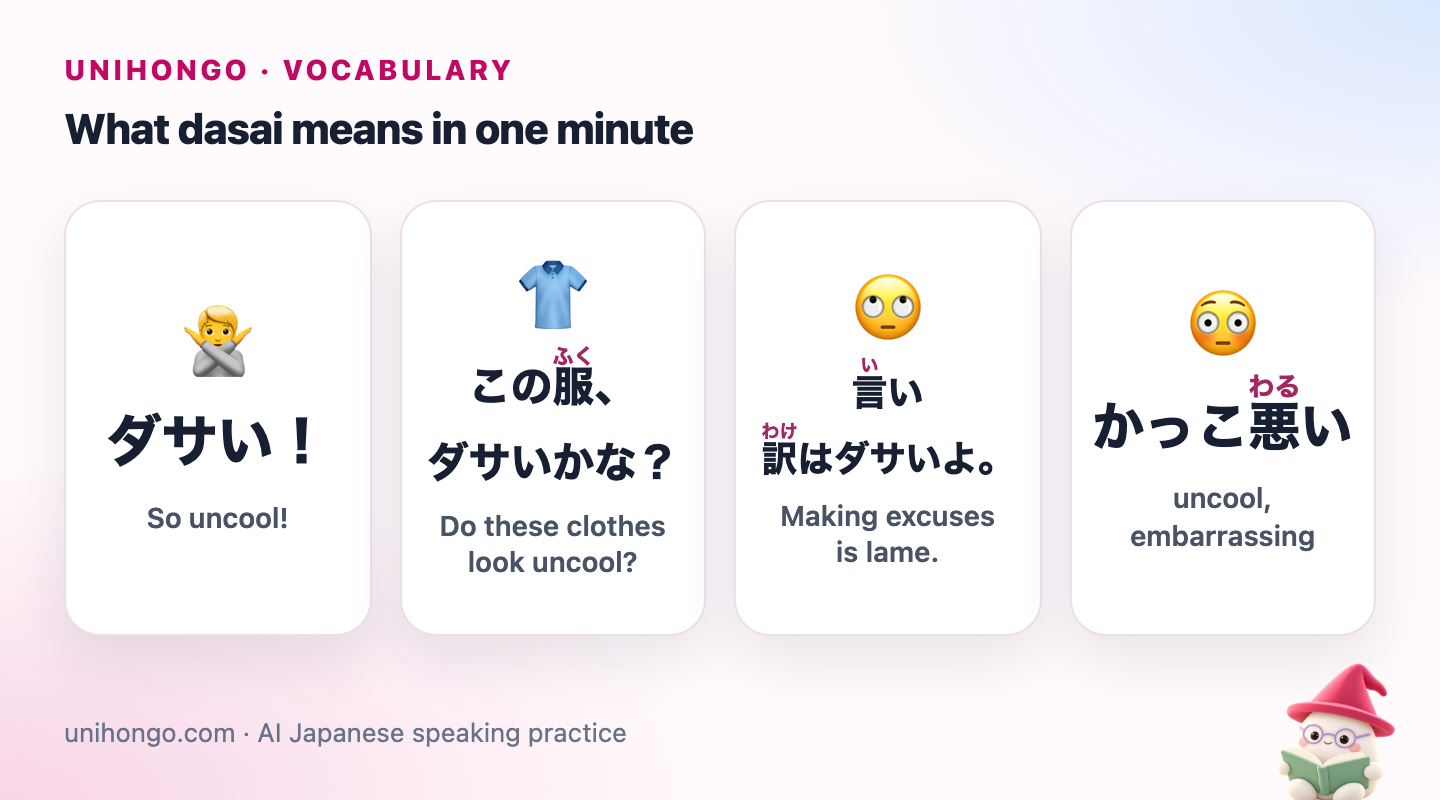
| Japanese | Romaji | Meaning |
|---|---|---|
| ダサい! | Dasai! | So uncool! |
| この服、ダサいかな? | Kono fuku, dasai ka na? | Do these clothes look uncool? |
| 言い訳はダサいよ。 | Iiwake wa dasai yo. | Making excuses is lame. |
| かっこ悪い | kakkowarui | uncool, embarrassing |
Spelling, origin and the forms you will hear
Dasai is usually written in katakana, ダサい, though you will also see it in hiragana, ださい. There is no standard kanji. Where the word comes from is unclear: several theories circulate, and none is confirmed, so it is best not to repeat any of them as fact.
It conjugates like any i-adjective. In fast speech it is often clipped to dasa, written with a small tsu at the end when someone reacts in a split second. That clipped form is very blunt, so it is best kept for laughing at yourself or at an object.
| Japanese | Romaji | Meaning |
|---|---|---|
| ダサかった。 | Dasakatta. | That was uncool. |
| ダサくない? | Dasakunai? | Isn't it a bit uncool? |
| ダサすぎる。 | Dasasugiru. | That's way too uncool. |
| ダサくて笑える。 | Dasakute waraeru. | It's so dorky it's funny. |
Dasakunai? with rising intonation is a soft way to give an opinion: literally isn't it uncool?, it invites the other person to agree rather than declaring a verdict.
Every real use of dasai, with examples
Here is dasai at work in the situations where you will actually hear it: shopping, looking at old photos, judging a design, reacting to someone's behaviour, and laughing at your own clumsy moment.
| Japanese | Romaji | Meaning |
|---|---|---|
| このロゴ、ちょっとダサくない? | Kono rogo, chotto dasakunai? | Isn't this logo a bit tacky? |
| 昔の写真、ダサくて笑える。 | Mukashi no shashin, dasakute waraeru. | My old photos are so dorky they're funny. |
| 人のせいにするのはダサいよ。 | Hito no sei ni suru no wa dasai yo. | Blaming other people is lame. |
| 転んじゃった。ダサすぎる。 | Koronjatta. Dasasugiru. | I tripped. So embarrassing. |
| 意外とダサくないね。 | Igai to dasakunai ne. | It's actually not uncool at all. |
| ダサいけど好き。 | Dasai kedo suki. | It's uncool, but I love it. |
Dasai, kakkowarui, oshare and friends compared
To talk about style naturally, you need the whole family of words, not just the insult. The table shows how they differ.
| Japanese | Romaji | Meaning |
|---|---|---|
| かっこ悪いところ見せちゃった。 | Kakkowarui tokoro misechatta. | You saw me at my least cool. |
| そのバッグ、おしゃれだね。 | Sono baggu, oshare da ne. | That bag is stylish. |
| ちょっと地味かな。 | Chotto jimi ka na. | Maybe it's a bit plain. |
| この色、派手すぎない? | Kono iro, hadesuginai? | Isn't this colour too loud? |
| Word | Meaning | Typical use |
|---|---|---|
| dasai (ダサい) | Uncool, tacky, unfashionable | Style, design, lame behaviour |
| kakkowarui (かっこ悪い) | Uncool, embarrassing | Moments and behaviour; a bit softer |
| kakkoii (かっこいい) | Cool, stylish, good-looking | The opposite of both |
| oshare (おしゃれ) | Stylish, fashionable | Clothes, cafés, rooms, people |
| jimi (地味) | Plain, low-key | Neutral to mildly negative |
| hade (派手) | Flashy, loud | Bright colours, bold patterns |
Playful or mean? How to tell
Most everyday dasai is playful: friends laughing at a terrible souvenir T-shirt, someone laughing at their own school photos, a sibling rolling their eyes at a parent's dance moves. The tone is light and everyone is in on the joke.
It turns mean when it is serious and personal: telling someone their outfit is dasai when they clearly like it, or calling a gift dasai in front of the person who chose it. With people you do not know well, and with anyone older or senior, do not judge their style with dasai at all. If you want to give an honest opinion, use a softer frame such as watashi no konomi ja nai kamo, it might not be my taste.
| Japanese | Romaji | Meaning |
|---|---|---|
| いい意味でダサい。 | Ii imi de dasai. | Uncool in a good way. |
| 私の好みじゃないかも。 | Watashi no konomi ja nai kamo. | It might not be my taste. |
| もうちょっとシンプルなのがいいかな。 | Mō chotto shinpuru na no ga ii ka na. | Maybe something a bit simpler would be better. |
How to reply, and common learner mistakes
If a friend says your shirt is dasai, you can defend it, laugh it off, or ask for advice. Japanese friends often do all three in quick succession.
| Japanese | Romaji | Meaning |
|---|---|---|
| え、ダサい?気に入ってるのに。 | E, dasai? Ki ni itteru noni. | What, uncool? But I really like it. |
| ダサくて結構! | Dasakute kekkō! | Uncool? Fine by me! |
| じゃあ、どれがいいと思う? | Jā, dore ga ii to omou? | Then which one do you think is good? |
- Mistake 1: calling a gift or someone's cooking dasai. The word is about taste and style, and it insults the giver's choice.
- Mistake 2: using it with people you have just met, or with older people. Style judgements need a close relationship.
- Mistake 3: using dasai about ugly things in general. A broken chair is not dasai; dasai is about taste and coolness, not condition.
- Mistake 4: forgetting the opposite. If you only learn dasai, you will sound negative; learn oshare and kakkoii alongside it.
More style words: trendy, dated, retro and understated
When friends talk about clothes, dasai is only one note. Hayatte iru (in fashion) and imadoki (modern, of the moment) are the trendy side; furui (old, dated) is the neutral way to say something is out of date; retoro (retro) turns old into charming; and shibui (渋い) praises something subdued and quietly cool, like a dark navy jacket or an old wooden teahouse.
The most useful compliment of all is niau, to suit someone. Niatteru yo (it suits you) praises the match between the person and the clothes, which is warmer than judging the clothes alone, and it is the natural thing to say when a friend tries something on.
| Japanese | Romaji | Meaning |
|---|---|---|
| それ、今流行ってるよ。 | Sore, ima hayatteru yo. | That's in fashion right now. |
| ちょっと古いかな。 | Chotto furui ka na. | Maybe it's a bit dated. |
| レトロでかわいい。 | Retoro de kawaii. | It's retro and cute. |
| 渋いね。 | Shibui ne. | That's understated and cool. |
| 似合ってるよ。 | Niatteru yo. | It suits you. |
Mini dialogue: picking a shirt at a vintage shop
Two friends are shopping in a small vintage clothing shop. Notice how dasai kamo with a hesitant ūn softens the verdict, and how quickly the conversation moves on to kakkoii.

| Japanese | Romaji | Meaning |
|---|---|---|
| このシャツ、どう? | Kono shatsu, dō? | Leo: How's this shirt? |
| うーん、ちょっとダサいかも。 | Ūn, chotto dasai kamo. | Yui: Hmm, it might be a bit uncool. |
| マジで?じゃあ、こっちは? | Maji de? Jā, kotchi wa? | Leo: Seriously? Then what about this one? |
| あ、それはかっこいい! | A, sore wa kakkoii! | Yui: Oh, that one's cool! |
| よし、これにする。 | Yoshi, kore ni suru. | Leo: Right, I'll take this one. |
| さっきのも、いい意味でダサくて好きだったけどね。 | Sakki no mo, ii imi de dasakute suki datta kedo ne. | Yui: Though I did like the first one, uncool in a good way. |