
Mochimochi: the texture of fresh mochi
Mochi (餅) is rice cake made by pounding steamed glutinous rice until it becomes smooth and elastic. Fresh mochi is soft, slightly stretchy and bouncy when you bite it. Doubling the word, mochimochi, turns it into a mimetic word for that texture, in the same way that many Japanese texture words repeat a sound.
The key feeling is springiness with softness. Mochimochi food is not hard and not mushy: it pushes back pleasantly against your teeth and then gives way. That is why the word is praise. Saying kono pan, mochimochi! is a compliment to the baker.
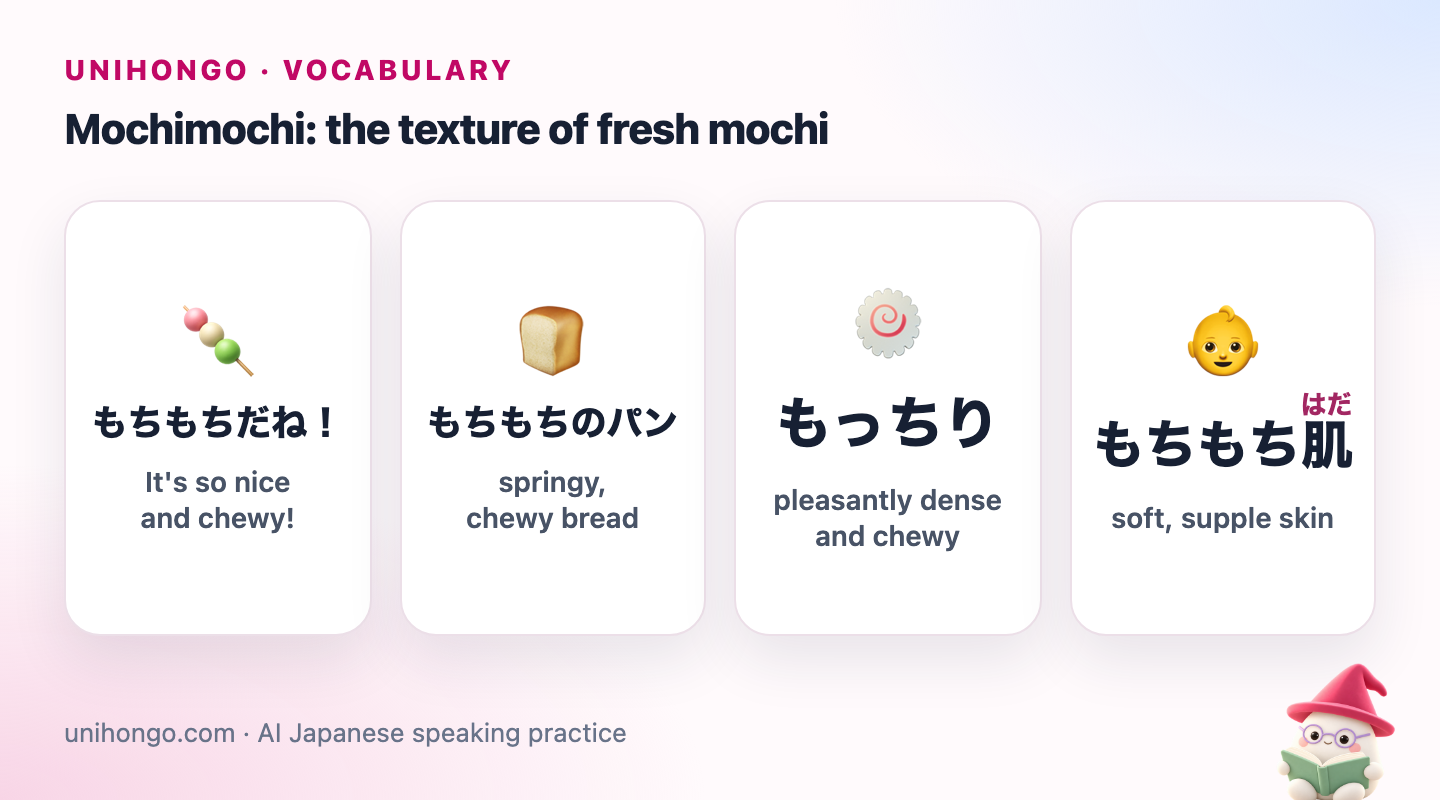
| Japanese | Romaji | Meaning |
|---|---|---|
| もちもちだね! | Mochimochi da ne! | It's so nice and chewy! |
| もちもちのパン | mochimochi no pan | springy, chewy bread |
| もっちり | motchiri | pleasantly dense and chewy |
| もちもち肌 | mochimochi hada | soft, supple skin |
Foods people call mochimochi
Mochimochi is used far beyond mochi itself. Shiratama dango, small rice-flour dumplings in sweet soups and parfaits, are classic. Bread made with rice flour, komeko pan, is often sold for its mochimochi texture, as are bagels and some soft rolls. Fresh noodles, gnocchi, tapioca pearls in bubble tea and Korean-style rice cakes are all described this way. Some popular doughnuts and pastries are made specifically to be mochimochi.
Savoury dishes count too. Gyōza with thick skins, okonomiyaki made with grated yam in the batter, and Chinese-style steamed buns are often praised for a mochimochi bite. When a texture is the main selling point, people may even choose a restaurant for it, saying they want something mochimochi today.
Grammar is simple. Use mochimochi shite iru for a description, often shortened to mochimochi shiteru, mochimochi da or mochimochi desu for a comment, and mochimochi no or mochimochi shita before a noun.
| Japanese | Romaji | Meaning |
|---|---|---|
| 白玉がもちもちしておいしい。 | Shiratama ga mochimochi shite oishii. | The rice-flour dumplings are delicious and chewy. |
| 米粉パンはもちもちしていますね。 | Komeko pan wa mochimochi shite imasu ne. | Rice-flour bread is nice and chewy, isn't it? |
| タピオカのもちもちした食感が好き。 | Tapioka no mochimochi shita shokkan ga suki. | I love the chewy texture of tapioca. |
| この麺、もちもちで最高! | Kono men, mochimochi de saikō! | These noodles are chewy and amazing! |
Mochimochi, motchiri, fuwafuwa, purupuru and koshi
Texture words come in families, and knowing the neighbours makes mochimochi clearer. Motchiri (もっちり) is very close but often feels denser and is common in product names. Fuwafuwa (ふわふわ) is light, airy and fluffy, like a soufflé pancake or fresh white bread. Purupuru (ぷるぷる) is wobbly and jelly-like, like pudding or warabi mochi. Nebaneba (ねばねば) is sticky and stringy, like natto or okra.
For noodles, Japanese has a special word: koshi (こし), a firm, springy bite, especially for udon. Udon with good koshi is firm and resilient. Mochimochi udon is softer and more elastic. Both are compliments, and noodle lovers have strong opinions about which they prefer.
| Japanese | Romaji | Meaning |
|---|---|---|
| 外はカリッと、中はもっちり。 | Soto wa karitto, naka wa motchiri. | Crisp outside, dense and chewy inside. |
| このパンケーキ、ふわふわだね。 | Kono pankēki, fuwafuwa da ne. | This pancake is so fluffy. |
| 讃岐うどんはこしが強い。 | Sanuki udon wa koshi ga tsuyoi. | Sanuki udon has a really firm bite. |
| Word | Texture | Typical foods |
|---|---|---|
| mochimochi | Soft, springy, chewy | Mochi, bagels, rice-flour bread, tapioca |
| motchiri | Denser, heavier chew | Bread, dumpling skins, cheesecake |
| fuwafuwa | Light, airy, fluffy | Pancakes, sponge cake, omelettes |
| purupuru | Wobbly, jelly-like | Pudding, jelly, warabi mochi |
| nebaneba | Sticky, stringy | Natto, okra, grated yam |
| koshi ga aru | Firm, resilient bite | Udon, soba, pasta |
Mochimochi on packaging and menus
Shops and adverts love mochimochi because it sounds both tasty and cute. On packaging you will see mochimochi shokkan, chewy texture, or shin shokkan, a new texture. Menus describe dough as mochimochi kiji, chewy dough, for pizza, dumplings or crepes. In a bakery, a small card next to a loaf may say mochimochi to highlight it.
When you shop, the word is useful for asking. Mochimochi shita pan wa dore desu ka, which bread is the chewy one, is a natural question in a bakery, and staff are often happy to recommend their favourite.
| Japanese | Romaji | Meaning |
|---|---|---|
| もちもち食感が人気です。 | Mochimochi shokkan ga ninki desu. | The chewy texture is popular. |
| もちもちした生地のピザ | mochimochi shita kiji no piza | pizza with a chewy crust |
| もちもちしたパンはどれですか。 | Mochimochi shita pan wa dore desu ka. | Which bread is the chewy one? |
Cheeks and skin: kind uses and risky ones
Mochimochi also describes soft, plump, springy skin. Parents and grandparents happily say a baby's cheeks are mochimochi, and the compliment is sweet and common. Skincare adverts promise mochimochi hada, soft, supple, mochi-like skin, and people may say it about their own skin after a good face mask.
Be careful about other adults. Commenting on someone's body can feel personal anywhere, and mochimochi can be heard as plump or soft in a teasing way. A related word, muchimuchi (むちむち), means plump and fleshy and can sound suggestive, so learners should avoid it about people altogether.
| Japanese | Romaji | Meaning |
|---|---|---|
| 赤ちゃんのほっぺ、もちもちだね。 | Akachan no hoppe, mochimochi da ne. | The baby's cheeks are so soft and squishy. |
| パックをしたら、肌がもちもちになった。 | Pakku o shitara, hada ga mochimochi ni natta. | After the face mask, my skin feels soft and supple. |
Reacting and complimenting: mochimochi in conversation
In real conversation, mochimochi is most often a reaction in the first second after a bite. Japanese food talk often starts with texture, and television food reporters are famous for describing the bite before the flavour. A quick mochimochi! with wide eyes is as natural as saying mmm in English. Friends usually reply by agreeing and adding a detail: deshō? koko no wa tokubetsu nan da, right? The ones here are special.
You can make the reaction stronger in a few ways. Sugoi mochimochi, really chewy, and mocchimochi with a small tsu, an emphatic spoken form, are both common in casual speech. To compare, use yori: kore no hō ga mochimochi shiteru, this one is chewier. To praise a cook politely, combine texture with taste: mochimochi shite ite, totemo oishii desu, it is lovely and chewy, and very tasty.
Mochimochi is also popular as a cute word by itself. Soft toys, cushions and round mascots are described as mochimochi when they are squishy and bouncy to the touch, and you may see it on the tags of plush toys in shops. Squeezing a soft cushion and saying mochimochi is the same playful feeling as saying squishy in English, and children often use it this way.
| Japanese | Romaji | Meaning |
|---|---|---|
| わあ、もっちもち! | Wā, mocchimochi! | Wow, so chewy! (emphatic, casual) |
| こっちのほうがもちもちしてる。 | Kotchi no hō ga mochimochi shiteru. | This one is chewier. |
| もちもちしていて、とてもおいしいです。 | Mochimochi shite ite, totemo oishii desu. | It's lovely and chewy, and very tasty. (polite) |
| このクッション、もちもちで気持ちいい。 | Kono kusshon, mochimochi de kimochi ii. | This cushion is so squishy and nice. |
Mini dialogue: choosing bread at a bakery
Ji-woo stops at a small bakery near her station on the way home. She wants something chewy for tomorrow's breakfast and asks the clerk for help. Notice the polite requests and the way the clerk describes the textures.
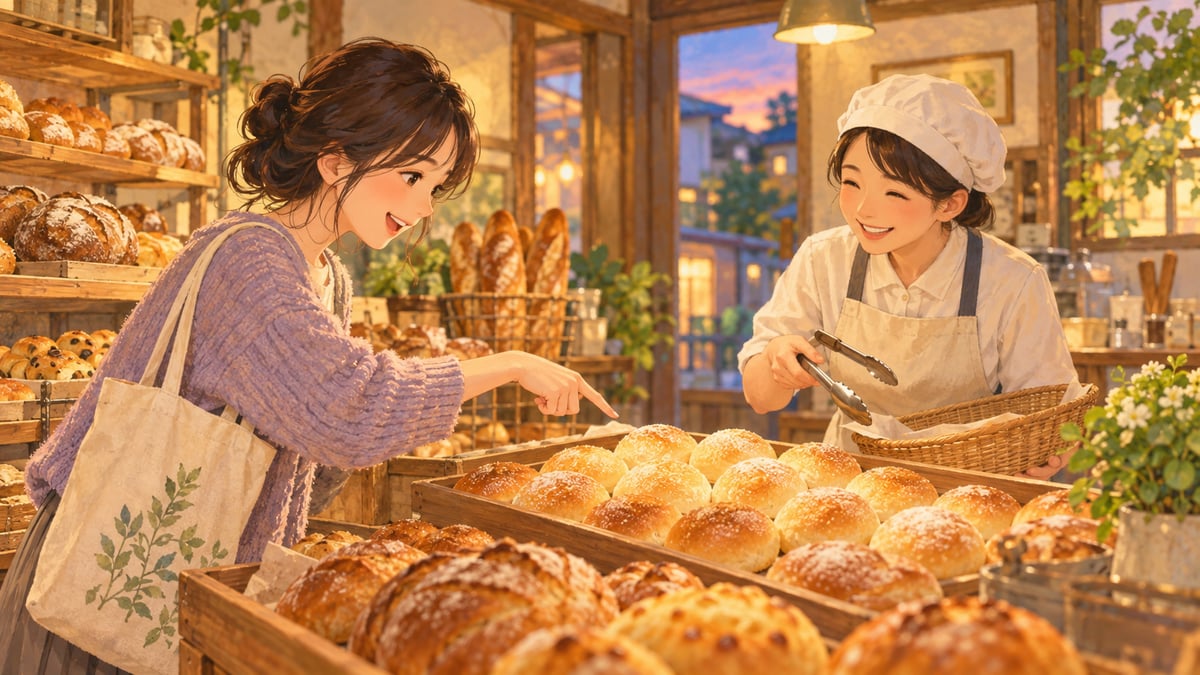
| Japanese | Romaji | Meaning |
|---|---|---|
| すみません、もちもちしたパンはありますか。 | Sumimasen, mochimochi shita pan wa arimasu ka. | Ji-woo: Excuse me, do you have any chewy bread? |
| こちらの米粉パンがおすすめです。もっちりしていますよ。 | Kochira no komeko pan ga osusume desu. Motchiri shite imasu yo. | Clerk: I recommend this rice-flour bread. It's nice and dense. |
| ふわふわのパンとどう違いますか。 | Fuwafuwa no pan to dō chigaimasu ka. | Ji-woo: How is it different from the fluffy bread? |
| 食パンはふわふわで、こちらは弾力があります。 | Shokupan wa fuwafuwa de, kochira wa danryoku ga arimasu. | Clerk: The sandwich loaf is fluffy, and this one is springy. |
| じゃあ、これを二つください。 | Jā, kore o futatsu kudasai. | Ji-woo: Then two of these, please. |
| トースターで少し温めると、もっともちもちになりますよ。 | Tōsutā de sukoshi atatameru to, motto mochimochi ni narimasu yo. | Clerk: If you warm it a little in the toaster, it gets even chewier. |
Taste-test your texture words with Mocchi
Tell Mocchi what you ate this week and ask: help me describe each one with the right texture word. Mocchi suggests mochimochi, fuwafuwa, sakusaku or purupuru for each food, explains why, and keeps a note of the textures you confuse so it can quiz you on them later with /quiz.
Then play Sushi Sort for a change of pace: reading quick Japanese orders and sending the right plate keeps food words fresh. If you add your texture words as flashcards, Kotoba Stack lets you build a tower word by word with your own deck.
Common learner mistakes
- Using mochimochi for tough food. Tough meat is katai; mochimochi is always soft and pleasant.
- Calling udon with a firm bite mochimochi when you mean koshi ga aru. Both are praise, but they describe different textures.
- Confusing mochimochi with nebaneba. Natto is sticky and stringy, not springy.
- Using mochimochi or muchimuchi about an adult's body. Keep it for food, babies' cheeks and skincare.
- Forgetting shita or no before a noun. Say mochimochi shita pan or mochimochi no pan, not mochimochi pan, in careful speech, although shops sometimes use the short form in names.