
The words both sports share
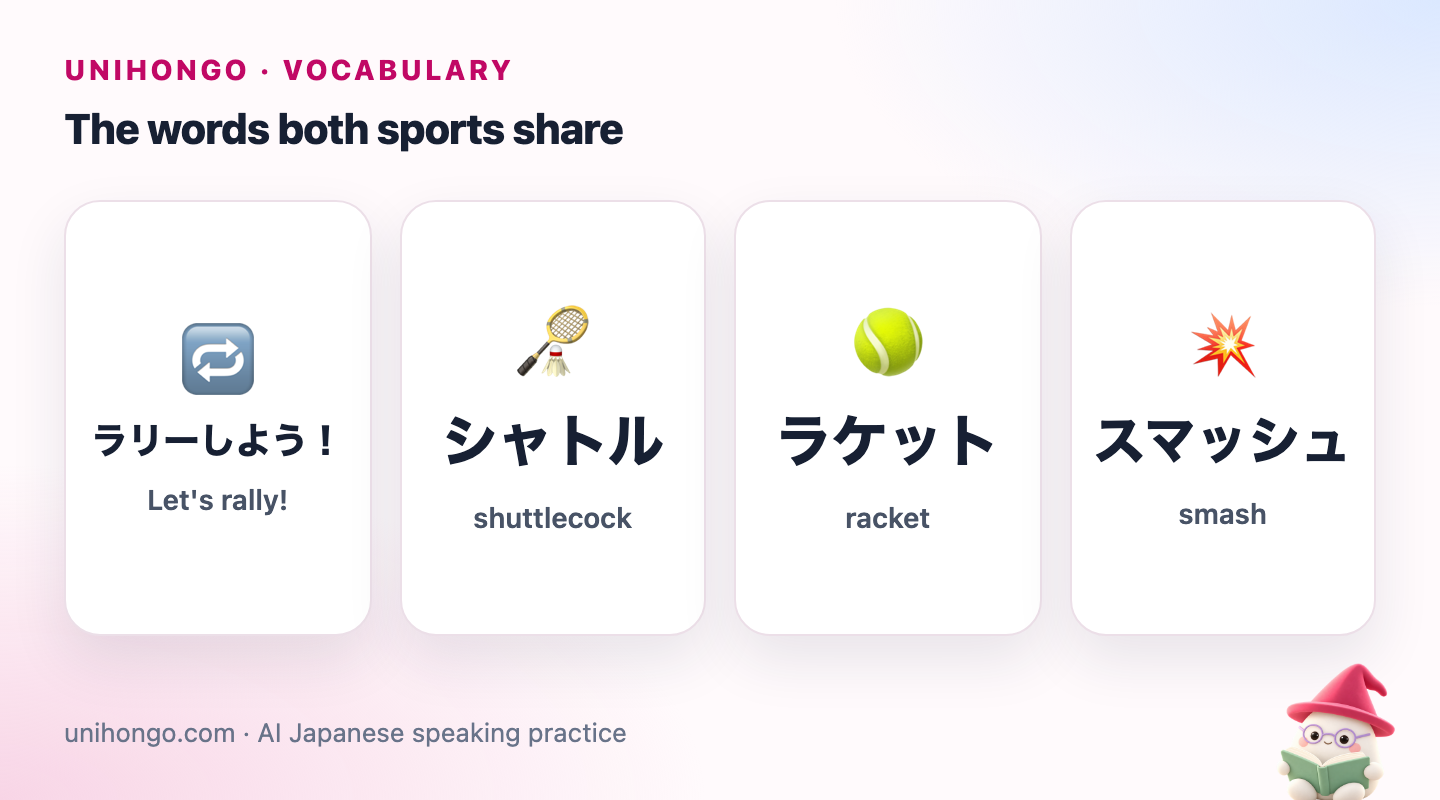
Tennis and badminton share so much vocabulary in Japanese that you can learn them together. The racket, the serve, the rally, the net and the smash are all the same katakana words, and doubles and singles are daburusu and shingurusu in both. Learn this core set first and you can follow most of a conversation about either sport.
Rarī deserves a note. Besides meaning a rally in a match, rarī suru is also what people say for hitting the ball back and forth casually without keeping score. Rarī shiyō, let's rally, is a friendly invitation to warm up or just to play for fun.
| Japanese | Romaji | Meaning |
|---|---|---|
| ラリーしよう! | Rarī shiyō! | Let's rally! |
| シャトル | shatoru | shuttlecock |
| ラケット | raketto | racket |
| スマッシュ | sumasshu | smash |
| サーブ | sābu | serve |
| ダブルス | daburusu | doubles |
| シングルス | shingurusu | singles |
| ネット | netto | net |
Tennis strokes and shots
Tennis strokes are named almost exactly as in English. Forehand and backhand are usually shortened in conversation to foa and bakku. Sutorōku means a groundstroke from the back of the court, and borē is a volley at the net. A lob is a robu, and a drop shot is a doroppu shotto.
Strings are not sutoringu in Japanese tennis: they are gatto, from gut. A shop that restrings rackets offers gatto hari, and the tension is tenshon.
| Japanese | Romaji | Meaning |
|---|---|---|
| フォア | foa | forehand |
| バック | bakku | backhand |
| ボレー | borē | volley |
| ストローク | sutorōku | groundstroke |
| ロブ | robu | lob |
| ガット | gatto | racket strings |
| ガットが切れました。 | Gatto ga kiremashita. | My strings broke. |
| バックが苦手です。 | Bakku ga nigate desu. | My backhand is weak. |
Saying the score in tennis
Japanese uses the English tennis score words in katakana, so the system is familiar, but the pronunciation is Japanese. The server's score is said first. Faults and lets are also English: a fault is fōruto, a double fault is daburu fōruto, and a let is retto.
| Japanese | Romaji | Meaning |
|---|---|---|
| サーティー・ラブ | sātī rabu | thirty-love |
| デュースです。 | Dyūsu desu. | Deuce. |
| フォールト! | Fōruto! | Fault! |
| 今のはレットです。 | Ima no wa retto desu. | That was a let. |
| 六対四で勝ちました。 | Roku tai yon de kachimashita. | I won six to four. |
| Score | Japanese | Note |
|---|---|---|
| 0 | rabu | love; zero is not used here |
| 15 | fifutīn | the first point |
| 30 | sātī | two points |
| 40 | fōtī | three points |
| 40-40 | dyūsu | deuce |
| Advantage | adobantēji | one point after deuce |
Tai (対) means versus or to, and it is used for all scores in Japanese, in every sport. Roku tai yon, six to four, is how you report a set result to a friend.
Badminton shots and the shuttle
Badminton has its own set of shot names, mostly English, and some of them mean something different from tennis. A kuria (clear) is a high, deep shot to the back of the court; a doroppu falls just over the net; a heapin, hairpin, is a delicate net shot that rises and falls close to the tape; and a doraibu is a fast, flat shot. A pusshu is a quick downward shot at the net.
Shuttles wear out and break, so players often ask for a new one. Atarashii shatoru ii? is the casual way to ask if you can open a new shuttle.
| Japanese | Romaji | Meaning |
|---|---|---|
| クリア | kuria | clear (high, deep shot) |
| ドロップ | doroppu | drop shot |
| ヘアピン | heapin | hairpin net shot |
| ドライブ | doraibu | drive (fast, flat shot) |
| プッシュ | pusshu | push (quick shot down at the net) |
| 羽根が壊れた。 | Hane ga kowareta. | The shuttle broke. (casual) |
| 二十一点のゲームにしよう。 | Nijūitten no gēmu ni shiyō. | Let's play a game to twenty-one. |
In Japanese, doraibu means different strokes in different racket sports: in badminton it is a flat, fast shot, while in table tennis it is a heavy topspin stroke. Context makes it clear.
Courtesy on a shared court
Public courts are often next to each other with only a low net or no barrier between them, so balls and shuttles cross over all the time. The courtesies are simple and polite: call out before you walk onto someone's court, ask for your ball back, and thank people who return it. A short sumimasen covers most of it.
When the ball comes to you from another court, wait until their point is finished and then send it back with a short dōzo. Walking across another court during a rally is considered rude almost everywhere, and Japan is no exception.
| Japanese | Romaji | Meaning |
|---|---|---|
| すみません、ボールお願いします! | Sumimasen, bōru onegai shimasu! | Excuse me, could you send the ball back? |
| どうぞ! | Dōzo! | Here you go! (returning a ball) |
| ありがとうございます! | Arigatō gozaimasu! | Thank you! |
| そっちに入っちゃいました、すみません。 | Socchi ni haitchaimashita, sumimasen. | Sorry, it went onto your court. |
| ナイスショット! | Naisu shotto! | Nice shot! |
| お疲れさまでした。 | Otsukaresama deshita. | Good game, thanks. (after playing) |
Booking a court and joining an open session
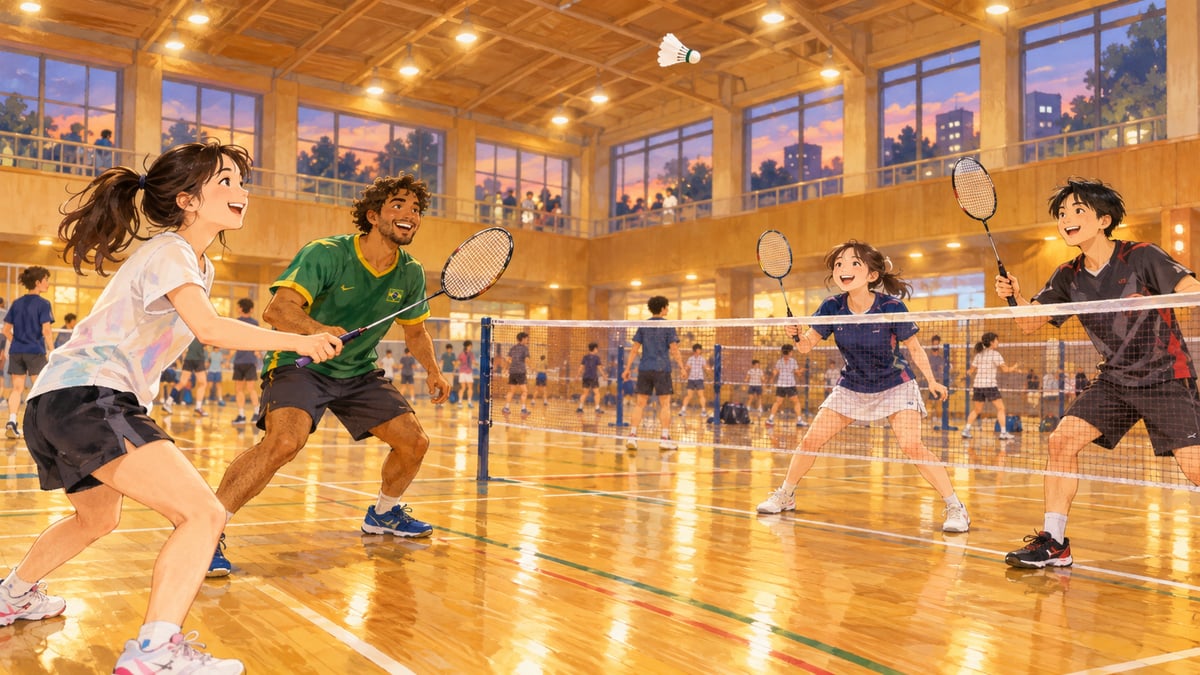
Outdoor tennis courts run by towns are usually booked by time slot, often through a booking system for registered residents, and popular weekend slots can be decided by lottery. Rules differ from town to town, so ask at the facility. For badminton, many sports halls hold open sessions for individuals at fixed times, where you pay at the counter and share the courts with whoever comes.
| Japanese | Romaji | Meaning |
|---|---|---|
| コートを予約したいんですが。 | Kōto o yoyaku shitai n desu ga. | I'd like to book a court. |
| 土曜日の午前は空いていますか。 | Doyōbi no gozen wa aite imasu ka. | Is Saturday morning available? |
| ラケットは借りられますか。 | Raketto wa kariraremasu ka. | Can I rent a racket? |
| 個人開放は何時からですか。 | Kojin kaihō wa nanji kara desu ka. | What time does the open session start? |
| 一緒にダブルスしませんか。 | Issho ni daburusu shimasen ka. | Would you like to play doubles together? |
Mini dialogue: small talk on the bench
| Japanese | Romaji | Meaning |
|---|---|---|
| バドミントン、長いんですか。 | Badominton, nagai n desu ka. | Player: Have you played badminton long? |
| いえ、始めたばかりです。 | Ie, hajimeta bakari desu. | You: No, I've only just started. |
| そうなんですね。クリアがきれいでしたよ。 | Sō nan desu ne. Kuria ga kirei deshita yo. | Player: Really? Your clears looked great. |
| ありがとうございます。スマッシュはまだまだです。 | Arigatō gozaimasu. Sumasshu wa madamada desu. | You: Thank you. My smash still needs a lot of work. |
| 次のゲーム、一緒にどうですか。 | Tsugi no gēmu, issho ni dō desu ka. | Player: How about the next game together? |
Madamada desu, I still have a long way to go, is the classic modest reply to a compliment on a skill. Nagai n desu ka, is it long, is a natural short way to ask how long someone has been doing something.
Practise the bench talk out loud
Start with Mocchi: type /quiz tennis and badminton shot names and scores, and Mocchi asks you to name a shot from its description or say a score in Japanese. It remembers which words trip you up, so dyūsu or heapin will come back in a later review if you missed them.
Then open AI Sensei, choose Ibuki-sensei and ask for a role: a friendly regular at a public court. Ask to join a doubles game, chat about how long you have played and answer the compliments modestly with madamada desu. The session report afterwards lists the corrections and new words.
Common learner mistakes
- Saying sutoringu for racket strings. Tennis and badminton players say gatto.
- Saying zero instead of rabu in a tennis score.
- Assuming a Japanese friend's school tennis was the hard-ball game. Ask: kōshiki desu ka, sofuto tenisu desu ka?
- Walking onto another court to fetch a ball during their rally. Wait, then ask with sumimasen.
- Calling every hard badminton shot a sumasshu. A fast flat shot is a doraibu, and a high deep one is a kuria.