
Ōkini at a glance
Ōkini is the most famous Kansai way to say thank you. It is usually written in hiragana, おおきに, and pronounced with a long o at the start. You will hear it in shops, restaurants and market stalls, in Kyoto teahouse districts and in Kansai comedy, and you will see it printed on souvenirs, aprons and shop curtains.
It is warm and a little old-fashioned. To many people it sounds like a friendly shopkeeper or a grandparent, and that is part of its charm.
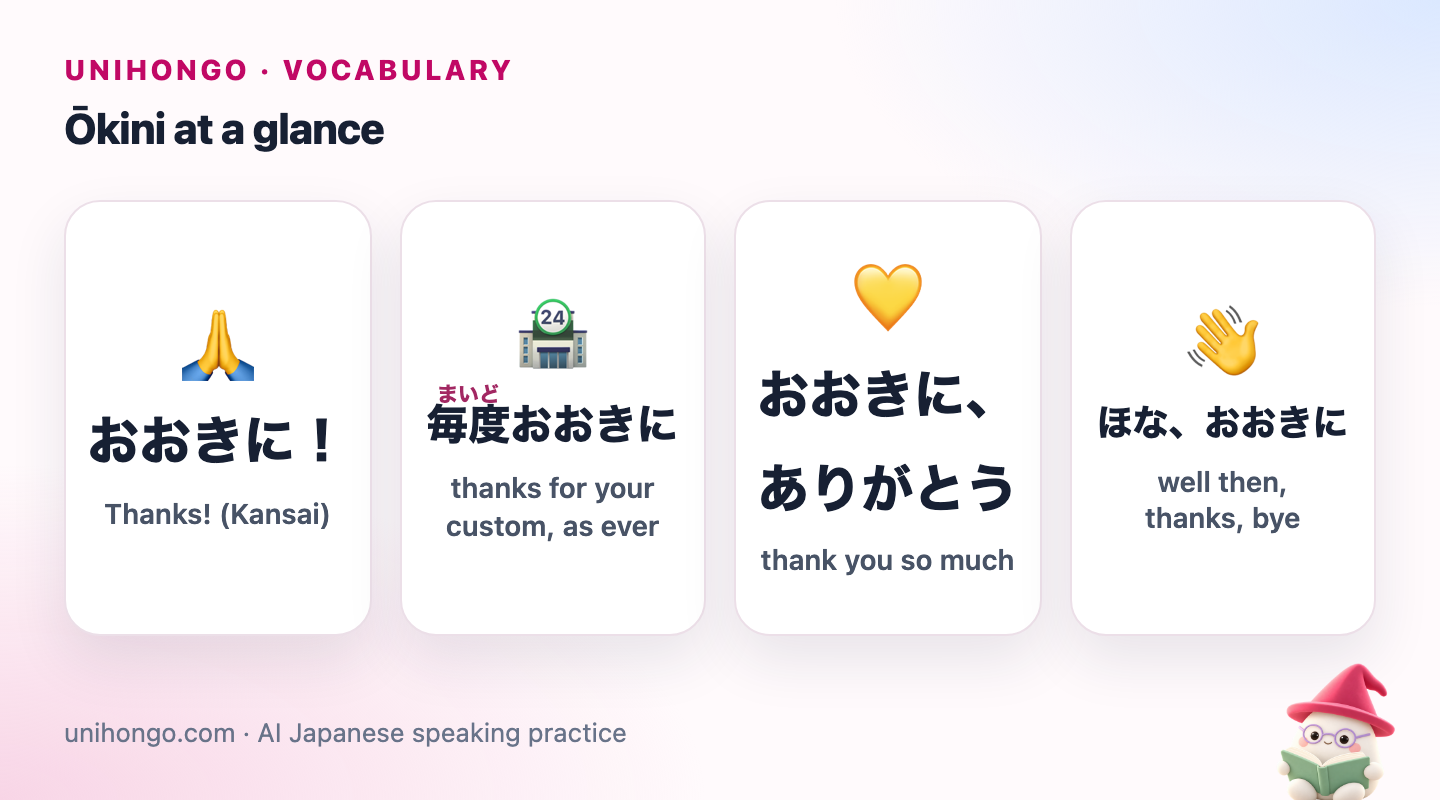
| Japanese | Romaji | Meaning |
|---|---|---|
| おおきに! | Ōkini! | Thanks! (Kansai) |
| 毎度おおきに | maido ōkini | thanks for your custom, as ever |
| おおきに、ありがとう | ōkini, arigatō | thank you so much |
| ほな、おおきに | hona, ōkini | well then, thanks, bye |
| 大きに喜ぶ | ōki ni yorokobu | to be greatly pleased (literary) |
Where does the word come from? Ōki ni (大きに) is an old adverb meaning greatly or very much, built from ōki, big. In the past, people in Kansai said ōki ni arigatō, thank you very much, and over time the arigatō part was dropped, leaving ōkini to carry the thanks on its own. That is why ōkini, arigatō, which might look like saying thank you twice, sounds natural: it is close to the original full phrase.
The same ōki ni is still found in older or literary Japanese with the meaning very, as in ōki ni yorokobu, to be greatly pleased, but in modern conversation it mostly survives as Kansai thanks. Because the word is so firmly linked to Kansai, writers in novels, comics and television often give a character ōkini to show at once that they are from Osaka or Kyoto.
Who says ōkini today
Usage has changed with generations. You are most likely to hear ōkini from people behind a counter: owners of small shops and restaurants, market stall holders, taxi drivers and staff in traditional businesses, especially older ones. In Kyoto, it is also associated with the speech of the old teahouse districts, and some shops there use it as part of their traditional atmosphere.
Many younger people in Kansai say arigatō instead, with a Kansai accent, and use ōkini only jokingly or with older relatives. Some families use it every day and others hardly at all. If you live in Kansai, listen to the people around you rather than assuming a rule.
| Japanese | Romaji | Meaning |
|---|---|---|
| おおきに、また来てな。 | Ōkini, mata kite na. | Thanks, come again. (Kansai shopkeeper) |
| おばあちゃん、いつもおおきにって言うね。 | Obāchan, itsumo ōkini tte iu ne. | Grandma always says ōkini, doesn't she? |
| ありがとう、助かったわ。 | Arigatō, tasukatta wa. | Thanks, that really helped. (Kansai, younger speaker) |
Maido ōkini and other shop phrases
In shops, ōkini often travels with maido (毎度), every time. Maido ōkini means thank you, as always, and is said to regular customers, or simply as a friendly thanks when you pay. On its own, maido is also a Kansai shop greeting, a little like hello, good to see you again, and it can be heard even when you visit for the first time.
Kyoto has its own famous welcome words. Oideyasu and okoshiyasu both mean welcome, and many people say okoshiyasu feels a little more formal, but explanations differ. In Osaka you are more likely to hear a lively irasshai. You do not need to say these yourself; it is enough to recognise them.
| Japanese | Romaji | Meaning |
|---|---|---|
| 毎度! | Maido! | Hello again! (Kansai shop greeting) |
| 毎度おおきに。 | Maido ōkini. | Thanks, as always. (to a customer) |
| おこしやす。 | Okoshiyasu. | Welcome. (Kyoto, traditional) |
| おいでやす。 | Oideyasu. | Welcome. (Kyoto) |
Ōkini as a soft goodbye or a soft no
Because ōkini is so closely linked to the end of a transaction, it often works as a friendly goodbye: hona, ōkini, well then, thanks, said as you leave a shop or end a phone call. It wraps up the exchange the way thanks, bye does in English.
Some people describe a softer use, especially in Kyoto, where ōkini can politely end a conversation without saying yes, for example when someone is offered something they do not want. A related line often quoted is ōkini, kangaetokimasu, thanks, I'll think about it, which may really mean no. These indirect styles are described in many books and jokes about Kyoto, but how common they are is debated, and you should not assume a hidden meaning every time you hear ōkini.
| Japanese | Romaji | Meaning |
|---|---|---|
| ほな、おおきに。 | Hona, ōkini. | Well then, thanks. Bye. (Kansai) |
| おおきに、考えときます。 | Ōkini, kangaetokimasu. | Thanks, I'll think about it. (may be a polite no) |
Replying to thanks in Kansai: ee yo and kamahen
When a Kansai friend thanks you, the standard iie, dō itashimashite is always understood, but it can sound stiff between friends anywhere in Japan. Kansai speakers often answer with ee yo, it's fine, or kamahen, no problem, the Kansai form of kamawanai, it doesn't matter. Kamahen de, with a friendly de at the end, sounds especially warm.
If someone thanks you for something big, people in any region usually wave it away rather than accept the thanks directly: iya iya, tondemonai, oh no, not at all. Learners do not need to use the Kansai forms, but recognising them stops you from wondering whether you did something wrong when a friend answers your arigatō with kamahen.
| Japanese | Romaji | Meaning |
|---|---|---|
| ええよ、ええよ。 | Ee yo, ee yo. | It's fine, it's fine. (Kansai) |
| かまへんで。 | Kamahen de. | No problem at all. (Kansai) |
| いえいえ、どういたしまして。 | Ie ie, dō itashimashite. | Not at all, you're welcome. (standard) |
Should you say ōkini?
As a learner or visitor, you can use ōkini lightly, and in Kansai it usually earns a smile. The key is the setting: it fits small shops, stalls and casual moments with people who use Kansai dialect. In formal situations and outside Kansai, the standard phrases are safer.
| Situation | What to say | Why |
|---|---|---|
| Paying at an Osaka stall | Ōkini, or arigatō | Friendly and local; either is fine |
| A Kyoto sweet shop | Arigatō gozaimasu, or a warm ōkini | Staff may use ōkini with you |
| A hotel front desk | Arigatō gozaimasu | Formal service setting |
| A business meeting in Osaka | Arigatō gozaimasu | Dialect thanks can sound too casual |
| A shop in Tokyo | Arigatō gozaimasu | Ōkini may sound like a joke there |
Mini dialogue: an Osaka takoyaki stall
Priya and her friend stop at a small takoyaki stall in an Osaka shopping street on a warm evening. The owner speaks in a strong Osaka style. Notice how ōkini closes the exchange.
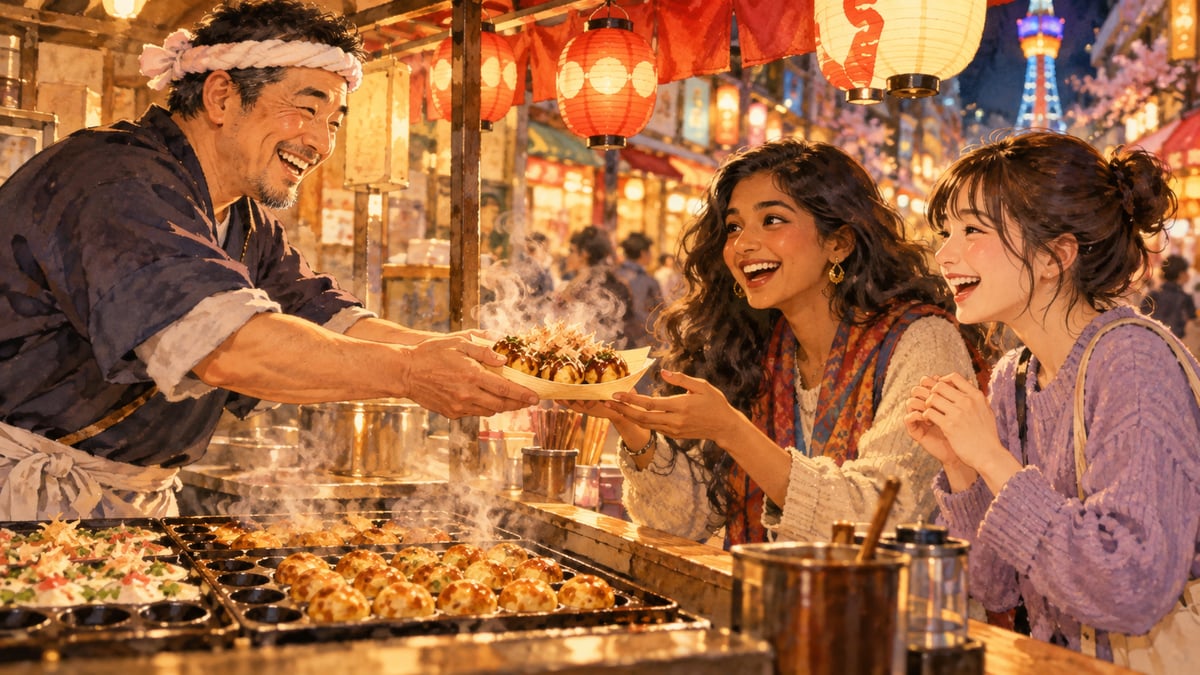
| Japanese | Romaji | Meaning |
|---|---|---|
| いらっしゃい!何個にする? | Irasshai! Nanko ni suru? | Owner: Welcome! How many do you want? |
| 八個ください。 | Hakko kudasai. | Priya: Eight, please. |
| ソースとマヨネーズ、かけてええ? | Sōsu to mayonēzu, kakete ee? | Owner: OK if I put sauce and mayo on? |
| はい、お願いします。 | Hai, onegai shimasu. | Priya: Yes, please. |
| はい、八百円。熱いから気ぃつけてな。 | Hai, happyaku en. Atsui kara kii tsukete na. | Owner: Here you go, 800 yen. They're hot, so be careful. |
| おおきに! | Ōkini! | Priya: Thanks! |
| お、おおきに!また来てや。 | O, ōkini! Mata kite ya. | Owner: Oh, thank you! Come again. |
Learn Kansai shop phrases the easy way with Mocchi
Ask Mocchi: make a list of Kansai shop phrases with their standard Japanese equivalents, then quiz me. Mocchi gives you maido, ōkini, ee, kamahen and more side by side, quizzes you on them one at a time, and keeps track of the ones you miss so they come back in later reviews.
To hear them in a real exchange, open AI Sensei, choose Haru-sensei and ask him to run an Osaka stall in Kansai dialect, then switch to standard Japanese if you lose the thread.
Common learner mistakes
- Writing ōkini as ookini without knowing it has a long vowel. Both spellings appear in English, but the sound is a long o: ō-ki-ni.
- Using ōkini in formal settings, such as a job interview or a hotel complaint. Use arigatō gozaimasu.
- Saying ōkini in Tokyo as everyday thanks. People will understand, but it can sound like you are imitating Kansai speech.
- Assuming ōkini always hides a no in Kyoto. Usually it is just thanks.
- Thinking you must reply in dialect. A smile and dōmo are enough when someone says ōkini to you.