

Choose usefulness before the number of new cards
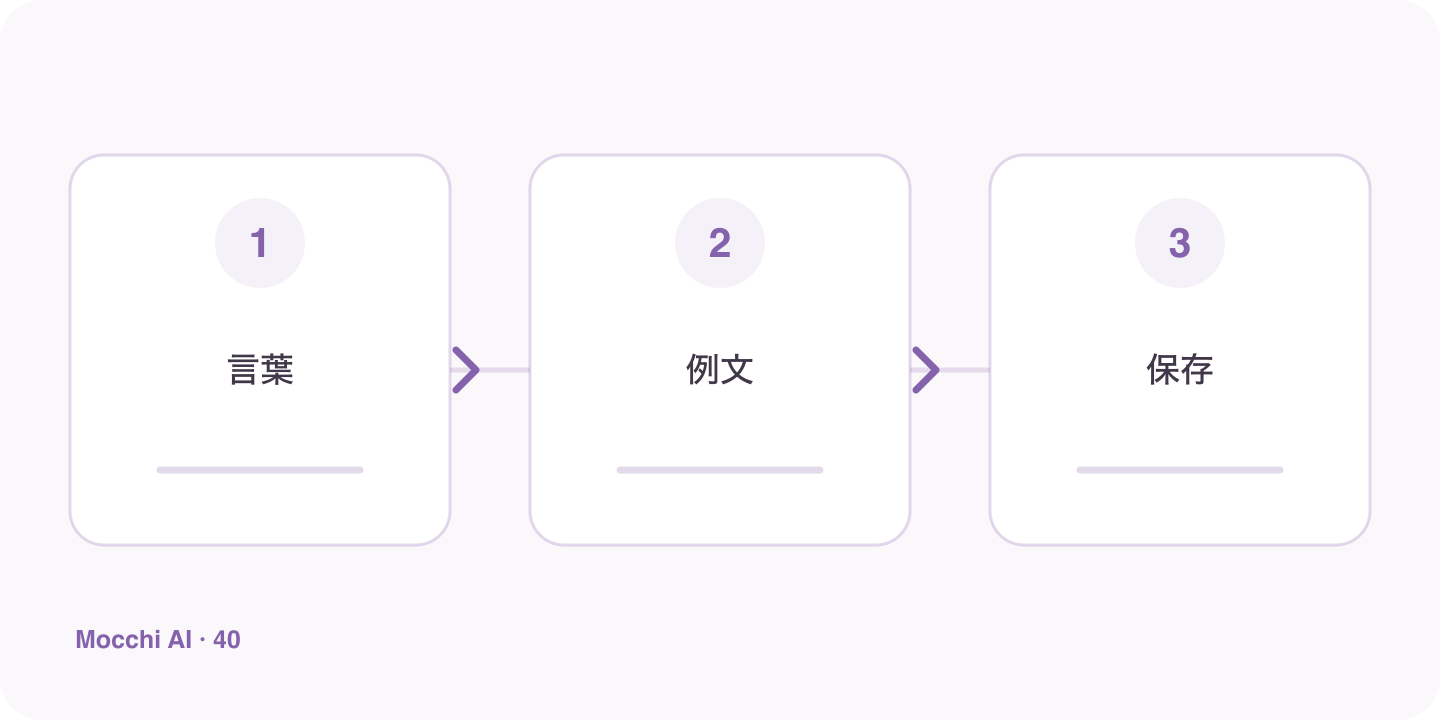
Start with words that support your present goal, recur in material you use, or explain a mistake you want to fix. Tell Mocchi where the words came from and why they matter. This gives the card-making request a purpose beyond collecting everything that looked unfamiliar in a passage.
Keep the first set small enough to inspect. A card can contain an unclear gloss, an example above your level, or a picture that suggests the wrong sense. Reviewing a few proposed cards carefully is more useful than adding a large set whose problems only become visible during repeated frustrating reviews.
Preserve one meaning and a short example
A word such as 予約 is easier to review when its intended sense is tied to booking a table or another clear service. Include a simple example and its meaning. The example should support the target word rather than introduce several unrelated difficulties. Ask Mocchi to simplify surrounding vocabulary if the card becomes a reading challenge instead of a vocabulary check.
| Japanese | Romaji | Meaning |
|---|---|---|
| 席を予約しました。 | Seki o yoyaku shimashita. | I reserved a seat. |
| 予約があります。 | Yoyaku ga arimasu. | I have a reservation. |
Check the reading and choose a useful picture
Read the proposed kana reading and compare the example with the meaning you intend to practice. Choose a picture that supports that sense, especially for a word with several possible associations. Abstract words may need a scene rather than a literal object. The picture is a cue, not a substitute for the context that makes the card's answer specific.
Save through the interface and verify the result
Review the suggestions, make your choices, and use the save workflow. Then check that the cards you intended are present. If account limits or feature availability affect saving, use the information shown by the interface and choose an available alternative. A blog instruction should not lead you to assume that every suggestion is already stored or that installation changes the account's limits.
Use review difficulty to improve the card
When a card repeatedly feels hard, identify the problem. Perhaps you forgot the sound, the prompt accepts several answers, or the example does not make the meaning clear. Ask Mocchi for a focused explanation or memory hook and revise the study approach as appropriate. The objective is a card that supports useful recall, not a growing collection that rewards recognition only when a familiar picture is visible.