
What kimochi covers
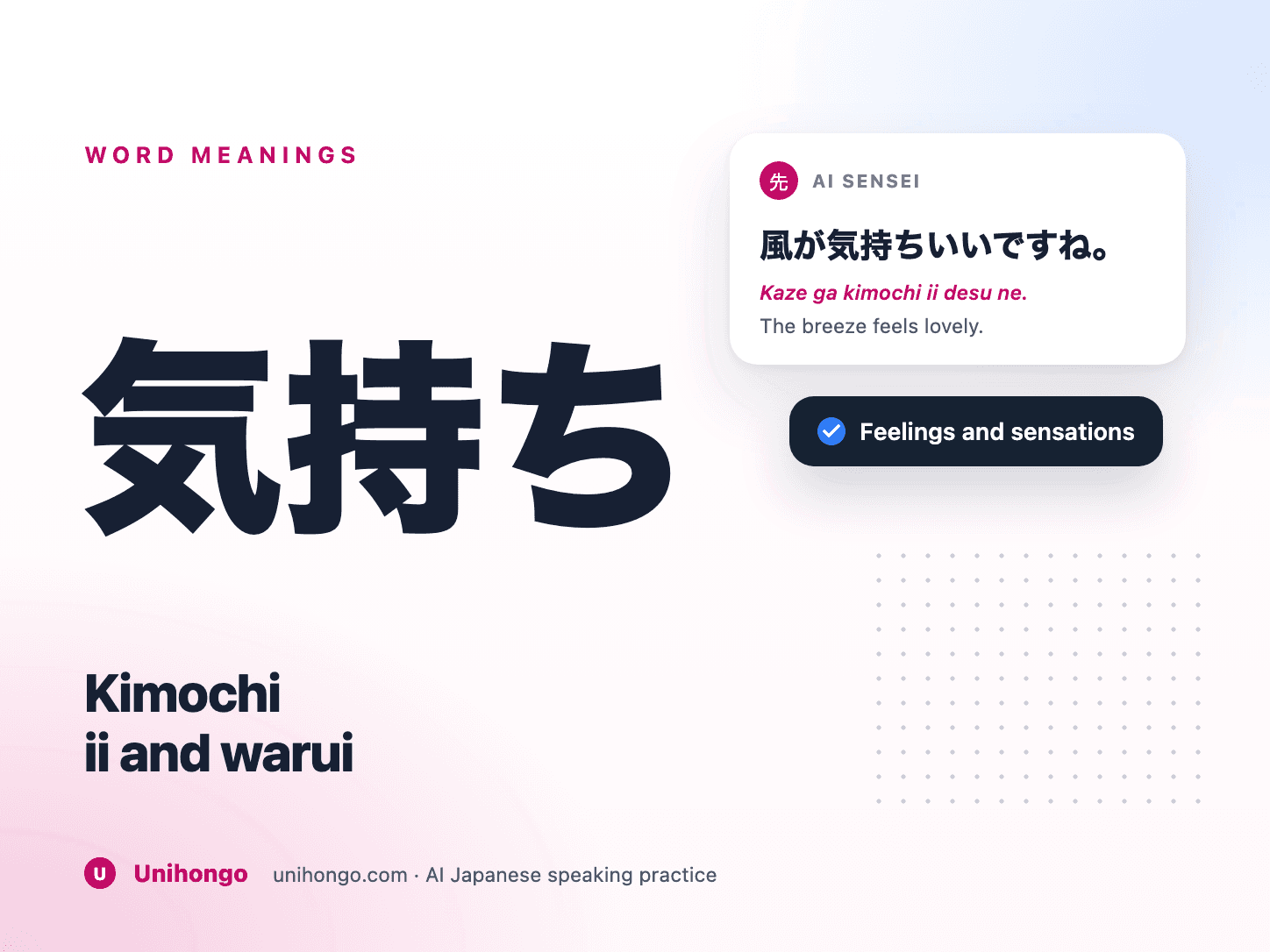
Kimochi joins ki, spirit or mind, with mochi, from motsu, to hold. It is how something is held in you: a sensation in the body, a mood, or an attitude towards someone.
English splits those into different words, which is why kimochi translates as feeling in one sentence and as consideration or intention in the next.
| Japanese | Romaji | Meaning |
|---|---|---|
| 気持ち | kimochi | Feeling |
| 気持ちいい | kimochi ii | Feels good, pleasant |
| 気持ち悪い | kimochi warui | Feels bad, sick, or creepy |
| 気持ちが伝わる | kimochi ga tsutawaru | Your feelings come across |
Kimochi, kibun and kanjō
Learners mix these up because English uses feel for all of them. The distinction is scope: kimochi is a specific feeling about something, kibun is your overall mood or physical state, and kanjō is emotion as a concept.
| Japanese | Romaji | Meaning |
|---|---|---|
| 今日は気分がいい。 | Kyō wa kibun ga ii. | I'm in a good mood today |
| ちょっと気分が悪いです。 | Chotto kibun ga warui desu. | I feel a little unwell |
| 相手の気持ちを考える | aite no kimochi o kangaeru | To think about the other person's feelings |
| 感情を抑える | kanjō o osaeru | To hold back your emotions |
| Word | What it describes | Typical use |
|---|---|---|
| Kimochi, feeling | A specific sensation or feeling about something | How the bath feels, how someone feels about you |
| Kibun, mood | Your general mood or physical condition | Being in a good mood, feeling unwell |
| Kanjō, emotion | Emotion as a concept | Controlling or expressing emotions |
Kimochi ii: when something feels good
Kimochi ii describes physical pleasantness: a hot bath, a cool breeze, fresh sheets, a stretch after sitting too long. It is a reaction to how something feels, not a description of being happy.
The past form kimochi yokatta is the natural thing to say after an onsen, and kimochi yosasō describes someone who looks comfortable.
| Japanese | Romaji | Meaning |
|---|---|---|
| 風が気持ちいいですね。 | Kaze ga kimochi ii desu ne. | The breeze feels lovely |
| 温泉、気持ちよかった。 | Onsen, kimochi yokatta. | The hot spring felt great |
| 猫が気持ちよさそうに寝ている。 | Neko ga kimochi yosasō ni nete iru. | The cat is sleeping so comfortably |
Kimochi warui: sick, uneasy or gross
Kimochi warui has two main senses. Physically it means nauseous, the feeling of carsickness or too much to drink. Emotionally it means unsettling, creepy or disgusting, whether about an insect, a strange story or a person's behaviour.
Context separates them easily, but the second sense makes it harsh when aimed at people. The slang kimoi, and the even shorter kimo, are blunt insults among young people.
| Japanese | Romaji | Meaning |
|---|---|---|
| 車に酔って気持ち悪い。 | Kuruma ni yotte kimochi warui. | I'm carsick and feel sick |
| なんか気持ち悪い話だね。 | Nanka kimochi warui hanashi da ne. | That's a creepy story |
| 虫が気持ち悪い。 | Mushi ga kimochi warui. | Bugs gross me out |
| キモい | kimoi | Gross, creepy: slang, often hurtful |
Hon no kimochi: the thought behind a gift
Kimochi also means the intention behind an action, and gift giving shows this most clearly. Handing over a present with hon no kimochi desu frames it as a small expression of feeling rather than something valuable.
The same idea lets you decline gracefully. O-kimochi dake itadakimasu means I will gratefully accept just the thought, a polite way to refuse an offer of money or a gift you cannot take.
| Japanese | Romaji | Meaning |
|---|---|---|
| ほんの気持ちです。 | Hon no kimochi desu. | It's just a small token |
| 気持ちばかりですが。 | Kimochi bakari desu ga. | It's only a small token, but please |
| お気持ちだけいただきます。 | O-kimochi dake itadakimasu. | I'll accept just the kind thought |
| お気持ちはうれしいです。 | O-kimochi wa ureshii desu. | I'm grateful for the thought |
Talking about other people's feelings
Japanese is careful about stating what someone else feels, so kimochi often appears in phrases that acknowledge feelings rather than describe them. Sono kimochi, wakaru yo is one of the most comforting things you can say to a friend.
When you want to express your own feelings clearly, kimochi o tsutaeru, to convey your feelings, is the natural verb.
| Japanese | Romaji | Meaning |
|---|---|---|
| その気持ち、わかるよ。 | Sono kimochi, wakaru yo. | I know how you feel |
| 気持ちはわかりますが…… | Kimochi wa wakarimasu ga… | I understand how you feel, but… |
| 感謝の気持ちを伝えたいです。 | Kansha no kimochi o tsutaetai desu. | I want to express my gratitude |
| 正直な気持ちを言うと…… | Shōjiki na kimochi o iu to… | To be honest about how I feel… |
These are the phrases that make conversations about difficult things possible. Unihongo's learn-by-playing games help keep them fresh, but saying them in a real exchange is what makes them available when a friend needs them.