
The four words to learn first
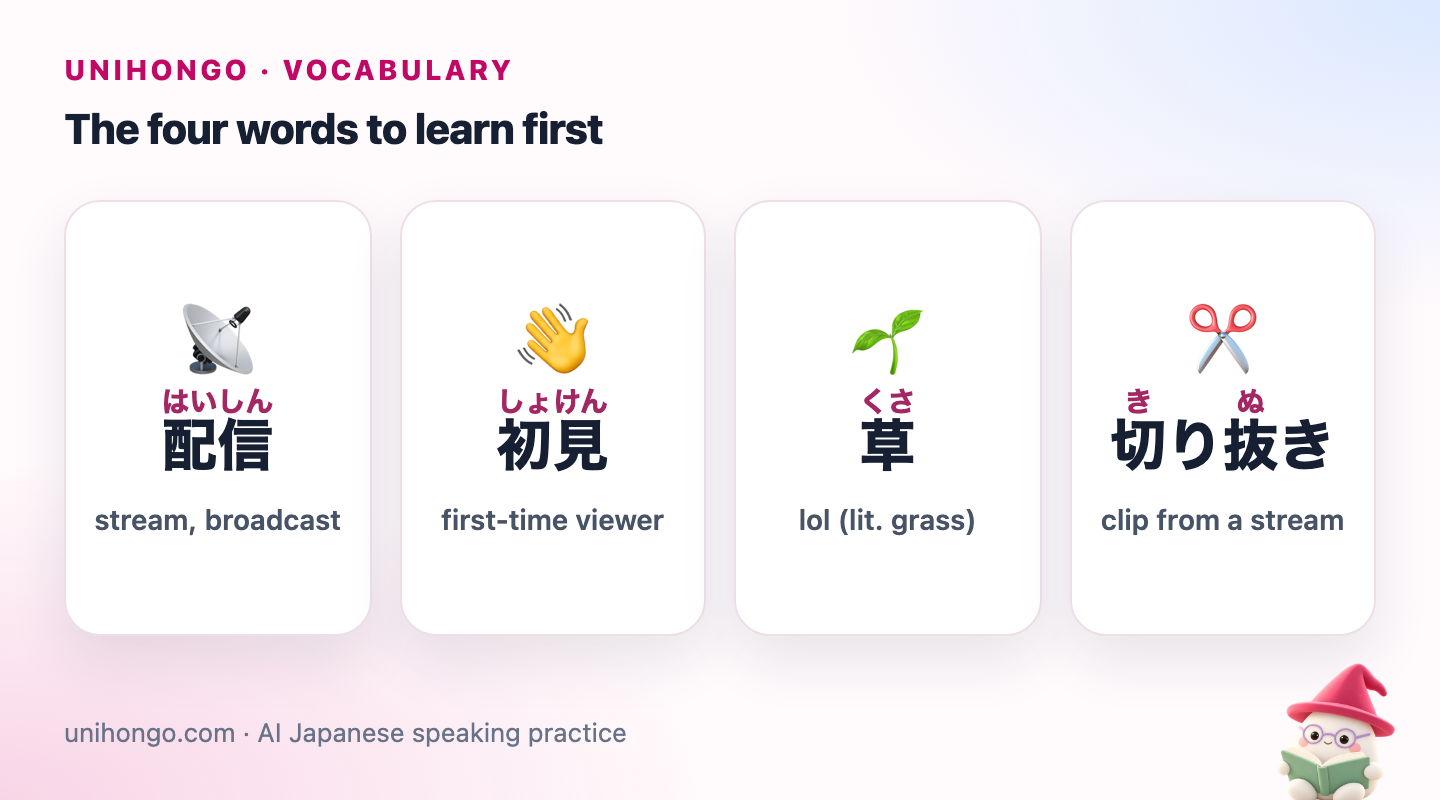
If you learn only four words before opening a stream, make them these. Haishin is the general word for distributing content online and, by extension, a live stream. Shoken is what you are on your first visit. Kusa is what the chat types when something is funny. Kirinuki are the short clips through which most people discover a streamer.
The rows after the cards add the next four you will meet. All of them appear in stream titles, descriptions and chat every day.
| Japanese | Romaji | Meaning |
|---|---|---|
| 配信 | haishin | stream, broadcast |
| 初見 | shoken | first-time viewer |
| 草 | kusa | lol (lit. grass) |
| 切り抜き | kirinuki | clip from a stream |
| スパチャ | supacha | Super Chat, a paid message |
| 同接 | dōsetsu | concurrent viewers |
| アーカイブ | ākaibu | archive, the saved stream |
| コメント | komento | comment, chat message |
Stream types: what waku means
Waku (枠) literally means "frame". On streaming sites it came to mean one slot, one single broadcast, and fans attach it to the kind of content. A singing stream is an utawaku, from uta, "song". Zatsudan (雑談) means "small talk", and a zatsudan stream is simply the streamer chatting with the audience.
| Japanese | Romaji | Meaning |
|---|---|---|
| 枠 | waku | a stream slot (lit. frame) |
| 歌枠 | utawaku | singing stream |
| 雑談 | zatsudan | chatting, casual talk |
| ゲーム実況 | gēmu jikkyō | game play with live commentary |
| 生配信 | nama haishin | live stream |
| コラボ | korabo | collaboration with other streamers |
| 耐久 | taikyū | endurance stream |
Zatsudan streams are the best choice for learners. There is no game noise, the topics are daily life, and the streamer speaks in whole sentences. Utawaku are pleasant but teach little conversation, and fast action games are the hardest to follow.
Reading the chat
Japanese chat is short and repetitive, which makes it friendly reading practice. Hundreds of people type the same few reactions. Besides the words below, you will see 8888, which stands for clapping because eight is read hachi and repeated hachi sounds like pachi pachi, the sound of applause. Rows of w are laughter, the origin of kusa.
| Japanese | Romaji | Meaning |
|---|---|---|
| 初見です。 | Shoken desu. | It's my first time here. |
| かわいい | kawaii | cute |
| ナイス | naisu | nice! |
| えらい | erai | well done, good for you |
| おめでとう | omedetō | congratulations |
| 待機 | taiki | waiting (before the start) |
| 助かる | tasukaru | thanks, I needed that |
Taiki is typed in the minutes before a stream begins, while viewers wait on the page. Tasukaru literally means "that helps", and viewers use it playfully to thank the streamer for something they enjoyed.
Greetings and sign-offs: kon and otsu
Many streamers have a personal greeting and a personal goodbye, and the chat types them back in chorus. The pattern is very regular. Greetings are often built on kon, the front of konnichiwa and konbanwa. Goodbyes are often built on otsu (おつ), a clipped form of otsukaresama, with part of the streamer's name attached.
You do not need to know each streamer's special version. The plain greetings are always correct, and nobody minds a polite newcomer.
| Japanese | Romaji | Meaning |
|---|---|---|
| こんばんは。 | Konbanwa. | Good evening. |
| おつ | otsu | good work, bye (clipped) |
| おつかれさまでした。 | Otsukaresama deshita. | Thank you for the stream. |
| またね。 | Mata ne. | See you. |
Money, numbers and channel words
Streamers talk about their channel constantly, so these terms are worth knowing by ear. Dōsetsu is short for dōji setsuzoku (同時接続), "simultaneous connections", the number of people watching at one moment. The closing request you will hear at the end of countless videos asks for a like and a subscription.
| Japanese | Romaji | Meaning |
|---|---|---|
| チャンネル登録 | channeru tōroku | subscribing to a channel |
| 高評価 | kōhyōka | a like, a thumbs up |
| メンバーシップ | menbāshippu | paid channel membership |
| 概要欄 | gaiyōran | description box |
| ネタバレ | netabare | spoiler |
| 視聴者 | shichōsha | viewer |
Chat etiquette on Japanese streams
Most streamers post rules in the description box, and they are similar from channel to channel. Following them matters more than perfect grammar.
- Read the rules in the gaiyōran before you type.
- Do not bring up other streamers unless the streamer mentions them first.
- No netabare: never reveal what happens next in a game or story.
- Do not give game instructions unless the streamer asks for help.
- Do not hold conversations with other viewers in the chat.
- Write to the streamer in polite desu and masu style, and keep it short.
Why streams are good listening practice, and where they fall short
Streams give you something rare: hours of unscripted Japanese from one voice. You get used to that person's speed and habits, and each stream becomes easier than the last. Streamers also read comments aloud before they answer them, so you often see a sentence in the chat and hear it a moment later. Archives let you pause and replay, and clips with captions let you check what you heard.
The limits are just as clear. The style is casual and playful, the slang changes quickly, and game talk is full of jargon. Treat streams as listening material and as a window on how friends talk. For the polite Japanese you need with strangers, shop staff and colleagues, practise separately.
Talking about streams in polite Japanese
The fan words fit neatly into ordinary polite sentences, which is how you will use them when you talk to another fan for the first time.
| Japanese | Romaji | Meaning |
|---|---|---|
| 昨日の配信、見ましたか。 | Kinō no haishin, mimashita ka. | Did you watch yesterday's stream? |
| 切り抜きで知りました。 | Kirinuki de shirimashita. | I found out through clips. |
| アーカイブで見ます。 | Ākaibu de mimasu. | I'll watch the archive. |
| 歌枠が一番好きです。 | Utawaku ga ichiban suki desu. | I like singing streams best. |
| 雑談配信は聞きやすいです。 | Zatsudan haishin wa kikiyasui desu. | Chat streams are easy to follow. |