
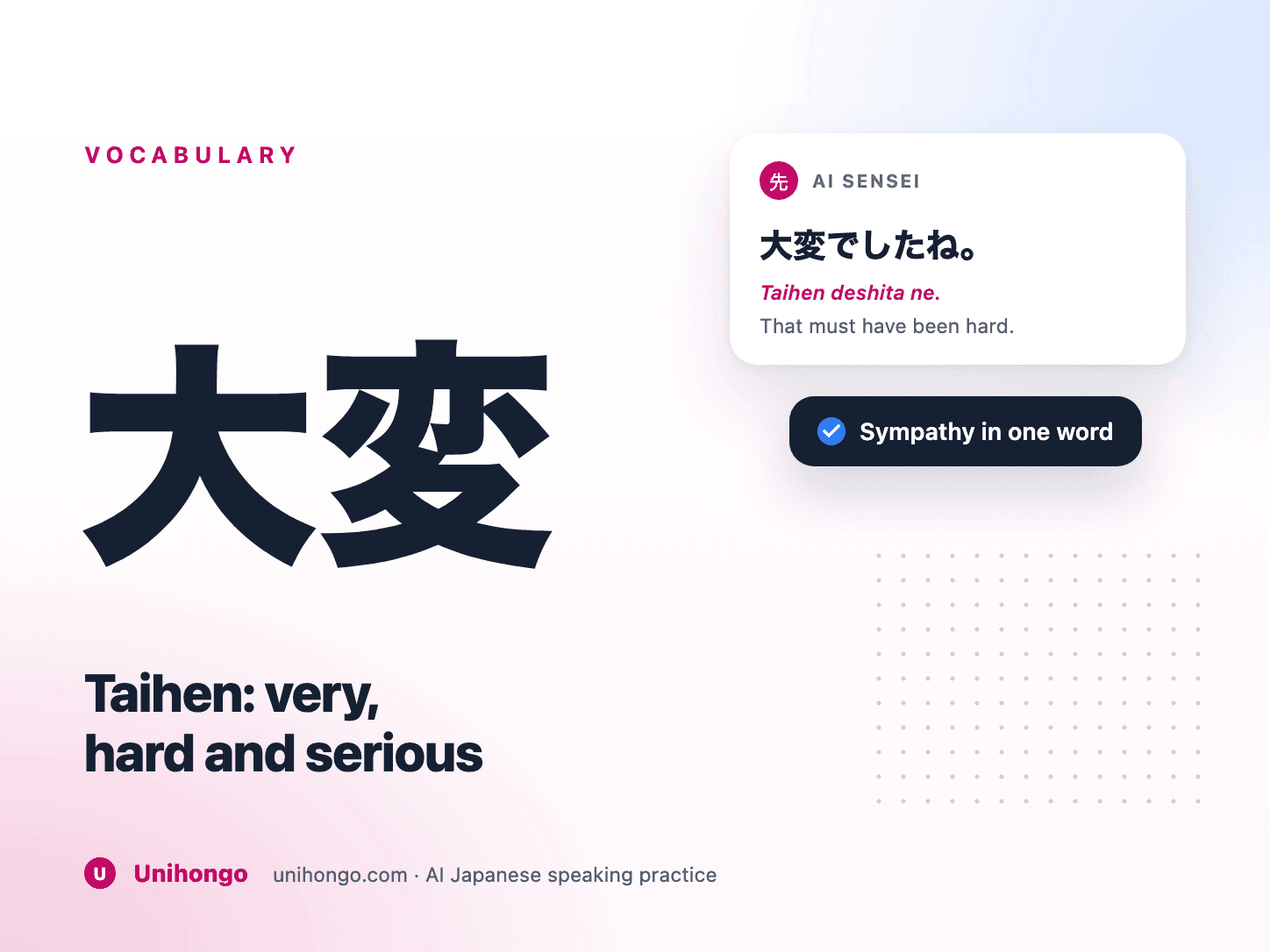
Two jobs for one word
Taihen, written 大変, literally means a big change. As a na-adjective it describes a situation that takes a lot of effort, causes trouble or is serious. As an adverb it means very or extremely, and in that role it belongs mostly to formal and business speech.
The two uses are easy to tell apart: the adjective comes with desu or na, and the adverb sits directly before another word.
| Japanese | Romaji | Meaning |
|---|---|---|
| 仕事が大変です。 | Shigoto ga taihen desu. | Work is really demanding. |
| 大変な一日でした。 | Taihen na ichinichi deshita. | It was a rough day. |
| 大変助かりました。 | Taihen tasukarimashita. | That was a great help. |
| 大変申し訳ありません。 | Taihen mōshiwake arimasen. | I am terribly sorry. |
Taihen desu ne as sympathy
When someone describes something demanding, such as a long commute, a new baby, exams or a move, the natural Japanese response acknowledges the effort instead of offering solutions. Taihen desu ne does exactly that.
The past form is for something already over, and adding deshō shows you can imagine it.
| Japanese | Romaji | Meaning |
|---|---|---|
| それは大変ですね。 | Sore wa taihen desu ne. | That sounds really hard. |
| 大変でしたね。 | Taihen deshita ne. | That must have been hard. |
| 引っ越し、大変だったでしょう。 | Hikkoshi, taihen datta deshō. | Moving must have been exhausting. |
| 毎日大変だね。 | Mainichi taihen da ne. | You have it tough every day. (casual) |
The replies are usually modest. People play down their own hardship rather than agreeing that it is terrible.
Replying when someone sympathises
If someone says taihen desu ne to you, a short, modest acknowledgement keeps the exchange warm. Thanking them for noticing is also natural.
| Japanese | Romaji | Meaning |
|---|---|---|
| いえいえ、なんとか。 | Ie ie, nantoka. | Oh, I'm getting by. |
| まあ、そうですね。 | Mā, sō desu ne. | Well, it is a bit. |
| ありがとうございます。なんとか頑張っています。 | Arigatō gozaimasu. Nantoka ganbatte imasu. | Thank you. I'm hanging in there. |
| でも、慣れてきました。 | Demo, narete kimashita. | But I'm getting used to it. |
Taihen as very, in formal speech
In apologies, thanks and service language, taihen intensifies the phrase that follows. It is standard in announcements, emails and customer service, and it sounds a step more formal than totemo.
In casual conversation, taihen as very sounds stiff. Friends say sugoku, totemo or honto ni instead.
| Japanese | Romaji | Meaning |
|---|---|---|
| 大変お待たせいたしました。 | Taihen omatase itashimashita. | Thank you very much for waiting. |
| 大変お世話になりました。 | Taihen o-sewa ni narimashita. | Thank you so much for all your help. |
| 大変失礼いたしました。 | Taihen shitsurei itashimashita. | I sincerely apologise. |
| 大変勉強になりました。 | Taihen benkyō ni narimashita. | I learned a great deal. |
Taihen da! when something goes wrong
Said suddenly and loudly, taihen da means oh no or something terrible has happened. You hear it in real emergencies, in minor domestic panics and constantly in dramas and manga.
Taihen na koto ni natta means things have become serious.
| Japanese | Romaji | Meaning |
|---|---|---|
| 大変だ! | Taihen da! | Oh no! Something's wrong! |
| 大変、財布がない! | Taihen, saifu ga nai! | Oh no, my wallet's gone! |
| 大変なことになりました。 | Taihen na koto ni narimashita. | Something serious has happened. |
| 大変です、火事です! | Taihen desu, kaji desu! | Emergency, there's a fire! |
Taihen, muzukashii and kitsui
All three can translate as hard, but they point at different kinds of difficulty. Choosing the right one makes your Japanese sound far more precise.
| Japanese | Romaji | Meaning |
|---|---|---|
| この問題は難しいです。 | Kono mondai wa muzukashii desu. | This question is difficult. |
| 子育ては大変です。 | Kosodate wa taihen desu. | Raising children is a lot of work. |
| この階段はきついですね。 | Kono kaidan wa kitsui desu ne. | These stairs are tough going. |
| Kind of difficulty | Best word family | Example situation |
|---|---|---|
| Hard to understand or solve | The word for difficult | A grammar question or an exam problem |
| Demanding, a lot to cope with | The word for demanding and serious | Moving house or raising small children |
| Physically or mentally tough, tight | The casual word for tough or tight | Steep stairs, a packed schedule, tight shoes |
| Serious or alarming | The word for demanding and serious | A sudden accident or a lost passport |