
Bimyō meaning: the dictionary says subtle, friends mean meh
The kanji 微 means tiny or faint and 妙 means delicate or strange. Put together, bimyō originally described something so fine that it is hard to pin down: a subtle taste, a delicate balance, a fine distinction. That meaning is alive and well in phrases such as bimyō na chigai, a subtle difference.
In casual conversation, though, the word drifted. If something is hard to pin down as good, it is probably not good. So today, when a friend says bimyō about a film, they usually mean it was so-so or disappointing, and when they say it about a plan, they mean it might not work. These four lines cover most of what you will hear.
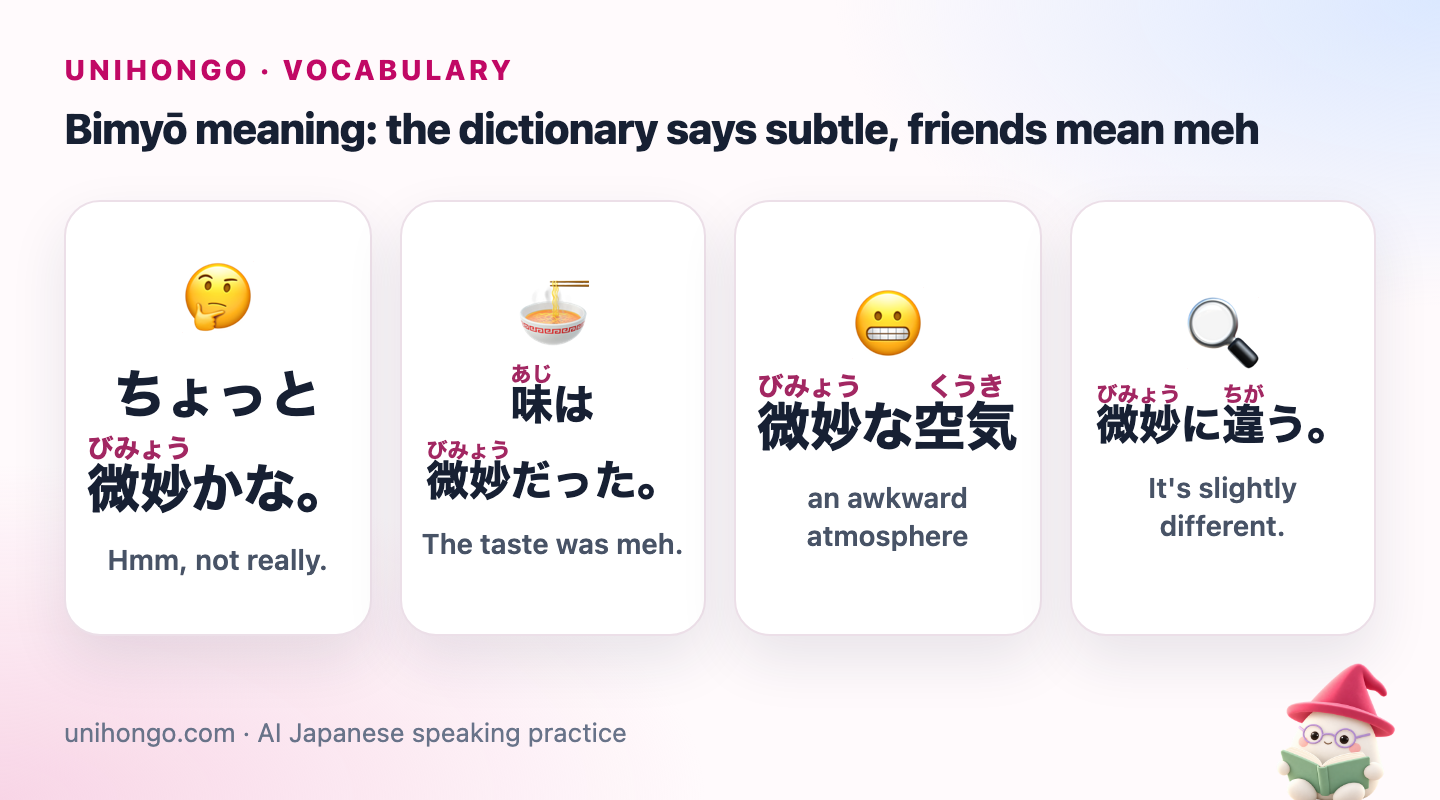
| Japanese | Romaji | Meaning |
|---|---|---|
| ちょっと微妙かな。 | Chotto bimyō ka na. | Hmm, not really. |
| 味は微妙だった。 | Aji wa bimyō datta. | The taste was meh. |
| 微妙な空気 | bimyō na kūki | an awkward atmosphere |
| 微妙に違う。 | Bimyō ni chigau. | It's slightly different. |
Notice how often bimyō comes wrapped in softeners: chotto (a little), ka na (I wonder), and a trailing pause. The word itself is already soft, and speakers make it softer still. That is the whole point of using it.
Bimyō as a soft verdict on food, films and outfits
Japanese conversation tends to avoid flat negative judgements, especially about things other people like or made. Bimyō fills a useful gap: it lets you say you were not impressed while leaving room for the other person to disagree. Friends use it constantly about restaurants, new snacks, films, games, songs and clothes.
| Japanese | Romaji | Meaning |
|---|---|---|
| あの映画、どうだった? | Ano eiga, dō datta? | Friend: How was that film? |
| 正直、微妙だった。 | Shōjiki, bimyō datta. | Honestly, it was so-so. |
| この色、微妙じゃない? | Kono iro, bimyō ja nai? | Isn't this colour a bit off? |
| 新作のお菓子、微妙だね。 | Shinsaku no okashi, bimyō da ne. | The new snack is kind of meh, huh. |
| 悪くはないけど、微妙。 | Waruku wa nai kedo, bimyō. | It's not bad, but it's meh. |
| Word | Strength | Typical feeling |
|---|---|---|
| saikō (最高) | Very positive | The best, loved it |
| mā mā (まあまあ) | Neutral to mildly positive | It was okay, decent |
| bimyō (微妙) | Mildly negative, vague | So-so, not quite, hard to say |
| imaichi (いまいち) | Mildly negative, clear | Not good enough, disappointing |
| mazui / hidoi (まずい / ひどい) | Strongly negative | Tastes bad, terrible |
Mā mā and bimyō sit side by side, but they lean in different directions: mā mā leans toward okay, bimyō leans toward not okay. If you enjoyed a meal moderately, mā mā is kinder to the person who recommended it.
Bimyō as a gentle no to plans and invitations
The second big job of bimyō is about possibility rather than quality. When someone asks if you can make it on Saturday, bimyō means you are not sure, and very often it works as a polite no. Many Japanese speakers avoid refusing an invitation with a bare no, so a vague answer that the listener can read is a natural choice.
If you really are unsure, say when you will know. If you mean no, offer another option so the conversation stays warm.
| Japanese | Romaji | Meaning |
|---|---|---|
| 土曜日はちょっと微妙かな。 | Doyōbi wa chotto bimyō ka na. | Saturday is a bit iffy for me. |
| 間に合うか微妙です。 | Maniau ka bimyō desu. | I'm not sure I'll make it in time. |
| 明日になったらわかるよ。 | Ashita ni nattara wakaru yo. | I'll know tomorrow. |
| 日曜日なら行けるよ。 | Nichiyōbi nara ikeru yo. | I can go if it's Sunday. |
How your voice changes bimyō
Bimyō is a word people perform. The same three syllables can be a careful verdict, a question or a joke depending on how you say them. A short pause before the word, often filled with ūn, signals that you are choosing your words. A falling tone states your opinion. A rising tone asks whether the other person agrees, and drawing out the end makes it playful or exaggerated.
| Japanese | Romaji | Meaning |
|---|---|---|
| うーん、微妙。 | Ūn, bimyō. | Hmm, meh. |
| 微妙?そうかな。 | Bimyō? Sō ka na. | Iffy? Do you think so? |
| それ、微妙じゃない? | Sore, bimyō ja nai? | Isn't that a bit iffy? |
| How you say it | What it signals |
|---|---|
| Pause, then a flat bimyō | A considered verdict: I was not impressed |
| Rising bimyō? | Asking: do you think it's iffy? |
| Bimyō ja nai? with a rise | A soft opinion: don't you think it's a bit off? |
| Long, sing-song bimyō | Teasing or joking, often among close friends |
Bimyō na and bimyō ni: the original meaning still matters
Before a noun, bimyō na describes something delicate, subtle or awkward. Before a verb or adjective, bimyō ni means slightly or subtly. These uses are common in both casual speech and writing, and they are where the word's original meaning shows through.
The most useful one for social life is bimyō na kūki, the awkward atmosphere after a joke falls flat or someone mentions the wrong topic. Bimyō na kankei describes a relationship that is hard to label, such as two people who are more than friends but not quite dating.
| Japanese | Romaji | Meaning |
|---|---|---|
| 微妙な違いがあります。 | Bimyō na chigai ga arimasu. | There is a subtle difference. |
| 一瞬、微妙な空気になった。 | Isshun, bimyō na kūki ni natta. | For a moment things got awkward. |
| 二人は微妙な関係だね。 | Futari wa bimyō na kankei da ne. | Those two have a hard-to-define relationship. |
| 色が微妙に違う。 | Iro ga bimyō ni chigau. | The colour is slightly different. |
| 微妙な問題ですね。 | Bimyō na mondai desu ne. | That's a delicate issue, isn't it? |
Bimyō na mondai, a delicate issue, is polite and works at work. It signals that a topic needs care, not that it is bad.
Common mistakes with bimyō
- Using it as a compliment. In casual speech bimyō is almost never praise. To say a flavour is gentle and good, say yasashii aji instead.
- Saying it flatly about someone's own work. Bimyō about a friend's cooking, drawing or new haircut can sting. Ask a question first or mention what you liked.
- Giving no reason. A bare bimyō can sound as if you cannot be bothered to explain. Follow it with the reason: amasugite, too sweet; nagasugite, too long.
- Using it with superiors. Bimyō desu to a manager sounds vague and casual. Use muzukashii or a clear explanation.
- Mixing it up with myō (妙), which on its own means strange or odd, as in myō na hanashi, a strange story.
Mini dialogue: the new ramen place was… bimyō
You tried the ramen shop that just opened near the station, and a friend who has not been yet asks how it was. A natural answer has three parts: the verdict, a reason, and something fair to balance it. Here is how it might go.

| Japanese | Romaji | Meaning |
|---|---|---|
| 新しいラーメン屋、どうだった? | Atarashii rāmen-ya, dō datta? | Friend: How was the new ramen place? |
| うーん、ちょっと微妙だった。 | Ūn, chotto bimyō datta. | You: Hmm, it was a bit meh. |
| え、そうなんだ。何が? | E, sō nan da. Nani ga? | Friend: Oh really? What was? |
| スープがしょっぱすぎてさ。 | Sūpu ga shoppasugite sa. | You: The soup was way too salty. |
| でも、麺はおいしかったよ。 | Demo, men wa oishikatta yo. | You: But the noodles were good. |
| じゃあ、また行く? | Jā, mata iku? | Friend: So would you go again? |
| うーん、それも微妙かな。 | Ūn, sore mo bimyō ka na. | You: Hmm, that's iffy too. |