
The four winter words to learn first
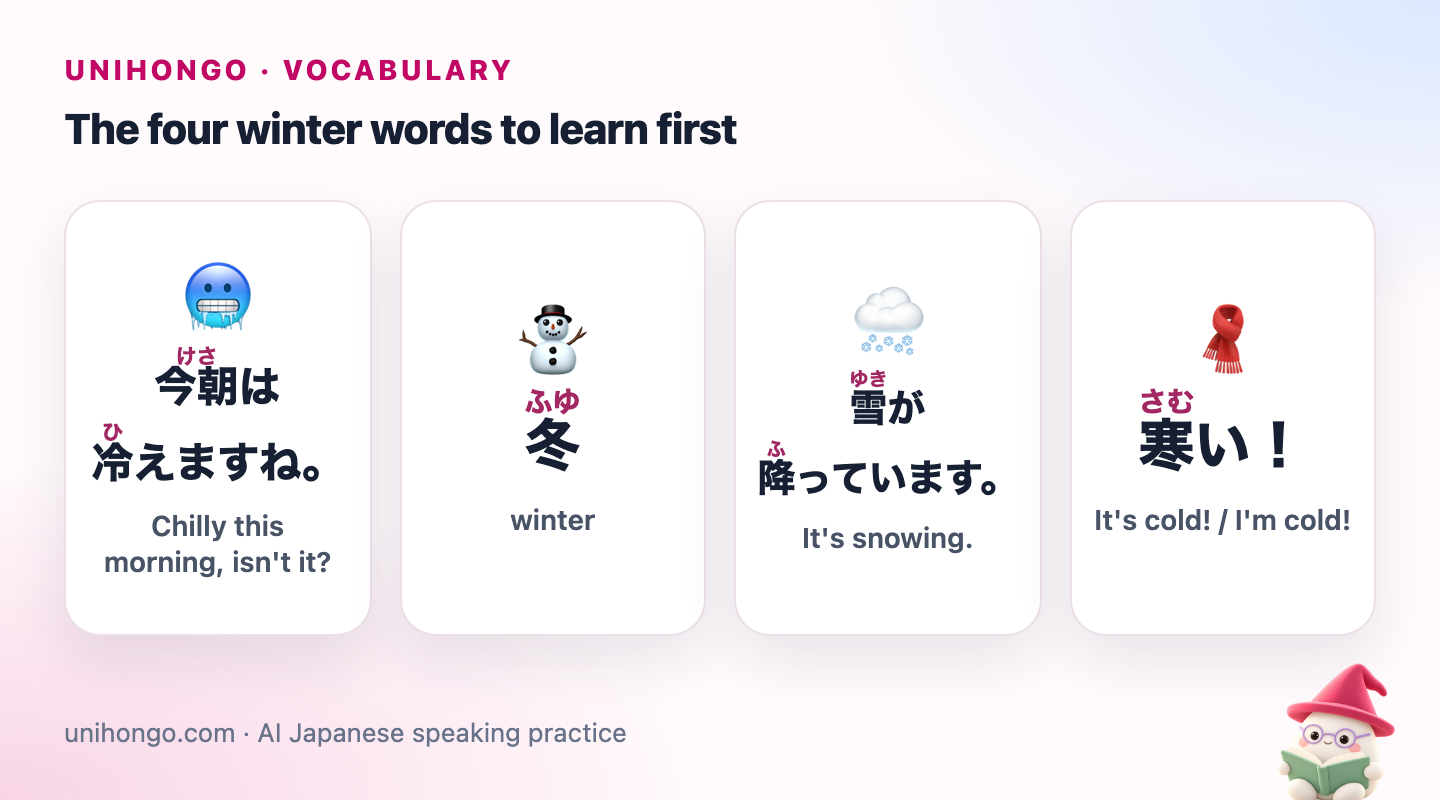
Start with these four. Fuyu is winter itself. Yuki is snow, with the verb furu for falling and tsumoru for piling up. Samui is the word you will say most, and kesa wa hiemasu ne is the line you will hear at every bus stop on a frosty morning.
| Japanese | Romaji | Meaning |
|---|---|---|
| 今朝は冷えますね。 | Kesa wa hiemasu ne. | Chilly this morning, isn't it? |
| 冬 | fuyu | winter |
| 雪が降っています。 | Yuki ga futte imasu. | It's snowing. |
| 寒い! | Samui! | It's cold! / I'm cold! |
Samui, tsumetai and hieru: three ways to be cold
English uses cold for everything. Japanese splits it three ways, and mixing them up is the most common winter mistake.
| Japanese | Romaji | Meaning |
|---|---|---|
| 今日は寒いですね。 | Kyō wa samui desu ne. | It's cold today, isn't it? |
| 手が冷たい。 | Te ga tsumetai. | My hands are cold. (casual) |
| 体が冷えました。 | Karada ga hiemashita. | I got chilled through. |
| ビールが冷えていますよ。 | Bīru ga hiete imasu yo. | The beer is nice and cold. |
| 冷たい風が吹いています。 | Tsumetai kaze ga fuite imasu. | A cold wind is blowing. |
| Word | Used for | Do not use it for |
|---|---|---|
| 寒い samui | The weather, a room, how your whole body feels | Objects you touch, such as water or a drink |
| 冷たい tsumetai | Things that feel cold to touch: water, wind, hands, a drink | The weather in general |
| 冷える hieru | Getting cold or chilled: a morning, your body, a drink in the fridge | A one-off cold object |
Tsumetai also means cold-hearted, as in tsumetai hito, a cold person, so be careful: anata wa tsumetai sounds like you are unkind, not that your hands are cold. Say te ga tsumetai instead.
Snow, ice and frost
Japanese has many snow words, but these are the ones you will hear on weather forecasts and in daily speech. Ōyuki (大雪) is heavy snowfall and appears in weather warnings. Shimo (霜) is frost, and shimobashira (霜柱) are the little columns of ice that push up out of the soil on cold mornings; children love stepping on them. Tsurara (つらら) are icicles.
| Japanese | Romaji | Meaning |
|---|---|---|
| 初雪 | hatsuyuki | the first snow of the season |
| 粉雪 | konayuki | powder snow |
| ぼたん雪 | botan yuki | big, wet snowflakes |
| みぞれ | mizore | sleet |
| 吹雪 | fubuki | snowstorm, blizzard |
| 雪が積もりました。 | Yuki ga tsumorimashita. | The snow has piled up. |
| 道が凍っています。 | Michi ga kōtte imasu. | The road is icy. |
| 霜が降りました。 | Shimo ga orimashita. | There was a frost. |
Wind, darkness and the feeling of winter
Kogarashi (木枯らし) is the dry north wind that blows the last leaves off the trees in late autumn and early winter. Fuyubare (冬晴れ) is a clear, crisp winter day, very common on the Pacific side of Japan, where winters are sunny and dry while the Sea of Japan side gets heavy snow. The sun sets early, so people say hi ga mijikai, the days are short.
Hieshō (冷え性) is a word you will hear often: it describes someone whose hands and feet are always cold. It is a description of how a person is, used in everyday conversation and in adverts for socks and warming drinks.
| Japanese | Romaji | Meaning |
|---|---|---|
| 木枯らしが吹いています。 | Kogarashi ga fuite imasu. | The cold north wind is blowing. |
| 日が短くなりましたね。 | Hi ga mijikaku narimashita ne. | The days have got short, haven't they? |
| 私、冷え性なんです。 | Watashi, hieshō nan desu. | I always have cold hands and feet. |
| 手がかじかんで書けません。 | Te ga kajikande kakemasen. | My hands are too numb to write. |
Winter foods and drinks
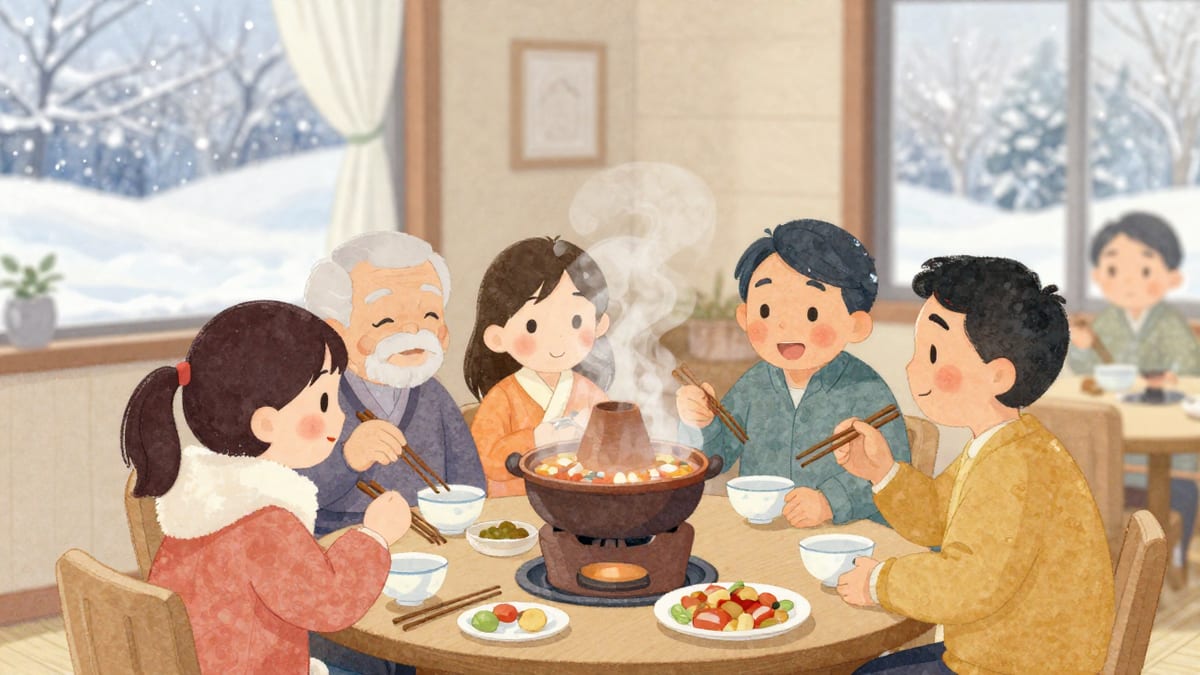
Food is half of winter in Japan. Hot pot, nabe (鍋), shared from one pot on the table, is the classic winter dinner, with many regional and family versions. Convenience stores sell oden (おでん), simmered fishcakes, daikon and eggs in broth, from the counter, and steamed buns, nikuman (肉まん), from a heated case. Roasted sweet potatoes, yakiimo (焼き芋), are sold from trucks and in supermarkets. Mandarins, mikan, appear on every kotatsu.
| Japanese | Romaji | Meaning |
|---|---|---|
| 今夜は鍋にしよう。 | Kon'ya wa nabe ni shiyō. | Let's have hot pot tonight. (casual) |
| おでんの大根が好きです。 | Oden no daikon ga suki desu. | I love the daikon in oden. |
| 焼き芋、甘いね! | Yakiimo, amai ne! | This sweet potato is so sweet! (casual) |
| 温まりますね。 | Atatamarimasu ne. | This really warms you up, doesn't it? |
| ホットでお願いします。 | Hotto de onegai shimasu. | Hot, please. (ordering a drink) |
Winter clothes
| Japanese | Romaji | Meaning |
|---|---|---|
| マフラーを巻いて行きなさい。 | Mafurā o maite ikinasai. | Wear your scarf when you go. (parent to child) |
| 手袋を忘れました。 | Tebukuro o wasuremashita. | I forgot my gloves. |
- コート kōto: a coat. ダウン daun or ダウンジャケット: a down jacket.
- マフラー mafurā: a scarf. Not a car part in Japanese.
- 手袋 tebukuro: gloves. ミトン miton: mittens.
- ニット帽 nittobō: a knitted hat.
- タイツ taitsu: tights, and 厚手の靴下 atsude no kutsushita: thick socks.
- 防寒着 bōkangi: warm, cold-weather clothing in general.
Clothes verbs depend on the body part: kōto o kiru for a coat, tebukuro o hameru or tebukuro o suru for gloves, mafurā o maku for a scarf you wrap, and bōshi o kaburu for a hat.
Common learner mistakes with winter words
Most winter mistakes come from translating English cold directly, or from using a word that is correct in the dictionary but odd in conversation. These are the ones Japanese teachers hear every year.
- Saying mizu ga samui for cold water. Objects you touch are tsumetai: mizu ga tsumetai.
- Saying anata wa tsumetai to mean your hands are cold. It sounds like you are calling the person cold-hearted. Say te ga tsumetai ne.
- Using yuki ga furimasu for snow that is falling right now. For the present moment, use yuki ga futte imasu.
- Saying kōri ga arimasu for an icy road. People describe the road instead: michi ga kōtte imasu or michi ga tsurutsuru desu.
- Calling a scarf sukāfu. A winter scarf is mafurā; sukāfu is a light fashion scarf.
- Saying kaze o motte imasu, I have a cold. The verb is hiku: kaze o hikimashita, I caught a cold.
Weather small talk in Japan usually ends with agreement, not information. When someone says samui desu ne, the natural reply is hontō ni samui desu ne, it really is, rather than a fact about the temperature.
Expressions people actually say, and a mini dialogue
These lines are the glue of winter conversation, from the office to the corner shop. The last one is the standard caring close for a message or email in winter.
| Japanese | Romaji | Meaning |
|---|---|---|
| 寒くなりましたね。 | Samuku narimashita ne. | It's got cold, hasn't it? |
| 風邪をひかないようにね。 | Kaze o hikanai yō ni ne. | Don't catch a cold. (casual, caring) |
| お体に気をつけてください。 | Okarada ni ki o tsukete kudasai. | Please take care of yourself. (polite) |
| おはようございます。今朝は冷えますね。 | Ohayō gozaimasu. Kesa wa hiemasu ne. | Coworker: Morning. It's chilly today. |
| 本当に。雪が降るかもしれませんね。 | Hontō ni. Yuki ga furu kamo shiremasen ne. | You: Really. It might snow. |
| 今日は鍋がいいですね。 | Kyō wa nabe ga ii desu ne. | Coworker: A hot pot would be nice today. |