
What māmā means
Māmā is a doubled form of mā, a softening word that means well or kind of. Doubled, it describes something that is passable, decent or fairly good. It can stand alone as an answer, take desu, describe a noun with no, or work as an adverb.
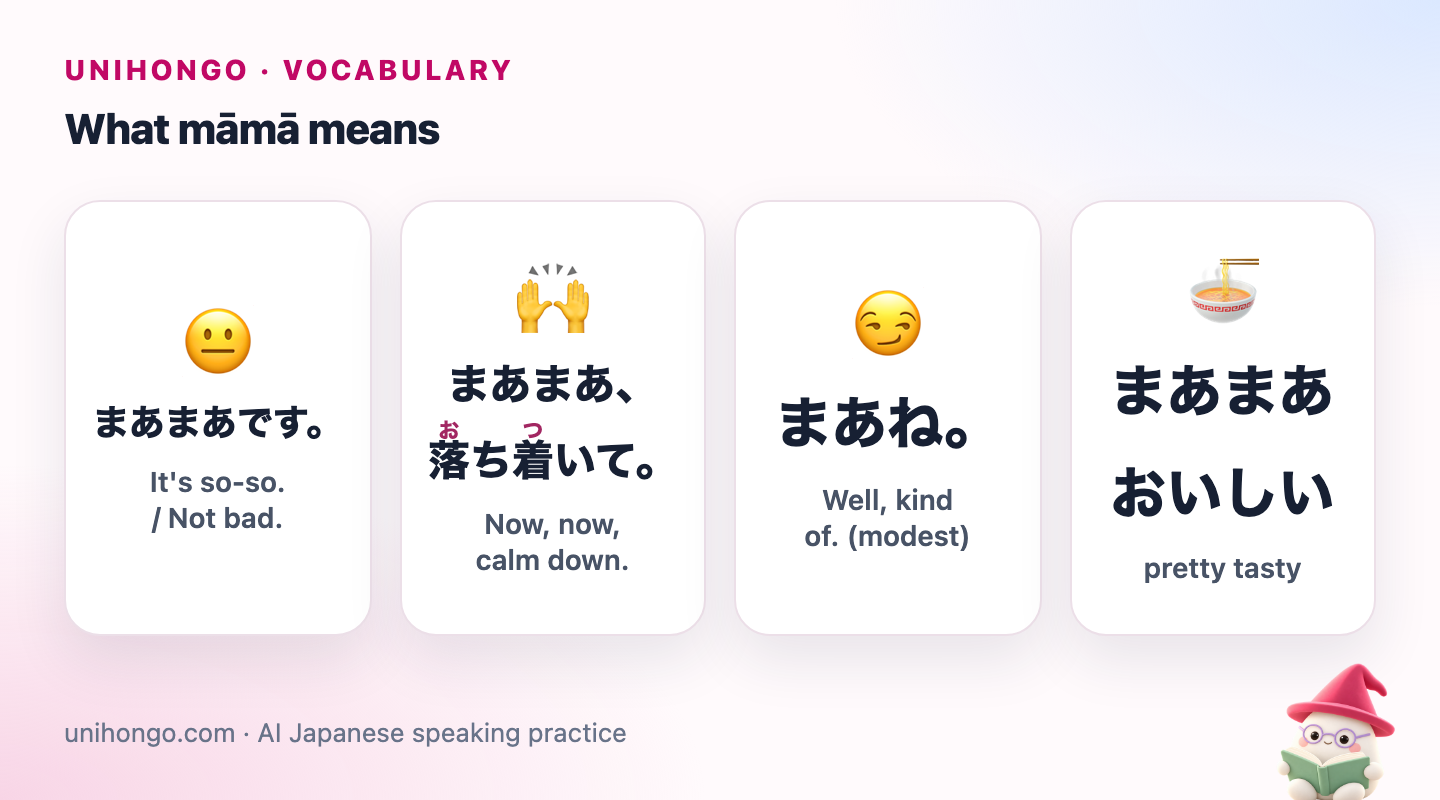
It also has a second, quite different job: calming people down. These four lines show its range.
| Japanese | Romaji | Meaning |
|---|---|---|
| まあまあです。 | Māmā desu. | It's so-so. / Not bad. |
| まあまあ、落ち着いて。 | Māmā, ochitsuite. | Now, now, calm down. |
| まあね。 | Mā ne. | Well, kind of. (modest) |
| まあまあおいしい | māmā oishii | pretty tasty |
How positive is māmā?
Think of a rough scale. Māmā sits above average but below good: decent, acceptable, fairly. It is warmer than futsū, ordinary, and much warmer than bimyō, iffy. The exact feeling depends on context and tone, but this table is a reliable guide.
| Japanese | Romaji | Meaning |
|---|---|---|
| テストはまあまあだった。 | Tesuto wa māmā datta. | The test went okay. (casual) |
| まあまあの成績 | māmā no seiseki | decent grades |
| 電車はまあまあ混んでいた。 | Densha wa māmā konde ita. | The train was fairly crowded. |
| 結構よかったよ。 | Kekkō yokatta yo. | It was actually pretty good. (casual) |
| Word | Rough feeling | Example use |
|---|---|---|
| saikō | The best, amazing | A wonderful trip |
| kekkō ii | Quite good | A film better than expected |
| māmā | Not bad, decent | A test, a meal, your week |
| futsū | Ordinary, average | Nothing special |
| bimyō | Iffy, hard to say | A meal you did not really like |
| imaichi | Not quite there | A disappointing sequel |
Māmā also softens amounts and distances. Māmā takai, fairly expensive, or māmā tōi, quite far, gives an honest but gentle estimate, which is handy when you give directions or recommend a shop.
The modest māmā
Japanese speakers often play down their own skills, family and work, and māmā is a perfect tool for that. When a fluent friend says their English is māmā, or a colleague says the project went māmā, they may well mean it went well. Listen for the context and the smile.
This makes māmā a safe answer for you too. When someone compliments your Japanese, māmā desu yo or mada māmā desu sounds modest without the awkward heavy denial of zenzen dame desu.
In polite conversation, māmā often comes after okagesama de, thanks to you, which adds gratitude to the modesty. A manager asked how business is going may answer māmā desu ne with a smile, which can mean anything from fine to very good; the follow-up questions usually tell you more.
| Japanese | Romaji | Meaning |
|---|---|---|
| 日本語、上手ですね。 | Nihongo, jōzu desu ne. | Coworker: Your Japanese is good. |
| いえいえ、まだまあまあです。 | Ieie, mada māmā desu. | Oh no, it's just so-so for now. (modest) |
| 元気? | Genki? | Friend: How are you? |
| うん、まあまあかな。 | Un, māmā ka na. | Yeah, I'm doing okay, I guess. |
| 仕事はどうですか。 | Shigoto wa dō desu ka. | How is work? |
| おかげさまで、まあまあです。 | Okagesama de, māmā desu. | It's going fine, thank you. (polite, modest) |
Careful: māmā about someone else's effort
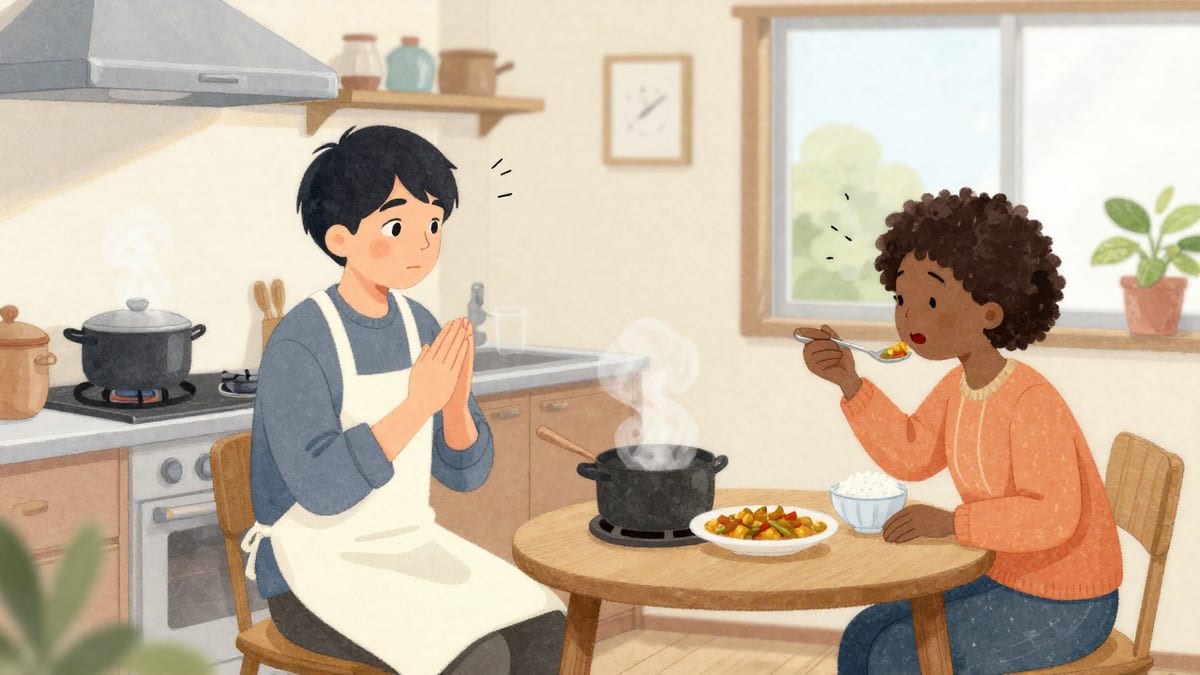
The same modesty works against you when you talk about other people's things. If a friend cooked for you, gave you a present or played in a concert and asks what you thought, māmā sounds like faint praise: it was all right, I suppose. Some close friends joke this way, but in most situations it will disappoint.
Say something specific and warm instead. If you honestly did not love it, praise one part you did like.
| Japanese | Romaji | Meaning |
|---|---|---|
| どう?おいしい? | Dō? Oishii? | Friend: So? Is it good? |
| すごくおいしい! | Sugoku oishii! | It's really good! |
| このスパイス、いいね。 | Kono supaisu, ii ne. | I love these spices. |
| まあまあかな。 | Māmā ka na. | Hmm, it's okay, I guess. (can hurt) |
Now, now: the calming māmā and plain mā
Said slowly and softly, often with hands raised, māmā calms people down. You hear it when friends argue, when someone is getting too worked up, or when a host waves away a guest's polite refusals. In that use it means now, now, come on or never mind. Some older speakers also say māmā as gentle surprise, as in my, my, you came all this way.
The calming māmā is usually lower and softer, both syllables gently stretched, often with a patting or pushing-down movement of the hands. The rating māmā is flatter and quicker.
Plain mā is the softener inside the word. On its own it means well or I suppose; mā ii ka is oh well, never mind; and mā ne, with a little smile, is a modest yes, as in sort of, said by someone who is quite pleased.
| Japanese | Romaji | Meaning |
|---|---|---|
| まあまあ、そう言わずに。 | Māmā, sō iwazu ni. | Come on, don't say that. |
| まあまあ、どうぞどうぞ。 | Māmā, dōzo dōzo. | Host: Now, now, please, go ahead. |
| まあまあ、よく来たね。 | Māmā, yoku kita ne. | My, my, how nice of you to come. (older speaker) |
| まあ、いいか。 | Mā, ii ka. | Oh well, never mind. |
| 彼女できたの?まあね。 | Kanojo dekita no? Mā ne. | Got a girlfriend? Well, kind of. (casual) |
Sokosoko, bochibochi and other so-so words
A few neighbours of māmā are worth knowing. Sokosoko means reasonably, more or less adequately, and can sound a little more positive. Bochibochi is the classic Kansai answer to how is business: getting by, little by little. Futsū is plain average, and bimyō, which has its own guide, is hard to say, slightly negative.
| Japanese | Romaji | Meaning |
|---|---|---|
| そこそこできます。 | Sokosoko dekimasu. | I can do it reasonably well. |
| そこそこ人気がある。 | Sokosoko ninki ga aru. | It's fairly popular. |
| ぼちぼちです。 | Bochibochi desu. | Getting by. (Kansai flavour) |
| 普通かな。 | Futsū ka na. | It's average, I guess. |
Mini dialogue: Monday small talk
| Japanese | Romaji | Meaning |
|---|---|---|
| 週末、どうでした? | Shūmatsu, dō deshita? | Coworker: How was your weekend? |
| まあまあでした。ちょっと雨でしたけど。 | Māmā deshita. Chotto ame deshita kedo. | You: Not bad. It rained a bit, though. |
| どこか行きました? | Doko ka ikimashita? | Coworker: Did you go anywhere? |
| 近くの温泉に行きました。まあまあ混んでましたね。 | Chikaku no onsen ni ikimashita. Māmā kondemashita ne. | You: I went to a nearby onsen. It was fairly crowded. |
| いいなあ。私は家でぼーっとしてました。 | Ii nā. Watashi wa ie de bōtto shitemashita. | Coworker: Lucky you. I just lazed around at home. |
Get the tone right with Mocchi
- Tell Mocchi: Give me six situations and ask me whether māmā sounds modest, fine or rude in each. Mocchi explains each answer and keeps a note of the ones you misjudge.
- Write your answers to three compliments and send them with /correct, so Mocchi can suggest warmer or more modest versions.
- Then open the pronunciation coach and choose a sentence intonation drill: the calming māmā and the so-so māmā differ mostly in tone, and hearing your own recording next to the model makes that difference clear.
Common learner mistakes
- Rating a friend's cooking or gift as māmā. Use oishii, ureshii or a specific compliment instead.
- Taking a Japanese speaker's māmā about their own skill at face value. It is often modest, so the skill may be quite good.
- Pronouncing it with short vowels, mama. That is the word for mum; hold both long a sounds.
- Using māmā in formal reports. In writing, choose specific words such as ōmune ryōkō, generally good.
- Forgetting the calming use. If someone says māmā while raising their hands, they are not rating anything.