
What the word is actually saying
Mottainai is an i-adjective, so it behaves like takai or atsui: it can end a sentence on its own, take desu for politeness, and sit in front of a noun as in mottainai tsukaikata, a wasteful way of using something. What makes it hard to translate is not the grammar but the feeling. The speaker is saying that the thing in question still holds value, and that letting the value go unused is a small loss worth remarking on.
Because of that, it is rarely a complaint about a person. It is a comment about the thing. When a parent says it about a bowl of rice, the subject of the sentence is the rice, not the child. Learners who translate it as you are being wasteful make the word sound sharper than it is. Keep it aimed at the object and it stays gentle.
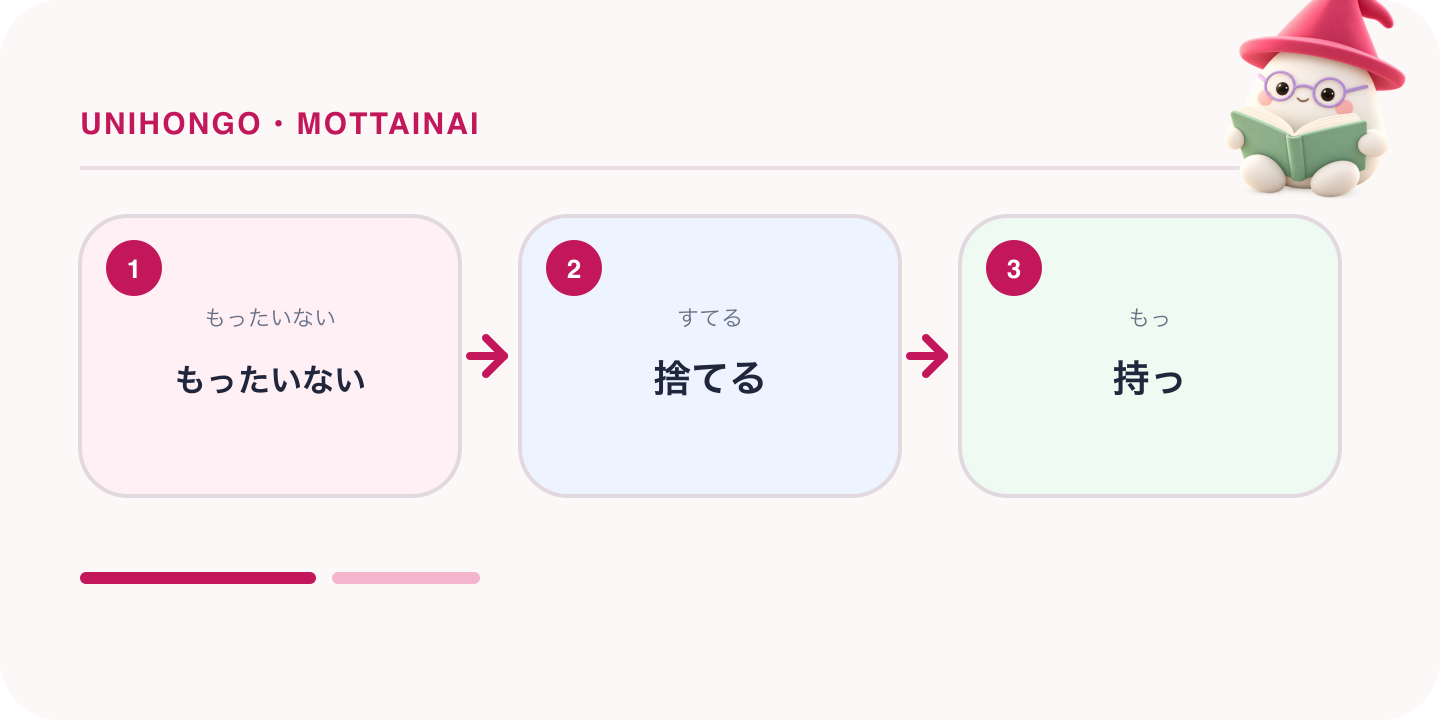
The five everyday situations
| Situation | Natural sentence | Why mottainai fits |
|---|---|---|
| Food left over | 残すのはもったいないです。Nokosu no wa mottainai desu. | The food is still good and will be binned |
| A working item | まだ使えるのに、もったいない。Mada tsukaeru no ni, mottainai. | The value is intact but about to be lost |
| Time | 時間がもったいないです。Jikan ga mottainai desu. | Hours that could have been used well |
| A chance | せっかくの機会がもったいないですよ。Sekkaku no kikai ga mottainai desu yo. | An opportunity that will not come again |
| Unused ability | その才能を使わないのはもったいない。Sono sainō o tsukawanai no wa mottainai. | Something good in a person is sitting idle |
| Utilities | 電気をつけっぱなしはもったいないよ。Denki o tsukeppanashi wa mottainai yo. | Small daily loss, said as a reminder |
Sekkaku is worth learning alongside mottainai, because the two travel together. Sekkaku marks something that took effort or luck to arrange, so sekkaku no kikai means a chance that did not come cheaply. That is exactly the kind of thing mottainai comments on.
The forms you will actually say
Three shapes cover most real use. The bare word is a reflex, said the moment you see the waste. Adding na or nā lengthens it into a sigh and is casual, common among friends and family. Adding kara or node turns it into a reason and lets you attach an action, which is the most useful pattern for a learner because it explains what you want to do about it.
The nominalising no wa pattern is the fourth shape and the most flexible. Take any verb, add no wa, and finish with mottainai desu: suteru no wa mottainai desu, nokosu no wa mottainai desu, tsukawanai no wa mottainai desu. That single frame lets you say the word about anything.
| Japanese | Romaji | Meaning |
|---|---|---|
| もったいない。 | Mottainai. | What a waste. (casual) |
| もったいないなあ。 | Mottainai nā. | That really is a shame. (casual) |
| もったいないですね。 | Mottainai desu ne. | That is a waste, isn't it. (polite) |
| 捨てるのはもったいないです。 | Suteru no wa mottainai desu. | It would be a waste to throw it away. |
| もったいないから、持って帰ります。 | Mottainai kara, motte kaerimasu. | It would be a waste, so I will take it home. |
| もったいないので、半分いただきます。 | Mottainai node, hanbun itadakimasu. | It would be a waste, so I will have half. |
| もったいないことをしました。 | Mottainai koto o shimashita. | That was a waste on my part. |
| もったいない使い方ですね。 | Mottainai tsukaikata desu ne. | That is a wasteful way to use it. |
Food and objects: the most common setting
Most of the mottainai a learner hears will be about food and things. Restaurants, homes and shops all produce moments where something usable is about to be discarded, and the word appears immediately. It is also the easiest place to use it yourself, because a short reason plus a request sounds natural and polite.
Note that taking leftovers home is not possible everywhere, and many restaurants decline for food-safety reasons, especially with raw or dressed dishes. Asking is normal and causes no offence, and a refusal is not rudeness, so accept it lightly and move on. The phrases below work for both outcomes, and the same reason clause, mottainai node, introduces the request without sounding like a complaint about the portion size.
| Japanese | Romaji | Meaning |
|---|---|---|
| まだ食べられますよ。もったいないです。 | Mada taberaremasu yo. Mottainai desu. | It is still edible. It would be a waste. |
| 食べ残しはもったいないので、包んでもらえますか? | Tabenokoshi wa mottainai node, tsutsunde moraemasu ka? | It would be a waste to leave this, so could you wrap it up? |
| 残さないで食べましょう。 | Nokosanaide tabemashō. | Let's finish it rather than leave it. |
| 新品なのに捨てるなんて、もったいない。 | Shinpin na no ni suteru nante, mottainai. | Throwing away something brand new is such a waste. |
| まだ動くので、修理して使います。 | Mada ugoku node, shūri shite tsukaimasu. | It still works, so I will repair it and keep using it. |
| まだ着られる服は、もったいないので譲ります。 | Mada kirareru fuku wa, mottainai node yuzurimasu. | Clothes that can still be worn are too good to bin, so I give them away. |
| 袋はいりません。もったいないので。 | Fukuro wa irimasen. Mottainai node. | I do not need a bag. It would be a waste. |
| 裏紙を使いましょう。もったいないですから。 | Uragami o tsukaimashō. Mottainai desu kara. | Let's use the back of the paper. It would be a waste otherwise. |
| こんなに立派なのに、もったいないですね。 | Konna ni rippa na no ni, mottainai desu ne. | It is such a fine thing; what a shame. |
| リサイクルに出せば、もったいなくないですよ。 | Risaikuru ni daseba, mottainakunai desu yo. | If you put it out for recycling, it is not wasted. |
The negative form is mottainakunai, following the ordinary i-adjective rule, and the past is mottainakatta. Learners often reach for a desu-based negative and produce mottainai ja nai desu, which sounds off in careful speech. Treat the word exactly like takai and the forms come out right.
Time, chances and ability
The abstract uses are where mottainai starts to feel like a way of seeing rather than a comment about rubbish. An unused ticket, a free afternoon spent scrolling, a language you studied for years and never speak: all of these attract the word. This is also where it becomes a piece of encouragement. Telling someone that not using their skill is mottainai is a compliment wrapped in a nudge.
Be careful with the strength of it. Saying that time spent with a particular person is mottainai would sound insulting, and telling an adult that their job is mottainai comes close to judging their life. Aim the word at the unused resource rather than at the decision someone has made, and soften it with desu yo or to omoimasu when you are encouraging rather than commenting, which keeps it as a nudge instead of a verdict.
| Japanese | Romaji | Meaning |
|---|---|---|
| 時間がもったいないです。 | Jikan ga mottainai desu. | It is a waste of time. |
| 並ぶ時間がもったいないので、予約しました。 | Narabu jikan ga mottainai node, yoyaku shimashita. | Queuing would waste time, so I booked. |
| せっかくの機会ですから、もったいないですよ。 | Sekkaku no kikai desu kara, mottainai desu yo. | It is a rare chance, so it would be a shame to miss it. |
| 行かないのはもったいないと思います。 | Ikanai no wa mottainai to omoimasu. | I think it would be a waste not to go. |
| 日本語が話せるのに、使わないのはもったいないです。 | Nihongo ga hanaseru no ni, tsukawanai no wa mottainai desu. | You can speak Japanese, so not using it is a waste. |
| その才能、もったいないですよ。 | Sono sainō, mottainai desu yo. | That talent of yours should not go unused. |
| チケットが余っています。もったいないですね。 | Chiketto ga amatte imasu. Mottainai desu ne. | We have spare tickets. What a shame. |
| 天気がいいのに家にいるのはもったいない。 | Tenki ga ii no ni ie ni iru no wa mottainai. | The weather is good, so staying home is a waste. |
Mottainai, muda and oshii
Muda is the plain word for waste and uselessness. It describes an outcome as pointless and carries no affection for the thing lost. Jikan no muda means the time produced nothing. Mudazukai means spending money on nothing worthwhile. You can use muda about an effort that failed, which you cannot really do with mottainai.
Mottainai keeps its eye on the value that still exists. That is why it works for a working fridge on the kerb and not for a broken one. Oshii is the third neighbour: it means a near miss, as when an answer was almost right, and it also means being reluctant to part with something. Learners often use muda where a Japanese speaker would say mottainai, which makes an ordinary remark sound cold.
| Japanese | Romaji | Meaning |
|---|---|---|
| それは時間の無駄です。 | Sore wa jikan no muda desu. | That is a waste of time. |
| 無駄遣いはやめましょう。 | Mudazukai wa yamemashō. | Let's stop spending wastefully. |
| 努力は無駄になりませんでした。 | Doryoku wa muda ni narimasen deshita. | The effort was not wasted. |
| 食べ物を無駄にしないでください。 | Tabemono o muda ni shinaide kudasai. | Please do not waste food. |
| 惜しい!もう少しでした。 | Oshii! Mō sukoshi deshita. | So close. You almost had it. |
| 手放すのが惜しいです。 | Tebanasu no ga oshii desu. | I am reluctant to part with it. |
The second use: too good for me
This use surprises learners, but it is common and worth recognising. When someone is praised generously, offered an honour, or introduced in flattering terms, a modest reply is to say that the praise is mottainai. The logic is the same as the waste use turned inward: something of value is being spent on someone who does not deserve it. In English it comes out as I do not deserve such kind words.
The set phrase is mottainai okotoba desu, using the honorific o before kotoba. It is formal, so keep it for ceremonies, speeches, award moments and senior colleagues. Between friends the simpler watashi ni wa mottainai desu does the same job. Neither is a refusal; both accept the compliment while stepping back from it.
| Japanese | Romaji | Meaning |
|---|---|---|
| もったいないお言葉です。 | Mottainai okotoba desu. | Your kind words are more than I deserve. |
| もったいないお言葉をいただき、ありがとうございます。 | Mottainai okotoba o itadaki, arigatō gozaimasu. | Thank you for such generous words. |
| そんな、私にはもったいないです。 | Sonna, watashi ni wa mottainai desu. | Please, that is too good for me. |
| 私にはもったいないくらいのお話です。 | Watashi ni wa mottainai kurai no ohanashi desu. | This offer is almost too good for someone like me. |
| こんな賞をいただいて、もったいないくらいです。 | Konna shō o itadaite, mottainai kurai desu. | Receiving an award like this is more than I deserve. |
| もったいないほどのおもてなしでした。 | Mottainai hodo no omotenashi deshita. | The hospitality was more than we deserved. |
Say it once and then accept graciously. Repeating the deflection three times turns modesty into a performance, and the person praising you is left with nowhere to go. One mottainai okotoba desu followed by arigatō gozaimasu is the natural shape.
Where a learner will hear it
In households it is the standard comment at the table and at the bin, and it is one of the first words children learn to say back to their parents. In offices you will hear it about printing, single-use supplies and unused budget or leave. In shops and restaurants it appears when a customer declines a bag, chopsticks or a receipt, and staff often meet the request with a small nod of agreement.
It also shows up in public messaging about food waste and recycling, where phrases such as shokuhin rosu, food loss, sit beside it. Habits vary by household, region and generation, so treat what you hear as one family's or one company's practice rather than a national rule. What is consistent is the word, not the behaviour behind it.
| Japanese | Romaji | Meaning |
|---|---|---|
| ご飯を残さないで。もったいないでしょ。 | Gohan o nokosanaide. Mottainai desho. | Do not leave your rice. It is a waste, isn't it. (casual, at home) |
| 両面印刷にしましょう。もったいないので。 | Ryōmen insatsu ni shimashō. Mottainai node. | Let's print double-sided. Otherwise it is wasteful. |
| 食品ロスを減らしましょう。 | Shokuhin rosu o herashimashō. | Let's reduce food waste. |
| 有給が残っています。使わないともったいないですよ。 | Yūkyū ga nokotte imasu. Tsukawanai to mottainai desu yo. | You have paid leave left. It is a waste not to use it. |
| レシートは結構です。もったいないので。 | Reshīto wa kekkō desu. Mottainai node. | I do not need the receipt. It would be a waste. |
Replying when someone says it to you
Mottainai is often a soft suggestion, so it expects a response. If you agree, echo it back with ne and act. If you were offered food or a spare item because leaving it would be wasteful, accepting is the kindest reply. If you would rather not, a gentle refusal with a reason keeps the exchange warm.
| Japanese | Romaji | Meaning |
|---|---|---|
| そうですね、もったいないですね。 | Sō desu ne, mottainai desu ne. | You are right, it would be a waste. |
| じゃあ、いただきます。 | Jā, itadakimasu. | In that case, I will have it. |
| ありがとうございます。無駄にしません。 | Arigatō gozaimasu. Muda ni shimasen. | Thank you. I will not waste it. |
| お気持ちだけいただきます。 | Okimochi dake itadakimasu. | I appreciate the thought, but I will decline. |
| すみません、お腹がいっぱいで。 | Sumimasen, onaka ga ippai de. | Sorry, I am completely full. |
Mistakes to avoid
- Do not aim it at a person's character. Say suteru no wa mottainai desu, not anata wa mottainai.
- Do not use it for something broken or worthless; that is muda, not mottainai.
- Do not treat it as a scolding. Add ne or a reason and it stays a friendly remark.
- Conjugate it as an i-adjective: mottainakatta and mottainakunai, never mottainai deshita.
- Do not overuse the modest deflection. Once per compliment, then thank the person.
- Do not present the word as proof of a national virtue. It is a common everyday word, and habits differ from home to home.