
Four words for looking after a plant
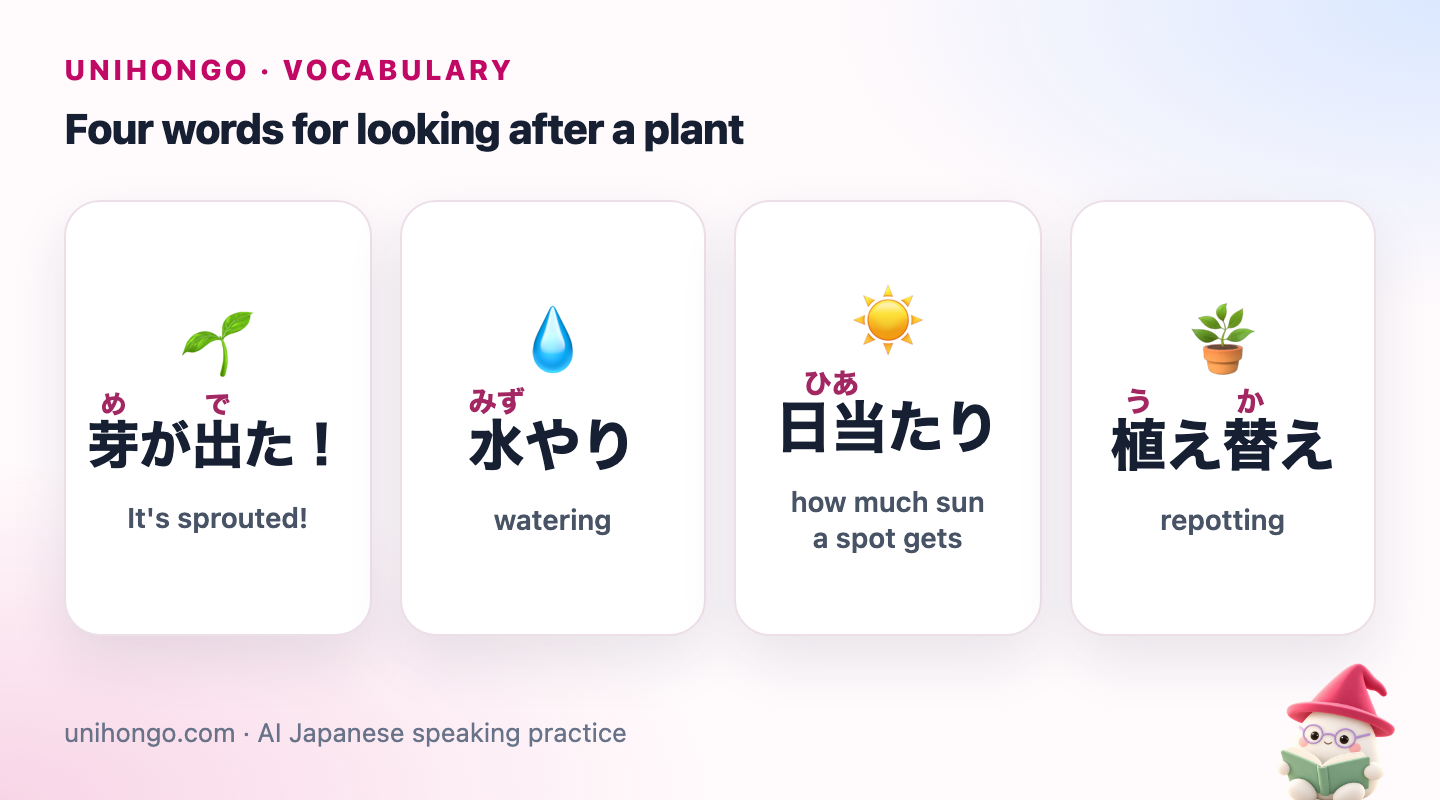
Plant care in Japanese comes down to a few everyday words. You water it, you find a spot with the right amount of sun, and every year or two you move it to a bigger pot. And one morning, if you are lucky, a new shoot appears and you say me ga deta, it has sprouted.
Hiatari (日当たり) literally means where the sun hits. Estate agents use it to describe apartments, hiatari ryōkō, very sunny, and gardeners use it for plants. Uekae (植え替え) is from ueru, to plant, and kaeru, to change: replanting into a new pot or fresh soil.
| Japanese | Romaji | Meaning |
|---|---|---|
| 芽が出た! | Me ga deta! | It's sprouted! |
| 水やり | mizuyari | watering |
| 日当たり | hiatari | how much sun a spot gets |
| 植え替え | uekae | repotting |
| そろそろ植え替えの時期だね。 | Sorosoro uekae no jiki da ne. | It's nearly time to repot. (casual) |
Kinds of plants and gardens
Japanese has native words for the basics and loanwords for many modern categories. Ki (木) is a tree, kusa (草) is grass or weeds, hana (花) is a flower, and shokubutsu (植物) is the general word for a plant. Gādeningu (ガーデニング) is used for decorative home gardening, while engei (園芸) is the broader, older word you see on shop sections and magazine titles.
| Japanese | Romaji | Meaning |
|---|---|---|
| 観葉植物 | kanyō shokubutsu | houseplants, foliage plants |
| 多肉植物 | taniku shokubutsu | succulents |
| サボテン | saboten | cactus |
| ハーブ | hābu | herbs |
| 家庭菜園 | katei saien | home vegetable growing |
| ベランダ菜園 | beranda saien | balcony vegetable garden |
| 盆栽 | bonsai | bonsai |
| 季節の花 | kisetsu no hana | seasonal flowers |
| 雑草 | zassō | weeds |
Plants are part of growing up in Japan. Many primary schools have children grow asagao (朝顔), morning glories, and keep a diary of their growth, and plenty of adults still remember carrying the pot home for the summer holidays. Seasonal flowers matter too: shops change their displays with the seasons, and neighbours often notice and comment on what is blooming at your door.
Pots, soil and tools
A garden shop sorts its materials into a few clear groups, and most labels use these words. Ueki bachi (植木鉢), usually just hachi, is a flowerpot; a long rectangular container is a purantā (プランター). Soil is tsuchi (土), and mixed potting soil for a specific purpose is baiyōdo (培養土), which you will see on large bags. Fertiliser is hiryō (肥料).
| Japanese | Romaji | Meaning |
|---|---|---|
| 植木鉢 | ueki bachi | flowerpot |
| プランター | purantā | planter box |
| 受け皿 | ukezara | saucer under a pot |
| 培養土 | baiyōdo | potting soil |
| 肥料 | hiryō | fertiliser |
| 種 | tane | seeds |
| 苗 | nae | seedling |
| じょうろ | jōro | watering can |
| 園芸用の手袋 | engei yō no tebukuro | gardening gloves |
| 剪定ばさみ | sentei basami | pruning shears |
Growing, flowering and the verbs of care
Plants in Japanese grow with sodatsu (育つ), and you grow them with sodateru (育てる), the same pair used for children. Flowers saku (咲く), bloom, and fruit naru (なる), grows on the plant. Care verbs are practical and worth learning in pairs, because they often differ from English. Ueru is planting something with roots; maku is sowing seeds.
| Japanese | Romaji | Meaning |
|---|---|---|
| ベランダでトマトを育てています。 | Beranda de tomato o sodatete imasu. | I grow tomatoes on my balcony. |
| 種をまく | tane o maku | to sow seeds |
| 苗を植える | nae o ueru | to plant a seedling |
| 花が咲いた。 | Hana ga saita. | The flower has bloomed. |
| 実がなった。 | Mi ga natta. | It has fruit now. |
| 枝を切る | eda o kiru | to cut back a branch |
| 肥料をあげる | hiryō o ageru | to give fertiliser |
| 水をあげすぎないでね。 | Mizu o agesuginaide ne. | Don't overwater it. (casual) |
Mizu o yaru and mizu o ageru both mean to water. Yaru is the traditional verb for giving to plants and animals, but many speakers now prefer ageru because it sounds gentler. Both are correct; follow the people around you.
When something goes wrong
Plant problems are the best excuse to talk to shop staff. Describe the symptom with a simple verb, then ask what to do. Yellow leaves are ha ga kiiroku natta, drooping is shioreta, and rot at the roots from too much water is negusare (根腐れ), a word you will hear often from staff who suspect you overwatered.
| Japanese | Romaji | Meaning |
|---|---|---|
| 葉っぱが黄色くなってきました。 | Happa ga kiiroku natte kimashita. | The leaves are turning yellow. |
| しおれてしまいました。 | Shiorete shimaimashita. | It has wilted. |
| 枯れちゃった… | Karechatta... | It died... (casual) |
| 根腐れかもしれません。 | Negusare kamo shiremasen. | Staff: It might be root rot. |
| 土に小さい虫がいます。 | Tsuchi ni chiisai mushi ga imasu. | There are tiny insects in the soil. |
| 冬は室内に入れたほうがいいですか。 | Fuyu wa shitsunai ni ireta hō ga ii desu ka. | Should I bring it inside for the winter? |
Mini dialogues: at the plant shop and on the balcony
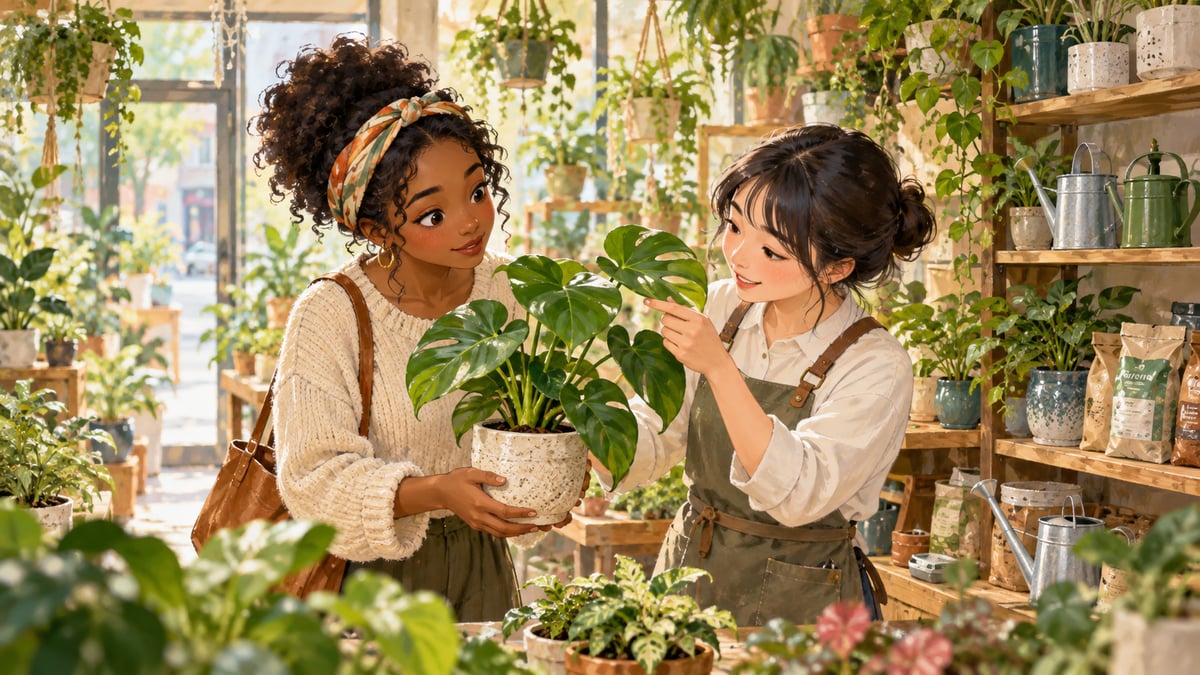
Neighbourhood plant shops and the garden section of a home centre are usually relaxed, and staff often ask about your room before recommending anything. Neighbours who garden are just as happy to share tips, and a word about someone's flowers is a classic way to start a chat.
| Japanese | Romaji | Meaning |
|---|---|---|
| 日当たりの悪い部屋でも育ちますか。 | Hiatari no warui heya demo sodachimasu ka. | You: Will it grow in a room without much sun? |
| これなら大丈夫ですよ。丈夫なので。 | Kore nara daijōbu desu yo. Jōbu na node. | Staff: This one will be fine. It's hardy. |
| 水やりはどのくらいですか。 | Mizuyari wa dono kurai desu ka. | You: How often should I water it? |
| 土が乾いたら、たっぷりあげてください。 | Tsuchi ga kawaitara, tappuri agete kudasai. | Staff: When the soil is dry, water it well. |
| きれいなお花ですね。 | Kirei na ohana desu ne. | You: What lovely flowers. (to a neighbour) |
| ありがとう。毎朝水をあげてるの。 | Arigatō. Maiasa mizu o ageteru no. | Neighbour: Thank you. I water them every morning. |
| 私もベランダで何か育てたいです。 | Watashi mo beranda de nanika sodatetai desu. | You: I'd like to grow something on my balcony too. |
| じゃあ、バジルの苗を少し分けてあげる。 | Jā, bajiru no nae o sukoshi wakete ageru. | Neighbour: Then I'll give you a few basil seedlings. |
Balcony gardening has a few unwritten rules in apartment buildings. Water dripping onto the balcony below and soil blocking drains are common sources of complaints, so use saucers and keep the drain clear. Many buildings also ask residents to keep the emergency exit panel on the balcony free of pots.
Common learner mistakes
- Using shinu for a plant. Say kareru: kareta, karete shimatta.
- Mixing up ueru and maku. Seeds are maku; anything with roots is ueru.
- Calling a weed kusa in a garden shop. Kusa can mean grass in general; zassō makes clear you mean unwanted weeds.
- Saying hana for every plant. Hana is a flower; a plant is shokubutsu, and a houseplant is kanyō shokubutsu.
- Using sodatsu and sodateru the wrong way round. The plant sodatsu, grows; you sodateru, grow it.
- Asking for tsuchi when you need potting soil. Tsuchi is any soil or earth; for a houseplant, ask for baiyōdo, or kanyō shokubutsu no tsuchi, and staff will show you the right bag.
- Saying hiatari ga ōkii. Sunlight is good or bad, not big: hiatari ga ii, a sunny spot, and hiatari ga warui, a shady one.
Grow your plant words a little each day
Ask Mocchi: Explain the difference between ueru and maku, and sodatsu and sodateru, then give me five sentences to fill in. Mocchi corrects each answer, remembers the pairs that trip you up and, if you ask, slips a short review into your personal plan for the week, much like a daily watering.
Then add the care words to your Flash Card list with photos of your own plants, so mizuyari is your watering can and hiatari is your window. Spaced repetition brings the hard ones back before you forget them, and Vocabulary Dash lets you run through the same deck as a quick 3D game.