
Ii kanji in four everyday lines
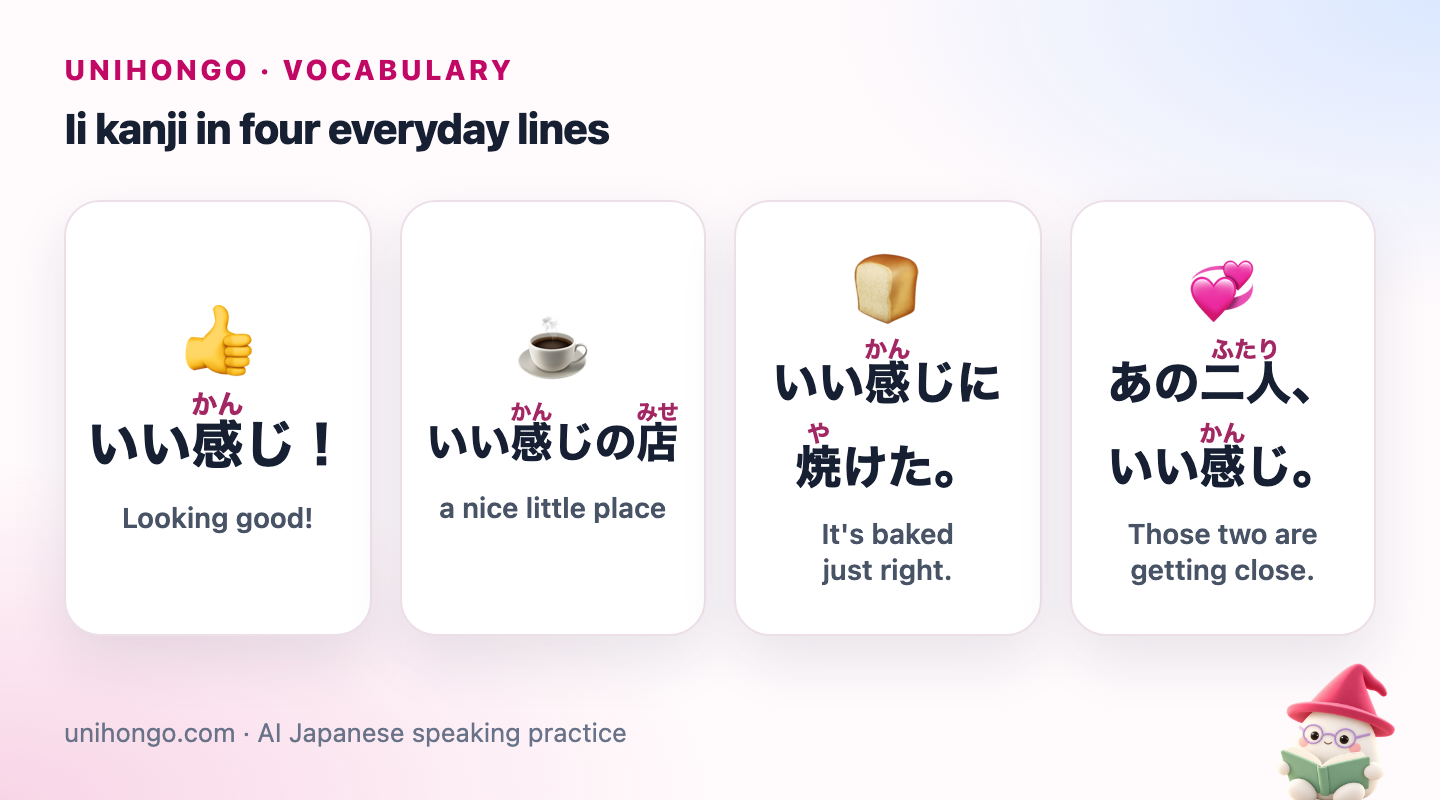
These four lines show the range of ii kanji. The first is a quick reaction to how something looks. The second describes a place with a nice atmosphere. The third is about a result that came out just right. The fourth is the gossip use about two people who are getting close.
| Japanese | Romaji | Meaning |
|---|---|---|
| いい感じ! | Ii kanji! | Looking good! |
| いい感じの店 | ii kanji no mise | a nice little place |
| いい感じに焼けた。 | Ii kanji ni yaketa. | It's baked just right. |
| あの二人、いい感じ。 | Ano futari, ii kanji. | Those two are getting close. |
Kanji as feeling, not characters
Kanji (感じ) comes from the verb kanjiru (感じる), to feel. As a noun it means a feeling, sense or impression: the feeling a place gives you, the impression a person makes, the sense that things are going well. Ii is good. So ii kanji is a good feeling or a good impression, used as a compact way to say 'nice'.
The same sound kanji also means the characters (漢字), and in writing there is no confusion. In speech, context almost always decides. If you want to make a joke, you can: kanji no benkyō, ii kanji? 'Is your kanji study going ii kanji?' Japanese people sometimes play with this too.
Ii kanji works in three grammatical slots: on its own as a reaction, before a noun with no (ii kanji no mise), and before a verb with ni (ii kanji ni dekita, it came out nicely).
| Japanese | Romaji | Meaning |
|---|---|---|
| 春の気配を感じる。 | Haru no kehai o kanjiru. | I can feel spring coming. |
| どんな感じ? | Donna kanji? | What's it like? / How's it going? |
| いい感じにできた。 | Ii kanji ni dekita. | It came out nicely. |
| 漢字の勉強、いい感じ? | Kanji no benkyō, ii kanji? | Is your kanji study going well? (wordplay) |
Going well: progress and results
Ii kanji is a relaxed way to say that something is progressing well or turned out well. Friends say it about studying, training, cooking, a new job or a renovation. It is upbeat but not boastful, because it sounds like an impression rather than a firm claim.
With ni, it describes how something was done: ii kanji ni yaketa (baked just right), ii kanji ni tsukareta (pleasantly tired), ii kanji ni sabite iru (nicely weathered). In this pattern ii kanji means 'in a good, appealing way', and it is common on cooking shows and in product reviews.
| Japanese | Romaji | Meaning |
|---|---|---|
| 日本語の勉強、いい感じだよ。 | Nihongo no benkyō, ii kanji da yo. | My Japanese study is going well. |
| 新しい仕事、どんな感じ? | Atarashii shigoto, donna kanji? | Friend: How's the new job going? |
| 今のところ、いい感じ。 | Ima no tokoro, ii kanji. | So far, so good. |
| いい感じに疲れた。 | Ii kanji ni tsukareta. | I'm pleasantly tired. |
| お肉がいい感じに焼けてきた。 | Oniku ga ii kanji ni yakete kita. | The meat's cooking up nicely. |
Nice places, things and style
Ii kanji no + noun describes something with an appealing atmosphere or style: a café with soft light and wooden tables, a jacket that fits well, a playlist that suits a rainy evening. It is vaguer than kirei (pretty, clean) or oshare (stylish), which is exactly why people like it: it says 'this feels right' without needing a precise reason.
Shops and magazines use it a lot, and you will hear it when friends recommend somewhere: ii kanji no izakaya mitsuketa, I found a nice izakaya. If you want to ask for a recommendation, donna kanji no mise ga ii? asks what kind of place they would like.
| Japanese | Romaji | Meaning |
|---|---|---|
| 駅の近くにいい感じのカフェがあるよ。 | Eki no chikaku ni ii kanji no kafe ga aru yo. | There's a nice café near the station. |
| そのジャケット、いい感じだね。 | Sono jaketto, ii kanji da ne. | That jacket looks good on you. |
| どんな感じの店がいい? | Donna kanji no mise ga ii? | What kind of place would you like? |
| 落ち着いた感じの店がいいな。 | Ochitsuita kanji no mise ga ii na. | Somewhere with a calm feel would be nice. |
Ano futari, ii kanji: the romance hint
When people say two others are ii kanji, they usually mean the pair seem to be getting close: they chat a lot, leave together, laugh at each other's jokes. It is the stage before anyone says they are a couple, and the phrase is deliberately vague, which makes it perfect for light gossip among friends or coworkers.
You can also use it about yourself, carefully: kanojo to ii kanji nan da, 'things are going well with her', tells a friend there is something happening without saying too much. The phrase is warm and casual. Avoid it about people who might be hurt by the gossip, and never say it in front of the pair.
| Japanese | Romaji | Meaning |
|---|---|---|
| 最近、田中さんと佐藤さん、いい感じじゃない? | Saikin, Tanaka-san to Satō-san, ii kanji ja nai? | Friend: Don't Tanaka and Sato seem close lately? |
| え、本当?気づかなかった。 | E, hontō? Kizukanakatta. | You: Really? I didn't notice. |
| いつも一緒に帰ってるよ。 | Itsumo issho ni kaetteru yo. | Friend: They always leave together. |
| 実は、僕も今いい感じの人がいるんだ。 | Jitsu wa, boku mo ima ii kanji no hito ga iru n da. | You: Actually, there's someone I'm getting close to too. |
| えー、聞かせて! | Ē, kikasete! | Friend: Ooh, tell me everything! |
Ii kanji, kanji ga ii, and ~tte kanji
Three patterns with kanji are easy to mix up. Ii kanji describes how something is going or how it looks. Kanji ga ii, with the word order reversed, usually describes a person's manner: pleasant, friendly, easy to like. Its opposite, kanji ga warui, means unpleasant or rude-seeming, and it is a real criticism.
Then there is ~tte kanji, a very common filler among younger speakers that means 'kind of like...' or 'that sort of thing'. Konna kanji means 'like this', and it is what a stylist says when showing you a photo, or what you say when you finish explaining something. The table sums them up.
| Japanese | Romaji | Meaning |
|---|---|---|
| 店員さん、感じがいい人だったね。 | Ten'in-san, kanji ga ii hito datta ne. | The clerk was really pleasant, wasn't she? |
| あの店は感じが悪かった。 | Ano mise wa kanji ga warukatta. | That shop felt unfriendly. |
| こんな感じにしたいです。 | Konna kanji ni shitai desu. | I'd like it like this. (showing a photo) |
| もう疲れたって感じ。 | Mō tsukareta tte kanji. | I'm kind of just over it. (casual) |
| Pattern | Meaning | Example use |
|---|---|---|
| ii kanji | Nice, going well, just right | Reacting to food, progress, a place |
| kanji ga ii (hito) | Pleasant, likeable manner | Describing a shop clerk or new colleague |
| kanji ga warui | Unpleasant, rude-seeming | Complaining about service |
| konna kanji | Like this | Showing a photo or finishing an explanation |
| ~tte kanji | Kind of like..., that sort of thing | Casual, vague description |
At the hair salon: the mirror moment
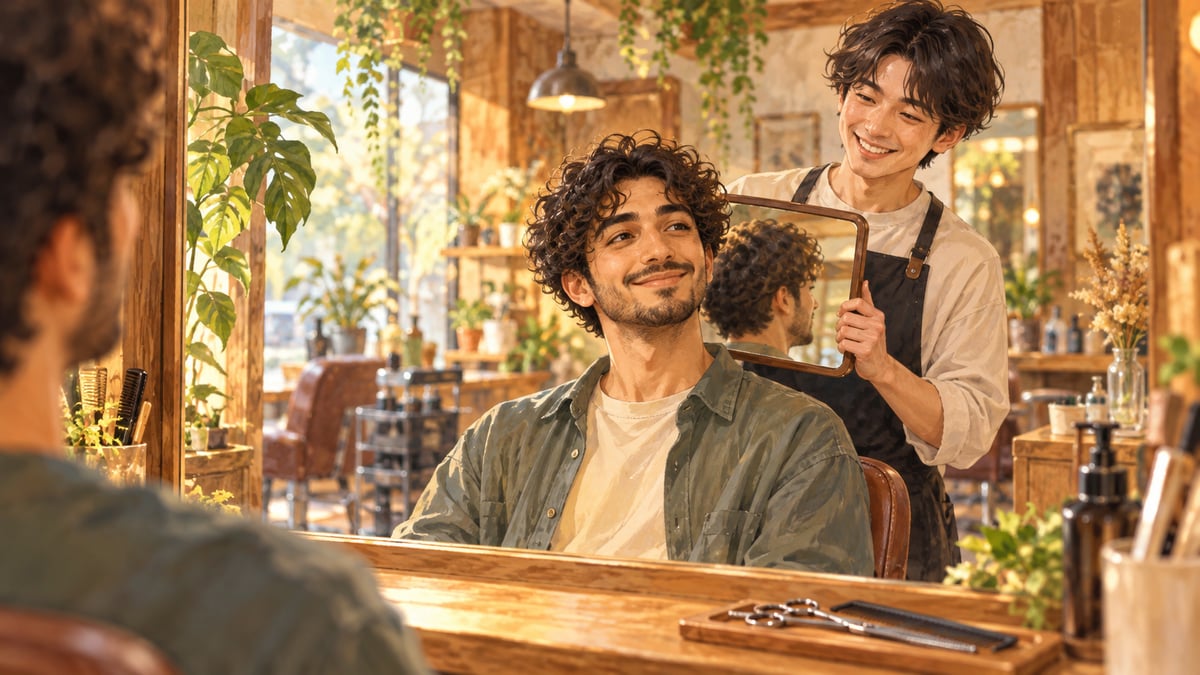
The hair salon is where many learners hear ii kanji first. Stylists in Japan often show you the back of your hair in a hand mirror and ask how it feels, using ikaga desu ka or ii kanji desu ka. A short, clear answer helps: say it is good, or ask for one small change. Saying daijōbu desu alone can be ambiguous, so add a word that shows you are happy.
| Japanese | Romaji | Meaning |
|---|---|---|
| こんな感じでいかがですか。 | Konna kanji de ikaga desu ka. | Stylist: How does this look? |
| はい、すごくいい感じです。 | Hai, sugoku ii kanji desu. | You: Yes, it looks great. |
| 前髪をもう少し短くできますか。 | Maegami o mō sukoshi mijikaku dekimasu ka. | You: Could the fringe be a bit shorter? |
| かしこまりました。 | Kashikomarimashita. | Stylist: Certainly. |
| ……これでいかがでしょう。 | ...Kore de ikaga deshō. | Stylist: How about now? |
| ばっちりです。ありがとうございます。 | Batchiri desu. Arigatō gozaimasu. | You: Perfect. Thank you very much. |
If you are not happy, it is fine to say so politely. Japanese stylists generally expect small requests at this point, and a specific one is easier for them than a vague hesitation. Point to the area and use mō sukoshi, a little more: mō sukoshi karuku, a little lighter, or mō sukoshi sorotte, a little more even. Then the next mirror check can end with a genuine ii kanji desu.
When ii kanji is too casual, and other mistakes
- Using it in a formal report. Purojekuto wa ii kanji desu sounds light to a client or senior manager; junchō ni susunde imasu, it is progressing smoothly, is the professional version.
- Saying ano futari, ii kanji to the couple. It is gossip, and it can embarrass people. Keep it among friends.
- Mixing up ii kanji and kanji ga ii. Ii kanji is about how something is going; kanji ga ii is about a person's manner.
- Overusing ~tte kanji. A little sounds natural; in every sentence it sounds vague, like ending everything with 'kind of'.
- Hearing kanji and thinking of characters. Listen for ii, donna, konna and no: they almost always mean 感じ, the feeling.
Make ii kanji yours with Mocchi
Ask Mocchi: 'Write six short sentences using ii kanji, kanji ga ii, konna kanji and ~tte kanji, then quiz me on which is which.' Mocchi explains every answer and remembers which pattern trips you up, so it shows up again in a later /review.
For the salon conversation itself, open AI Sensei and ask Yamada-sensei to play your stylist. Ask for one change, answer the mirror check with ii kanji desu, and read the session report for the corrections and new words.