

How department names are built
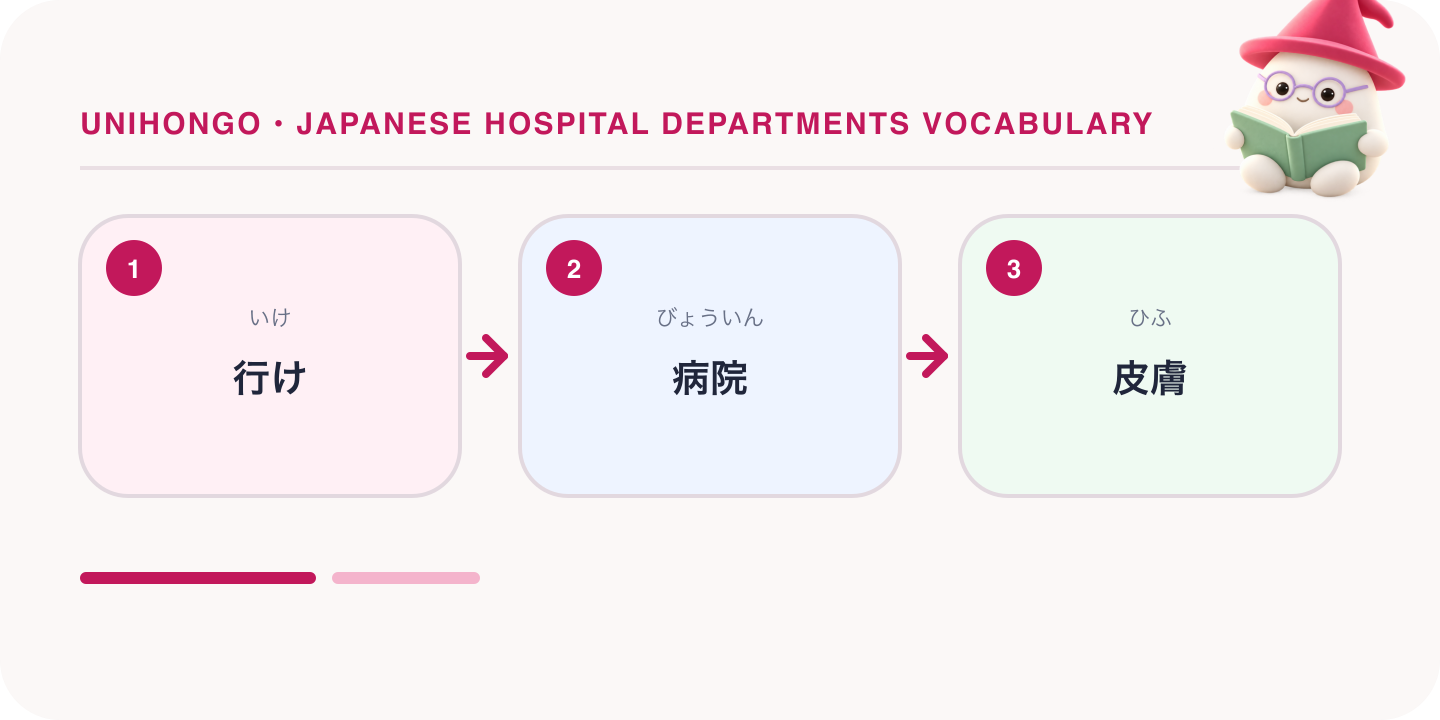
Almost every department name is a compound ending in ka, which means section or department. The first part says what the section deals with. Nai, inside, gives naika, internal medicine. Ge, outside, gives geka, surgery. Shōni, small child, gives shōnika, paediatrics. Hifu is skin, so hifuka is dermatology; gan is eye, so ganka is ophthalmology; shi is tooth, so shika is dentistry. Jibika is short for jibi inkōka, ears, nose and throat.
Longer names stack a modifier in front. Seikei geka is orthopaedic surgery; keisei geka, with a different kei, is plastic surgery, and the two are easy to confuse on a board. Shinryō naika is psychosomatic medicine, for stress-related physical symptoms, while seishinka is psychiatry. Sanfujinka combines sanka, obstetrics, and fujinka, gynaecology, and some clinics list only one of the two.
| Japanese | Romaji | Meaning |
|---|---|---|
| 何科に行けばいいですか。 | Nani-ka ni ikeba ii desu ka. | Which department should I go to? |
| この病院に皮膚科はありますか。 | Kono byōin ni hifuka wa arimasu ka. | Does this hospital have a dermatology department? |
| 内科と外科、どちらですか。 | Naika to geka, dochira desu ka. | Is it internal medicine or surgery? |
| 整形外科は何階ですか。 | Seikei geka wa nan-gai desu ka. | What floor is orthopaedics on? |
The departments in one table
The table below covers the departments on almost any hospital board and most clinic signs. Clinics often combine two or three, such as naika and shōnika, or hifuka and hinyōkika, on the same sign. Larger hospitals split naika into organ-based sections, such as shōkaki naika, gastroenterology, and junkanki naika, cardiology, but the reception desk will direct you if you name the general one.
| Department | Reading | What it treats |
|---|---|---|
| 内科 | naika | internal medicine: colds, flu, stomach, chronic illness |
| 外科 | geka | surgery: injuries, conditions needing an operation |
| 小児科 | shōnika | paediatrics: children |
| 産婦人科 | sanfujinka | obstetrics and gynaecology |
| 皮膚科 | hifuka | dermatology: skin, rashes, eczema |
| 眼科 | ganka | ophthalmology: eyes |
| 耳鼻科 | jibika | ear, nose and throat |
| 整形外科 | seikei geka | orthopaedics: bones, joints, back |
| 心療内科 | shinryō naika | psychosomatic medicine: stress-related symptoms |
| 精神科 | seishinka | psychiatry |
| 歯科 | shika | dentistry |
| 泌尿器科 | hinyōkika | urology |
A few more that appear on large boards: hōshasenka, radiology; masuika, anaesthesiology; nōshinkei geka, neurosurgery; and kyūkyū, the emergency department, usually signposted separately with a red sign.
Choosing the department for a symptom
Because you choose the department yourself, it helps to think in categories before you set out. Fever, cough, sore throat, stomach ache, diarrhoea and general feeling unwell all go to naika. A child with any of those goes to shōnika. Cuts, sprains, back pain and suspected fractures go to seikei geka for bones and joints, or geka for wounds. Rashes, itching and insect bites go to hifuka. Eye pain or sudden changes in vision go to ganka, and ear pain, blocked nose, hay fever and dizziness go to jibika.
Two choices surprise many visitors. Hay fever, kafunshō, is treated at jibika rather than naika, and mild sore throats are often taken to jibika too. Stress-related symptoms such as insomnia, appetite loss or palpitations with no physical cause go to shinryō naika, which is less intimidating for many people than seishinka. If you are genuinely unsure, naika is the safe default: the doctor will refer you onward if needed.
| Japanese | Romaji | Meaning |
|---|---|---|
| 熱と咳があります。内科でいいですか。 | Netsu to seki ga arimasu. Naika de ii desu ka. | I have a fever and a cough. Is internal medicine right? |
| 子どもの発疹は小児科ですか、皮膚科ですか。 | Kodomo no hasshin wa shōnika desu ka, hifuka desu ka. | For a child's rash, paediatrics or dermatology? |
| 足首をひねったので、整形外科に行きたいです。 | Ashikubi o hinetta node, seikei geka ni ikitai desu. | I twisted my ankle, so I'd like to go to orthopaedics. |
| 花粉症は耳鼻科で診てもらえますか。 | Kafunshō wa jibika de mite moraemasu ka. | Can ear, nose and throat see me for hay fever? |
- Fever, cough, stomach: naika; for a child, shōnika
- Sprain, back pain, possible fracture: seikei geka
- Deep cut, wound that needs stitches: geka
- Rash, itching, eczema: hifuka
- Eye pain, blurred vision: ganka
- Ear, nose, throat, hay fever, dizziness: jibika
- Insomnia, stress symptoms: shinryō naika
- Toothache: shika, which is usually a separate clinic
Dentists are almost always separate clinics called shika iin, and you rarely find one inside a general hospital, so search for shika on its own.
Kurinikku, iin and byōin
The Japanese system expects you to start small. A kurinikku or iin is a clinic: one or two doctors, a few specialities, no beds, and usually walking distance from home. A byōin is a hospital, with many departments, wards and a much longer wait. Large hospitals discourage walk-ins for minor problems, and many add an extra charge if you come without a shōkaijō, a referral letter from a clinic; the amount and rules vary, so check the hospital's website or ask.
The practical path is therefore clinic first, hospital if referred. Clinics also tend to be faster and easier for a learner, because reception has time to explain the form. Signs help you identify them: a sign reading naika, shōnika with a family name in front is a clinic run by that doctor, and a sign with sōgō byōin, general hospital, is the big one. Opening hours, uketsuke jikan, are posted at the door and reception usually closes some time before the doctor stops seeing patients.
| Japanese | Romaji | Meaning |
|---|---|---|
| 近くに内科のクリニックはありますか。 | Chikaku ni naika no kurinikku wa arimasu ka. | Is there an internal medicine clinic nearby? |
| 紹介状がなくても診てもらえますか。 | Shōkaijō ga nakute mo mite moraemasu ka. | Can I be seen without a referral letter? |
| 受付は何時までですか。 | Uketsuke wa nan-ji made desu ka. | What time does reception close? |
| 予約は必要ですか。 | Yoyaku wa hitsuyō desu ka. | Do I need an appointment? |
| 今日は何時間くらい待ちますか。 | Kyō wa nan-jikan kurai machimasu ka. | About how long is the wait today? |
At the reception desk
Reception, uketsuke, is where the department decision becomes a form. The first question is almost always shoshin desu ka, is this your first visit here, or hajimete desu ka. If yes, you hand over your hokenshō, health insurance card, and fill in a monshinhyō, a questionnaire about your symptoms and history. If not, you hand over the shinsatsuken, the patient card from last time, and say what you are there for.
You may also be asked which department, nani-ka, whether you have a referral letter, and whether you have an appointment. Then you sit in the waiting room, machiaishitsu, until your name or number is called. In many clinics you take off your shoes at the door and use slippers, so watch what others do.
| Japanese | Romaji | Meaning |
|---|---|---|
| 初診ですか。 | Shoshin desu ka. | Is this your first visit? |
| はい、初めてです。 | Hai, hajimete desu. | Yes, it's my first time. |
| 保険証をお願いします。 | Hokenshō o onegai shimasu. | Your insurance card, please. |
| こちらの問診票にご記入ください。 | Kochira no monshinhyō ni go-kinyū kudasai. | Please fill in this questionnaire. |
| 診察券をお持ちですか。 | Shinsatsuken o o-mochi desu ka. | Do you have your patient card? |
| 熱があるので、内科でお願いします。 | Netsu ga aru node, naika de onegai shimasu. | I have a fever, so internal medicine, please. |
| お名前をお呼びしますので、お待ちください。 | O-namae o o-yobi shimasu node, o-machi kudasai. | We will call your name, so please wait. |
Words on the reception form
The monshinhyō varies by clinic but the headings repeat. Shimei is your full name, often with a furigana line for the reading, and seinengappi is your date of birth, sometimes with a box for the Japanese era. Jūsho is address and denwa bangō is telephone number. Shōjō is symptoms, and the form usually asks itsu kara, since when. Kiōshō is your medical history, arerugī is allergies, and fukuyōchū no kusuri is medicine you are currently taking. Ninshin-chū, pregnant, and junyū-chū, breastfeeding, appear on women's forms.
You will also see shoshin and saishin as tick boxes, and hokenshō and shinsatsuken as items to present. Okusuri techō is the medicine notebook that pharmacies issue; bring it if you have one, because the doctor uses it to check interactions. When a field is unclear, ask reception; they see foreign patients more often than you might expect and will explain or let you skip it.
| Form word | Reading | Meaning |
|---|---|---|
| 初診 / 再診 | shoshin / saishin | first visit / return visit |
| 保険証 | hokenshō | health insurance card |
| 診察券 | shinsatsuken | patient card |
| 問診票 | monshinhyō | medical questionnaire |
| 氏名 | shimei | full name |
| 生年月日 | seinengappi | date of birth |
| 症状 | shōjō | symptoms |
| 既往症 | kiōshō | medical history |
| 服用中の薬 | fukuyōchū no kusuri | medicine currently taken |
| お薬手帳 | okusuri techō | medicine notebook |
| 紹介状 | shōkaijō | referral letter |
When you pick the wrong department
Choosing wrongly is common and easy to fix. If reception thinks another department fits better, they will say so and redirect you, sometimes to a different building. If the doctor decides after examining you, they write a shōkaijō and send you on, either within the hospital or to a specialist clinic. Neither is a problem, and nobody will be annoyed; the system is built around it.
The mistake that costs time is going straight to a large hospital for a small problem. Without a referral you may wait hours and pay extra, and you may still be sent to a clinic. Another is confusing seikei geka with keisei geka, or shinryō naika with shinkei naika, which is neurology. When in doubt, describe the symptom rather than guessing the department, and let reception choose.
| Japanese | Romaji | Meaning |
|---|---|---|
| この症状は何科がいいですか。 | Kono shōjō wa nani-ka ga ii desu ka. | Which department is best for these symptoms? |
| 別の科を紹介してもらえますか。 | Betsu no ka o shōkai shite moraemasu ka. | Could you refer me to another department? |
| 整形外科と形成外科、どちらですか。 | Seikei geka to keisei geka, dochira desu ka. | Is it orthopaedics or plastic surgery? |
| 専門のクリニックを教えてください。 | Senmon no kurinikku o oshiete kudasai. | Please tell me a specialist clinic. |