
The short answer: yabai is an intensifier
Yabai does not have a good meaning and a bad meaning that you choose between. It has one meaning, roughly this is off the scale, and the scale can run in either direction. When a friend takes a bite of curry and says yabai, the curry is far better than expected. When the same friend looks at a train departure board and says yabai, something has gone badly wrong. The word marks intensity; the situation supplies the sign.
That is why dictionaries look unhelpful here. Translating yabai as dangerous explains the older uses and none of the new ones, and translating it as awesome explains the new ones and none of the old. Treat it the way English speakers treat sick or insane in casual speech: a word whose direction is set entirely by delivery, and which sounds wrong in a formal register no matter which direction it points.
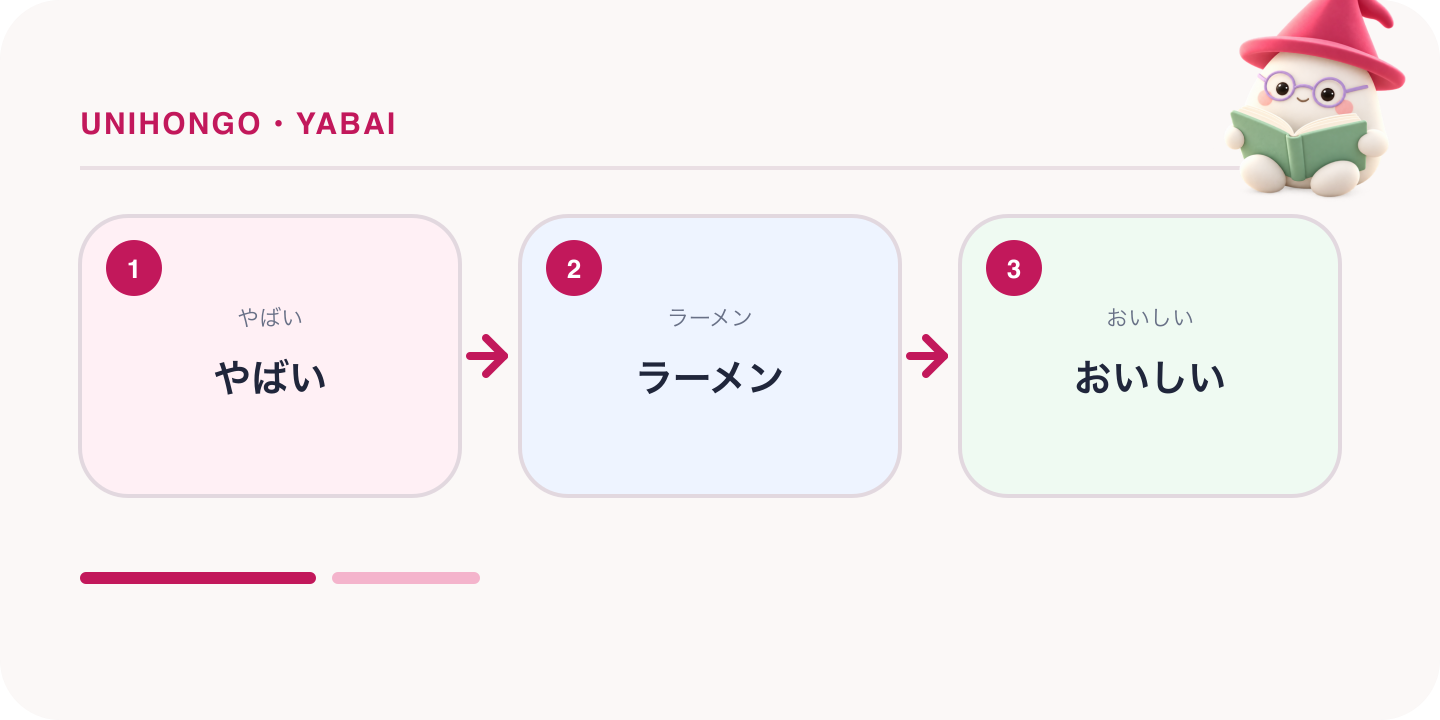
From dangerous to delicious
The original sense is the negative one. Yabai described something risky, something you would rather not be caught near, and it kept a slightly rough edge. Over time younger speakers began using it for anything overwhelming, and once a word means overwhelming, there is nothing stopping it from attaching to overwhelmingly good things too. The positive use is now completely ordinary among younger speakers and increasingly common well beyond them.
Both senses live side by side today, which is unusual and worth respecting. Older speakers may still hear the negative sense first, so a delighted yabai about someone's cooking can read oddly to them for a moment. Nothing here is a rule you can rely on by age; it is a tendency, and the safe move is to match the room rather than lead it.
Yabai when something is amazing
The positive use lands on food, music, views, skill, and anything unexpectedly excellent. It usually comes out fast, often on its own before any explanation follows, and it is frequently paired with the specific word straight afterwards. Yabai, oishii is a very natural sequence: the reaction, then the reason. Learners often say only the yabai, which leaves the listener guessing, so add the second half.
| Japanese | Romaji | Meaning |
|---|---|---|
| これ、やばい。 | Kore, yabai. | This is unreal. (casual, delighted) |
| このラーメン、やばい。 | Kono rāmen, yabai. | This ramen is unbelievable. |
| やばい、おいしい。 | Yabai, oishii. | Wow, this is delicious. |
| 昨日のライブ、やばかった。 | Kinō no raibu, yabakatta. | Last night's concert was amazing. |
| 景色がやばいね。 | Keshiki ga yabai ne. | The view is incredible, isn't it. |
| この曲、やばくない? | Kono kyoku, yabakunai? | Isn't this song incredible? |
| やばいくらいおいしい。 | Yabai kurai oishii. | It is ridiculously delicious. |
| あの人、歌やばいよ。 | Ano hito, uta yabai yo. | That person's singing is on another level. |
Yabai when something is going wrong
The negative use covers three overlapping ideas: this is bad news, this is going to cause trouble, and this is unsafe. It is the sense you will hear when a deadline slips, when the last train is missed, or when someone describes a place they would not walk through at night. The tone is shorter and flatter than the delighted version, and it is often repeated: yabai yabai.
| Japanese | Romaji | Meaning |
|---|---|---|
| やばい、遅刻する。 | Yabai, chikoku suru. | Oh no, I'm going to be late. |
| やばい、財布忘れた。 | Yabai, saifu wasureta. | Rats, I forgot my wallet. |
| やばい、終電がない。 | Yabai, shūden ga nai. | This is bad, there's no last train. |
| それ、やばいよ。 | Sore, yabai yo. | That's bad news. |
| このままだとやばい。 | Kono mama da to yabai. | If this carries on we're in trouble. |
| 締め切りがやばい。 | Shimekiri ga yabai. | The deadline is looking dire. |
| あの道、夜はやばいらしい。 | Ano michi, yoru wa yabai rashii. | That street is apparently dodgy at night. |
| 天気がやばいことになってる。 | Tenki ga yabai koto ni natteru. | The weather has turned nasty. |
The panic use: yabai about yourself
By far the most frequent use in daily life is the small self-directed exclamation at the moment you realise you have made a mistake. It is not really addressed to anyone; it is thinking out loud. The clipped form yaba, sometimes cut off sharply with a small tsu, is used the same way and sounds even more spontaneous.
This is the use that gets learners into trouble, because it comes out automatically once you have absorbed it, and it will come out in front of a manager at exactly the wrong moment. If you learn only one polite substitute from this article, learn the one for this situation: shimatta is still casual but far less loaded, and mōshiwake arimasen is what you actually say to a superior.
| Japanese | Romaji | Meaning |
|---|---|---|
| やば、寝坊した。 | Yaba, nebō shita. | Oh no, I overslept. |
| やばいやばい、時間ない。 | Yabai yabai, jikan nai. | No no no, there's no time. |
| やば、間違えた。 | Yaba, machigaeta. | Oops, I made a mistake. |
| しまった、忘れてた。 | Shimatta, wasureteta. | Ugh, I forgot. |
| 申し訳ありません、遅れます。 | Mōshiwake arimasen, okuremasu. | I am very sorry, I will be late. |
| すみません、少し遅れそうです。 | Sumimasen, sukoshi okuresō desu. | Sorry, it looks like I will be a little late. |
Where yabai does not belong
Yabai is casual, and it reads as young. That combination makes it unsuitable in three settings: with anyone senior to you, with anyone you have just met, and in any situation where you are representing an organisation. It is not a rude word, and nobody will be offended by it; the risk is that you sound like you have not judged the room, which in a work context is its own kind of mistake.
There is a second cost that applies even among friends. Because yabai can mean almost anything, a speaker who reaches for it every time says very little. Replacing it with the accurate word makes your Japanese sound more capable, not more formal, and it gives your listener something to respond to. Nobody has ever been unimpressed by hearing sōzō ijō deshita instead of a third yabai.
- Do not say it to a manager, a client, a teacher, or anyone significantly older.
- Do not say it in a job interview, a meeting, or on a customer call.
- Do not use it in writing that anyone at work will read.
- Among close friends of a similar age, it is completely normal.
- If you are unsure of the relationship, use sugoi or taihen instead and lose nothing.
What yabai means where, and what to say instead
| Situation | What yabai means there | Say this instead |
|---|---|---|
| Tasting food you love | Unbelievably good | おいしい oishii, 最高 saikō |
| A concert or a view | Overwhelming, amazing | すごい sugoi, 素晴らしい subarashii |
| Someone's skill | Off the charts | うまい umai, すごい sugoi |
| A price on a tag | Shockingly high | 高い takai |
| A bargain | Shockingly cheap | 安い yasui, お得 otoku |
| Realising you are late | I am in trouble | まずい mazui, 間に合わない ma ni awanai |
| A deadline slipping | Critically behind | 厳しい kibishii, 危ない abunai |
| A colleague's workload | Extreme, punishing | 大変 taihen |
| A dark street at night | Unsafe | 危ない abunai, 危険 kiken |
| A serious problem at work | This will cause damage | まずい mazui, 深刻 shinkoku |
| Feeling unwell before a shift | In bad shape | 体調が悪い taichō ga warui |
Read the right-hand column as your working vocabulary and the left as listening comprehension. You need to understand yabai in all of these situations, because you will hear it in all of them, but you only need to produce the precise words. That split is a reasonable way to treat most slang.
The related forms you will hear
| Form | Romaji | How it is used |
|---|---|---|
| やばい | Yabai | The base form, positive or negative, casual |
| やば / やばっ | Yaba (the final っ is a sharp cut-off) | Clipped exclamation, usually the panic sense |
| やばかった | Yabakatta | Past form, most often about something amazing |
| やばくない? | Yabakunai? | Rhetorical question meaning isn't this incredible |
| やばすぎる | Yabasugiru | Too much, taken to an extreme, either direction |
| やばみ | Yabami | Playful noun form, internet and youth speech only |
Yabai conjugates exactly like any other i-adjective, which makes it a convenient form to practise on: yabai, yabakunai, yabakatta, yabakunakatta. The only thing to remember is that all of these forms stay casual. Adding desu to make yabai desu does not make it appropriate for a meeting; it just produces a polite sentence with a slangy word in it.
The precise words, in polite form
Here is the same emotional range, said in a way you can use at work or with someone you have just met. Notice that the positive reactions are short and the negative ones are hedged, which matches how Japanese usually handles the two directions. Taihen desu ne in particular is one of the most useful sentences in the language, because it acknowledges someone's difficulty without claiming to fix it.
| Japanese | Romaji | Meaning |
|---|---|---|
| すごいですね。 | Sugoi desu ne. | That is impressive. |
| 最高でした。 | Saikō deshita. | It was fantastic. |
| 本当においしいです。 | Hontō ni oishii desu. | It is genuinely delicious. |
| 想像以上でした。 | Sōzō ijō deshita. | It was better than I imagined. |
| 素晴らしいですね。 | Subarashii desu ne. | That is wonderful. |
| それは大変ですね。 | Sore wa taihen desu ne. | That sounds tough. |
| これはまずいですね。 | Kore wa mazui desu ne. | This is a bad situation. |
| ちょっと危ないです。 | Chotto abunai desu. | It is a little dangerous. |
| 少し厳しいかもしれません。 | Sukoshi kibishii kamo shiremasen. | It might be a bit tight. |
| 間に合いそうにありません。 | Ma ni aisō ni arimasen. | It does not look like I will make it in time. |
| 困りました。 | Komarimashita. | I am in difficulty here. |
A short dialogue with both directions
This exchange between two friends shows the word swinging from good to bad within a few lines, which is exactly how it behaves in real speech. Read both parts aloud and change your voice between them; the pitch and speed are doing more work than the vocabulary.
| Japanese | Romaji | Meaning |
|---|---|---|
| A: このパン、やばくない? | A: Kono pan, yabakunai? | A: Isn't this bread incredible? |
| B: ほんとだ、やばいね。どこで買ったの? | B: Hontō da, yabai ne. Doko de katta no? | B: You're right, it's amazing. Where did you buy it? |
| A: 駅前の店。あ、やば。 | A: Ekimae no mise. A, yaba. | A: The shop by the station. Oh no. |
| B: どうしたの? | B: Dō shita no? | B: What's wrong? |
| A: 三時に約束あった。やばいやばい。 | A: San-ji ni yakusoku atta. Yabai yabai. | A: I had an appointment at three. This is bad. |
| B: 急いだほうがいいよ。 | B: Isoida hō ga ii yo. | B: You'd better hurry. |
Now say the same content politely, as you would to a colleague: kono pan, totemo oishii desu ne, then sumimasen, san-ji ni yakusoku ga atta no o wasurete imashita. The information is identical and the register is completely different, which is the whole skill this word is teaching you.
How to practise this without picking up a habit
Slang is absorbed passively and produced accidentally, so the goal is to build recognition without building reflex. Keep yabai in your listening vocabulary and put the precise words in your mouth. A simple way to enforce that split is to say the accurate word every single time you feel the urge to say yabai, for a week; after that the accurate word is the one that arrives first.
| Japanese | Romaji | Meaning |
|---|---|---|
| 今のは、いい意味のやばいですか。 | Ima no wa, ii imi no yabai desu ka. | Was that yabai in the good sense? |
| やばいは友達だけに使います。 | Yabai wa tomodachi dake ni tsukaimasu. | I only use yabai with friends. |
| 仕事では大変ですねと言います。 | Shigoto de wa taihen desu ne to iimasu. | At work I say taihen desu ne instead. |
| もっと正確な言葉を使いたいです。 | Motto seikaku na kotoba o tsukaitai desu. | I want to use more precise words. |
- When you hear yabai in a video, pause and decide out loud whether it was positive or negative, and why.
- Write down the situation and the precise word that would have fitted it.
- Say your own reactions twice for a week, once casually and once politely.
- Keep taihen desu ne and abunai desu ready as your two workplace defaults.
- Practise the panic sentence you will actually need, sumimasen, sukoshi okuresō desu, until it beats yaba to your lips.