
What kimoi means in one minute
Kimoi is an i-adjective meaning gross, creepy or disgusting. It is an instant reaction: you see something unpleasant, and kimoi! comes out, usually with a little shudder. It is casual slang, used among friends, siblings and classmates, and constantly in anime and variety shows.
It sits in a family with its full form, kimochi warui, and with the playful kimo-kawaii. The full form has a second meaning that kimoi does not share: I feel sick.
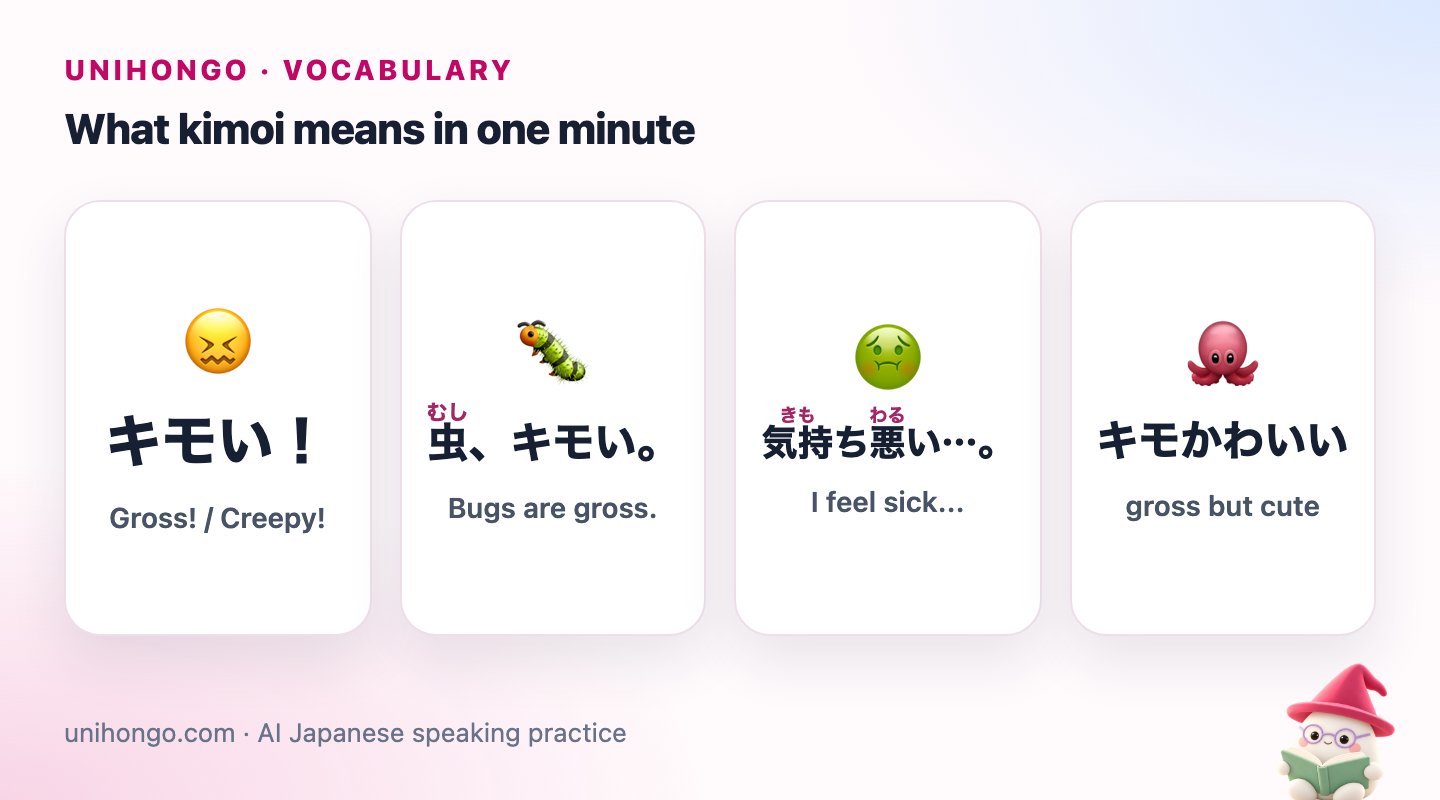
| Japanese | Romaji | Meaning |
|---|---|---|
| キモい! | Kimoi! | Gross! / Creepy! |
| 虫、キモい。 | Mushi, kimoi. | Bugs are gross. |
| 気持ち悪い…。 | Kimochi warui... | I feel sick... |
| キモかわいい | kimokawaii | gross but cute |
From kimochi warui to kimoi
Kimochi (気持ち) means feeling or mood, and warui (悪い) means bad. Together, kimochi warui describes a bad, unpleasant feeling: the physical one of nausea, and the emotional one you get from something creepy or disgusting. Young people clipped it to kimoi, much as kakkoii and other long words get shortened in slang, and the short form has been common for decades.
Kimoi is usually written in katakana, キモい, which makes it look like a sharp reaction. In speech it shrinks again to kimo, often written with a small tsu to show a clipped sound, and you will also hear kimosugiru (way too gross).
| Japanese | Romaji | Meaning |
|---|---|---|
| 気持ち | kimochi | feeling, mood |
| 悪い | warui | bad |
| 気持ち悪い | kimochi warui | unpleasant; creepy; I feel sick |
| キモい | kimoi | gross, creepy (casual slang) |
| キモすぎる。 | Kimosugiru. | That's way too gross. |
Every real use of kimoi, with examples
The everyday, harmless uses are reactions to things: insects, slime, strange textures, gory scenes in a horror film. People also use it about their own behaviour, to laugh at themselves. Kimochi warui covers all of these and adds two more: feeling physically sick, and a genuine sense of unease, such as when you feel someone is following you.
| Japanese | Romaji | Meaning |
|---|---|---|
| この食感、ちょっとキモい。 | Kono shokkan, chotto kimoi. | This texture is kind of gross. |
| あのシーン、キモかった。 | Ano shīn, kimokatta. | That scene was so gross. |
| 一人でニヤニヤして、私キモいね。 | Hitori de niyaniya shite, watashi kimoi ne. | Grinning to myself like a weirdo, huh. |
| バスに酔って気持ち悪い。 | Basu ni yotte kimochi warui. | I feel carsick on the bus. |
| 飲みすぎて気持ち悪い。 | Nomisugite kimochi warui. | I drank too much and feel sick. |
| 夜道で後ろに人がいて、気持ち悪かった。 | Yomichi de ushiro ni hito ga ite, kimochi warukatta. | Someone was behind me on a dark street; it felt creepy. |
Why kimoi hurts when it is aimed at a person
When kimoi is aimed at a person, it no longer describes a reaction. It becomes a label that says you are repulsive. Saying it about someone's face, body, voice, clothes or hobbies is one of the cruellest casual insults in Japanese, and it is closely tied to teasing and bullying at school. Many adults who were called kimoi as teenagers still remember it.
As a learner, keep a simple rule: kimoi is for bugs, slime and horror films. Not for people, and not for things people love, such as someone's favourite anime, idol or collection.
| Target | How it lands |
|---|---|
| Bugs, slime, a strange texture, a gory scene | A normal casual reaction |
| Your own silly behaviour | Self-mocking and light |
| A friend's goofy face, with a laugh | Teasing, but risky |
| A person's looks, body, voice or hobby | Deeply hurtful; avoid completely |
| Anything in a polite setting | Never; it sounds childish and rude |
Kimo-kawaii and other playful relatives
Kimo-kawaii (キモかわいい) is a compound of kimoi and kawaii: gross but cute, creepy-cute. It is used with affection for odd mascots, strange sea creatures, bug-eyed toys and characters that are so weird they become lovable. Its cousin busa-kawaii (ブサかわいい) means ugly-cute and is used mainly about pets, such as a squashed-face dog. Both are compliments, and both are casual.
For something unsettling rather than disgusting, bukimi (不気味) means eerie or uncanny, and it is a neutral word you can use anywhere.
| Japanese | Romaji | Meaning |
|---|---|---|
| このキャラ、キモかわいい! | Kono kyara, kimokawaii! | This character is creepy-cute! |
| ブサかわいい犬だね。 | Busakawaii inu da ne. | What an ugly-cute dog. |
| ちょっと不気味ですね。 | Chotto bukimi desu ne. | It's a little eerie, isn't it? |
Safer words, replies and learner mistakes
To say you dislike something without sounding rude, use nigate (苦手), which means it is not my thing. It is soft, polite and works for food, bugs and activities. For feeling ill in a polite setting, such as at work or at a clinic, kibun ga warui desu is the standard phrase.
If a friend says kimoi to you as a joke, you can protest playfully. If it really stings, say so gently.
| Japanese | Romaji | Meaning |
|---|---|---|
| 虫はちょっと苦手です。 | Mushi wa chotto nigate desu. | I'm not great with bugs. (polite) |
| すみません、気分が悪いです。 | Sumimasen, kibun ga warui desu. | Excuse me, I feel unwell. (polite) |
| キモいって言わないでよ! | Kimoi tte iwanaide yo! | Don't call me creepy! (playful) |
| それは傷つくなあ。 | Sore wa kizutsuku nā. | That really hurts. |
- Mistake 1: saying kimoi when you feel sick. Use kimochi warui or kibun ga warui desu.
- Mistake 2: calling food someone cooked kimoi. Even if the texture is strange to you, say nigate or chotto nigate kamo.
- Mistake 3: mixing up kimochi warui and kimochi ii. Kimochi ii means it feels good, like a hot bath or a breeze.
- Mistake 4: using kimoi about people's interests. Fans of anime, idols or trains are not kimoi; that use is mean-spirited.
Related words: gory, scary and queasy
English gross and creepy cover a lot of ground, and Japanese splits that ground into several words. Guroi (グロい), from the English grotesque, is for gore and graphic violence, such as a horror film full of blood. Kowai (怖い) is plain scary. Zotto suru is the cold shiver you feel when something is eerie, and mukamuka suru describes a churning, queasy stomach, though mukatsuku can also mean to be irritated, so listen to the context.
These words let you be more precise than kimoi, and most of them are less personal. Saying a film is guroi describes the film; nobody is insulted.
| Japanese | Romaji | Meaning |
|---|---|---|
| グロい映画は苦手。 | Guroi eiga wa nigate. | I can't handle gory films. |
| 怖い話はやめて。 | Kowai hanashi wa yamete. | Stop telling scary stories. |
| ぞっとした。 | Zotto shita. | It sent a chill down my spine. |
| なんかムカムカする。 | Nanka mukamuka suru. | I feel kind of queasy. |
Mini dialogue: deep-sea fish at the aquarium
Two friends are at an aquarium, in front of a tank of strange deep-sea creatures. Kimoi is aimed at a fish, and the conversation turns it into kimo-kawaii, which is how the word is often used in real life.
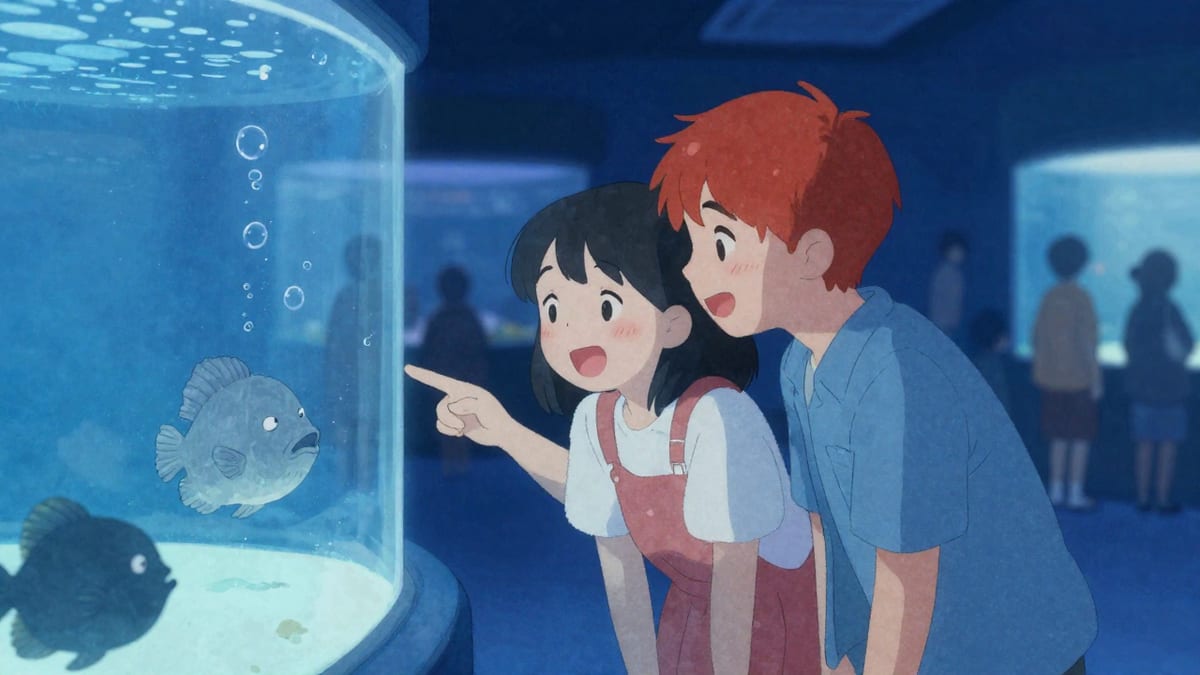
| Japanese | Romaji | Meaning |
|---|---|---|
| 見て、この深海魚。 | Mite, kono shinkaigyo. | Aiko: Look at this deep-sea fish. |
| うわ、キモい! | Uwa, kimoi! | Sam: Whoa, that's gross! |
| でも、ちょっとかわいくない? | Demo, chotto kawaikunai? | Aiko: But isn't it kind of cute? |
| 確かに。キモかわいいね。 | Tashika ni. Kimokawaii ne. | Sam: True. It's creepy-cute. |
| ぬいぐるみ、買っちゃおうかな。 | Nuigurumi, kacchaō ka na. | Aiko: Maybe I'll buy the plush toy. |
| いいね。ぼくも買う。 | Ii ne. Boku mo kau. | Sam: Nice. I'll get one too. |