
Learn Japanese Word Partners With Mocchi, Not Just Glosses

A Japanese word becomes easier to use when you learn some of the words that naturally accompany it. Ask Mocchi for a useful word partner and a situation, then make a changed sentence rather than relying only on a dictionary gloss.

Mocchi pairs a Japanese noun with the verb that expresses the intended everyday action
What you need to know

Learn Japanese Word Partners With Mocchi, Not Just Glosses

Knowing the separate meanings of a noun and verb does not always tell you which combination expresses your intended action. English and Japanese may package the same idea differently. A collocation lesson focuses on that partnership: taking a photograph, making a reservation, or asking a question. Keep the example connected to something you want to say, then vary the person, object, or time so the phrase becomes flexible language rather than a fixed line you can only repeat.

Learn a useful noun and verb together.

Connect the pair to one understandable situation.

Check alternatives instead of assuming literal translation works.

Change the sentence while keeping the partnership.

Choose a word you want to use, not merely recognize

Bring Mocchi a word from a recent reading, correction, or everyday goal. Explain what you want to say with it. If the word is only vaguely familiar, check its meaning first. If the meaning is clear but the surrounding sentence is difficult, a word-partner exercise may be the useful next step. This keeps the lesson tied to a real gap instead of adding another unrelated vocabulary list.

Do not ask for every possible combination immediately. One relevant partnership is enough to begin. A long list can make the word look well covered while leaving you unable to retrieve the combination required by the message you actually wanted to express.

A photograph gives the verb a specific job

写真を撮ります expresses taking a photograph. The phrase supplies a useful partnership between the noun and verb, rather than asking you to translate an English verb independently. Put it in a short sentence, then change the time or location. Ask Mocchi whether the combination still expresses your intended action when the surrounding details change.
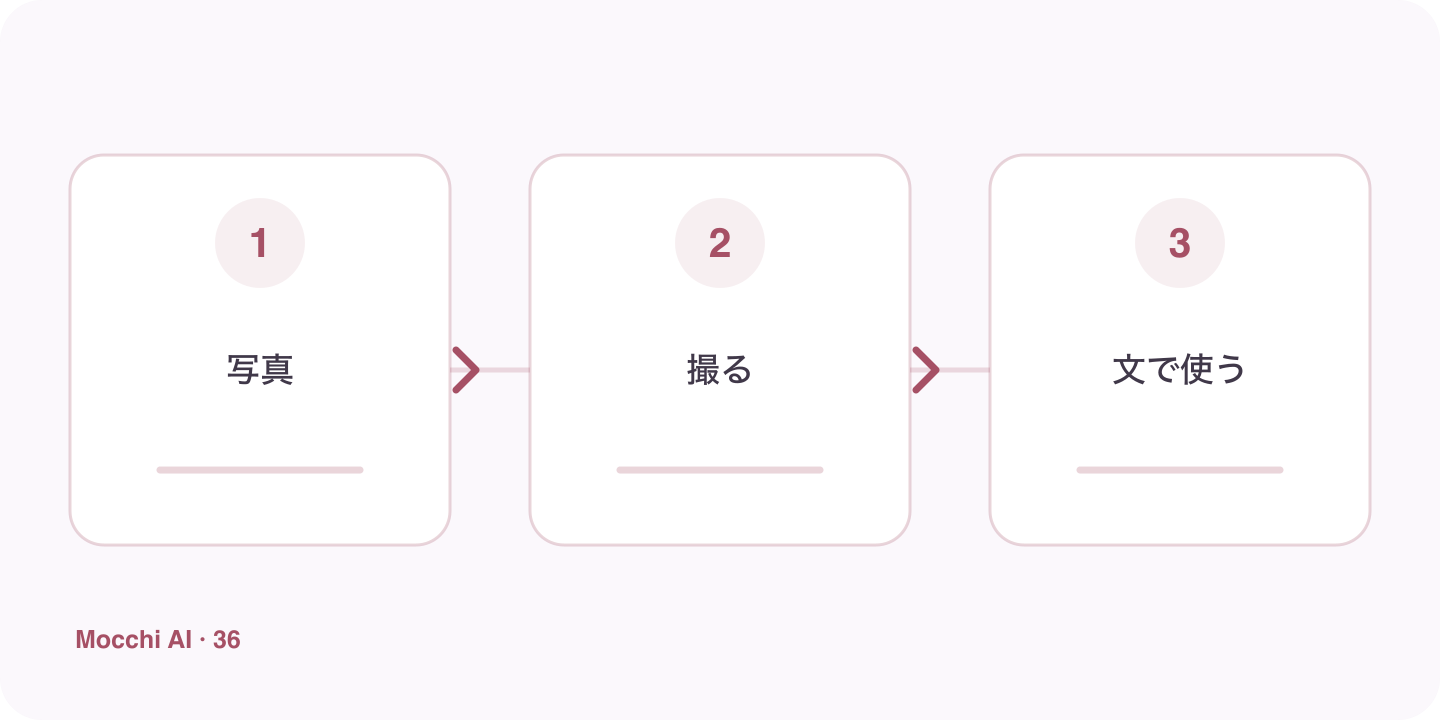
写真 is connected to 撮る and then placed in a short sentence about taking a photograph
A useful vocabulary note preserves the words that work together for the intended action.
JapaneseRomajiMeaning
公園で写真を撮ります。Kōen de shashin o torimasu.I take photographs in the park.
昨日、写真を撮りました。Kinō, shashin o torimashita.I took a photograph yesterday.

Compare alternatives through their intended actions

When another verb seems possible, ask for the situation it would describe rather than treating every alternative as a simple synonym. The useful question is what you would be doing or saying with that combination. A small contrast can prevent you from importing a broad familiar-language meaning into a Japanese phrase where a different partnership is expected.

Make a card that preserves the partnership

If the phrase needs review, include a short situation and one intended meaning. A card containing only a noun and a broad gloss may not test the verb partnership at all. Ask Mocchi to suggest a card from the example, review the proposed reading and meaning, and save it through the card workflow if it serves your goal.

Check a new sentence after a delay

At another session, use the phrase in a changed situation without opening the original model. If you retrieve the noun but not its partner, target that connection directly. If the pair is available but the sentence has a tense error, move the review to grammar. Personalized practice becomes more useful when you identify which link is weak rather than repeatedly labeling the whole word unknown.

Key points

A practical way to improve

Choose a word you recognize but hesitate to use. Ask Mocchi for two common partners in different clear situations, then select the one relevant to your goal. Make a short sentence with it and request feedback on the combination. Later, change the time or subject without looking at the model. Save the phrase and example on a card if the partnership still needs recall practice.

  1. 1

    Choose one clear goal

    Focus each session on a situation or skill you can actually use.

  2. 2

    Practice actively

    Say complete answers aloud instead of only reading or recognizing Japanese.

  3. 3

    Review and repeat

    Keep useful corrections and revisit the same skill until it feels natural.

FAQ

Frequently asked questions

Is a collocation the same as an idiom?

Not necessarily. A collocation can be an ordinary combination of words that commonly expresses an action or relationship. You can practice useful partners without assuming that every phrase has a hidden figurative meaning.

Should I memorize whole sentences instead of words?

Short sentences can preserve context, but also identify the word partnership inside them. Then change a detail so you can use the combination in another message rather than only reciting one complete sentence.

What if more than one verb can accompany the noun?

Ask what action or interpretation each combination expresses. Choose the partner for your intended situation rather than trying to assign one universal verb to every use of a noun.

Learn the phrase your message actually needs

Use Mocchi to connect vocabulary with a natural partner and a sentence you can adapt.