
What hima means in one minute
Hima is free time, and the state of having nothing to do. It can be neutral (I'm free on Saturday), negative (I'm so bored), or social (are you free?, which usually means I want to invite you). It is a noun and a na-adjective, and it is mainly casual.
For friends, hima is the most natural way to talk about availability. For people above you, it needs to be replaced, because asking whether someone is hima can imply they are idle.
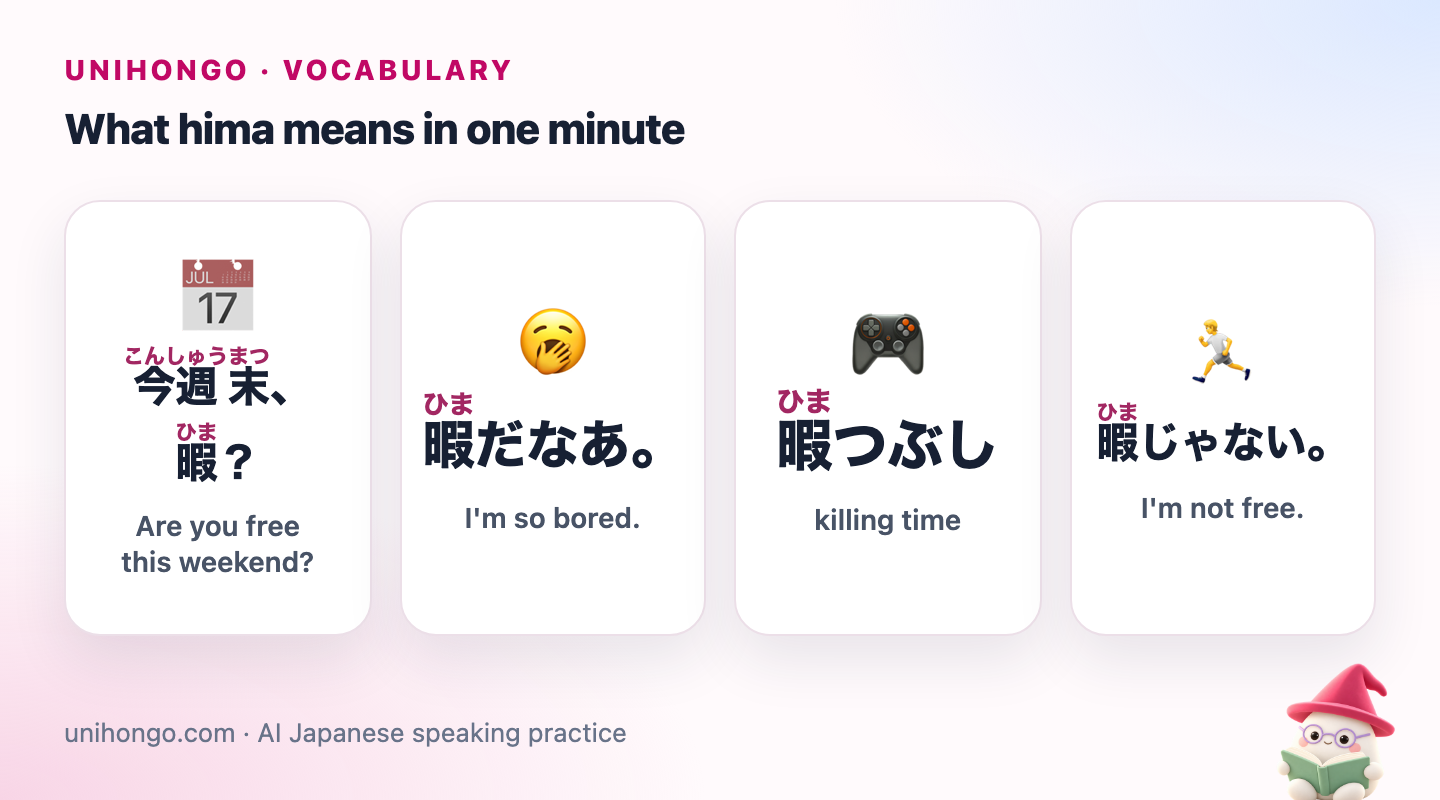
| Japanese | Romaji | Meaning |
|---|---|---|
| 今週末、暇? | Konshūmatsu, hima? | Are you free this weekend? |
| 暇だなあ。 | Hima da nā. | I'm so bored. |
| 暇つぶし | himatsubushi | killing time |
| 暇じゃない。 | Hima ja nai. | I'm not free. |
The kanji and the basic patterns
Hima is written 暇. The kanji has the sun radical 日 on the left, a reminder that it is about days and time. The same kanji appears in kyūka (休暇), a holiday or leave from work, and in yoka (余暇), leisure time.
As a noun, hima combines with ga aru and ga nai: hima ga aru (to have free time), hima ga nai (to have no time). As a na-adjective, it takes na before nouns: hima na hi, a free day. Hima na toki, when you're free, is a common way to make an open-ended suggestion.
| Japanese | Romaji | Meaning |
|---|---|---|
| 最近、暇がない。 | Saikin, hima ga nai. | I haven't had any free time lately. |
| 暇な日は何してる? | Hima na hi wa nani shiteru? | What do you do on your days off? |
| 暇な時、連絡して。 | Hima na toki, renraku shite. | Get in touch when you're free. |
| 日曜日なら暇だよ。 | Nichiyōbi nara hima da yo. | I'm free if it's Sunday. |
Hima? as an invitation
Among friends, hima? is rarely just a question about your diary. It usually means I'm about to invite you. Japanese speakers often ask it first, then reveal the plan, which gives both sides a way out: if you are not free, nobody has to turn down a specific invitation.
Many people find it friendlier to put the plan in the same sentence, so the other person knows what they are agreeing to. Doyōbi hima? eiga ikanai? (Free on Saturday? Want to see a film?) is natural and clear.
| Japanese | Romaji | Meaning |
|---|---|---|
| 明日、暇? | Ashita, hima? | Are you free tomorrow? |
| 土曜日暇だったら、ご飯行かない? | Doyōbi hima dattara, gohan ikanai? | If you're free Saturday, want to get dinner? |
| 今、暇?ちょっと電話していい? | Ima, hima? Chotto denwa shite ii? | Free right now? Can I call you for a bit? |
| 来週、どこか暇な日ある? | Raishū, dokoka hima na hi aru? | Do you have a free day sometime next week? |
Saying yes and no, without sounding cold
A yes is easy: hima da yo, or un, nani mo nai yo (yeah, nothing on). A no needs a little more care. Hima ja nai is grammatically fine, but on its own it can sound blunt, even a little defensive, as if you were insisting you are not idle. Japanese speakers usually soften a no with an apology, a trailing chotto, a brief reason and, if they want to meet, another day.
| Japanese | Romaji | Meaning |
|---|---|---|
| 暇だよ。どうしたの? | Hima da yo. Dō shita no? | I'm free. What's up? |
| うん、何もないよ。 | Un, nani mo nai yo. | Yeah, I've got nothing on. |
| ごめん、その日はちょっと…。 | Gomen, sono hi wa chotto... | Sorry, that day's a bit… |
| バイトがあって。 | Baito ga atte. | I've got my part-time job. |
| 日曜日はどう? | Nichiyōbi wa dō? | How about Sunday? |
| ちょっと予定があるんだ。 | Chotto yotei ga aru n da. | I've got something on. |
Polite alternatives: asking people above you
Never ask a teacher, boss, client or older acquaintance hima desu ka. It can sound as if you think they have nothing to do, which is the opposite of respectful. Instead, ask whether they have time, or ask about their convenience (tsugō). For a quick question at work, ima yoroshii desu ka is the standard opener.
| Japanese | Romaji | Meaning |
|---|---|---|
| すみません、今お時間ありますか。 | Sumimasen, ima ojikan arimasu ka. | Excuse me, do you have a moment now? |
| 今よろしいですか。 | Ima yoroshii desu ka. | Is now a good time? (polite) |
| 来週のご都合はいかがですか。 | Raishū no gotsugō wa ikaga desu ka. | How is your schedule next week? (polite) |
| Who you are asking | What to say | Meaning |
|---|---|---|
| A close friend | Hima? | Are you free? |
| A classmate or coworker your age | Ima jikan aru? | Got a minute? |
| A senior coworker or teacher | O-jikan arimasu ka | Do you have a moment? |
| Your boss, for a quick question | Ima yoroshii desu ka | Is now a good time? |
| A client or for a meeting date | Go-tsugō wa ikaga desu ka | How is your schedule? |
Hima-tsubushi, quiet shops and o-itoma
Hima-tsubushi (暇つぶし) is something you do to kill time: a phone game on the train, a café while you wait for a friend. It can also be slightly dismissive: tada no hima-tsubushi, just something to pass the time.
In business, hima describes a slow period: a shop is hima on a rainy Tuesday. Staff say this among themselves, but telling a shop owner omise, hima desu ne (your shop is quiet) can sound rude, as if the business is failing.
Finally, the same kanji with o in front can be read o-itoma (お暇), a formal word for taking your leave. Sorosoro o-itoma shimasu means I should be going now, said when leaving someone's home. For the feeling of boredom itself, see our guide to saying I'm bored in Japanese, which covers tsumaranai and taikutsu.
| Japanese | Romaji | Meaning |
|---|---|---|
| 電車で暇つぶしにゲームをする。 | Densha de himatsubushi ni gēmu o suru. | I play games on the train to kill time. |
| 今日は店が暇だね。 | Kyō wa mise ga hima da ne. | The shop's quiet today, isn't it? (between staff) |
| そろそろお暇します。 | Sorosoro oitoma shimasu. | I should be taking my leave. (formal) |
Common mistakes: asking a teacher hima desu ka; answering a friend with a flat hima ja nai; using hima to mean that something is boring, which is tsumaranai; and confusing hima ga nai (no free time) with hima ja nai (not free right now).
More hima words: himajin, himasō and te ga aku
A few related expressions come up often. Himajin (暇人), literally a free-time person, is a teasing word for someone with too much time on their hands; friends use it with a laugh, but it is not something to call a stranger. Himasō means looks bored or looks like they have nothing to do. Te ga aku, literally your hands become empty, is a softer way to talk about being free at work: te ga aitara means when you have a moment, and it is polite enough for colleagues.
Finally, jikan aru? (got time?) is a neutral alternative to hima? among friends, and it avoids any hint that the other person is idle.
| Japanese | Romaji | Meaning |
|---|---|---|
| 暇人だね。 | Himajin da ne. | You've got too much time on your hands. (teasing) |
| 暇そうだね。 | Himasō da ne. | You look like you've got nothing to do. |
| 手が空いたら手伝ってください。 | Te ga aitara tetsudatte kudasai. | When you have a moment, please help me. |
| 時間ある? | Jikan aru? | Got a minute? |
Mini dialogue: making weekend plans after class
Two classmates are leaving their language school on a Thursday afternoon. Notice the invitation with hima, the soft no, and the counter-offer.
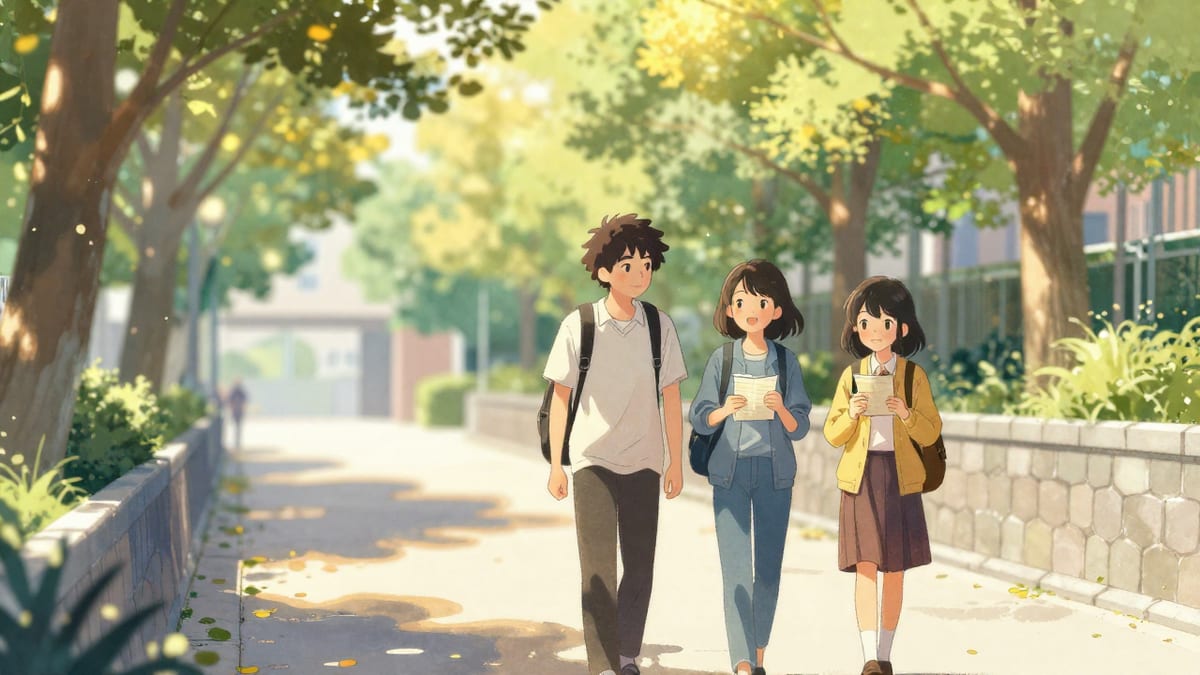
| Japanese | Romaji | Meaning |
|---|---|---|
| ねえ、土曜日暇? | Nē, doyōbi hima? | Lucas: Hey, are you free on Saturday? |
| 土曜日はちょっと…。バイトがあって。 | Doyōbi wa chotto... Baito ga atte. | Emi: Saturday's a bit… I have work. |
| そっか。映画に行こうと思ってたんだけど。 | Sokka. Eiga ni ikō to omotteta n dakedo. | Lucas: I see. I was thinking of seeing a film. |
| 日曜日なら暇だよ! | Nichiyōbi nara hima da yo! | Emi: I'm free on Sunday! |
| じゃあ、日曜日の午後にしよう。 | Jā, nichiyōbi no gogo ni shiyō. | Lucas: Then let's do Sunday afternoon. |
| いいね。楽しみ! | Ii ne. Tanoshimi! | Emi: Sounds good. Can't wait! |