
Clothing words are sorted by body region
Japanese speakers group clothing by where it sits on the body, and the grammar follows that grouping. Torso items include shatsu (shirt), tī shatsu (T-shirt), sētā (jumper), jaketto, kōto, and wanpīsu (dress). Leg and foot items include zubon (trousers), jīnzu, sukāto, kutsushita (socks), and kutsu (shoes). Head items are bōshi (hat) and herumetto. Accessories, called komono, cover ties, belts, watches, and jewellery.
Most of these words are katakana loanwords, easy to recognise and easy to mispronounce: sētā, jīnzu, and kōto all carry long vowels that need two full beats. The third example below uses de for the outfit you go somewhere in, the same particle as densha de, so you can name an outfit without a wearing verb.
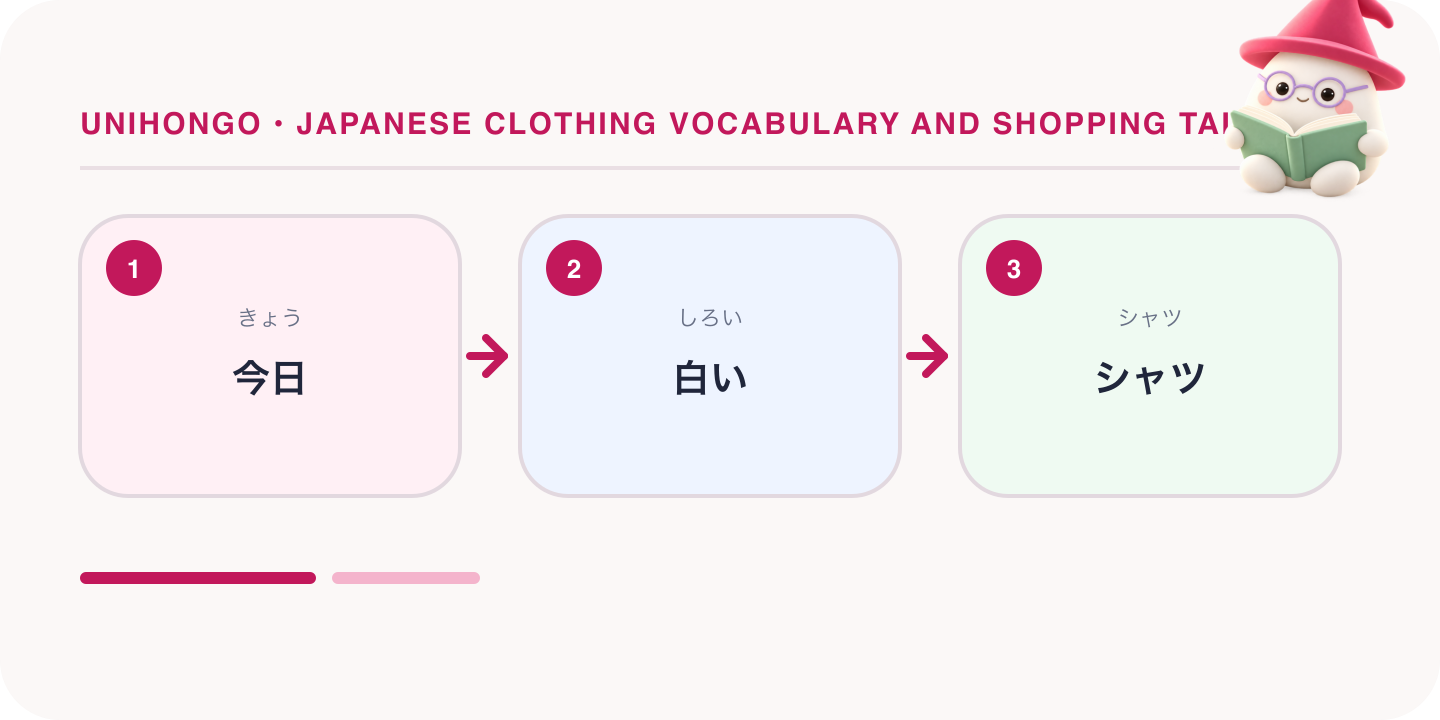
| Japanese | Romaji | Meaning |
|---|---|---|
| 今日は白いシャツを着ています。 | Kyō wa shiroi shatsu o kite imasu. | I am wearing a white shirt today. |
| 寒いので、コートを着ます。 | Samui node, kōto o kimasu. | It is cold, so I will put on a coat. |
| ジーンズとスニーカーで行きます。 | Jīnzu to sunīkā de ikimasu. | I will go in jeans and trainers. |
Kiru, haku, and kaburu: the verb follows the body part
Kiru is for anything that goes over the torso, whether it has sleeves or not: shirts, jumpers, jackets, coats, dresses, suits, pyjamas, and yukata. Haku is for anything you step into or pull over the legs and feet: trousers, skirts, shorts, socks, tights, shoes, boots, and sandals. Kaburu is for anything that covers the head from above: hats, caps, helmets, and hoods.
Small items take other verbs. Suru is the safe general choice for ties, belts, masks, gloves, and jewellery. Tsukeru also works for watches, necklaces, earrings, and perfume. Glasses and sunglasses take kakeru, and a scarf can take suru or maku, to wrap. Learners often reach for kiru for everything, and a sentence like kutsu o kimasu sounds as odd as saying you dressed in your shoes.
| Japanese | Romaji | Meaning |
|---|---|---|
| スカートを履きます。 | Sukāto o hakimasu. | I put on a skirt. |
| 靴を履いてください。 | Kutsu o haite kudasai. | Please put your shoes on. |
| 帽子をかぶります。 | Bōshi o kaburimasu. | I put on a hat. |
| ネクタイをします。 | Nekutai o shimasu. | I put on a tie. |
| 時計をつけます。 | Tokei o tsukemasu. | I put on a watch. |
| 眼鏡をかけます。 | Megane o kakemasu. | I put on my glasses. |
Taking things off is simpler. Nugu removes anything worn with kiru or haku, so kōto o nugimasu and kutsu o nugimasu both work, and kutsu o nuide kudasai is the line you hear at the entrance of a home or a temple. Hats, glasses, and accessories come off with toru or hazusu.
Describing what someone is wearing with te iru
Kimasu describes the action of putting on a shirt. To say that someone has a shirt on right now, Japanese uses the te iru form: kite imasu, haite imasu, kabutte imasu, shite imasu, kakete imasu. This is the same resulting-state use of te iru as kekkon shite imasu (is married), and it is the form you need for almost every real description of clothing.
The te iru form also lets you point someone out: megane o kakete iru hito (the person wearing glasses) puts the whole description in front of hito. The common learner mistake is asking nani o kimasu ka when you mean what someone has on, which sounds like asking about a plan to get dressed.
| Japanese | Romaji | Meaning |
|---|---|---|
| 田中さんは青いジャケットを着ています。 | Tanaka-san wa aoi jaketto o kite imasu. | Tanaka is wearing a blue jacket. |
| 黒いズボンを履いている人です。 | Kuroi zubon o haite iru hito desu. | It is the person wearing black trousers. |
| 眼鏡をかけている人が先生です。 | Megane o kakete iru hito ga sensei desu. | The one wearing glasses is the teacher. |
| 今日は何を着ていますか? | Kyō wa nani o kite imasu ka? | What are you wearing today? |
| 赤い帽子をかぶっています。 | Akai bōshi o kabutte imasu. | I am wearing a red hat. |
Sizes and fit
Sizes in most shops are letters read the Japanese way: esu, emu, eru, and eru eru or ekkusu eru for the largest. Shoes are in centimetres, so nijūgo senchi is a 25. When something does not fit, name the body part or the measurement with ga and then the problem: kata ga kitsui (tight in the shoulders), uesuto ga yurui (loose at the waist), take ga nagai (too long in the length), sode ga mijikai (sleeves too short).
Chōdo ii means just right and is the reply staff hope for. Pittari is a friendlier version of the same idea. If you want a different size, wan saizu ue and wan saizu shita ask for one up or one down. The shopping phrases post on this blog covers the fitting-room and checkout scripts, so here the focus is on the fit words themselves.
| Japanese | Romaji | Meaning |
|---|---|---|
| サイズはいくつですか? | Saizu wa ikutsu desu ka? | What size are you? (staff) |
| エムサイズです。 | Emu saizu desu. | I am a medium. |
| 肩が少しきついです。 | Kata ga sukoshi kitsui desu. | It is a little tight in the shoulders. |
| ウエストがゆるいです。 | Uesuto ga yurui desu. | It is loose at the waist. |
| ワンサイズ上はありますか? | Wan saizu ue wa arimasu ka? | Do you have one size up? |
| サイズはちょうどいいです。 | Saizu wa chōdo ii desu. | The size is just right. |
Materials and patterns
A material joins its item with no: men no shatsu (a cotton shirt), ūru no sētā (a wool jumper), kawa no kutsu (leather shoes). The everyday material words are men or kotton for cotton, ūru for wool, asa for linen, shiruku for silk, kawa for leather, and poriesuteru and nairon for synthetics. Percentages are read with pāsento, so a label reading 綿100% is men hyaku pāsento.
Patterns work the same way. Muji is plain with no pattern, sutoraipu or shima is striped, chekku is checked, mizutama is polka dots, and hanagara is floral. The suffix gara means pattern, so you will also hear mizutama-gara and chekku-gara. Ask about material when you care about warmth or washing, and about pattern when you want something plainer than what is on the rail.
| Japanese | Romaji | Meaning |
|---|---|---|
| これは綿ですか? | Kore wa men desu ka? | Is this cotton? |
| 綿百パーセントです。 | Men hyaku pāsento desu. | It is one hundred percent cotton. (staff) |
| ウールのセーターが欲しいです。 | Ūru no sētā ga hoshii desu. | I want a wool jumper. |
| 無地のほうが好きです。 | Muji no hō ga suki desu. | I prefer plain ones. |
| ストライプのシャツはありますか? | Sutoraipu no shatsu wa arimasu ka? | Do you have a striped shirt? |
Describing style: casual, formal, plain, and loud
Kajuaru and fōmaru are used as in English, and both are na-adjectives: kajuaru na fuku, fōmaru na kakkō. Jimi describes muted colours and understated design, and hade describes bright, bold, or attention-seeking pieces. Neither is an insult when applied to clothes, though calling a person jimi suggests they are dull. Oshare means stylish and is the compliment people actually give.
The verb niau means to suit, and the person it suits takes ni: watashi ni niaimasu. In conversation it usually appears as niatte imasu ne, the standard way to praise what someone is wearing, and the natural reply is thanks plus a small deflection, such as saying it was cheap, rather than agreeing.
| Japanese | Romaji | Meaning |
|---|---|---|
| そのシャツ、よく似合っていますね。 | Sono shatsu, yoku niatte imasu ne. | That shirt really suits you. |
| ありがとうございます。安かったんです。 | Arigatō gozaimasu. Yasukatta n desu. | Thank you. It was cheap, actually. |
| 普段はカジュアルな服が多いです。 | Fudan wa kajuaru na fuku ga ōi desu. | I mostly wear casual clothes. |
| もう少し地味な色がいいです。 | Mō sukoshi jimi na iro ga ii desu. | I would like a slightly more understated colour. |
| ちょっと派手すぎませんか? | Chotto hade sugimasen ka? | Isn't it a bit too flashy? |
| おしゃれですね。どこで買いましたか? | Oshare desu ne. Doko de kaimashita ka? | That is stylish. Where did you buy it? |
Laundry and care words
Sentaku suru is to do the washing, arau is to wash a specific item, hosu is to hang it out to dry, tatamu is to fold, and airon o kakeru is to iron. Sentakuki is the washing machine and kansōki the dryer, though many homes in Japan still dry clothes on a balcony. Kurīningu ni dasu means to send something to the dry cleaner. Care labels use tearai for hand wash and chijimu for shrinking, the question to ask about wool, and shimi is a stain that has set.
| Japanese | Romaji | Meaning |
|---|---|---|
| 洗濯機で洗えますか? | Sentakuki de araemasu ka? | Can it go in the washing machine? |
| 手洗いのほうがいいです。 | Tearai no hō ga ii desu. | Hand washing is better. |
| 縮みますか? | Chijimimasu ka? | Will it shrink? |
| シャツにアイロンをかけます。 | Shatsu ni airon o kakemasu. | I iron the shirt. |
| スーツをクリーニングに出します。 | Sūtsu o kurīningu ni dashimasu. | I take my suit to the dry cleaner. |
| しみが取れません。 | Shimi ga toremasen. | The stain will not come out. |
Dress-code vocabulary at work
Fukusō is the formal word for attire, and the question fukusō wa jiyū desu ka asks whether dress is free, which is how you ask about a dress code. Sūtsu chakuyō on a notice means suits are required. Seifuku is a uniform and shifuku is your own clothes. Ofisu kajuaru is common in many offices, and kūru bizu is the summer practice, widely followed, of dropping ties and jackets in the heat.
| Japanese | Romaji | Meaning |
|---|---|---|
| 服装は自由ですか? | Fukusō wa jiyū desu ka? | Is there a dress code? |
| 夏はクールビズなので、ネクタイはいりません。 | Natsu wa kūru bizu na node, nekutai wa irimasen. | In summer it is cool biz, so you do not need a tie. |
| 面接にはスーツで行きます。 | Mensetsu ni wa sūtsu de ikimasu. | I will go to the interview in a suit. |
| うちの会社はオフィスカジュアルです。 | Uchi no kaisha wa ofisu kajuaru desu. | My company is office casual. |
| 名札をつけてください。 | Nafuda o tsukete kudasai. | Please wear your name badge. |
Reference table: clothing items and their verbs
| Item | Romaji | English | Wearing verb |
|---|---|---|---|
| シャツ | shatsu | shirt | 着る kiru |
| Tシャツ | tī shatsu | T-shirt | 着る kiru |
| セーター | sētā | jumper | 着る kiru |
| ジャケット | jaketto | jacket | 着る kiru |
| コート | kōto | coat | 着る kiru |
| ワンピース | wanpīsu | dress | 着る kiru |
| スーツ | sūtsu | suit | 着る kiru |
| パジャマ | pajama | pyjamas | 着る kiru |
| 浴衣 | yukata | yukata | 着る kiru |
| ズボン | zubon | trousers | 履く haku |
| ジーンズ | jīnzu | jeans | 履く haku |
| スカート | sukāto | skirt | 履く haku |
| 短パン | tanpan | shorts | 履く haku |
| 靴 | kutsu | shoes | 履く haku |
| スニーカー | sunīkā | trainers | 履く haku |
| ブーツ | būtsu | boots | 履く haku |
| サンダル | sandaru | sandals | 履く haku |
| 靴下 | kutsushita | socks | 履く haku |
| タイツ | taitsu | tights | 履く haku |
| 帽子 | bōshi | hat | かぶる kaburu |
| ヘルメット | herumetto | helmet | かぶる kaburu |
| 眼鏡 | megane | glasses | かける kakeru |
| サングラス | sangurasu | sunglasses | かける kakeru |
| ネクタイ | nekutai | tie | する suru |
| ベルト | beruto | belt | する suru |
| マフラー | mafurā | scarf | する suru / 巻く maku |
| 手袋 | tebukuro | gloves | する suru / はめる hameru |
| マスク | masuku | mask | する suru |
| 時計 | tokei | watch | する suru / つける tsukeru |
| 指輪 | yubiwa | ring | する suru / はめる hameru |
| ネックレス | nekkuresu | necklace | する suru / つける tsukeru |
| イヤリング | iyaringu | earrings | する suru / つける tsukeru |
| かばん | kaban | bag | 持つ motsu |
Where two verbs are listed, either is natural and suru is the safer choice if you are unsure. A bag is carried rather than worn, so it takes motsu, or kakeru when it hangs from a shoulder. Underwear follows the body-part rule too: a vest takes kiru and pants take haku.
Putting a whole outfit into one sentence
To describe an outfit you chain the verbs with the te form, which the te form guide on this blog explains in depth. Each item keeps its own verb, only the final one carries the tense: shatsu o kite, zubon o haite, bōshi o kabutte imasu. The pattern is long but regular, and it is exactly what you need when a friend asks what you wore or when you describe a person you met.
| Japanese | Romaji | Meaning |
|---|---|---|
| 今日は白いシャツを着て、黒いズボンを履いています。 | Kyō wa shiroi shatsu o kite, kuroi zubon o haite imasu. | Today I am wearing a white shirt and black trousers. |
| 彼は帽子をかぶって、サングラスをかけています。 | Kare wa bōshi o kabutte, sangurasu o kakete imasu. | He is wearing a hat and sunglasses. |
| 面接ではスーツを着て、ネクタイをしました。 | Mensetsu de wa sūtsu o kite, nekutai o shimashita. | At the interview I wore a suit and a tie. |
| 週末はTシャツとジーンズが多いです。 | Shūmatsu wa tī shatsu to jīnzu ga ōi desu. | At the weekend it is mostly T-shirts and jeans. |
| 明日は何を着て行きますか? | Ashita wa nani o kite ikimasu ka? | What are you going to wear tomorrow? |
| 寒そうなので、コートを着て行きます。 | Samusō na node, kōto o kite ikimasu. | It looks cold, so I will wear a coat. |
Kite ikimasu, to wear something and go, is how Japanese says you will go out in a particular item. It answers the common question of what to wear somewhere, and it is the form a host or colleague uses when giving advice about the weather.
How to practise clothing words out loud
- Describe your own outfit every morning in one chained te form sentence, and change the adjectives as the weather changes.
- On a train, silently describe three strangers with the te iru hito pattern, then say one description out loud on the way home.
- Sort your wardrobe by verb once: kiru items in one pile, haku in another, and say the verb as you put each item away.
- Rehearse two fit complaints and one compliment reply before your next shopping trip, so the fitting room does not force you to build sentences from scratch.