
Ryūkōgo, shingo and shigo: the three labels
Ryūkō (流行) is a trend, a fashion, or something that is going around; the same word is used when a cold is spreading. Add go (語), word, and you have ryūkōgo, a word that is going around. A shingo (新語) is a word that is new. A shigo (死語) is a word that has died.
The everyday verb is hayaru (はやる), to be in fashion. People say ima hayatte iru, it is popular now, about words, songs, sweets and clothes alike.
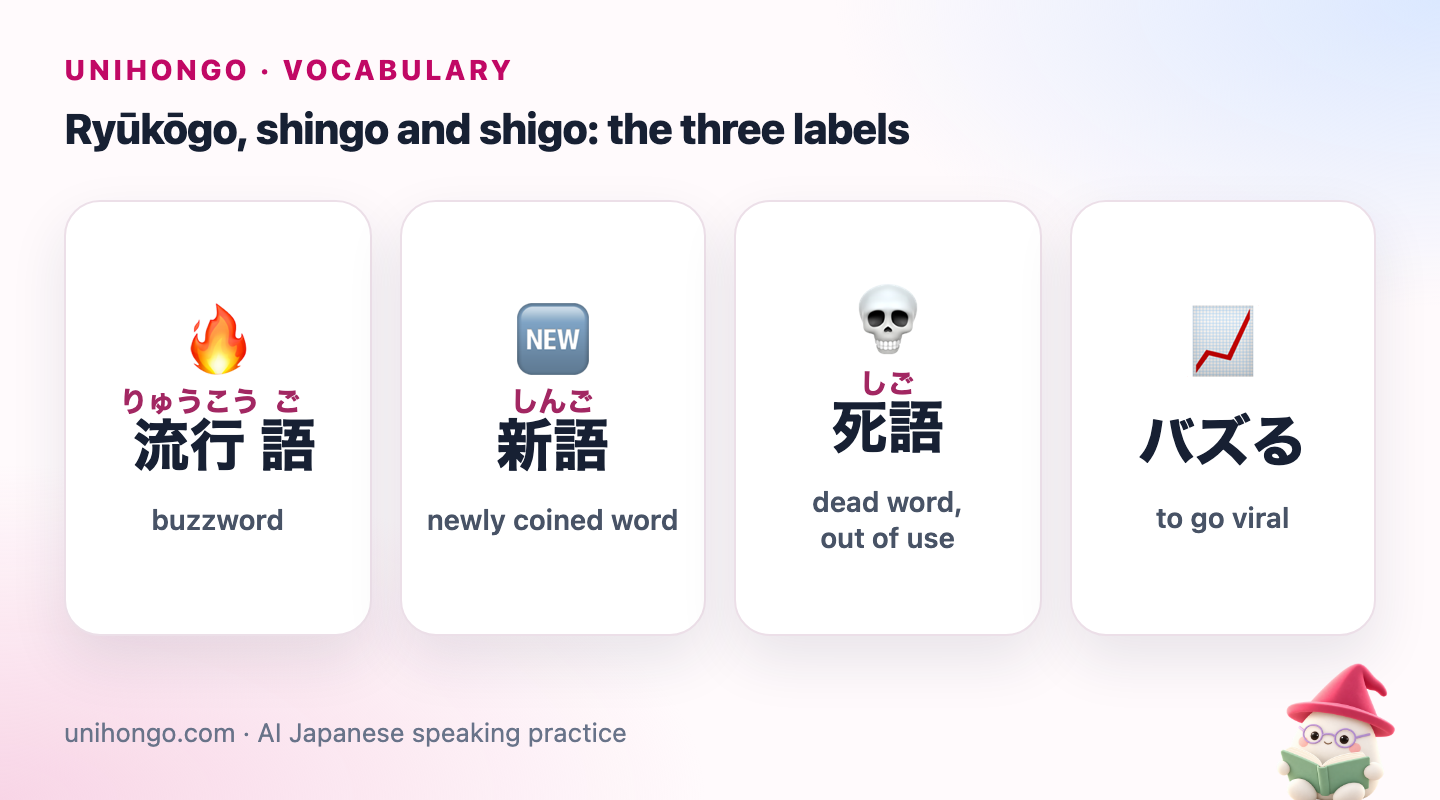
| Japanese | Romaji | Meaning |
|---|---|---|
| 流行語 | ryūkōgo | buzzword |
| 新語 | shingo | newly coined word |
| 死語 | shigo | dead word, out of use |
| バズる | bazuru | to go viral |
| はやる | hayaru | to be in fashion |
| 今、はやっています。 | Ima, hayatte imasu. | It's popular right now. |
The December awards
The Shingo Ryūkōgo Taishō has been held since 1984. A list of nominees appears in autumn, and at the start of December a selection committee, not a public vote, announces a top ten and a grand prize, the nenkan taishō (年間大賞). The person behind each word, whether an athlete, a comedian or a politician, is invited to collect the prize, which is half the fun.
Winners come from a few reliable sources: sport, especially baseball; politics; comedy catchphrases and television dramas; and, more and more, social media. Every year people argue that they have never heard some of the winners, and that argument is part of the tradition too. Dictionary publishers and trend magazines publish their own rival lists.
| Japanese | Romaji | Meaning |
|---|---|---|
| 年間大賞 | nenkan taishō | grand prize of the year |
| 今年の流行語は何ですか。 | Kotoshi no ryūkōgo wa nan desu ka. | What are this year's buzzwords? |
| 流行語大賞が発表されました。 | Ryūkōgo taishō ga happyō saremashita. | The buzzword awards have been announced. |
Winners that outlived their year
| Japanese | Romaji | Meaning |
|---|---|---|
| おもてなし | omotenashi | wholehearted hospitality, 2013 |
| 倍返し | baigaeshi | double payback, 2013 |
| 爆買い | bakugai | explosive shopping spree, 2015 |
| 忖度 | sontaku | guessing a superior's wishes, 2017 |
| インスタ映え | insutabae | looking good on Instagram, 2017 |
| 三密 | sanmitsu | the three Cs to avoid, 2020 |
Omotenashi was an existing word that became a buzzword after it was spoken slowly, syllable by syllable, in Tokyo's presentation for the Olympic Games. Baigaeshi came from a hit television drama about a banker. Bakugai described tourists buying in bulk.
Sontaku and insutabae shared the grand prize in 2017. The first was an old literary word revived by a political scandal. The second left a useful child behind: baeru (映える), to look great in a photo, is still in daily use. Sanmitsu, the three conditions to avoid in the pandemic, won in 2020.
How buzzwords are built: shortening
Japanese likes to cut a long phrase down to about four beats, often by taking the first two beats of each half. The result sounds light and friendly, and many shortened forms become the normal word.
| Japanese | Romaji | Meaning |
|---|---|---|
| あけおめ | akeome | Happy New Year, shortened |
| スマホ | sumaho | smartphone |
| コンビニ | konbini | convenience store |
| コスパ | kosupa | value for money |
| タイパ | taipa | value for time |
Akeome comes from akemashite omedetō and is for friends, mostly in messages; to anyone senior, say the full akemashite omedetō gozaimasu. Kosupa is short for cost performance, and taipa, time performance, was built on the same model and picked as a new word of the year by a dictionary publisher in 2022.
How buzzwords are built: add ru and make a verb
The second great factory is the verb ending ru. Attach it to a noun or a clipped English word and conjugate the result like toru, to take: guguru, guguranai, gugutte, gugutta. English is mixed in freely, usually in katakana.
| Japanese | Romaji | Meaning |
|---|---|---|
| ググる | guguru | to google |
| サボる | saboru | to skip work or class |
| ディスる | disuru | to diss, to put down |
| メモる | memoru | to take a note |
| ググってみます。 | Gugutte mimasu. | I'll try googling it. |
| この動画はバズりました。 | Kono dōga wa bazurimashita. | This video went viral. |
Saboru, from sabotage, is the proof that a buzzword can become ordinary Japanese: it is generations old and nobody thinks of it as slang any more. All of these are casual. In a business email write kensaku shimasu, I will search, not gugurimasu.
Shigo: when a buzzword dies
Most buzzwords fade within a year or two, and comedy catchphrases fade fastest. Words that sound dated are called shigo. Classic examples that Japanese people themselves list are naui (ナウい), trendy, from the English now, and choberiba (チョベリバ), a 1990s teen phrase built from very bad.
For a learner the risk is real: a textbook, an old drama or an older friend may teach you a word that now makes people smile. Nobody minds, but it is worth asking.
| Japanese | Romaji | Meaning |
|---|---|---|
| それはもう死語ですよ。 | Sore wa mō shigo desu yo. | That word is already dead, you know. |
| もう古いですか。 | Mō furui desu ka. | Is it out of date already? |
| 今も使いますか。 | Ima mo tsukaimasu ka. | Do people still use it? |
Asking what people are saying now
Treat buzzwords as listening vocabulary first. Recognising this year's phrase lets you follow jokes and advertising. Using it works with friends and falls flat in an interview or with customers. The questions below let you collect words and check where they are safe.
| Japanese | Romaji | Meaning |
|---|---|---|
| 最近はやっている言葉は何ですか。 | Saikin hayatte iru kotoba wa nan desu ka. | What words are popular lately? |
| それはどういう意味ですか。 | Sore wa dō iu imi desu ka. | What does that mean? |
| どこから来た言葉ですか。 | Doko kara kita kotoba desu ka. | Where does the word come from? |
| 若い人がよく使いますか。 | Wakai hito ga yoku tsukaimasu ka. | Do young people use it a lot? |
| 私が使っても大丈夫ですか。 | Watashi ga tsukatte mo daijōbu desu ka. | Is it all right if I use it? |