
Moyamoya meaning: fog in your chest
Moyamoya is one of Japan's many mimetic words, which describe a state or texture through sound rather than imitate a noise. Its physical meaning is hazy, smoky or blurry, like steam in a bathroom or a thought you cannot quite catch. Applied to feelings, it describes the cloud of half-formed emotion that stays with you when something has not been resolved.
You will see it written in katakana (モヤモヤ) or hiragana (もやもや); both are common. It works as a verb with suru, as a noun with ga or no, and with kanji such as kan (feeling): moyamoya-kan, a sense of unease.
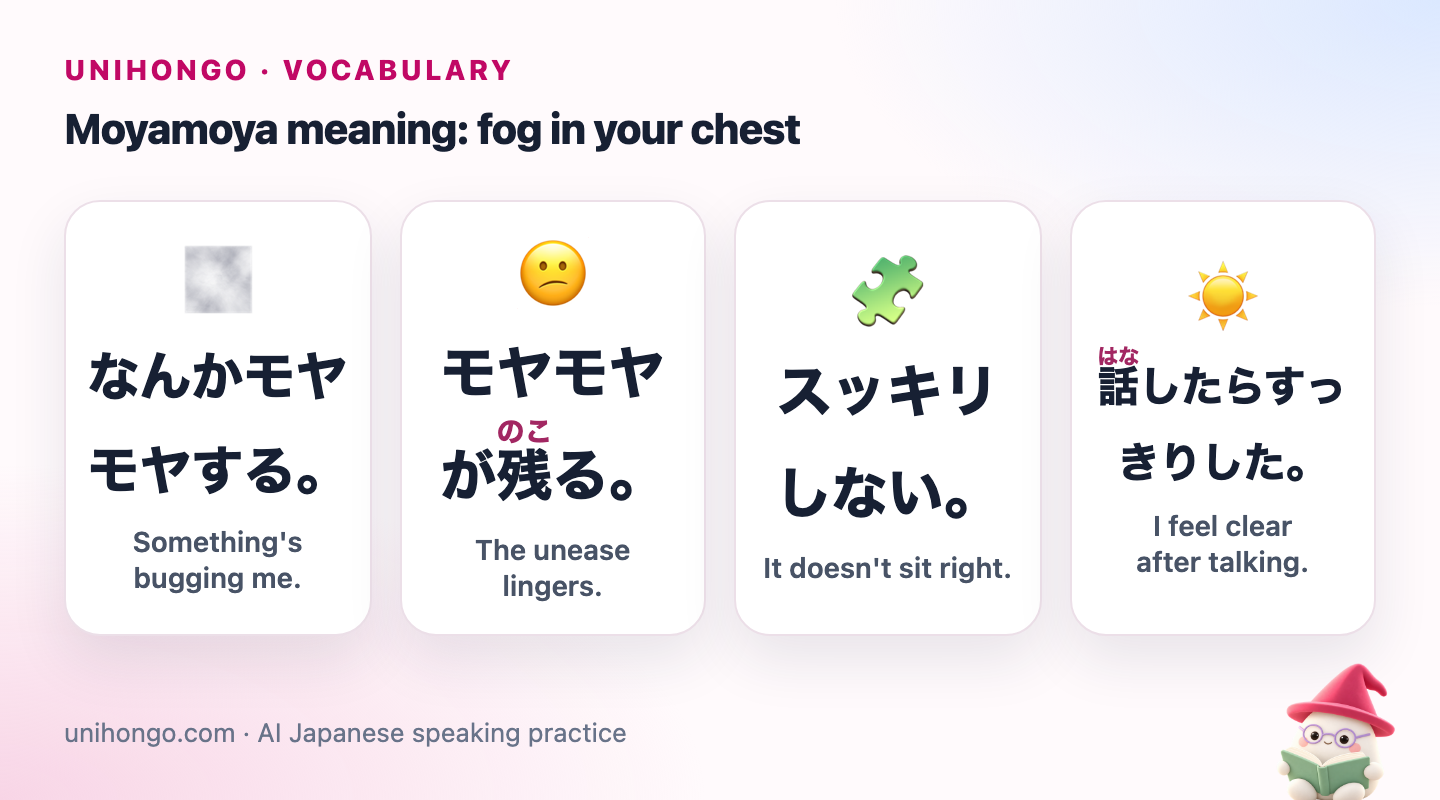
| Japanese | Romaji | Meaning |
|---|---|---|
| なんかモヤモヤする。 | Nanka moyamoya suru. | Something's bugging me. |
| モヤモヤが残る。 | Moyamoya ga nokoru. | The unease lingers. |
| スッキリしない。 | Sukkiri shinai. | It doesn't sit right. |
| 話したらすっきりした。 | Hanashitara sukkiri shita. | I feel clear after talking. |
Nanka, somehow, is moyamoya's best friend. Because the feeling is hard to name, people often admit that up front: nanka moyamoya suru, I can't explain it, but something feels off.
What moyamoya covers, and what it does not
Moyamoya is about vagueness. It fits when you cannot quite decide how you feel, when a question was left unanswered, or when you suspect you should be annoyed but are not sure. Common triggers include a comment that might have been a dig, a decision made without you, a story with an unclear ending, or a message with no reply.
Once the feeling becomes clear and strong, people usually switch to a more specific word. This table shows the neighbours.
| Japanese | Romaji | Meaning |
|---|---|---|
| 結論が出なくて、モヤモヤする。 | Ketsuron ga denakute, moyamoya suru. | No conclusion was reached, so I feel unsettled. |
| 映画の終わり方がモヤモヤした。 | Eiga no owarikata ga moyamoya shita. | The film's ending left me unsatisfied. |
| 返事が来なくて、モヤモヤしてる。 | Henji ga konakute, moyamoya shiteru. | I haven't had a reply, and it's bugging me. |
| Word | What it describes | How strong |
|---|---|---|
| moyamoya (モヤモヤ) | Unclear, unresolved unease | Mild, hard to name |
| iraira (イライラ) | Irritation, impatience | Clear and active |
| mukatsuku (むかつく) | Anger, disgust at someone | Strong, blunt, casual |
| fuan (不安) | Anxiety about the future | Clear worry |
| ochikomu (落ち込む) | Feeling down after something bad | Clear sadness |
Sukkiri: the feeling you want instead
Sukkiri is another mimetic word, and it is everything moyamoya is not: clear, clean, settled, refreshed. People use it for feelings after a problem is solved or a worry is shared, but also for a tidy room, a clear head after a good sleep, a short haircut and a clean, refreshing taste. Learning both words together gives you a whole before-and-after story.
| Japanese | Romaji | Meaning |
|---|---|---|
| 言いたいことを言って、すっきりした。 | Iitai koto o itte, sukkiri shita. | I said what I wanted to say and feel better. |
| 部屋がすっきりしたね。 | Heya ga sukkiri shita ne. | The room looks so much tidier. |
| 寝たら頭がすっきりした。 | Netara atama ga sukkiri shita. | After sleeping, my head feels clear. |
| すっきりした味ですね。 | Sukkiri shita aji desu ne. | It has a clean, refreshing taste. |
Saying what caused it
To explain your moyamoya, put the cause in a -te form or a ga clause in front of it. Being told something is -te iwarete; something not happening is -nakute. For an ongoing feeling, use moyamoya shiteru. If you want to name a topic, use no koto de: about.
None of these sentences blames anyone directly, which is part of the word's charm. You describe your inner weather and let the listener decide what it means.
| Japanese | Romaji | Meaning |
|---|---|---|
| あんなふうに言われて、モヤモヤした。 | Anna fū ni iwarete, moyamoya shita. | Being told that left me unsettled. |
| 仕事のことで、ずっとモヤモヤしてる。 | Shigoto no koto de, zutto moyamoya shiteru. | I've felt unsettled about work for ages. |
| モヤモヤの原因がわからない。 | Moyamoya no gen'in ga wakaranai. | I can't work out why I feel uneasy. |
| なんでモヤモヤするんだろう。 | Nande moyamoya suru n darō. | I wonder why it's bugging me. |
Listening when a friend says moyamoya
When someone tells you they feel moyamoya, they are usually not asking for a solution. They want to put the feeling into words. A good listener asks open questions, repeats the feeling back, and only then offers a view. These lines are casual; with a colleague, add desu and masu.
| Japanese | Romaji | Meaning |
|---|---|---|
| どうしたの?話、聞くよ。 | Dō shita no? Hanashi, kiku yo. | What's up? I'm listening. |
| それはモヤモヤするね。 | Sore wa moyamoya suru ne. | That would bother anyone. |
| 何が一番気になる? | Nani ga ichiban ki ni naru? | What bothers you most? |
| 本人に聞いてみたら? | Honnin ni kiite mitara? | Why not ask them directly? |
Ki ni naru, to be on your mind, is a useful partner word. Moyamoya is the feeling; ki ni naru points to the specific thing that keeps catching your attention.
Common mistakes with moyamoya
- Using it for strong anger. If you are furious, moyamoya sounds like an understatement. Use iraira or, among close friends, mukatsuku.
- Using it for physical illness. Feeling sick is kimochi ga warui; a stuffy head is atama ga bōtto suru. Moyamoya is about mood or unclear thoughts.
- Treating sukkiri as simply happy. Sukkiri means relieved, cleared or refreshed. A great party is tanoshikatta, not sukkiri shita.
- Writing it in emails at work. Name the concern instead: ki ni naru ten ga arimasu, there's a point I'm concerned about.
When your head feels moyamoya
Moyamoya is not only about feelings toward other people. It also describes thoughts that will not come together: an essay you cannot start, a plan with too many options, or a decision you keep putting off. Atama ga moyamoya suru means your head feels foggy, and kangae ga matomaranai, my thoughts won't come together, is its close partner.
The cure is the same as for emotional moyamoya: put it into words. Writing a list, talking to someone or going for a walk to clear your head are all ways people describe getting from moyamoya to sukkiri.
| Japanese | Romaji | Meaning |
|---|---|---|
| 頭がモヤモヤする。 | Atama ga moyamoya suru. | My head feels foggy. |
| 考えがまとまらない。 | Kangae ga matomaranai. | My thoughts won't come together. |
| 紙に書いたら、すっきりした。 | Kami ni kaitara, sukkiri shita. | Writing it down cleared my head. |
| 散歩して、頭をすっきりさせよう。 | Sanpo shite, atama o sukkiri saseyō. | Let's take a walk and clear our heads. |
Mini dialogue: from moyamoya to sukkiri
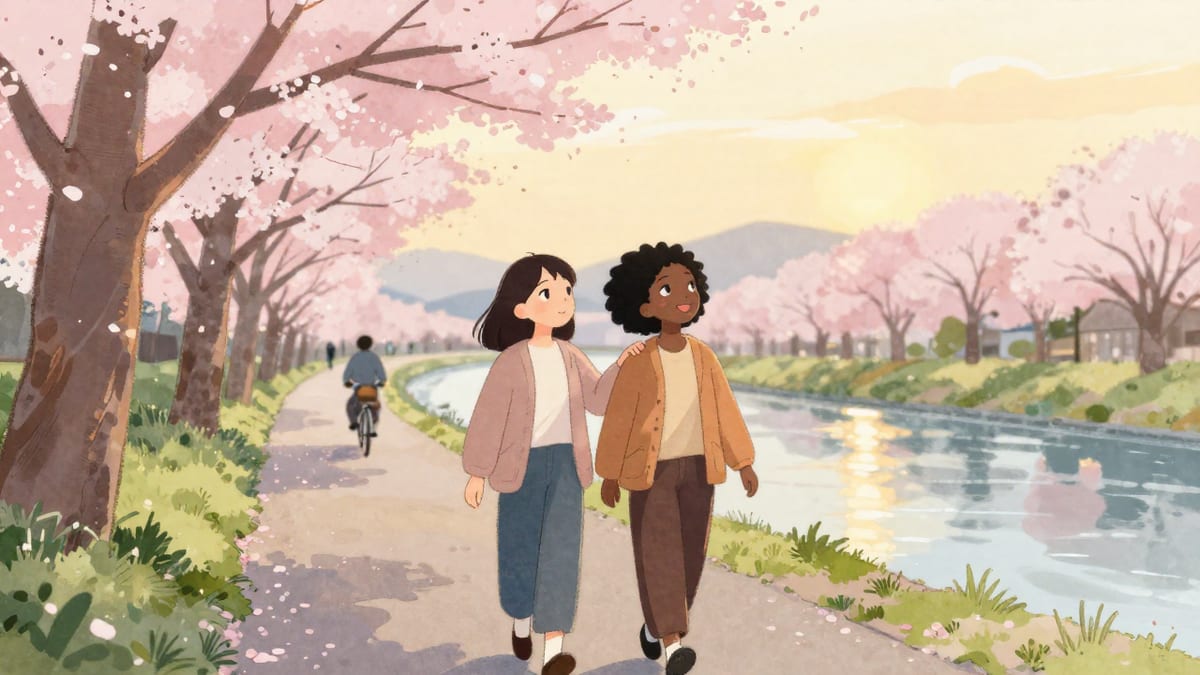
Your friend cancelled your plans at the last minute with a very short message, and it has been on your mind all day. Over coffee with another friend, you talk it through.
| Japanese | Romaji | Meaning |
|---|---|---|
| 元気ないね。どうしたの? | Genki nai ne. Dō shita no? | Friend: You seem down. What's up? |
| なんかモヤモヤしてて。 | Nanka moyamoya shitete. | You: Something's been bugging me. |
| ドタキャンされて、理由も言われなくて。 | Dotakyan sarete, riyū mo iwarenakute. | You: She cancelled last minute and gave no reason. |
| それはモヤモヤするね。 | Sore wa moyamoya suru ne. | Friend: No wonder you feel unsettled. |
| 忙しかっただけかもしれないよ。 | Isogashikatta dake kamo shirenai yo. | Friend: Maybe she was just busy. |
| そうだね。明日聞いてみる。 | Sō da ne. Ashita kiite miru. | You: True. I'll ask her tomorrow. |
| 話したら、すっきりした。 | Hanashitara, sukkiri shita. | You: I feel better after talking. |