
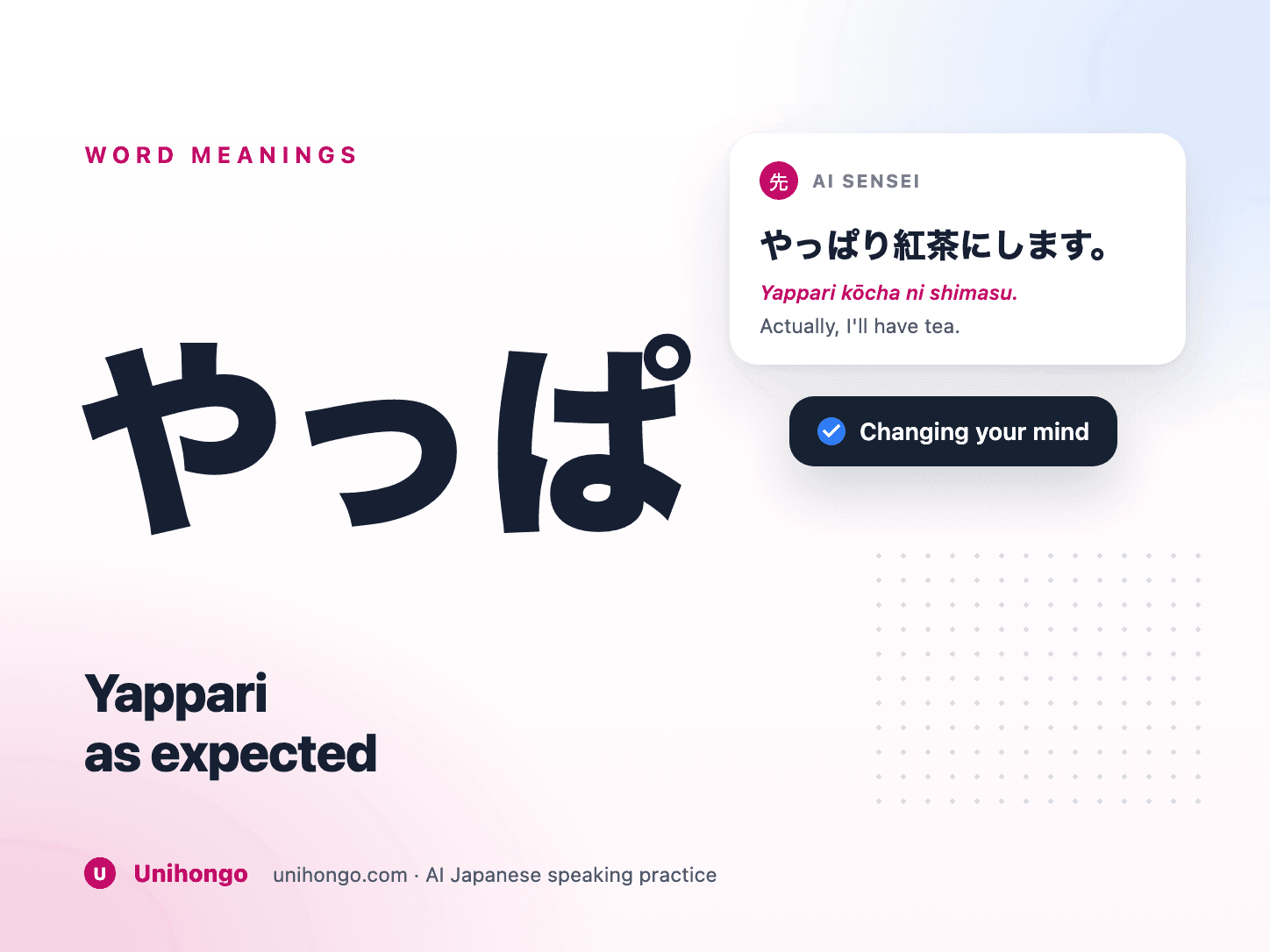
One word, one comparison
Every use of yappari compares the present with something earlier: a prediction, a common belief, or a choice you made and then left. Once you look for that comparison, the different English translations stop feeling random.
| Japanese | Romaji | Meaning |
|---|---|---|
| やっぱり雨だ。 | Yappari ame da. | It's raining, just as I thought |
| やっぱりやめておきます。 | Yappari yamete okimasu. | Actually, I'll pass after all |
| やっぱり家が一番。 | Yappari ie ga ichiban. | Home really is best after all |
| Use | The earlier thing | Rough English |
|---|---|---|
| Confirmation | A prediction or suspicion | Just as I thought |
| Changing your mind | Your first choice | Actually, on second thoughts |
| Conviction | A belief you still hold | After all, still |
As expected
The first use confirms that something turned out the way you or most people would have guessed. It often carries a small emotional colour: satisfaction if the expectation was good, resignation if it was not.
Said alone as yappari ne or yappari, it works as a complete reaction: I knew it.
| Japanese | Romaji | Meaning |
|---|---|---|
| やっぱりそうだと思った。 | Yappari sō da to omotta. | I thought so, I knew it |
| 彼、やっぱり来なかったね。 | Kare, yappari konakatta ne. | He didn't come after all, as expected |
| やっぱり人気ですね。 | Yappari ninki desu ne. | It's popular, just as you'd expect |
| やっぱりね。 | Yappari ne. | I knew it |
Changing your mind
The second use is the most practical for learners. When you change a decision, yappari at the start of the sentence signals the reversal before the listener hears what the new choice is.
It is soft and completely normal, whether you are adjusting an order in a café or backing out of plans.
| Japanese | Romaji | Meaning |
|---|---|---|
| コーヒーにします。 | Kōhī ni shimasu. | I'll have coffee |
| あ、やっぱり紅茶にします。 | A, yappari kōcha ni shimasu. | Oh, actually, I'll have tea |
| やっぱりいいです。 | Yappari ii desu. | Never mind after all |
| やっぱり行くことにした。 | Yappari iku koto ni shita. | I've decided to go after all |
Yahari, yappari and yappa
The word exists in several forms that differ only in register. Yahari is the original and sounds measured and formal, so it appears in speeches, news commentary and business. Yappari is the everyday spoken form and works in polite conversation. Yappa is casual and clipped.
| Japanese | Romaji | Meaning |
|---|---|---|
| やはり | yahari | Formal: speeches, news, business |
| やっぱり | yappari | Everyday speech, polite or casual |
| やっぱ | yappa | Casual, among friends |
| やはり、基本が大切です。 | Yahari, kihon ga taisetsu desu. | After all, the basics matter most |
| やっぱ、うまいな。 | Yappa, umai na. | Man, that's good after all |
In a job interview or presentation, choose yahari. With a friend over dinner, yappari or yappa both sound natural.
Patterns you will hear
Yappari clusters with a few recurring phrases, and learning them as chunks is faster than building them each time.
| Japanese | Romaji | Meaning |
|---|---|---|
| やっぱり日本の夏は暑いですね。 | Yappari Nihon no natsu wa atsui desu ne. | Japanese summers really are hot |
| 何だかんだ言っても、やっぱり地元が好き。 | Nandakanda itte mo, yappari jimoto ga suki. | Whatever I say, I still love my hometown |
| やっぱり無理かな。 | Yappari muri ka na. | Maybe it's not possible after all |
| やっぱり、そうですよね。 | Yappari, sō desu yo ne. | That's what I thought too, right? |
One habit to avoid
Because yappari confirms expectations, it can quietly turn an observation into a stereotype. Yappari Nihonjin wa followed by a trait sounds like of course Japanese people are like that, and it can land badly even when the trait is meant as a compliment.
Keep yappari for things you actually expected based on experience, like weather, food and your own plans, and it will sound warm rather than presumptuous.
- Safe: yappari oishii, yappari tsukareta, yappari yamemasu.
- Careful: yappari plus a nationality or group.
- Better: say what you personally noticed instead.