
What suteki means in one minute
Suteki is a na-adjective meaning lovely, wonderful, charming or delightful. It is positive, warm and slightly elegant, and it fits things you can see, such as clothes, rooms and gardens, as well as things you cannot, such as a person's character, an idea, an evening or a future plan.
In polite conversation, suteki desu ne (how lovely) is a safe compliment you can use with almost anyone, from a coworker's new bag to a host's living room.
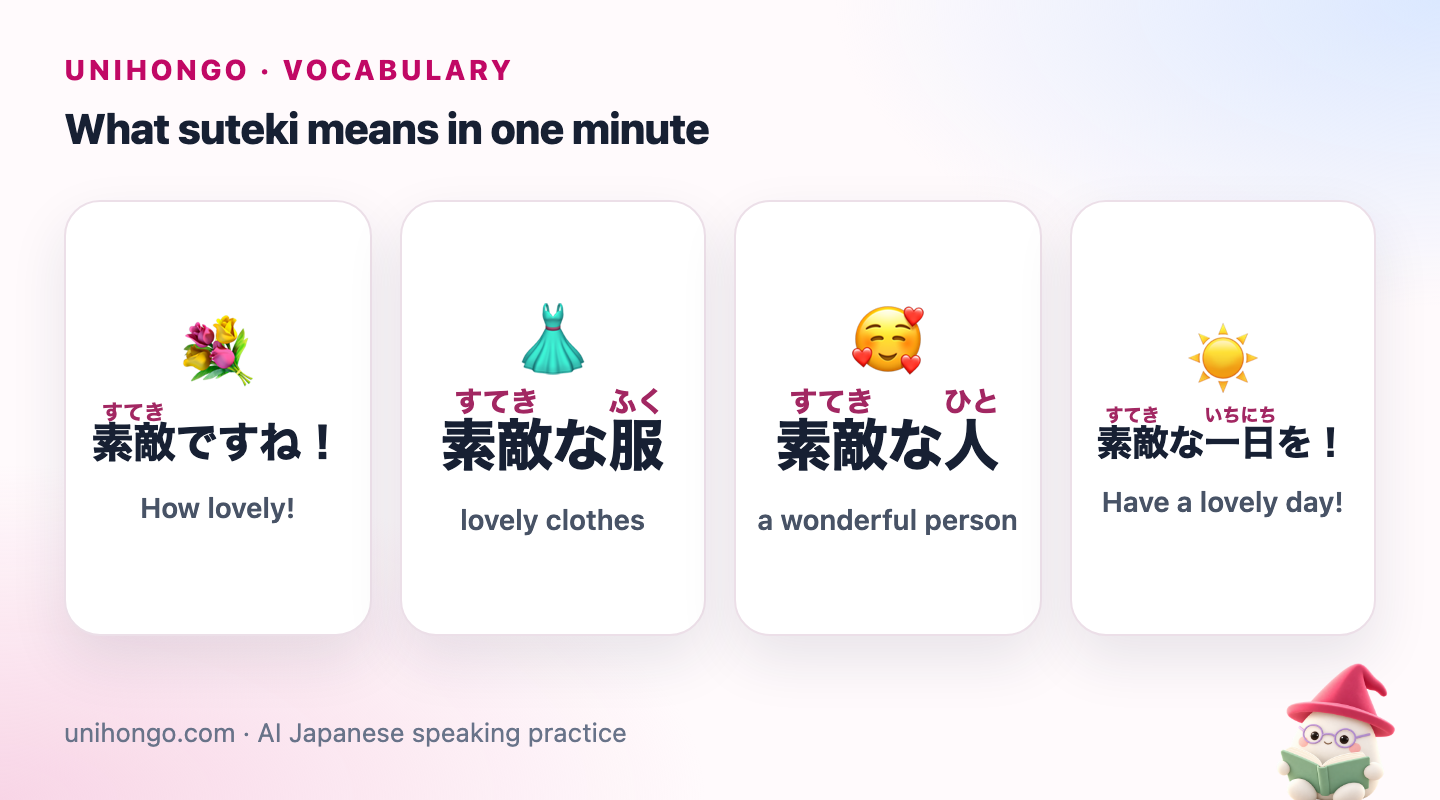
| Japanese | Romaji | Meaning |
|---|---|---|
| 素敵ですね! | Suteki desu ne! | How lovely! |
| 素敵な服 | suteki na fuku | lovely clothes |
| 素敵な人 | suteki na hito | a wonderful person |
| 素敵な一日を! | Suteki na ichinichi o! | Have a lovely day! |
The kanji and the grammar
Suteki is written 素敵. The first kanji means element or plain, and the second usually means enemy, which surprises learners. The characters are generally thought to have been chosen mainly for their sound rather than their meaning, a common practice called ateji, so do not try to read lovely out of them. The word is also often written in hiragana, すてき, which looks soft and friendly.
Suteki is a na-adjective. Before a noun it takes na: suteki na heya. At the end of a sentence it takes desu or da. As an adverb it becomes suteki ni: suteki ni kazaru, to decorate beautifully.
In casual speech, the sentence ending often disappears: sono iro, suteki! Women in particular may add ne or yo ne, and a long, warm sutekī can express real delight. The past form suteki datta (it was lovely) is handy for talking about trips, concerts and evenings after the fact.
| Japanese | Romaji | Meaning |
|---|---|---|
| 素敵な部屋ですね。 | Suteki na heya desu ne. | What a lovely room. |
| その色、素敵! | Sono iro, suteki! | That colour is lovely! |
| 素敵に飾ってありますね。 | Suteki ni kazatte arimasu ne. | It's been decorated beautifully. |
| すてきだった。 | Suteki datta. | It was lovely. |
Every real use of suteki, with examples
Here is suteki in its natural habitats: compliments on belongings, places, people, ideas, events and wishes. Notice how often it appears in front of a noun.
| Japanese | Romaji | Meaning |
|---|---|---|
| そのネクタイ、素敵ですね。 | Sono nekutai, suteki desu ne. | That's a lovely tie. |
| 素敵なカフェを見つけたよ。 | Suteki na kafe o mitsuketa yo. | I found a lovely café. |
| お母さん、素敵な人だね。 | Okāsan, suteki na hito da ne. | Your mum is a wonderful person. |
| それ、素敵なアイデアですね。 | Sore, suteki na aidia desu ne. | That's a lovely idea. |
| 素敵な夜をありがとう。 | Suteki na yoru o arigatō. | Thank you for a wonderful evening. |
| 素敵な週末をお過ごしください。 | Suteki na shūmatsu o osugoshi kudasai. | Have a lovely weekend. (polite) |
Who says suteki, and when
Everyone understands and uses suteki, but who says it in which setting varies. It is very common in polite compliments from people of all ages, in shops and restaurants (where staff may compliment a customer's choice), in wedding speeches, and in greeting cards. In casual chat among friends, it is heard more often from women, while many men lean on ii ne, kakkoii or iijan in the same moment. That is a tendency, not a rule, and a man who says suteki desu ne sounds polite and kind.
Suteki is almost never sarcastic, which makes it safer than many compliments. It is also gentle enough for people you have just met: complimenting an item, a room or an idea is welcome, while comments on someone's body are best avoided.
| Japanese | Romaji | Meaning |
|---|---|---|
| 素敵なお宅ですね。 | Suteki na otaku desu ne. | What a lovely home you have. (polite) |
| 素敵な写真、ありがとうございます。 | Suteki na shashin, arigatō gozaimasu. | Thank you for the lovely photo. |
| いいね、それ。 | Ii ne, sore. | That's nice. (casual, neutral) |
Suteki vs kirei, kawaii, subarashii and ii ne
These compliments overlap, so the table shows what each one is best at.
| Japanese | Romaji | Meaning |
|---|---|---|
| 景色がきれいですね。 | Keshiki ga kirei desu ne. | The view is beautiful. |
| この子犬、かわいい! | Kono koinu, kawaii! | This puppy is so cute! |
| 素晴らしい発表でした。 | Subarashii happyō deshita. | That was an excellent presentation. |
| Word | Core meaning | Best for |
|---|---|---|
| suteki (素敵) | Lovely, charming, wonderful | Things, places, people, ideas, moments |
| kirei (きれい) | Beautiful, pretty; clean | Appearance, scenery, tidy rooms |
| kawaii (かわいい) | Cute, adorable | Small, sweet or charming things and people |
| subarashii (素晴らしい) | Splendid, excellent | Achievements, performances, results |
| ii ne (いいね) | Nice, good | Casual approval of almost anything |
Notice the difference with subarashii: a lovely presentation slide might be suteki, but a brilliant presentation is subarashii. For impressive results, subarashii sounds more fitting.
Replies and common learner mistakes
When someone calls your things suteki, thank them and, if you like, add a small story. Japanese speakers often add a modest comment, which keeps the moment relaxed.
| Japanese | Romaji | Meaning |
|---|---|---|
| ありがとうございます。うれしいです。 | Arigatō gozaimasu. Ureshii desu. | Thank you. That makes me happy. |
| 母からもらったんです。 | Haha kara moratta n desu. | My mother gave it to me. |
| 実は安かったんですよ。 | Jitsu wa yasukatta n desu yo. | It was actually cheap. |
- Mistake 1: using suteki for food. Say oishii or oishisō. Suteki na ryōri can describe a beautifully presented dish, but not its taste.
- Mistake 2: forgetting na before a noun: suteki hito should be suteki na hito.
- Mistake 3: using suteki for big achievements in formal settings. Subarashii fits results and performances better.
- Mistake 4: assuming the kanji 敵 (enemy) changes the meaning. It is used for sound; suteki is always positive.
Suteki in cards, messages and wishes
Suteki is a favourite word in written wishes, because it is warm without being stiff. On New Year cards, birthday messages, wedding cards and farewell notes, you will often see suteki na plus a noun plus a wish ending such as yō ni (I hope that) or o (have a…). These lines are polite enough for coworkers and kind enough for friends.
After a wedding or a performance, ofutari tomo suteki deshita (you both looked wonderful) is a gracious thing to say to the couple.
| Japanese | Romaji | Meaning |
|---|---|---|
| 素敵な一年になりますように。 | Suteki na ichinen ni narimasu yō ni. | Wishing you a wonderful year. |
| 素敵なクリスマスを。 | Suteki na kurisumasu o. | Have a lovely Christmas. |
| お二人とも素敵でした。 | Ofutari tomo suteki deshita. | You both looked wonderful. |
| 素敵な出会いがありますように。 | Suteki na deai ga arimasu yō ni. | I hope you meet someone wonderful. |
Mini dialogue: a handmade gift
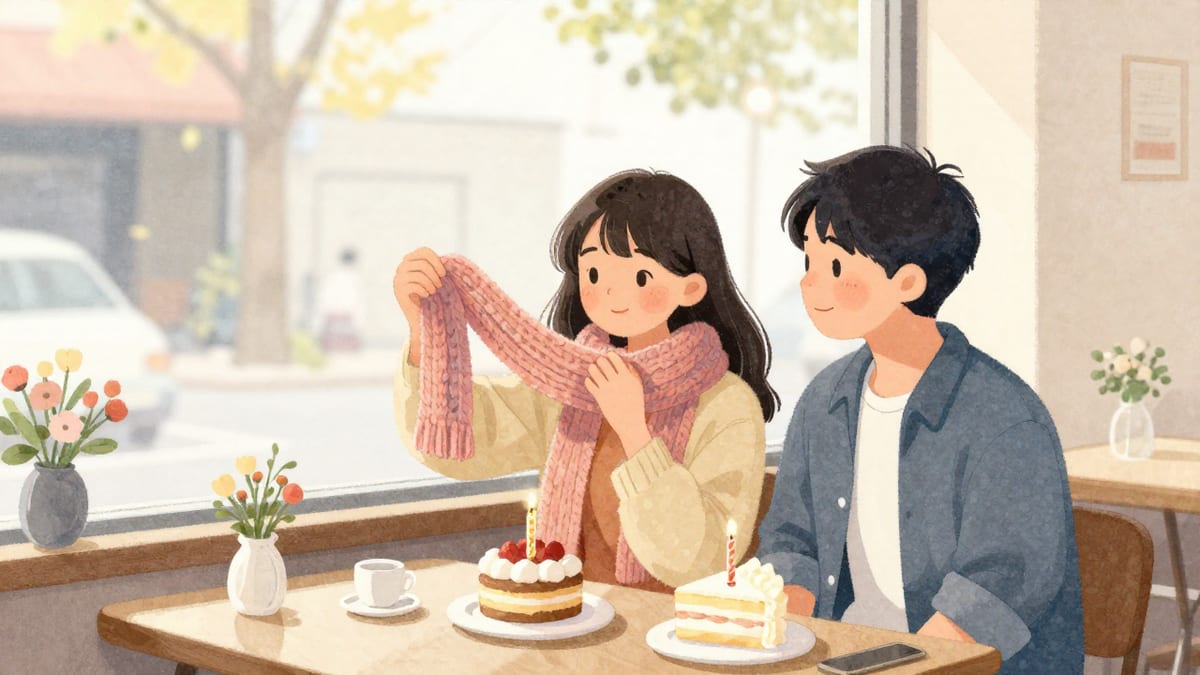
Two friends meet at a café, and one has brought a birthday present. Notice how suteki describes both the gift and the friend.
| Japanese | Romaji | Meaning |
|---|---|---|
| 誕生日おめでとう。これ、どうぞ。 | Tanjōbi omedetō. Kore, dōzo. | Mei: Happy birthday. This is for you. |
| わあ、ありがとう!開けてもいい? | Wā, arigatō! Akete mo ii? | Priya: Oh, thank you! Can I open it? |
| うん。手編みなんだけど…。 | Un. Teami nan dakedo... | Mei: Sure. I knitted it myself, so… |
| 素敵!色もすごくいい。 | Suteki! Iro mo sugoku ii. | Priya: It's lovely! The colour is perfect too. |
| 気に入ってくれてよかった。 | Ki ni itte kurete yokatta. | Mei: I'm so glad you like it. |
| メイって、本当に素敵な人だね。 | Mei tte, hontō ni suteki na hito da ne. | Priya: Mei, you really are a wonderful person. |