
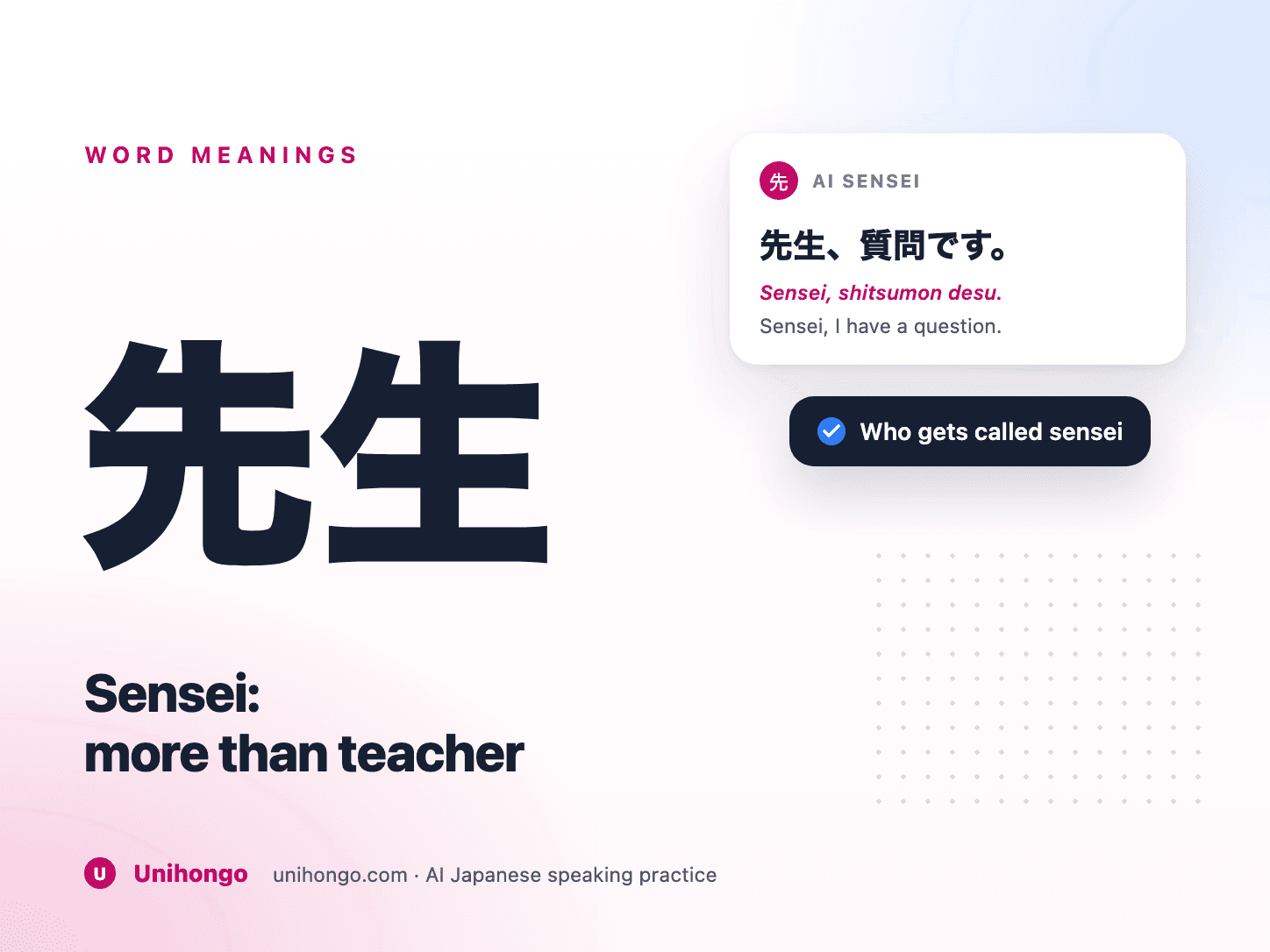
More than teacher
The characters in 先生 mean born before, which captures the idea: someone ahead of you in knowledge whom you learn from or rely on. The honorifics guide on this blog places it alongside san and sama.
Because it is a title of respect, it works both on its own and after a surname, and it signals a relationship as much as a job.
| Japanese | Romaji | Meaning |
|---|---|---|
| 先生 | sensei | Teacher, doctor, respected expert |
| 田中先生 | Tanaka-sensei | Mr or Ms Tanaka, the teacher |
| 先生、おはようございます。 | Sensei, ohayō gozaimasu. | Good morning, sensei. |
Who is called sensei
The common thread is professional expertise that others depend on. Usage varies by workplace and relationship, but these patterns are reliable.
| Person | Usually called sensei? | Note |
|---|---|---|
| School and university teachers | Yes | By students and parents |
| Doctors and dentists | Yes | By patients and staff |
| Lawyers | Yes | Common among clients |
| Members of parliament | Often | Common among staff and supporters |
| Authors and manga artists | Often | By editors and fans |
| Teachers of arts, music or martial arts | Yes | By their students |
| Nurses | Usually not | Surname plus san |
Addressing your teacher or doctor
Sensei on its own is the most natural way to get a teacher's or doctor's attention. It replaces anata, which would sound odd and distant.
Keep the rest of the sentence polite. The title does the respect work, but plain casual speech still sounds out of place with most teachers.
| Japanese | Romaji | Meaning |
|---|---|---|
| 先生、質問があります。 | Sensei, shitsumon ga arimasu. | Sensei, I have a question. |
| 先生、ちょっとよろしいですか。 | Sensei, chotto yoroshii desu ka. | Sensei, do you have a moment? |
| 先生、ありがとうございました。 | Sensei, arigatō gozaimashita. | Thank you, sensei. |
| 先生、薬はいつ飲めばいいですか。 | Sensei, kusuri wa itsu nomeba ii desu ka. | Doctor, when should I take the medicine? |
Sensei in the third person
When you talk about a teacher to someone else, surname plus sensei is normal, often with honorific verbs for their actions.
Schools and hospitals commonly keep sensei even when staff speak to parents or patients, which differs from ordinary companies, where your own boss loses their title in front of an outsider.
| Japanese | Romaji | Meaning |
|---|---|---|
| 田中先生がおっしゃいました。 | Tanaka-sensei ga osshaimashita. | Tanaka-sensei said so. |
| 山田先生は今日お休みです。 | Yamada-sensei wa kyō o-yasumi desu. | Yamada-sensei is off today. |
| 担任の先生に相談しました。 | Tannin no sensei ni sōdan shimashita. | I talked it over with the homeroom teacher. |
Never about yourself
Because sensei is a title of respect, using it for yourself sounds as if you are praising yourself. Describe the job with a neutral word or a verb instead.
The same goes for introducing your own job to a class or a parent. Let others use the title for you.
| Japanese | Romaji | Meaning |
|---|---|---|
| 英語の教師です。 | Eigo no kyōshi desu. | I'm an English teacher. |
| 小学校で教えています。 | Shōgakkō de oshiete imasu. | I teach at an elementary school. |
| 医者をしています。 | Isha o shite imasu. | I work as a doctor. |
| 担任の山田です。 | Tannin no Yamada desu. | I'm Yamada, the homeroom teacher. |
Sensei with a wink
Among friends, sensei is sometimes used playfully for someone who knows a lot about a hobby or who is lecturing everyone. It is affectionate teasing, and tone decides whether it lands as praise or a joke.
Senpai is a different axis: it marks someone ahead of you in the same group, not an expert you learn from. The senpai and kōhai guide covers that relationship.
| Japanese | Romaji | Meaning |
|---|---|---|
| ゲームのことなら、田中先生に聞いて。 | Gēmu no koto nara, Tanaka-sensei ni kiite. | For anything about games, ask Professor Tanaka. (playful) |
| はい、先生。 | Hai, sensei. | Yes, sir. (teasing a friend who is lecturing) |
Getting the title right in practice
The rules are simple, but under pressure learners slip back into san or into anata. Short, repeated exchanges with a teacher or doctor fix the reflex.
Unihongo's Describe Symptoms at a Clinic roleplay mission is a good place to practise addressing a doctor as sensei while explaining a problem, which is exactly when the habit tends to break.
- Address teachers and doctors as sensei.
- Use surname plus sensei, never plus san.
- Describe your own job with kyōshi or a verb.
- Expect schools and hospitals to keep sensei with outsiders.