
Four classic Japanese dog names
If you ask a Japanese friend to name a typical dog, you will likely hear one of these. They are short, easy to call out, and written in katakana, which gives them a friendly look.
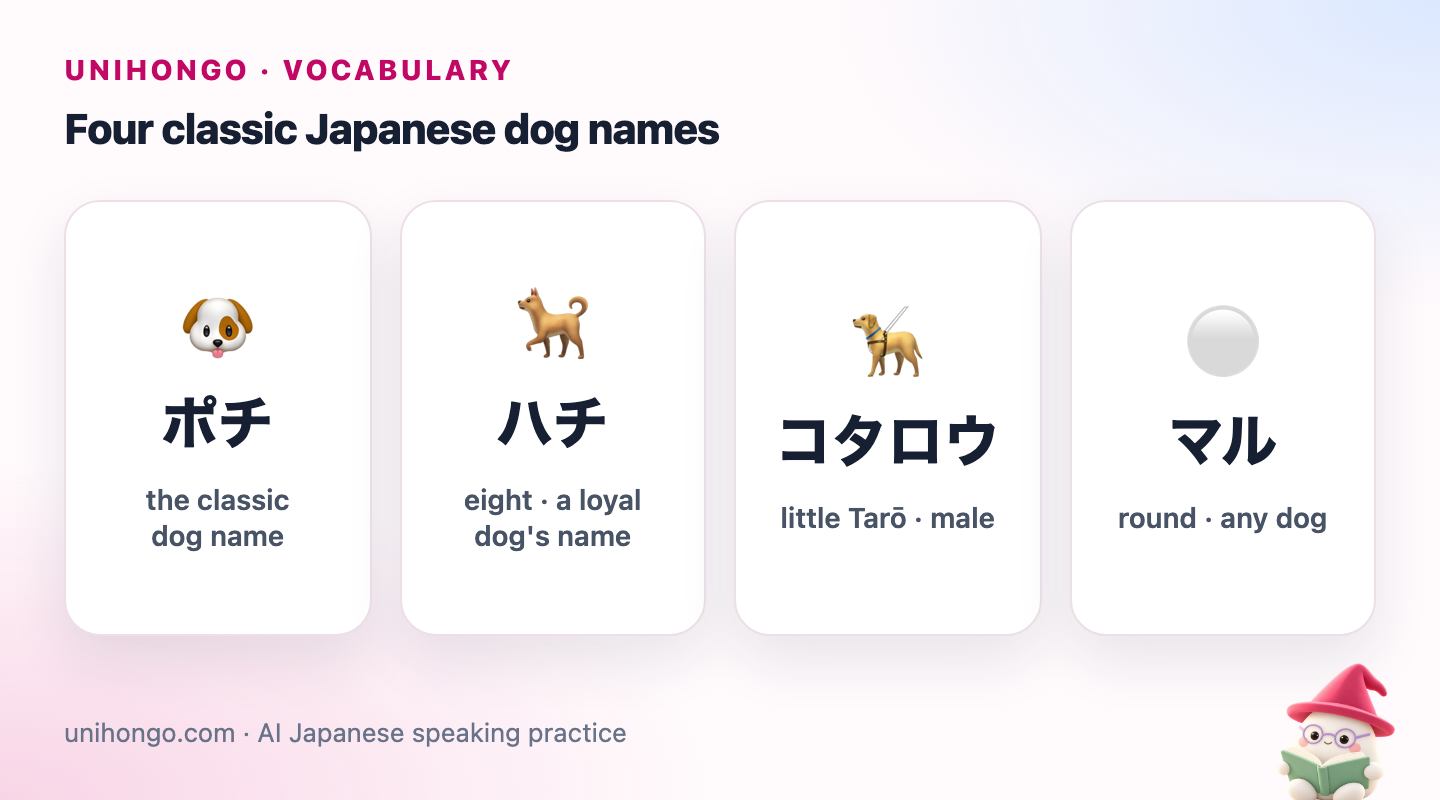
| Japanese | Romaji | Meaning |
|---|---|---|
| ポチ | Pochi | the classic dog name |
| ハチ | Hachi | eight · a loyal dog's name |
| コタロウ | Kotarō | little Tarō · male |
| マル | Maru | round · any dog |
Pochi's origin is unclear, and you will read several theories. Hachi is the number eight, a lucky number in Japan because its kanji 八 widens towards the bottom, a sign of growing prosperity, and it is also linked with the famous loyal dog whose statue stands outside a Tokyo station. Kotarō, little Tarō, is an affectionate old-style name, and Maru suits any round, fluffy dog.
Japanese breeds and the names owners give them
Japan has several native breeds, and their owners often pick names that match their traditional look: old human names, lucky words or names from the coat. Ken (犬) is the on'yomi of inu, dog, and appears in breed names; in compounds like Shibaken the inu is often read ken.
| Japanese | Romaji | Meaning |
|---|---|---|
| 柴犬 | shibainu | Shiba Inu |
| 豆柴 | mameshiba | small Shiba (lit. bean Shiba) |
| 秋田犬 | akitainu | Akita |
| 大吉 | Daikichi | great luck · male |
| 福 | Fuku | good fortune · any dog |
| 小梅 | Koume | little plum · female |
| 鉄 | Tetsu | iron, tough · male |
Daikichi is the best result on a shrine fortune slip, so it is a happy name for a dog that brings luck into the house. Fuku, fortune, is short and easy to call. For a red Shiba, owners sometimes choose names for warm colours, and for a black-and-tan one, Kuro is a natural pick. Coat-colour food names, such as Kinako for a light-brown dog, are a whole style of their own.
Names by look and personality
Many dogs are named for how they look or behave. These names are easy to understand and fun to explain to Japanese people, because they show you know the words behind them.
| Japanese | Romaji | Meaning |
|---|---|---|
| チャチャ | Chacha | from cha, brown · female |
| リキ | Riki | from riki, strength · male |
| ゲン | Gen | short, sturdy-sounding · male |
| ソラ | Sora | sky · any dog |
| ハナ | Hana | flower · female |
| コロ | Koro | roly-poly · puppy name |
| ラッキー | Rakkī | Lucky · any dog |
Koro comes from korokoro, the sound of something round rolling, and suits a chubby puppy. English words in katakana, such as Rakkī (Lucky) and Happī (Happy), are common, and so are names like Reo or Kai. A name from another language is no problem; just know how it is written in katakana, because that is how the vet and the groomer will write it.
Old human names that suit dogs
Many Japanese owners love giving dogs old-style human names, the kind you would expect on a grandfather or a character in a period drama. On a small dog they sound affectionate and a little comic, and on a big, dignified dog they sound just right. Kotarō is the best known, but there are many more.
| Japanese | Romaji | Meaning |
|---|---|---|
| 次郎 | Jirō | second son · male |
| ゴン太 | Gonta | a sturdy, cheeky old name · male |
| 銀次 | Ginji | silver + next · male, grey coats |
| 小雪 | Koyuki | little snow · female, white coats |
| 菊 | Kiku | chrysanthemum · female, old-style |
Owners usually write these names in katakana or hiragana on the dog's tag, even when the human name would use kanji, because it looks friendlier. Japanese people often react to them with a laugh and a warm hē, ii namae, oh, what a good name.
The commands Japanese dogs learn
Japanese dog commands are short and many sound like baby talk to learners, because they use polite o- forms or simple verb forms. Dogs trained in Japan respond to these, not to English, although some trainers use English words too.
| Japanese | Romaji | Meaning |
|---|---|---|
| おすわり | osuwari | sit |
| お手 | ote | give a paw |
| おかわり | okawari | the other paw |
| 伏せ | fuse | lie down |
| 待て | mate | stay, wait |
| よし | yoshi | OK, go ahead (release) |
| おいで | oide | come here |
| いい子だね! | Ii ko da ne! | Good dog! (lit. good child) |
Mate (待て) is the plain command form of matsu, to wait, and sounds firm, which is why it suits a dog. To a person, it would sound rude; you say matte (待って), with a small tsu, to a friend, or chotto matte kudasai politely. That small pause is the whole difference. Okawari means the other paw for a dog, but at the dinner table it means a second helping.
Small talk on a dog walk
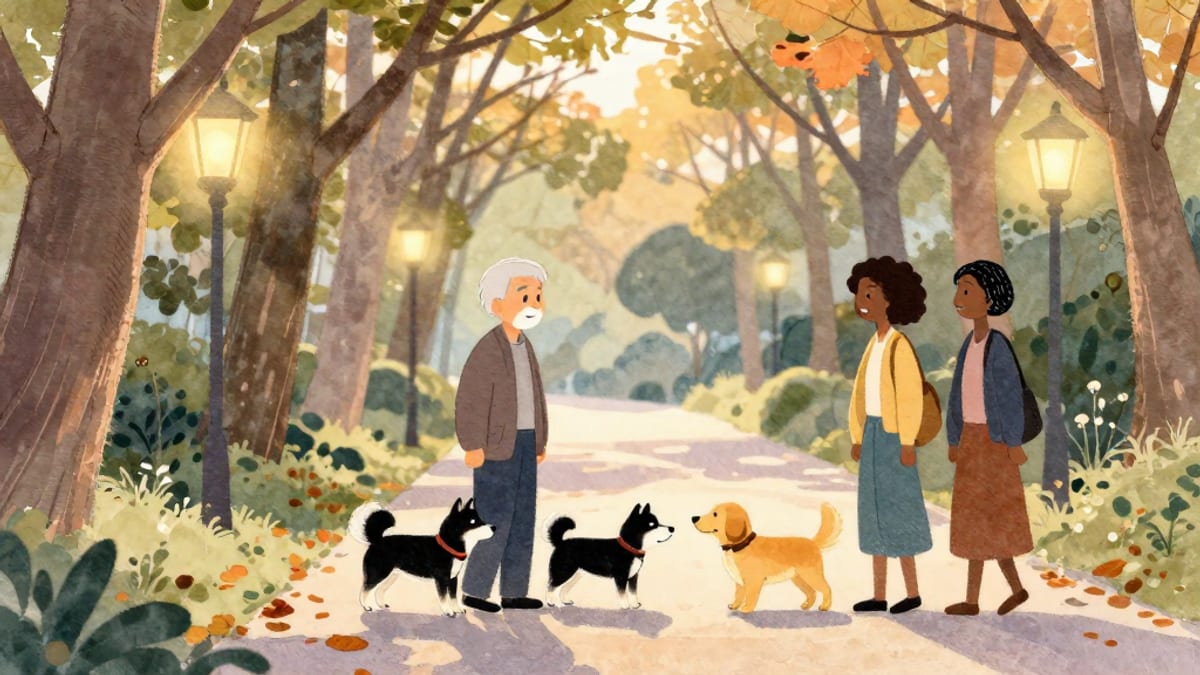
The morning or evening walk, sanpo (散歩), is one of the easiest places in Japan to start a conversation. Dog owners chat with each other freely, and a compliment about the dog is always welcome. Use polite Japanese with the owner, and baby-ish casual words with the dog.
| Japanese | Romaji | Meaning |
|---|---|---|
| かわいいワンちゃんですね。 | Kawaii wanchan desu ne. | What a cute dog. (polite) |
| 何という犬ですか。 | Nan to iu inu desu ka. | What breed is it? |
| 何歳ですか。 | Nansai desu ka. | How old is it? |
| 触っても大丈夫ですか。 | Sawatte mo daijōbu desu ka. | Is it OK to pet him? |
| ちょっと人見知りなんです。 | Chotto hitomishiri nan desu. | Owner: She's a bit shy with people. |
| 毎朝この公園を散歩しています。 | Maiasa kono kōen o sanpo shite imasu. | We walk in this park every morning. |
Wanchan, from wan wan, woof, is the friendly polite word for someone's dog, like neko chan for a cat. Hitomishiri, shy with strangers, is something owners often say to explain why a dog backs away; it is not a complaint about you.
Mini dialogue: checking in at the vet
Your dog Kotarō has an appointment. The receptionist checks you in and asks the standard questions.
| Japanese | Romaji | Meaning |
|---|---|---|
| こんにちは。三時に予約したブラウンです。 | Konnichiwa. Sanji ni yoyaku shita Buraun desu. | You: Hello. I'm Brown, with a three o'clock appointment. |
| コタロウくんですね。今日はどうされましたか。 | Kotarō kun desu ne. Kyō wa dō saremashita ka. | Receptionist: Kotarō, yes. What brings you in today? |
| 昨日から、あまりごはんを食べないんです。 | Kinō kara, amari gohan o tabenai n desu. | You: He hasn't been eating much since yesterday. |
| 体重を量りますので、こちらへどうぞ。 | Taijū o hakarimasu node, kochira e dōzo. | Receptionist: We'll weigh him, this way please. |
| はい。コタロウ、おいで。 | Hai. Kotarō, oide. | You: OK. Kotarō, come. |
Train the commands, and the small tsu, with Mocchi
Type /vocab dog commands to Mocchi and it gives you the words with example sentences, then quizzes you until osuwari, fuse and okawari come without thinking. Mocchi keeps a note of the ones you missed and slips them into a later review.
For mate and matte, open the pronunciation coach and choose a small tsu drill. You listen, slowed down if you like, record yourself, and get a score with a tip, which is exactly what that tiny pause needs.
Mistakes learners make with dog Japanese
- Saying mate to a person. It is a dog command or a sharp order; to people, say matte or chotto matte kudasai.
- Using inu chan. The friendly word is wanchan; inu is fine in neutral sentences such as inu o katte imasu, I have a dog.
- Petting a dog before asking. Many owners appreciate the question, especially with shy or older dogs.
- Counting dogs with nin. Small and medium dogs take hiki (ippiki, nihiki); very large animals can take tō, but for pet dogs hiki is usual.
- Being surprised by owners calling themselves mama or papa to the dog. It is common and affectionate: mama no tokoro ni oide, come to mummy.