
Kinoko: mushrooms in general
きのこ (kinoko) is the everyday word for any mushroom, edible or not. It is usually written in hiragana or katakana. Compounds help you talk about mushrooms precisely: 食用 (shokuyō), edible, and 毒 (doku), poison, are the two most important.
Many mushroom names end in たけ or だけ (take or dake), an old word for mushroom written with 茸: shiitake, matsutake, maitake. Enoki is often called えのきだけ (enokidake) on packaging, its full name.
| Japanese | Romaji | Meaning |
|---|---|---|
| きのこ狩り | kinokogari | mushroom picking, mushroom hunting |
| きのこ | kinoko | mushroom |
| 食用きのこ | shokuyō kinoko | edible mushroom |
| 毒きのこ | dokukinoko | poisonous mushroom |
| 秋の味覚 | aki no mikaku | the flavours of autumn |
| きのこが好きです。 | Kinoko ga suki desu. | I love mushrooms. |
Four mushroom words to know first
These four cover the everyday mushroom, the luxury one, the dangerous one and the dish you are most likely to eat.
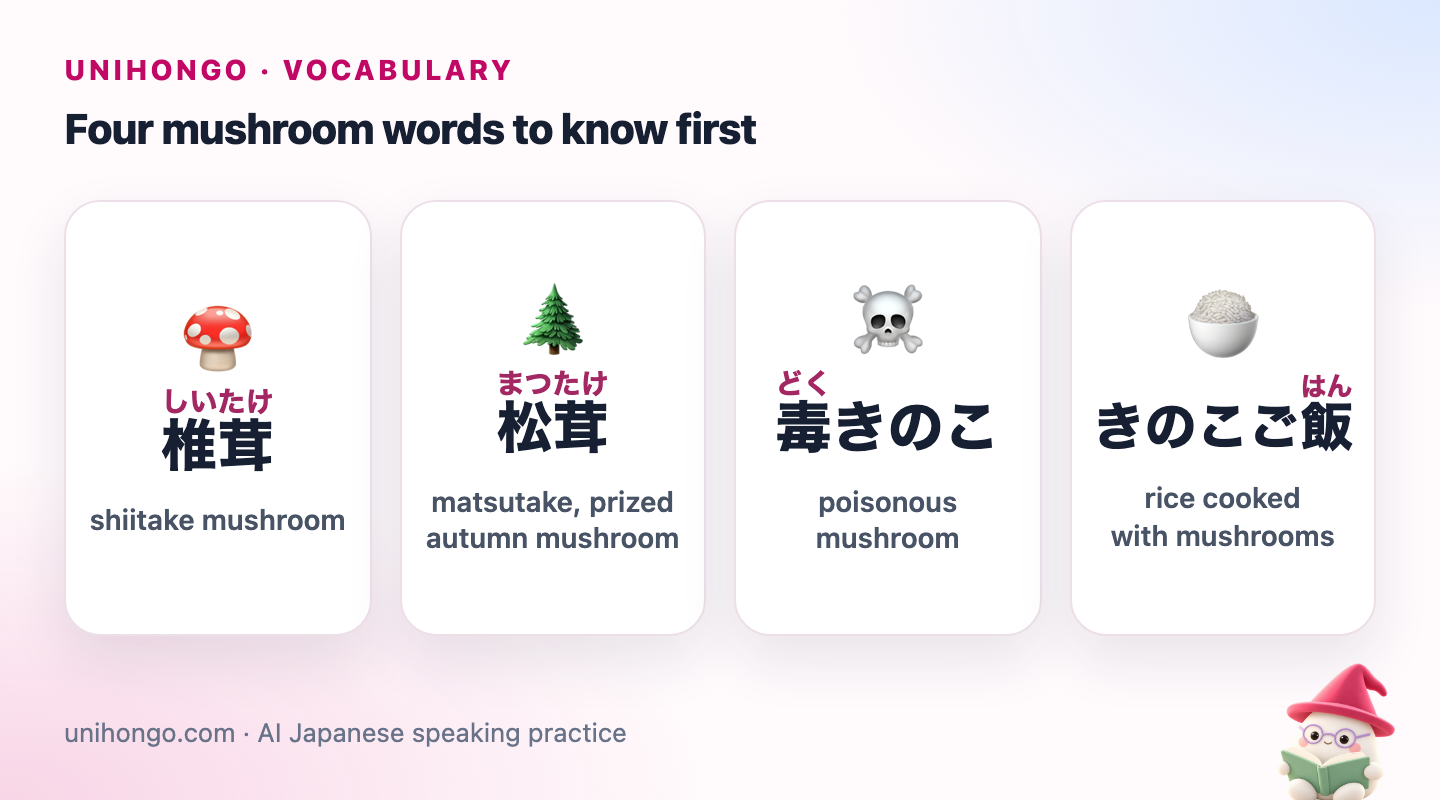
| Japanese | Romaji | Meaning |
|---|---|---|
| 椎茸 | shiitake | shiitake mushroom |
| 松茸 | matsutake | matsutake, prized autumn mushroom |
| 毒きのこ | dokukinoko | poisonous mushroom |
| きのこご飯 | kinoko gohan | rice cooked with mushrooms |
| 干し椎茸 | hoshi shiitake | dried shiitake |
| 松茸ご飯 | matsutake gohan | rice cooked with matsutake |
Shiitake is written 椎茸, the mushroom of the shii tree, a kind of chinquapin oak on whose logs it was traditionally grown. Supermarkets often use hiragana, しいたけ. Dried shiitake is a key ingredient in Japanese stock: soaking it in water makes a rich broth, and the soaking water is often used too.
The supermarket line-up
In almost any Japanese supermarket, the mushroom shelf sits in the vegetable section and holds the same familiar varieties. Most are cultivated indoors, so they are cheap and available all year, though prices and promotions often rise and fall with the season.
| Japanese | Romaji | Meaning |
|---|---|---|
| しめじ | shimeji | shimeji, small clustered mushrooms |
| ぶなしめじ | bunashimeji | beech shimeji (the common kind) |
| えのき | enoki | enoki, long thin white mushrooms |
| まいたけ | maitake | maitake, hen of the woods |
| エリンギ | eringi | king oyster mushroom |
| なめこ | nameko | nameko, small slippery mushrooms |
| マッシュルーム | masshurūmu | button mushroom |
| きくらげ | kikurage | wood ear mushroom |
Each has its favourite use. Enoki goes into hot pots and wraps; nameko, with its slippery coating, goes into miso soup; maitake is popular as tempura; eringi has a firm, meaty texture that works in stir-fries and grills. Eringi is written in katakana because it was introduced from abroad relatively recently, while the others are native words in hiragana. Maitake literally means dancing mushroom, and a common explanation is that people danced for joy when they found one.
Preparing and cooking mushrooms
Japanese recipes use a small set of verbs for mushrooms again and again. 石づき (ishizuki) is the hard base where the mushrooms grew from the bed, and it is cut off. Clustered mushrooms like shimeji and maitake are separated by hand, ほぐす (hogusu), and shiitake are often sliced thinly or cut with a decorative cross on the cap for hot pots.
| Japanese | Romaji | Meaning |
|---|---|---|
| 石づきを切る | ishizuki o kiru | to cut off the hard base |
| ほぐす | hogusu | to pull apart, separate into pieces |
| 薄切りにする | usugiri ni suru | to slice thinly |
| 炒める | itameru | to stir-fry, to sauté |
| 煮る | niru | to simmer |
| 戻す | modosu | to soak and rehydrate (dried shiitake) |
| しめじをほぐして、バターで炒めます。 | Shimeji o hogushite, batā de itamemasu. | Separate the shimeji and fry them in butter. |
| 干し椎茸を水で戻します。 | Hoshi shiitake o mizu de modoshimasu. | Soak the dried shiitake in water. |
Modosu literally means to return, and in cooking it means bringing a dried ingredient back to life with water. You will see it for shiitake, seaweed and dried tofu.
Classic mushroom dishes
Autumn menus at home and in restaurants are full of mushrooms. These dishes come up often, and knowing their names helps when you read a menu or a recipe site.
| Japanese | Romaji | Meaning |
|---|---|---|
| 炊き込みご飯 | takikomi gohan | rice cooked with seasoned ingredients |
| なめこの味噌汁 | nameko no misoshiru | miso soup with nameko |
| きのこのホイル焼き | kinoko no hoiruyaki | mushrooms baked in foil |
| 土瓶蒸し | dobinmushi | clear soup steamed in a small teapot |
| きのこ鍋 | kinoko nabe | mushroom hot pot |
| まいたけの天ぷら | maitake no tenpura | maitake tempura |
Dobinmushi is a refined autumn dish, often made with matsutake, in which a clear broth is steamed in a small clay teapot and drunk from a tiny cup before you eat the contents. Hoiruyaki, foil baking, is an easy home dish: mushrooms, butter and a little soy sauce, often with salmon, wrapped and baked.
Mushroom picking and staying safe
きのこ狩り (kinokogari), mushroom picking, is an autumn activity in some rural areas, often on guided tours or at farms where mushrooms are grown on logs. Picking wild mushrooms on your own is a different matter. Some poisonous mushrooms look very much like edible ones, and health authorities in Japan regularly warn people in autumn not to eat wild mushrooms unless an expert has identified them. The safest rule is simple: if you are not sure, do not pick it, do not eat it and do not give it to anyone.
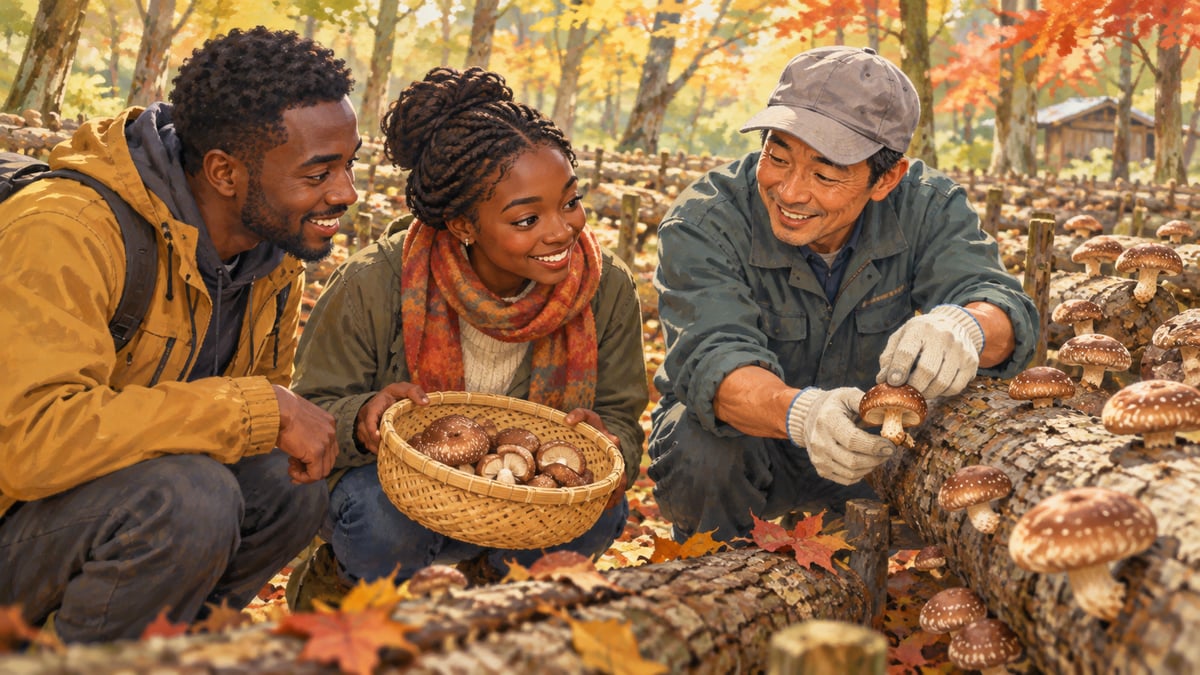
| Japanese | Romaji | Meaning |
|---|---|---|
| これは食べられますか。 | Kore wa taberaremasu ka. | You: Can this be eaten? |
| これは毒きのこだから、触らないでね。 | Kore wa dokukinoko da kara, sawaranaide ne. | Guide: This one is poisonous, so don't touch it. |
| 見分けるのが難しいですね。 | Miwakeru no ga muzukashii desu ne. | You: They're hard to tell apart. |
| 分からないものは採らないでください。 | Wakaranai mono wa toranaide kudasai. | Guide: Please don't pick anything you're not sure of. |
| 採ったきのこは、ここで確認しますよ。 | Totta kinoko wa, koko de kakunin shimasu yo. | Guide: We'll check the mushrooms you picked here. |
採る (toru) is the kanji for picking or gathering plants and mushrooms, while 取る is the general take. Both are read toru. Miwakeru, to tell apart, is the key verb in any conversation about look-alike mushrooms.
Mini dialogue: mushrooms for tonight's hot pot
Here a learner shops for a hot pot with a Japanese friend. Notice how the friend uses casual speech, and how quickly the conversation moves from names to price and season.
| Japanese | Romaji | Meaning |
|---|---|---|
| 今夜の鍋、きのこは何を入れる? | Kon'ya no nabe, kinoko wa nani o ireru? | Friend: What mushrooms shall we put in tonight's hot pot? |
| えのきとしいたけがいいな。 | Enoki to shiitake ga ii na. | You: Enoki and shiitake would be nice. |
| まいたけも入れようよ。いい出汁が出るから。 | Maitake mo ireyō yo. Ii dashi ga deru kara. | Friend: Let's add maitake too. It makes a good broth. |
| 松茸はないの? | Matsutake wa nai no? | You: No matsutake? |
| 高すぎるよ!それはまた今度。 | Takasugiru yo! Sore wa mata kondo. | Friend: Way too expensive! Maybe another time. |
| じゃあ、しめじも買っておこう。 | Jā, shimeji mo katte okō. | You: Then let's get some shimeji as well. |
Ii dashi ga deru, it gives a good broth, is high praise for any ingredient in a hot pot, and you will hear it about maitake, shiitake and kombu. Matsutake jokes are common too: because it is so expensive, many people laugh about only ever eating it once a year, or not at all. Mata kondo, another time, is a soft way to say no to a suggestion without refusing outright.
Sort your mushrooms with Mocchi
Try asking Mocchi: /vocab Japanese mushrooms for a hot pot, with example sentences. Mocchi lists the names, tells you which ones suit nabe, miso soup or tempura, and notes the ones you forget, so a later /quiz can bring back nameko or maitake right when they start to fade.
For a game that fits, play Sushi Sort on the games page, where you read a short Japanese food order and send the right plate. It trains the same reading speed you need when you scan a supermarket shelf or a seasonal menu.
Common learner mistakes
- Using masshurūmu for any mushroom. It means the button mushroom; the general word is kinoko.
- Saying shiitake mushroom in Japanese. Just shiitake: take already means mushroom.
- Mixing up nameko and nametake. Nameko is the slippery mushroom for miso soup; nametake is a jar of enoki simmered in soy sauce, eaten on rice.
- Washing shimeji under running water for a long time. Many cooks just wipe them and cut off the ishizuki.
- Eating wild mushrooms that a friend found. Even locals check with an expert first.