
What moe means
In fan language, moe is a reaction: the soft rush of affection you feel when a character does something endearing. Fans say a trait is moe, or that they moeru for it. The word is also a label for characters and art built around that cuteness.
Underneath the slang sits a plain, pretty verb about plants. These four words give you the whole range.
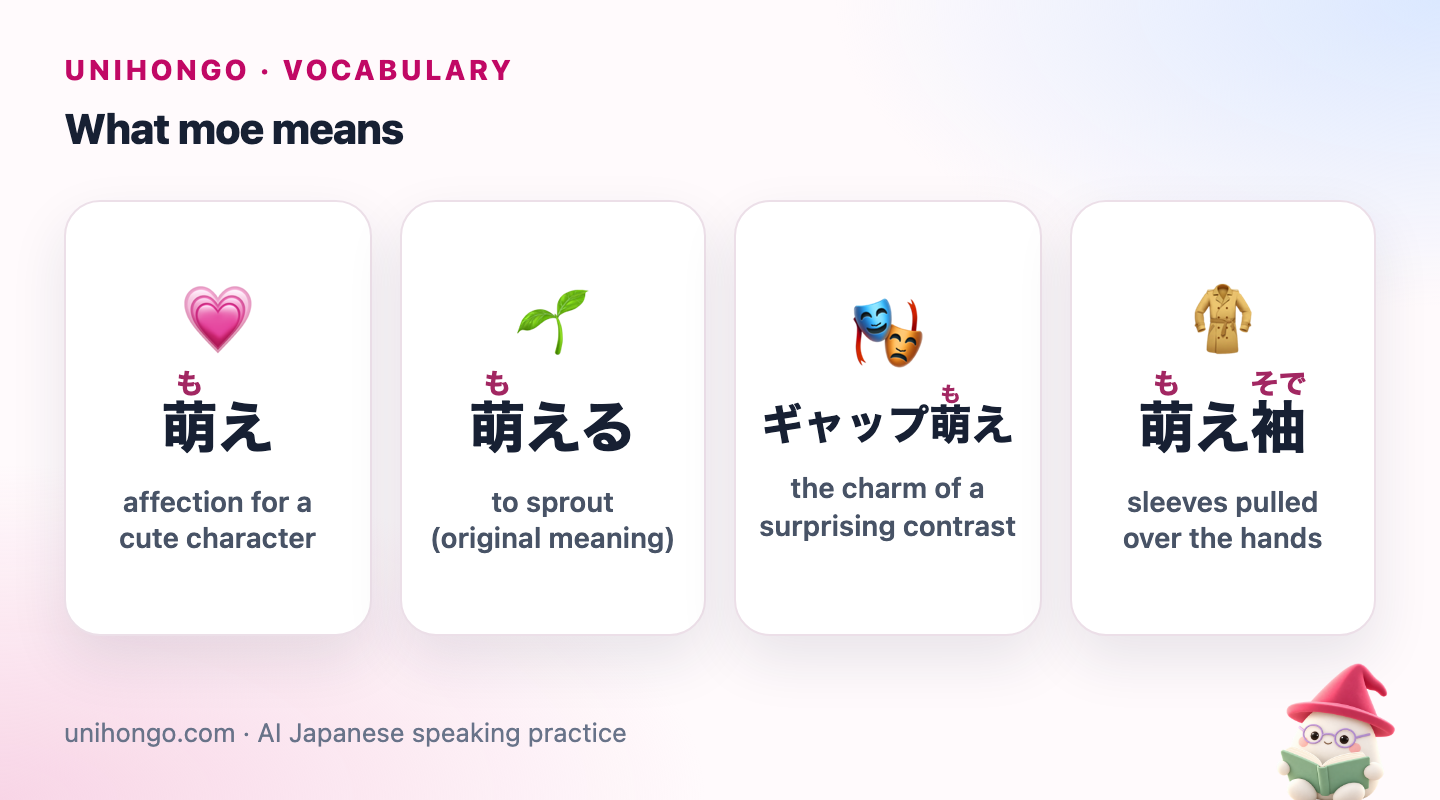
| Japanese | Romaji | Meaning |
|---|---|---|
| 萌え | moe | affection for a cute character |
| 萌える | moeru | to sprout (original meaning) |
| ギャップ萌え | gyappu moe | the charm of a surprising contrast |
| 萌え袖 | moe sode | sleeves pulled over the hands |
From budding leaves to fan slang
Long before anime, moeru meant new shoots pushing out of the ground or buds opening on branches. You see it in seasonal writing and in a few lovely words: moegi iro, a fresh yellow-green, and hōga, a bud or the first sign of something new. The kanji 萌 has the grass radical at the top, which fits its meaning.
How the slang began is not certain. It spread in fan communities around the 1990s, and several origin stories circulate, from a pun on 燃える, to burn with passion, to the names of particular characters. What is clear is the image: a feeling that sprouts in your heart.
| Japanese | Romaji | Meaning |
|---|---|---|
| 春になると、木々の若葉が萌える。 | Haru ni naru to, kigi no wakaba ga moeru. | In spring, young leaves bud on the trees. |
| 萌黄色 | moegi iro | fresh yellow-green |
| 新しい文化の萌芽 | atarashii bunka no hōga | the first buds of a new culture (written) |
| 燃える | moeru | to burn (a different word) |
How fans use moe
Fans use the word in a few fixed shapes. X ni moeru means a character or trait makes your heart melt. X moe, with the trait first, names your weak spot: megane moe is a soft spot for characters with glasses. Moe kyara is a cute character designed to be adored, and moe e is art drawn in that style. Some towns and companies even created moe-style mascots to promote local products.
Fans also use moe on its own as an exclamation when something cute happens on screen, a little like aww in English. It sounds strongly fan-flavoured, so it fits best among people who share the hobby.
In Akihabara, some maid cafés make a game of the word: staff and guests make a heart shape with their hands and chant moe moe kyun over a dish to make it tastier. It is playful theatre, and most visitors take part with a laugh.
| Japanese | Romaji | Meaning |
|---|---|---|
| このキャラに萌える。 | Kono kyara ni moeru. | This character melts my heart. (fan talk) |
| メガネ萌え | megane moe | a soft spot for characters with glasses |
| 萌えキャラ | moe kyara | a cute character made to be adored |
| 萌え絵 | moe e | moe-style art |
| 萌え萌えキュン! | Moe moe kyun! | a playful maid-café chant |
Gap moe and moe sode
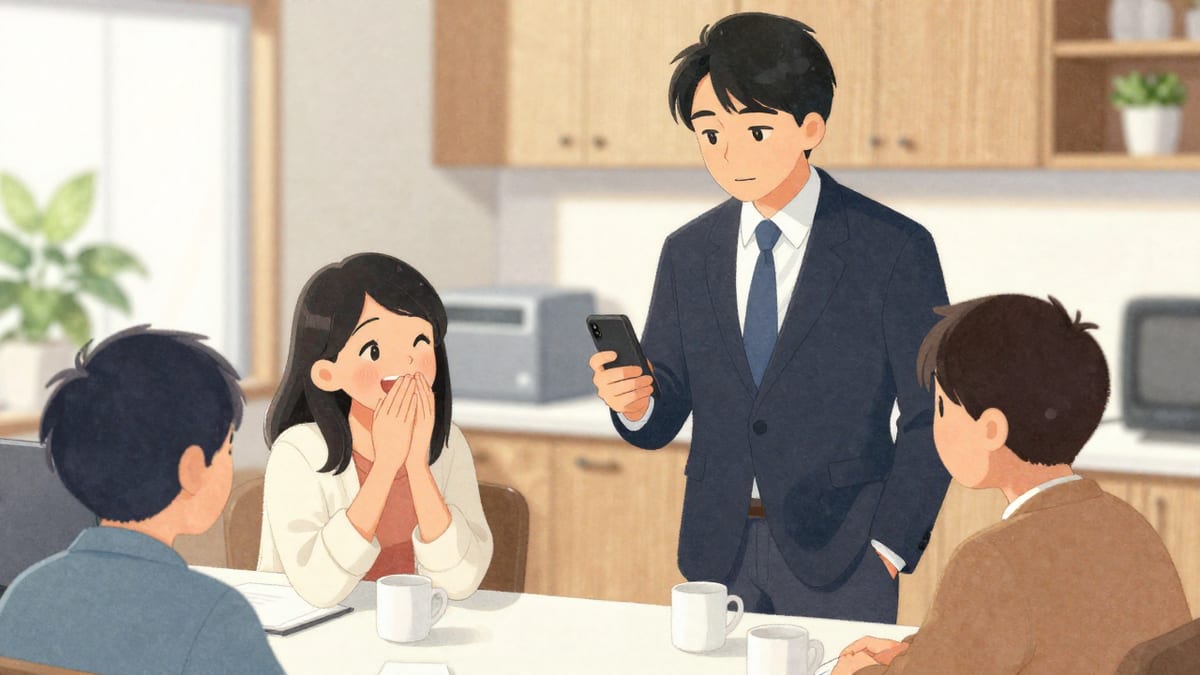
Two moe compounds have escaped fan circles and are used by many people. Gyappu moe, gap moe, is the charm of a contrast: a character, or a friend, who looks cool or strict but turns out to be shy, clumsy or crazy about cats. Friends use it lightly about each other, and it is the safest moe word to say about a real person.
Moe sode is a fashion term for sleeves long enough to cover the hands, often on oversized knitwear. You will see it in clothing descriptions and hear it from friends shopping for jumpers.
| Japanese | Romaji | Meaning |
|---|---|---|
| 強面なのに猫好きって、ギャップ萌え! | Kowamote na noni neko zuki tte, gyappu moe! | Tough-looking but loves cats? So charming! (casual) |
| 部長、実は甘いものが好きなんだって。 | Buchō, jitsu wa amai mono ga suki nan datte. | Apparently the department head secretly loves sweets. |
| 萌え袖のセーター | moe sode no sētā | a sweater with long, hand-covering sleeves |
Is moe still used? Tōtoi, oshi and friends
Moe became a mainstream buzzword in the mid-2000s, and like most buzzwords it now sounds a little of its time in casual chat. Fixed terms such as moe kyara and moe sode are still common, but fans talking about their feelings today often reach for other words.
| Japanese | Romaji | Meaning |
|---|---|---|
| この二人、尊い… | Kono futari, tōtoi... | These two are just too precious... (fan talk) |
| 私の推しはこのキャラです。 | Watashi no oshi wa kono kyara desu. | This character is my favourite. |
| 笑顔にキュンとした。 | Egao ni kyun to shita. | That smile made my heart skip. |
| Word | Meaning | Feel |
|---|---|---|
| moe | Affection for a cute trait | Classic fan word, a bit 2000s |
| tōtoi (尊い) | So precious it is almost holy | Current fan slang, playful |
| oshi (推し) | Your favourite member or character | Very current, widely used |
| kyun to suru | Your heart skips a beat | Cute, general, not only fans |
| kawaii | Cute | Everyday, for anything |
Real people, names and a word of care
Moe is built for fictional characters. Saying moe about a real person, especially a coworker, a stranger or someone younger, can sound strange or even creepy, because it treats them like a character to be consumed. Kawaii, suteki or a specific compliment works far better. Gyappu moe between friends is the exception, said lightly.
Some moe art is also criticised, in Japan and abroad, for making young-looking characters appealing in ways many people find uncomfortable. Opinions differ, and you will hear both proud fans and critics. Knowing that helps you read the room.
Finally, 萌 has long been a popular kanji in girls' names, chosen for the image of fresh new growth. A girl called Moe or Moeka is named after spring buds, not anime, so never joke about it.
| Japanese | Romaji | Meaning |
|---|---|---|
| 萌 | Moe | budding · girl |
| 萌花 | Moeka | budding flower · girl |
| 萌子 | Moeko | budding child · girl |
Mini dialogue: two fans comparing favourites
| Japanese | Romaji | Meaning |
|---|---|---|
| 最近、どのキャラが好き? | Saikin, dono kyara ga suki? | Friend: Which character are you into lately? |
| この先輩キャラ。クールなのに料理が下手なの。 | Kono senpai kyara. Kūru na noni ryōri ga heta na no. | You: This senior character. So cool, but terrible at cooking. |
| あー、ギャップ萌えだね。わかる! | Ā, gyappu moe da ne. Wakaru! | Friend: Ah, gap moe. I totally get it! |
| でしょ?もう推しだよ。 | Desho? Mō oshi da yo. | You: Right? They're my favourite now. |
Learn fan words without sounding dated
Paste a line such as Kono kyara no gyappu ni moeru into Mocchi with /explain to see each chunk and the particle ni explained. Then ask which fan words sound current; Mocchi keeps your interest in anime in its notes, so later vocabulary and reading practice can use fan topics you enjoy.
Turn moe, tōtoi, oshi, kyun to suru and moe sode into flashcards, then play them in Mocchi Flight, steering Mocchi through the gate with the right word.
Common learner mistakes
- Thinking moe is an art style only. It is first a feeling; the style is named after it.
- Calling a real person moe. Use kawaii, suteki or a concrete compliment instead.
- Writing 燃える for fan moe. The fan word uses 萌える; 燃える means to burn.
- Using moe in a formal setting or with people outside fandom. Many will understand it, but it sounds like insider slang.
- Assuming every Japanese person loves moe culture. Attitudes vary a lot, from enthusiasm to embarrassment.