

Choose an impression you can picture
Start with a scene such as rain, footsteps, or a texture rather than a list of unrelated expressions. Tell Mocchi what you want to describe and ask for a small contrast. A clear scene makes it easier to understand why one word fits better than another and avoids relying only on familiar-language adjectives that may overlap.
Keep the comparison manageable. Two expressions with different impressions can provide enough material for a useful session. You can expand the set later, after you can explain the first distinction and use each word in a short sentence without the model open.
Compare strong rain with a gentler rain scene
雨がざあざあ降っています evokes strong, noisy rain, while 雨がしとしと降っています presents a gentler steady rain impression. Read the complete sentences and ask Mocchi what kind of scene each suggests. The examples give a starting contrast; they do not mean that an English label captures every context or nuance of either expression.
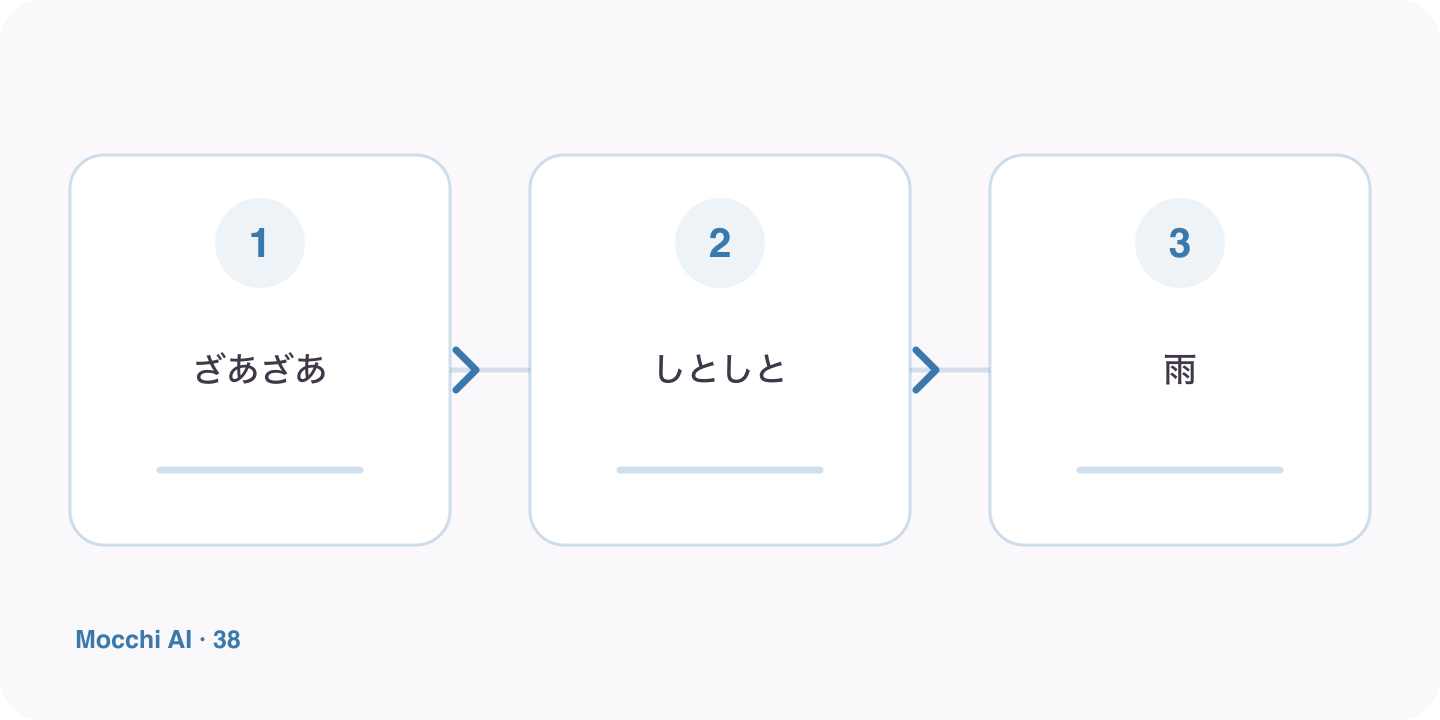
| Japanese | Romaji | Meaning |
|---|---|---|
| 雨がざあざあ降っています。 | Ame ga zāzā futte imasu. | The rain is pouring down. |
| 雨がしとしと降っています。 | Ame ga shitoshito futte imasu. | The rain is falling gently and steadily. |
Learn the sentence frame as well as the expression
A vivid word still needs a grammatical place in the sentence. Ask which verb or construction the example uses and practice that whole frame before changing it. This prevents you from inserting a newly learned expression anywhere an English adjective might appear. If the frame is unfamiliar, keep the surrounding vocabulary simple so the expressive word remains the main target.
Turn the contrast into a description game
Describe an invented scene without naming the target expression and ask Mocchi to offer a small choice. Explain which impression you intend before checking. Then reverse the exercise: choose a word and create a scene that suits it. This adds variety without turning the lesson into a guessing game disconnected from meaning.
Keep context when saving the word for review
Save the scene and sentence pattern alongside the expression, not only a broad translation such as strong or gentle. At a later session, ask for another scene and choose the word before opening the original note. If you can recall the sound but not its use, review the sentence and impression rather than collecting more expressions. Mocchi can make the exploration enjoyable while the context keeps it useful.