
One sound, many heavy rolling things
Gorogoro comes from the sound goro, a low, heavy roll, doubled to show that it keeps going. The voiced g makes it heavier than its unvoiced cousin korokoro, which describes small, light things rolling, like marbles or a small ball. This voiced-versus-unvoiced pattern runs through Japanese sound words: voiced versions sound bigger, heavier and often less elegant.
Keep the picture of something big and lumpy rolling over and over, with a low rumble, and the different meanings fall into place. The four below are the ones you will hear most.
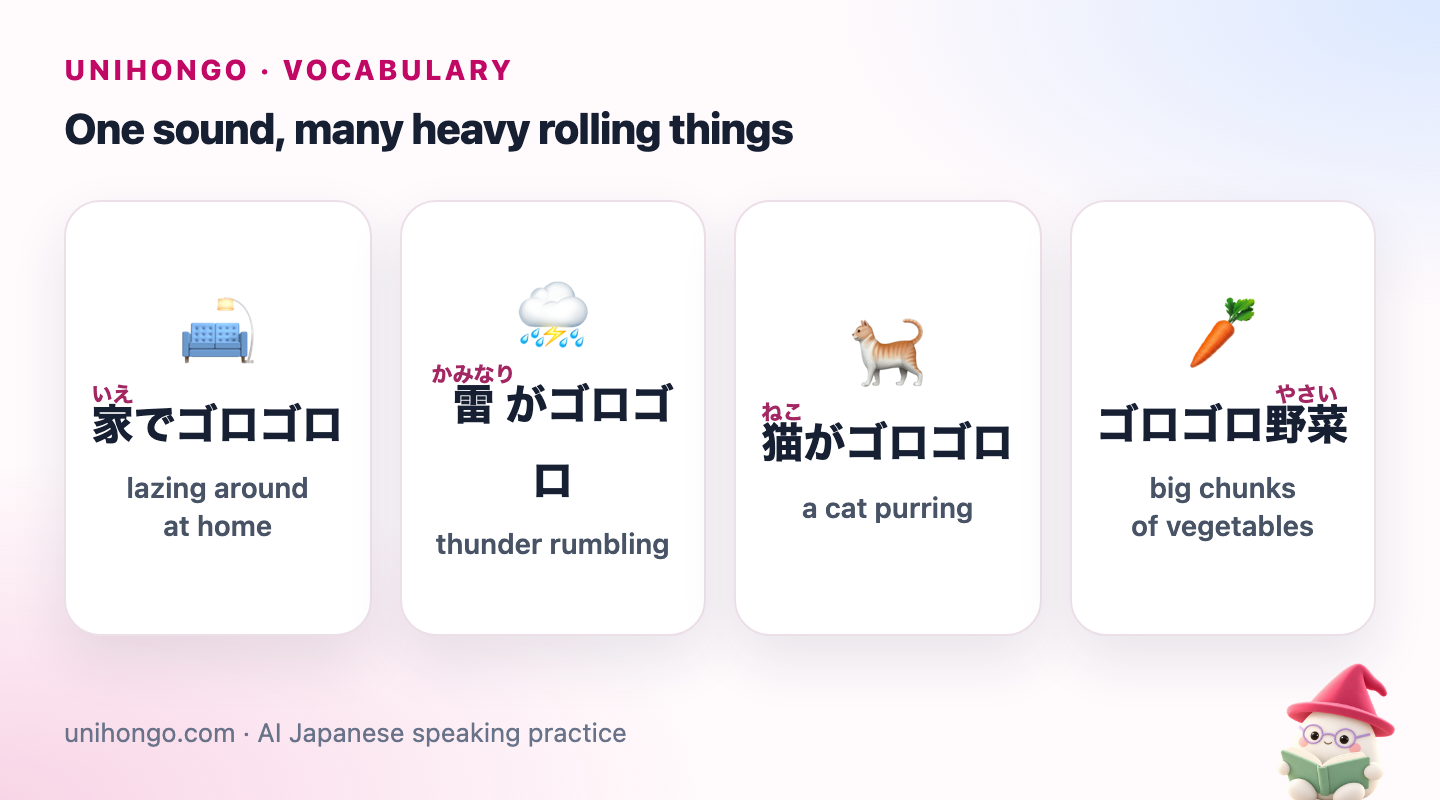
| Japanese | Romaji | Meaning |
|---|---|---|
| 家でゴロゴロ | ie de gorogoro | lazing around at home |
| 雷がゴロゴロ | kaminari ga gorogoro | thunder rumbling |
| 猫がゴロゴロ | neko ga gorogoro | a cat purring |
| ゴロゴロ野菜 | gorogoro yasai | big chunks of vegetables |
Lazing around: the weekend meaning
The meaning you will hear most in conversation is lying around doing nothing. Picture someone rolling from side to side on the sofa or the tatami with a phone or a manga: that is gorogoro. It is usually said with a smile about a lazy, happy day off, and it suggests lying down rather than being busy at home with chores.
Related words help here. Goron to (ごろんと) is a single roll or flop onto the floor: goron to yoko ni naru, to flop down and lie on your side. Gorone (ごろ寝) is lying down for a nap without a proper bed, such as dozing on the living-room floor.
Gorogoro is casual. When a coworker or your boss asks about your weekend, a softer and more polite choice is nonbiri, leisurely, or yukkuri, taking it easy.
| Japanese | Romaji | Meaning |
|---|---|---|
| 休みの日は家でゴロゴロしてた。 | Yasumi no hi wa ie de gorogoro shiteta. | I just lazed around at home on my day off. (casual) |
| ソファでゴロゴロしながら映画を見た。 | Sofa de gorogoro shinagara eiga o mita. | I watched a film lounging on the sofa. |
| 畳にごろんと横になった。 | Tatami ni goron to yoko ni natta. | I flopped down on the tatami. |
| 週末は家でのんびり過ごしました。 | Shūmatsu wa ie de nonbiri sugoshimashita. | I had a relaxing weekend at home. (polite) |
Rolling rocks and rumbling thunder
The oldest images are the physical ones. Heavy round things, such as boulders, logs or big stones, roll gorogoro down a slope, and a rocky riverbed is described as having stones gorogoro, lying everywhere.
Thunder is the other classic. In Japanese, lightning flashes pika and thunder rolls gorogoro, and children's songs and picture books use both. A well-known children's saying warns that the thunder god will take your belly button if you leave your stomach uncovered during a storm, so many children are told to cover their tummy when they hear gorogoro. Families repeat it with a smile rather than as a real belief.
| Japanese | Romaji | Meaning |
|---|---|---|
| 大きな岩がゴロゴロ転がってきた。 | Ōkina iwa ga gorogoro korogatte kita. | A big rock came rolling down. |
| 遠くで雷がゴロゴロ鳴っている。 | Tōku de kaminari ga gorogoro natte iru. | Thunder is rumbling in the distance. |
| ピカッと光って、ゴロゴロと鳴った。 | Pikatto hikatte, gorogoro to natta. | There was a flash, then a rumble of thunder. |
| 雷様におへそを取られるよ。 | Kaminarisama ni oheso o torareru yo. | The thunder god will take your belly button! (to a child) |
A purring cat and an unhappy stomach
A cat's purr is gorogoro too: neko ga nodo o gorogoro narasu, the cat purrs in its throat. People often say this when a cat is happy on their lap, and it is a favourite line in pet videos.
The stomach is where learners go wrong. Onaka ga gorogoro suru usually means your stomach is rumbling uncomfortably, a gurgling that often comes with an upset stomach or the need to find a toilet soon. It is not the friendly rumble of hunger. For that, Japanese says onaka ga gū to natta, my stomach growled, or simply onaka ga suita, I'm hungry. At a pharmacy or clinic, onaka ga gorogoro shite, geri gimi desu, my stomach is rumbling and I have mild diarrhoea, is a clear way to describe the problem.
| Japanese | Romaji | Meaning |
|---|---|---|
| 猫がのどをゴロゴロ鳴らしている。 | Neko ga nodo o gorogoro narashite iru. | The cat is purring. |
| 朝からお腹がゴロゴロします。 | Asa kara onaka ga gorogoro shimasu. | My stomach has been rumbling since this morning. (unwell) |
| お腹がぐうっと鳴った。 | Onaka ga gūtto natta. | My stomach growled. (hungry) |
| お腹がゴロゴロして、下痢ぎみです。 | Onaka ga gorogoro shite, geri gimi desu. | My stomach is upset and I have mild diarrhoea. |
Grit in the eye and chunks in the curry
Two more physical sensations use gorogoro. Me ga gorogoro suru describes the feeling that something is in your eye, such as dust, an eyelash or a contact lens problem. It is the standard way to explain this to an eye doctor or pharmacist, and eye-drop packaging often uses it too.
In food, gorogoro describes large, chunky pieces. A gorogoro yasai karē is a curry with big chunks of vegetables, and a menu may promise niku gorogoro, plenty of big pieces of meat. Here the word is attractive: it suggests a generous, hearty dish, the opposite of a thin sauce with a few tiny pieces, and home cooks proudly describe their own curry or stew this way.
| Japanese | Romaji | Meaning |
|---|---|---|
| 目がゴロゴロするんですが。 | Me ga gorogoro surun desu ga. | My eye feels gritty. (to a pharmacist) |
| コンタクトを入れると目がゴロゴロする。 | Kontakuto o ireru to me ga gorogoro suru. | My eye feels scratchy when I put my contacts in. |
| 具がゴロゴロ入ったカレーが好き。 | Gu ga gorogoro haitta karē ga suki. | I love curry with big chunks in it. |
Lying everywhere: gorogoro as plenty
The last meaning is figurative. If something is gorogoro, there is a lot of it lying around, as if it rolled into every corner. Sonna hanashi wa gorogoro aru means stories like that are everywhere. Saying talented people are gorogoro iru means there are plenty of them. It is casual, a little blunt, and often slightly dismissive: the point is that the thing is common, not special.
| Japanese | Romaji | Meaning |
|---|---|---|
| そんな話はゴロゴロあるよ。 | Sonna hanashi wa gorogoro aru yo. | Stories like that are everywhere. |
| 東京には上手な人がゴロゴロいる。 | Tōkyō ni wa jōzu na hito ga gorogoro iru. | Tokyo is full of skilled people. |
| Word | Image | Example use |
|---|---|---|
| gorogoro | Heavy, lumpy things rolling, a low rumble | Lazing, thunder, purring, chunks |
| korokoro | Small, light things rolling | A marble, a small ball, changing plans often |
| goron | One heavy roll or flop | Flopping down to lie on the floor |
| gūgū | A low growl or snore | A hungry stomach, deep sleep |
| zuruzuru | Dragging or slurping | Putting things off, slurping noodles |
Korokoro has its own figurative uses too: plans that change korokoro change constantly, and a plump small child or puppy can be korokoro, round and cute.
Mini dialogue: Monday morning small talk
On Monday morning, two coworkers chat by the office kitchen. Tom spent a rainy weekend at home with his cat. Notice how he moves from casual gorogoro to a more polite version when the section manager joins them.

| Japanese | Romaji | Meaning |
|---|---|---|
| 週末、何してた? | Shūmatsu, nani shiteta? | Saki: What did you do at the weekend? |
| 雨だったから、ずっと家でゴロゴロしてた。 | Ame datta kara, zutto ie de gorogoro shiteta. | Tom: It was raining, so I just lazed around at home. |
| 猫と一緒に? | Neko to issho ni? | Saki: With your cat? |
| うん、猫もずっとゴロゴロ言ってた。 | Un, neko mo zutto gorogoro itteta. | Tom: Yeah, and the cat purred the whole time. |
| おはよう。週末はゆっくりできた? | Ohayō. Shūmatsu wa yukkuri dekita? | Manager: Morning. Did you get some rest at the weekend? |
| はい、家でのんびり過ごしました。 | Hai, ie de nonbiri sugoshimashita. | Tom: Yes, I had a relaxing time at home. |
Untangle the meanings with Mocchi
A word with seven meanings is perfect quiz material. Ask Mocchi: give me eight gorogoro sentences with different meanings and let me name each one. Mocchi checks your answers, explains the clue in each sentence (the subject, the particle, the verb) and remembers which meanings you miss, then folds them into a later /review.
For the polite-versus-casual weekend answer, try AI Sensei: ask Hana-sensei to play a coworker on Monday morning, and practise switching from gorogoro to nonbiri when she says the boss is listening.
Common learner mistakes
- Saying onaka ga gorogoro for hunger. It sounds like an upset stomach; say onaka ga suita.
- Using gorogoro for busy days at home. If you cleaned all day, say ie de sōji shite ita; gorogoro means doing nothing.
- Using gorogoro with your boss about your weekend. It is fine with friends; nonbiri or yukkuri is more polite.
- Mixing up gorogoro and korokoro. Small, light things roll korokoro; heavy ones roll gorogoro.
- Forgetting that gorogoro as plenty can sound dismissive. Saying someone's skill is gorogoro aru implies it is nothing special.