
One pair, two directions
Picture something coming to rest on a surface and staying there. If a person puts it there, the verb is tsukeru and the thing takes o. If it simply ends up there, the verb is tsuku and the thing takes ga. A button on a shirt, ink on your hand, a stain on a sleeve, a name on a child, a price on a shelf, a habit on a person: Japanese treats all of these as contact that holds.
The verb classes differ, which matters when you conjugate under time pressure. Tsukeru is ichidan: tsukemasu, tsukenai, tsukete, tsuketa. Tsuku is godan: tsukimasu, tsukanai, tsuite, tsuita. The te-forms look similar in romaji, so listen for the difference between tsukete, from the transitive verb, and tsuite, from the intransitive one. Ki o tsukete and ki ga tsuite are a good pair to practise side by side.
Because these verbs are so general, they live inside fixed collocations, exactly like kakeru. Nobody chooses tsukeru from a list of meanings; they know that denki, nikki, namae and ki all take it. Learn each noun with its verb and the right one will arrive on time when you speak.
Japanese has many transitive and intransitive twins, and this family is unusually large. Learning them as pairs is efficient because the meaning barely changes; only the responsibility does. Practise by saying the action and then the resulting state: heya o katazukemashita, heya ga katazukimashita. That two-sentence habit trains the particle switch, which is the part that fails under pressure.
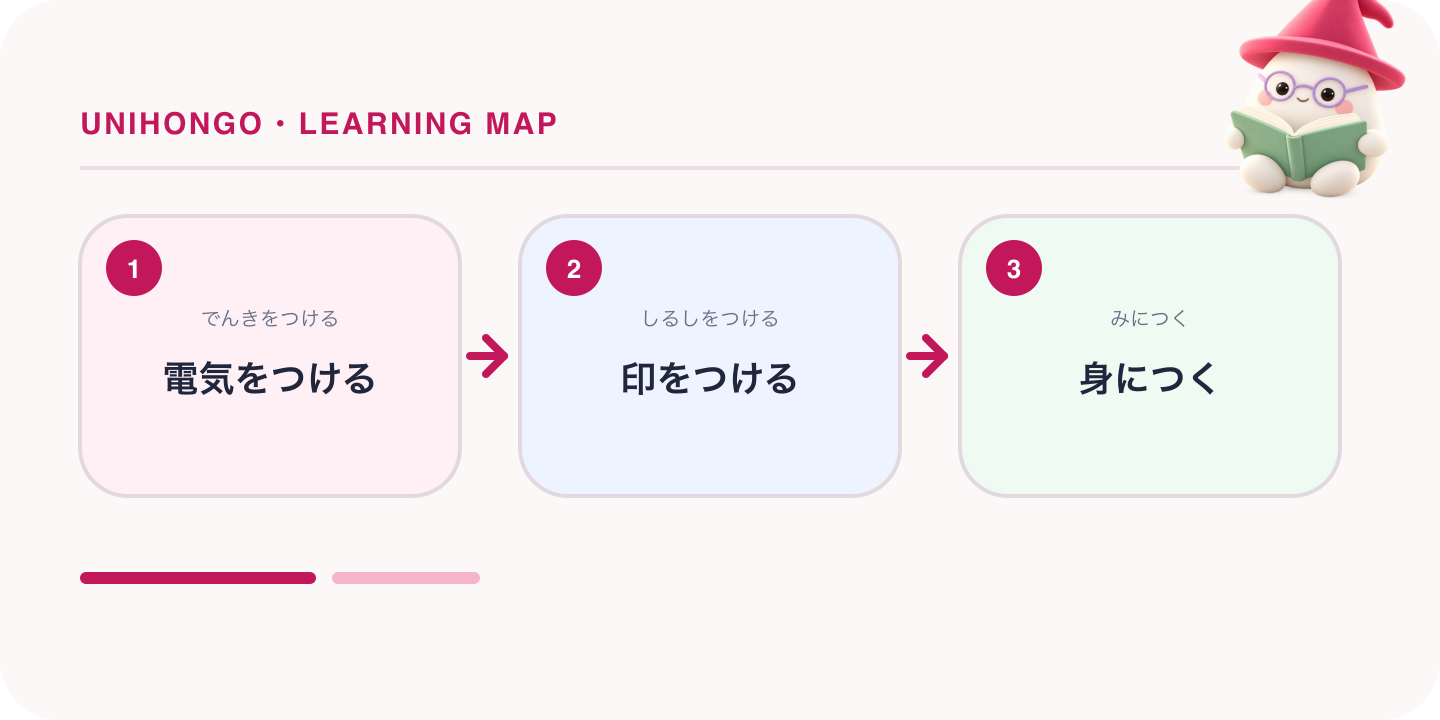
| Transitive: you do it | Intransitive: it happens | What changes |
|---|---|---|
| 電気をつける denki o tsukeru | 電気がつく denki ga tsuku | You switch it on / it comes on |
| 名前をつける namae o tsukeru | 名前が付く namae ga tsuku | You name it / it has a name |
| 力をつける chikara o tsukeru | 力がつく chikara ga tsuku | You build ability / ability grows |
| 気をつける ki o tsukeru | 気が付く ki ga tsuku | You take care / you notice |
| 見つける mitsukeru | 見つかる mitsukaru | You find it / it turns up |
| 片付ける katazukeru | 片付く katazuku | You tidy it / it gets tidy |
| 近づける chikazukeru | 近づく chikazuku | You bring it near / it comes near |
| 都合をつける tsugō o tsukeru | 都合がつく tsugō ga tsuku | You make the time / the time works out |
The sense table
| Verb | Sense | Collocation | Example |
|---|---|---|---|
| つける | Attach, fix on | ボタンを付ける botan o tsukeru | シャツにボタンを付けます shatsu ni botan o tsukemasu |
| つける | Switch on | 電気をつける denki o tsukeru | 電気をつけてください denki o tsukete kudasai |
| つける | Light a flame | 火をつける hi o tsukeru | ろうそくに火をつけます rōsoku ni hi o tsukemasu |
| つける | Apply to the body | 薬をつける kusuri o tsukeru | 傷に薬をつけます kizu ni kusuri o tsukemasu |
| つける | Dip into a sauce | わさびをつける wasabi o tsukeru | わさびをつけて食べます wasabi o tsukete tabemasu |
| つける | Season | 味をつける aji o tsukeru | 塩で味をつけます shio de aji o tsukemasu |
| つける | Mark, add a note | 印をつける shirushi o tsukeru | 大事な所に印をつけます daiji na tokoro ni shirushi o tsukemasu |
| つける | Keep a record | 日記をつける nikki o tsukeru | 毎晩日記をつけます maiban nikki o tsukemasu |
| つける | Give a name | 名前をつける namae o tsukeru | 子供に名前をつけます kodomo ni namae o tsukemasu |
| つける | Set a price or a mark | 値段をつける nedan o tsukeru | 高い値段をつけます takai nedan o tsukemasu |
| つける | Attach a condition | 条件をつける jōken o tsukeru | 条件をつけてもいいですか jōken o tsukete mo ii desu ka |
| つける | Wear an accessory | 指輪をつける yubiwa o tsukeru | 指輪をつけています yubiwa o tsukete imasu |
| つける | Be careful | 気をつける ki o tsukeru | 足元に気をつけてください ashimoto ni ki o tsukete kudasai |
| つく | Be stuck on | しみが付く shimi ga tsuku | 服にしみが付きました fuku ni shimi ga tsukimashita |
| つく | Come on | 電気がつく denki ga tsuku | 電気がついています denki ga tsuite imasu |
| 着く | Arrive | 駅に着く eki ni tsuku | 駅に着きました eki ni tsukimashita |
| 着く | Take a seat | 席に着く seki ni tsuku | 席に着いてください seki ni tsuite kudasai |
| 就く | Take up a job | 仕事に就く shigoto ni tsuku | 新しい仕事に就きます atarashii shigoto ni tsukimasu |
| つく | Be included | 朝食が付く chōshoku ga tsuku | 朝食が付いています chōshoku ga tsuite imasu |
| つく | Build up, take hold | 力がつく chikara ga tsuku | 力がつきました chikara ga tsukimashita |
| つく | Notice | 気が付く ki ga tsuku | 間違いに気が付きました machigai ni ki ga tsukimashita |
| つく | Work out, become possible | 都合がつく tsugō ga tsuku | 都合がつけば行きます tsugō ga tsukeba ikimasu |
Scan the fourth column rather than the second. What you need in speech is the whole sentence shape, including the particle, because the particle is what changes when you cross between the two halves of the pair.
Attaching, applying and dipping
This is the literal sense and the one that explains the rest. The thing being attached takes o and the place it lands on takes ni. Food gives you a useful contrast with kakeru from the previous sense group: you pour sauce over rice with kakeru, but you dip a piece of sashimi into a small dish with tsukeru. Ordering staff will use both, so hearing the difference is practical.
| Japanese | Romaji | Meaning |
|---|---|---|
| シャツにボタンを付けます。 | Shatsu ni botan o tsukemasu. | I sew a button onto the shirt. |
| 名札を胸に付けてください。 | Nafuda o mune ni tsukete kudasai. | Please put the name badge on your chest. |
| 傷口に薬をつけました。 | Kizuguchi ni kusuri o tsukemashita. | I put medicine on the cut. |
| お刺身にわさびをつけて食べます。 | O-sashimi ni wasabi o tsukete tabemasu. | I eat sashimi with a little wasabi on it. |
| 大事な所に印をつけておきます。 | Daiji na tokoro ni shirushi o tsukete okimasu. | I will mark the important parts in advance. |
| 指輪をつけていますね。 | Yubiwa o tsukete imasu ne. | You are wearing a ring, I see. |
| 塩で少し味をつけます。 | Shio de sukoshi aji o tsukemasu. | I season it lightly with salt. |
Turning things on
Anything with a switch or a flame takes tsukeru. This is one of the first collocations a learner needs in a shared house, an office or a hotel room, and it is almost always written in kana. The opposite is not a form of tsukeru: you switch things off with kesu, so denki o tsukemasu pairs with denki o keshimasu, and the pair is worth drilling together.
Watch the te-iru forms, because they carry different information. Denki o tsukete imasu describes a person in the act or in the habit of switching lights on. Denki ga tsuite imasu describes the state of the room, and it is what you actually say when you walk in and notice the light is on. Learners often use the transitive form for a state and sound as though someone is standing there operating the switch.
| Japanese | Romaji | Meaning |
|---|---|---|
| 電気をつけてもいいですか。 | Denki o tsukete mo ii desu ka. | May I turn the light on? |
| 暑いのでエアコンをつけましょう。 | Atsui node eakon o tsukemashō. | It is hot, so let us put the air conditioning on. |
| テレビをつけたまま寝てしまいました。 | Terebi o tsuketa mama nete shimaimashita. | I fell asleep with the television left on. |
| ろうそくに火をつけます。 | Rōsoku ni hi o tsukemasu. | I light the candle. |
| 出るときは電気を消してください。 | Deru toki wa denki o keshite kudasai. | Please switch the light off when you leave. |
Recording, naming and pricing
A more abstract group, but the image still holds: you put a figure onto a page, a name onto a person, a price onto an item, a condition onto an agreement. Nikki o tsukeru is the standard way to say keep a diary, and kakeibo o tsukeru is the household budget book that many families keep. Do not use kaku here; kaku is the physical act of writing, while tsukeru is the ongoing habit of recording.
| Japanese | Romaji | Meaning |
|---|---|---|
| 毎晩日記をつけています。 | Maiban nikki o tsukete imasu. | I keep a diary every night. |
| 家計簿をつけ始めました。 | Kakeibo o tsukehajimemashita. | I have started keeping a household account book. |
| 子供に名前をつけました。 | Kodomo ni namae o tsukemashita. | We gave the child a name. |
| この店は少し高い値段をつけています。 | Kono mise wa sukoshi takai nedan o tsukete imasu. | This shop prices things a little high. |
| 先生がテストに点をつけます。 | Sensei ga tesuto ni ten o tsukemasu. | The teacher marks the test. |
| 一つだけ条件をつけてもいいですか。 | Hitotsu dake jōken o tsukete mo ii desu ka. | May I attach just one condition? |
Tsuku: sticking, coming on and being included
The intransitive half reports states and results, which is why it fills so much of everyday conversation. Something got on your shirt, the light is on, a plan comes with breakfast, a habit has taken hold, your ability has grown. Notice that abstract growth uses tsuku rather than a verb of increase: chikara ga tsuku and jishin ga tsuku describe capacity settling onto you and staying.
The inclusion sense is worth learning before any trip. A hotel plan, a set meal or a phone contract all use tsuku to say what comes with it, and shop staff will ask or answer with it directly. Dorinku wa tsukimasu ka is a complete question, and the answer is often just tsukimasu or betsu ryōkin desu.
| Japanese | Romaji | Meaning |
|---|---|---|
| シャツにコーヒーのしみが付きました。 | Shatsu ni kōhī no shimi ga tsukimashita. | A coffee stain got on my shirt. |
| 手にインクが付いていますよ。 | Te ni inku ga tsuite imasu yo. | You have ink on your hand. |
| 電気がついたままですよ。 | Denki ga tsuita mama desu yo. | The light has been left on. |
| このプランには朝食が付いています。 | Kono puran ni wa chōshoku ga tsuite imasu. | This plan comes with breakfast. |
| ドリンクは付きますか。 | Dorinku wa tsukimasu ka. | Does it come with a drink? |
| 毎日練習して力がつきました。 | Mainichi renshū shite chikara ga tsukimashita. | Daily practice has built up my ability. |
| 少しずつ自信がついてきました。 | Sukoshi zutsu jishin ga tsuite kimashita. | I have gradually gained confidence. |
| 早起きの習慣がつきました。 | Hayaoki no shūkan ga tsukimashita. | I have got into the habit of rising early. |
| 都合がつけば参加します。 | Tsugō ga tsukeba sanka shimasu. | I will join if I can make the time. |
Arriving, and the seats and jobs that follow
Tsuku is the ordinary verb for arriving, written 着く, and it is far more common in speech than tōchaku suru, which belongs to announcements and timetables. The destination takes ni, and the conditional form tsuitara is one of the most useful sentences a traveller owns: tsuitara renraku shimasu, I will get in touch when I arrive.
Two neighbouring senses use different kanji for the same sound. Seki ni tsuku, written 着く, means to take your seat, and it is what a teacher or a host says before things begin. Shigoto ni tsuku, written 就く, means to take up a post, so it describes starting a career rather than going to the office on a given day. For the daily commute you would say kaisha ni ikimasu.
| Japanese | Romaji | Meaning |
|---|---|---|
| 何時に空港に着きますか。 | Nan-ji ni kūkō ni tsukimasu ka. | What time do you arrive at the airport? |
| ちょうど今、駅に着きました。 | Chōdo ima, eki ni tsukimashita. | I have just arrived at the station. |
| 荷物はもう着いていますか。 | Nimotsu wa mō tsuite imasu ka. | Has the luggage arrived yet? |
| 着いたら連絡します。 | Tsuitara renraku shimasu. | I will contact you once I arrive. |
| では、席に着いてください。 | Dewa, seki ni tsuite kudasai. | Right, please take your seats. |
| 来月から新しい仕事に就きます。 | Raigetsu kara atarashii shigoto ni tsukimasu. | I take up a new job from next month. |
Ki o tsukeru and ki ga tsuku
These two sit at the centre of daily politeness and learners mix them constantly. Ki o tsukeru is transitive and forward-looking: you place your attention on something, so it means be careful. Ki ga tsuku is intransitive and backward-looking: attention lands on you, so it means notice or realise. What you are careful about takes ni, and so does what you notice, which is part of why they blur.
Kizuku is the contracted single verb that grew out of ki ga tsuku, and it now conjugates independently: kizukimasu, kizukanakatta, kizuite. Use it exactly where you would use ki ga tsuku, especially in writing. There is one difference to remember: you cannot break kizuku apart, so ki wa tsukimasen deshita is possible with the two-word version but kizuku stays whole.
| Japanese | Romaji | Meaning |
|---|---|---|
| 足元に気をつけてください。 | Ashimoto ni ki o tsukete kudasai. | Please watch your step. |
| 車に気をつけてね。 | Kuruma ni ki o tsukete ne. | Watch out for the cars. (casual) |
| お体に気をつけてください。 | O-karada ni ki o tsukete kudasai. | Please take care of your health. |
| これから気をつけます。 | Kore kara ki o tsukemasu. | I will be careful from now on. |
| 間違いに気が付きませんでした。 | Machigai ni ki ga tsukimasen deshita. | I did not notice the mistake. |
| 忘れ物に気づいて戻りました。 | Wasuremono ni kizuite modorimashita. | I realised I had left something and went back. |
| 気が付いたら十二時でした。 | Ki ga tsuitara jūni-ji deshita. | Before I knew it, it was twelve o'clock. |
Ki o tsukete on its own is a complete farewell, roughly take care, and it is what people say at the door when you leave. Reply with hai, arigatō gozaimasu. If you are the one staying behind at work, itterasshai does the same job.
The kanji, and the lookalike verbs
Three kanji divide the senses. 付 covers attaching, applying, adding and being included, and it is the one you meet on menus and plans as the suffix tsuki, as in chōshoku-tsuki, breakfast included. 着 covers arriving and taking a seat, and it is the same character as kiru, to wear, which fits the idea of something settling onto a body. 就 is narrow and formal: taking up a post or a position.
Two other verbs share the reading and are not related. 漬ける tsukeru means to soak or pickle, so yasai o tsukemasu is about making pickles rather than dipping. Uso o tsuku means to tell a lie and tameiki o tsuku means to sigh; both are the transitive godan verb usually written in kana. Context separates them easily, but the readings catch learners out in listening.
| Form | What it covers | Example |
|---|---|---|
| 付 | Attach, apply, add, be included | 気を付ける ki o tsukeru, 朝食付き chōshoku-tsuki |
| 着 | Arrive, take a seat | 駅に着く eki ni tsuku, 席に着く seki ni tsuku |
| 就 | Take up a post or position | 仕事に就く shigoto ni tsuku, 就職 shūshoku |
| kana | Most everyday speech and casual writing | 電気をつける, 気をつけて, 日記をつける |
| 漬 | Soak or pickle, a separate verb | 野菜を漬ける yasai o tsukeru |
| kana (うそをつく) | Tell a lie, sigh, a separate verb | うそをつく uso o tsuku, ため息をつく tameiki o tsuku |
Compounds and set phrases you will hear
Tsuku sits inside a long list of compound verbs, and knowing the second half makes them readable. Omoitsuku is a thought arriving on you, oitsuku is catching up so that you are attached to the person ahead, ochitsuku is settling down, and chikazuku is drawing near. Mi ni tsukeru, to put onto your body, is the standard way to say acquire a skill, and mi ni tsuku is the same thing happening to you.
Two grammar points also grow from this verb. Ni tsuite means about or concerning, and it is the normal way to introduce a topic in a meeting or a class. Ni tsuki, more formal, means per, as in hitori ni tsuki, per person. Both are frozen forms, so you do not conjugate them, but recognising the origin helps you keep them apart from ni tsuite iru, which is the ordinary verb meaning is attached.
| Japanese | Romaji | Meaning |
|---|---|---|
| いい方法を思いつきました。 | Ii hōhō o omoitsukimashita. | I have thought of a good method. |
| 部屋を片付けてから出かけます。 | Heya o katazukete kara dekakemasu. | I will tidy the room and then go out. |
| やっと部屋が片付きました。 | Yatto heya ga katazukimashita. | The room is finally tidy. |
| 鍵が見つかりません。 | Kagi ga mitsukarimasen. | I cannot find my key. |
| やっと追いつきました。 | Yatto oitsukimashita. | I have finally caught up. |
| 少し落ち着いてください。 | Sukoshi ochitsuite kudasai. | Please calm down a little. |
| 日本語を身につけたいです。 | Nihongo o mi ni tsuketai desu. | I want to acquire real Japanese. |
| 犬が近づいてきました。 | Inu ga chikazuite kimashita. | The dog came closer. |
| 彼はうそをつきません。 | Kare wa uso o tsukimasen. | He does not tell lies. |
| 大きなため息をつきました。 | Ōkina tameiki o tsukimashita. | He let out a big sigh. |
| この件について話しましょう。 | Kono ken ni tsuite hanashimashō. | Let us talk about this matter. |
| 一人につき千円です。 | Hitori ni tsuki sen-en desu. | It is one thousand yen per person. |
Mistakes to check in your own speech
- Use ni for a destination with tsuku: eki ni tsukimashita, not eki de tsukimashita.
- Report a state with the intransitive form: denki ga tsuite imasu, not denki o tsukete imasu, when you simply notice a light is on.
- Keep the te-forms apart: tsukete comes from tsukeru, tsuite comes from tsuku.
- Do not mix the two ki phrases: ki o tsukete kudasai warns someone, ki ga tsukimashita reports that you noticed.
- Switch things off with kesu, not with a negative of tsukeru: eakon o keshimasu.
- Pour over is kakeru, dip is tsukeru, and pickle is a third verb written 漬ける.
- Conjugate the classes correctly: tsukemasen and tsukenai for the ichidan verb, tsukimasen and tsukanai for the godan one.