

The kanji: root plus going around
Nemawashi is written 根回し. The first kanji, 根, ne, means root. It also appears in konki, perseverance, literally root energy, and in the phrase ne ga majime, serious at heart. The second part, mawashi, comes from the verb mawasu, to turn, rotate or send round, written with 回, the kanji for turning and for counting times, as in ikkai, once.
So the word literally describes going around the roots. The image is physical: a gardener working their way around the base of a tree. That picture is the key to the business meaning, too. Before anything visible moves, someone patiently works around it at ground level.
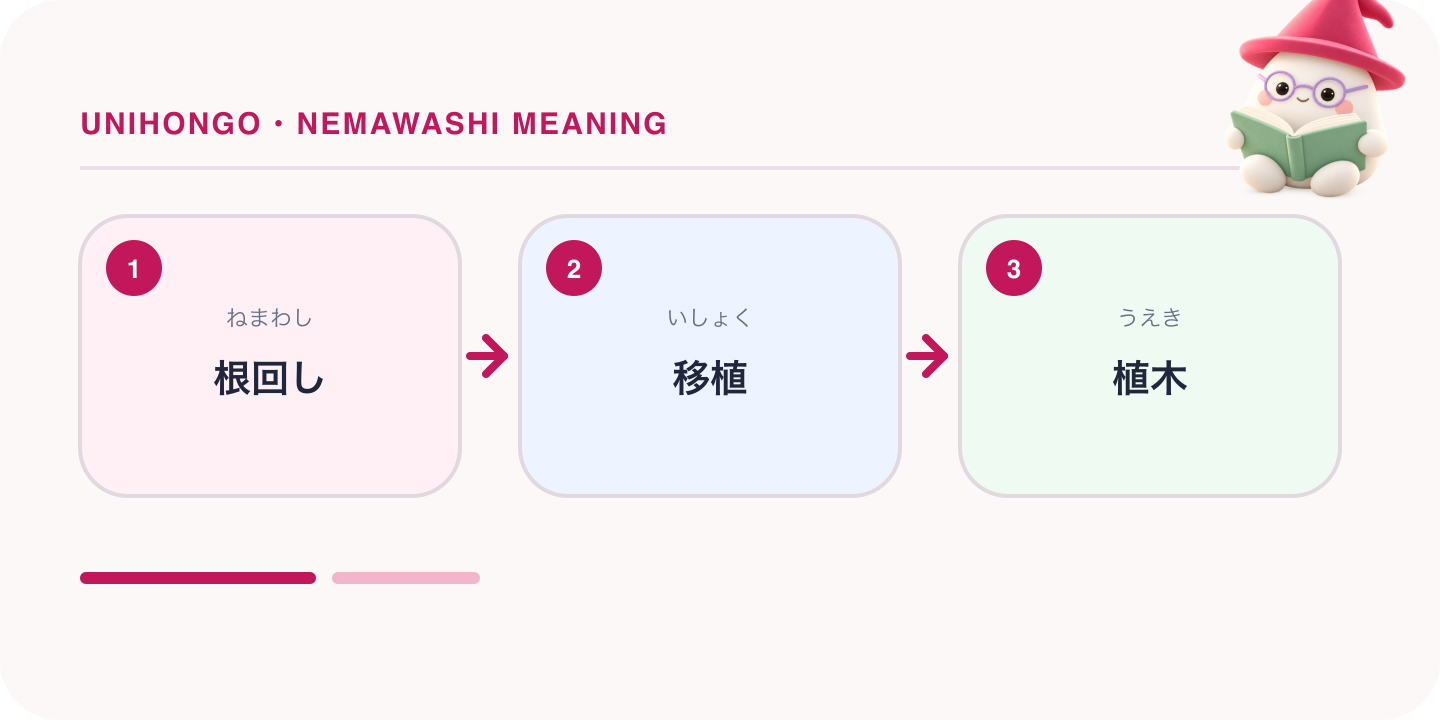
| Kanji | Reading | Meaning | Other words |
|---|---|---|---|
| 根 | ne / kon | Root | 根気 konki, 根拠 konkyo, 屋根 yane |
| 回 | kai / mawa(su) | Turn, go around, times | 回す mawasu, 一回 ikkai, 回覧 kairan |
| 根回し | nemawashi | Groundwork, prior consultation | 根回しする nemawashi suru |
The gardening origin
When a large tree needs to be moved, gardeners do not simply dig it up on the day. Some time in advance, they dig a trench around the trunk and cut the thick outer roots, sometimes wrapping the root ball. The tree then grows fine new roots closer to the trunk, and when it is finally lifted and replanted, it has a much better chance of surviving.
The transfer of this idea to people is easy to see. A proposal is like a tree: if you move it suddenly, in a formal meeting, the people affected may resist or feel ignored. If you prepare them in advance, the change takes root. Japanese speakers still recognise this image, and some explain the word to foreigners with exactly this story.
| Japanese | Romaji | Meaning |
|---|---|---|
| 木を移植する前に根回しをする。 | Ki o ishoku suru mae ni nemawashi o suru. | Prepare the roots before transplanting a tree. |
| 移植 | ishoku | Transplanting |
| 植木屋さん | uekiya-san | Gardener, tree specialist |
Nemawashi in Japanese workplaces today
In an office, nemawashi means talking to the people who matter before a formal decision: your manager, the head of a department that will be affected, a senior colleague whose opinion carries weight. You explain the idea, listen to concerns, and sometimes adjust the plan. By the time of the meeting, nobody is surprised, and objections have already been handled.
Japanese meetings often function as a place to confirm a decision rather than argue it out, and an unexpected proposal can put people in an awkward position, especially seniors who would lose face by rejecting it in public. Nemawashi protects everyone from that.
The word also has a critical edge. When people say the decision was made by nemawashi, they may mean that open discussion was skipped. In politics, nemawashi can suggest behind-the-scenes deals. So the same word can praise a thoughtful colleague or criticise a closed system, depending on tone.
| Japanese | Romaji | Meaning |
|---|---|---|
| 会議の前に根回ししておきました。 | Kaigi no mae ni nemawashi shite okimashita. | I laid the groundwork before the meeting. |
| 部長には話を通してあります。 | Buchō ni wa hanashi o tōshite arimasu. | I've already cleared it with the department head. |
| 根回しが足りなかったね。 | Nemawashi ga tarinakatta ne. | We didn't do enough groundwork, did we. |
| 根回しがうまい人だ。 | Nemawashi ga umai hito da. | They're good at building support behind the scenes. |
| 全部根回しで決まってしまった。 | Zenbu nemawashi de kimatte shimatta. | It was all decided beforehand, behind closed doors. |
Phrases for doing nemawashi politely
Good nemawashi is short and respectful. You ask for a moment, frame the idea as a consultation rather than a demand, and make the other person feel their view matters, which it does. These phrases work for a manager or a colleague in another team.
| Japanese | Romaji | Meaning |
|---|---|---|
| 今、少しよろしいでしょうか。 | Ima, sukoshi yoroshii deshō ka. | Do you have a moment now? |
| 事前にご相談したいことがありまして。 | Jizen ni gosōdan shitai koto ga arimashite. | There's something I'd like to consult you about in advance. |
| 来週の会議で提案する予定なのですが。 | Raishū no kaigi de teian suru yotei na no desu ga. | I'm planning to propose this at next week's meeting. |
| 率直なご意見を伺えればと思いまして。 | Sotchoku na go-iken o ukagaereba to omoimashite. | I was hoping to hear your honest opinion. |
| 何か気になる点はありますか。 | Nani ka ki ni naru ten wa arimasu ka. | Is there anything that concerns you? |
| いただいたご意見を反映させます。 | Itadaita go-iken o han'ei sasemasu. | I'll incorporate your feedback. |
| 会議の際には、ぜひご支援いただければ幸いです。 | Kaigi no sai ni wa, zehi go-shien itadakereba saiwai desu. | I'd be grateful for your support in the meeting. |
Ringi: the formal approval that follows
Many Japanese organisations use a formal approval process called ringi. A written proposal, the ringisho, is circulated to the relevant managers, and each one approves it, traditionally by stamping their hanko, a personal seal, and now often through an electronic workflow. The decision becomes official once everyone in the chain has signed off.
Nemawashi and ringi work together. Before submitting a ringisho, people usually do nemawashi so that nobody in the approval chain is surprised and the document is not sent back. That is why you may hear someone say ringi o ageru mae ni nemawashi shite oite, do the groundwork before you submit the approval request.
| Word | Reading | Meaning |
|---|---|---|
| 稟議 | ringi | Formal circulated approval process |
| 稟議書 | ringisho | The written approval request |
| 決裁 | kessai | Final approval by someone with authority |
| 承認 | shōnin | Approval |
| 判子 / はんこ | hanko | Personal seal used for approval |
| 差し戻し | sashimodoshi | Sending a document back for revision |
Sōdan and hōrensō
Nemawashi belongs to a wider culture of keeping people informed. New employees in Japan are commonly taught hōrensō, a pun on the word for spinach, made from hōkoku, report, renraku, inform or contact, and sōdan, consult. The idea is that you report results, share information and ask for advice early, rather than working alone and surprising people later.
Sōdan is the part closest to nemawashi. Consulting your manager before acting shows respect and lets them shape the plan. Many Japanese managers would rather be consulted too often than too little.
| Japanese | Romaji | Meaning |
|---|---|---|
| ご報告があります。 | Go-hōkoku ga arimasu. | I have something to report. |
| 念のためご連絡します。 | Nen no tame go-renraku shimasu. | I'm letting you know just in case. |
| ちょっとご相談してもいいですか。 | Chotto gosōdan shite mo ii desu ka. | Could I ask your advice on something? |
- Hōkoku, report: telling your manager the progress or result of a task.
- Renraku, contact: sharing facts others need, such as a delay or a schedule change.
- Sōdan, consult: asking for advice before a decision, especially when unsure.
- Nemawashi: consulting several stakeholders to build agreement before a formal decision.
Nemawashi abroad vs in Japan
Outside Japan, nemawashi is often taught as a management technique, sometimes listed alongside kaizen and other terms associated with Toyota and lean practice. In that framing it sounds like a clear, positive method for building consensus.
Inside Japan, people rarely think of it as a technique. It is simply how things get done, part of reading the situation and respecting hierarchy, and its reputation depends on how it is used. A younger employee might see heavy nemawashi as slow and old-fashioned; a manager might see a lack of it as careless. Understanding both views helps you judge how much preparation a particular workplace expects.
| Abroad | In Japan |
|---|---|
| A named consensus-building technique | An everyday habit, rarely called a technique |
| Presented as clearly positive | Positive or negative depending on context |
| Linked to lean and Toyota | Used in any organisation, including politics and schools |
| Often translated as consensus building | Closer to preparing the ground or clearing it in advance |
If you work with a Japanese team, a practical rule is this: whenever a proposal will affect someone, make sure they hear about it from you before they hear about it in a meeting.
Related words for behind-the-scenes coordination
Several other words describe work done before or around a formal decision. Some are neutral, some slightly negative, and knowing them helps you understand news reports and office gossip.
| Japanese | Romaji | Meaning |
|---|---|---|
| 下準備 | shitajunbi | Preparation, groundwork |
| 事前調整 | jizen chōsei | Coordinating in advance |
| 打ち合わせ | uchiawase | An informal working meeting |
| 段取り | dandori | Arrangements, planning the steps |
| 裏工作 | ura kōsaku | Behind-the-scenes manoeuvring (negative) |
| 根回しなしで提案するのは危ない。 | Nemawashi nashi de teian suru no wa abunai. | Proposing without groundwork is risky. |