
What ukeru means in one minute
Ukeru is a verb whose basic meaning is to receive. With an object, it is the everyday verb for taking an exam, taking a phone call, attending a class or undergoing surgery. Without an object, it means to be well received: a product that sells, a joke that gets a laugh, a show that is popular with young people.
The slang reaction ukeru! grew out of that second meaning. If something gets a laugh from you, it ukeru: it lands. Today the slang simply means that's hilarious.
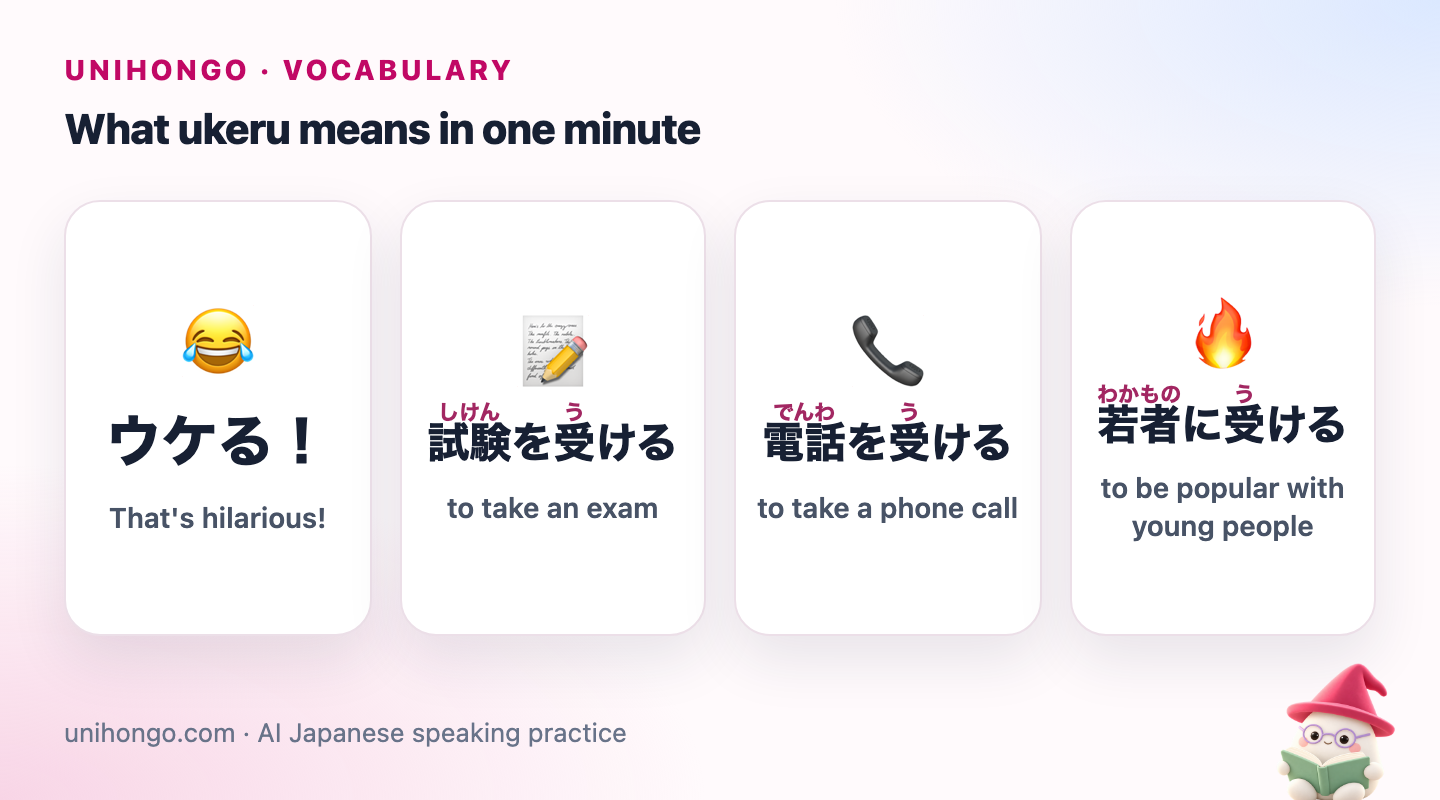
| Japanese | Romaji | Meaning |
|---|---|---|
| ウケる! | Ukeru! | That's hilarious! |
| 試験を受ける | shiken o ukeru | to take an exam |
| 電話を受ける | denwa o ukeru | to take a phone call |
| 若者に受ける | wakamono ni ukeru | to be popular with young people |
受ける, the standard verb: receive, take, undergo
The kanji 受 means receive. As a normal ichidan verb, ukeru takes the particle o for what you receive or undergo. It is neutral and fine in any register, and in polite speech it becomes ukemasu. Its passive-looking meaning is important: you take an exam that someone else sets, you receive a call that someone else makes, you undergo treatment that a doctor gives.
| Japanese | Romaji | Meaning |
|---|---|---|
| 来月、日本語の試験を受けます。 | Raigetsu, Nihongo no shiken o ukemasu. | I'm taking a Japanese exam next month. |
| オンラインで授業を受けています。 | Onrain de jugyō o ukete imasu. | I'm taking classes online. |
| さっき電話を受けました。 | Sakki denwa o ukemashita. | I took a phone call a moment ago. |
| 来週、手術を受けます。 | Raishū, shujutsu o ukemasu. | I'm having surgery next week. |
| 先生の影響を受けました。 | Sensei no eikyō o ukemashita. | I was influenced by my teacher. |
| 面接を受けることになりました。 | Mensetsu o ukeru koto ni narimashita. | I've got a job interview. |
Going down well: uketa and ukenakatta
The second meaning is to be well received, to land. A comedian's joke ukeru when the audience laughs. A product ukeru when people like it. Who it lands with comes with the particle ni. In the past tense, uketa means it got a laugh or went down well, and ukenakatta means it flopped. This use is casual to neutral and very common when people talk about speeches, jokes and party games.
| Japanese | Romaji | Meaning |
|---|---|---|
| その冗談、ウケたね。 | Sono jōdan, uketa ne. | That joke really landed. |
| 全然ウケなかった。 | Zenzen ukenakatta. | Nobody laughed at all. |
| このゲーム、子どもにウケるよ。 | Kono gēmu, kodomo ni ukeru yo. | Kids love this game. |
| 海外で受けている日本のアニメです。 | Kaigai de ukete iru Nihon no anime desu. | It's a Japanese anime that's popular overseas. |
Slang ukeru: that's hilarious
Said on its own, ukeru is a quick reaction: that cracks me up. You will hear it from friends reading a message, watching a video, or listening to a story, and you will see it in chats, usually in katakana. Maji de ukeru intensifies it, and ukeru n dakedo (that's hilarious, honestly) is a common way to say it with a laugh.
Tone matters. Bright and laughing, ukeru is pure enjoyment. Said flatly, it can sound like a dry lol, or even a slightly mocking that's ridiculous, so watch your friends' faces.
Is it dated? The slang was especially linked with high-school girls in the 2000s, and some young people now hear it as a bit old, while plenty of people still use it every day. Online, people also write wara (笑, laugh) or kusa (草, grass, because the letter w for warau looks like grass) after a funny line. If you want something safe and timeless, metcha waratta, I laughed so much, never goes out of date.
| Japanese | Romaji | Meaning |
|---|---|---|
| マジでウケる。 | Maji de ukeru. | That's seriously hilarious. |
| それ、ウケるんだけど。 | Sore, ukeru n dakedo. | That's hilarious, honestly. |
| めっちゃ笑った。 | Metcha waratta. | I laughed so hard. |
| お腹痛い。 | Onaka itai. | My stomach hurts from laughing. |
Register: when to say ukeru and what to say instead
The standard verb ukeru is fine everywhere. The slang reaction is for friends, siblings and classmates, not for teachers, bosses or people you have just met. In polite conversation, react with omoshiroi desu ne, or say that something made you laugh.
| Japanese | Romaji | Meaning |
|---|---|---|
| 面白いですね。 | Omoshiroi desu ne. | That's funny. (polite) |
| 思わず笑ってしまいました。 | Omowazu waratte shimaimashita. | I couldn't help laughing. (polite) |
| What you want to say | Casual | Polite |
|---|---|---|
| That's funny | Ukeru / Omoshiroi | Omoshiroi desu ne |
| I laughed a lot | Metcha waratta | Takusan waraimashita |
| The joke landed | Uketa ne | Minna waratte imashita ne |
| I'm taking an exam | Shiken ukeru | Shiken o ukemasu |
The classic learner mistake: ukeru vs ukaru
Ukeru means to take an exam; ukaru (受かる) means to pass it. The particles differ too: shiken o ukeru, but shiken ni ukaru. If you say shiken o ukemashita after your results come out, you have only told people that you sat the exam. The opposite of ukaru is ochiru, to fall, which means to fail.
| Japanese | Romaji | Meaning |
|---|---|---|
| 試験に受かった! | Shiken ni ukatta! | I passed the exam! |
| 大学に受かりました。 | Daigaku ni ukarimashita. | I got into university. |
| 試験に落ちちゃった。 | Shiken ni ochichatta. | I failed the exam. |
- Mistake 1: shiken ni ukemashita. Use o with ukeru: shiken o ukemashita.
- Mistake 2: using slang ukeru to a teacher or boss. Say omoshiroi desu ne.
- Mistake 3: saying ukeru when someone shares bad news with a nervous laugh. It can sound as if you are laughing at them.
- Mistake 4: writing the exam verb in katakana. Use 受ける for the standard meanings.
More ways to react to something funny
If you only have ukeru, every reaction sounds the same. Japanese has several others. Tsubo ni hairu, literally to hit the pressure point, means something hit your funny bone so hard you cannot stop. Fukidasu is to burst out laughing, often unexpectedly. Warai ga tomaranai means you cannot stop laughing. Okashii means funny, but it also means strange, so okashii ne can be either that's hilarious or that's odd; the tone decides.
Omoshiroi is the all-purpose word. It means funny and also interesting, so a friend who says omoshiroi about a lecture is not necessarily laughing.
| Japanese | Romaji | Meaning |
|---|---|---|
| ツボに入った。 | Tsubo ni haitta. | That hit my funny bone. |
| 思わず吹き出した。 | Omowazu fukidashita. | I burst out laughing. |
| 笑いが止まらない。 | Warai ga tomaranai. | I can't stop laughing. |
| それ、おかしいね。 | Sore, okashii ne. | That's funny. / That's odd. |
Mini dialogue: a story that cracks everyone up
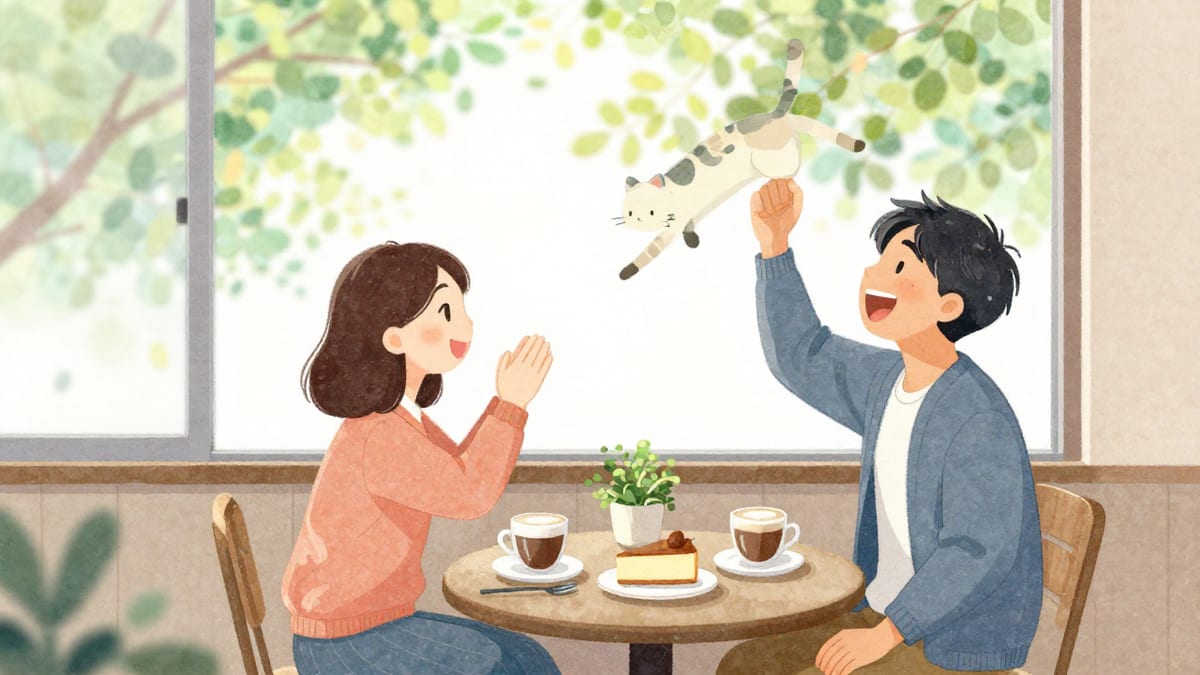
Three friends are at a café, and one of them tells a story about her cat. Notice the slang ukeru and the verb uketa side by side.
| Japanese | Romaji | Meaning |
|---|---|---|
| 昨日、うちの猫が冷蔵庫の上で寝てたの。 | Kinō, uchi no neko ga reizōko no ue de neteta no. | Saki: Yesterday my cat was sleeping on top of the fridge. |
| え、冷蔵庫の上?ウケる! | E, reizōko no ue? Ukeru! | Daniel: On top of the fridge? That's hilarious! |
| しかも、降りられなくて鳴いてた。 | Shikamo, orirarenakute naiteta. | Saki: And then she couldn't get down and was crying. |
| かわいそうだけど、めっちゃ笑った。 | Kawaisō da kedo, metcha waratta. | Daniel: Poor thing, but I laughed so hard. |
| この話、職場でもウケたよ。 | Kono hanashi, shokuba demo uketa yo. | Saki: This story went down well at work too. |