
Kizuna in one minute
Kizuna (絆) is a bond between people that holds firm. The kanji contains the thread radical 糸 on the left, a hint that it is something that ties. The word is commonly explained as having first meant a rope used to tether animals such as horses, and later also restraints that bind a person. Over time the meaning shifted from something that holds you back to something that holds you together, and today it is almost always positive.
In modern Japanese, kizuna suggests three things: the relationship is deep, it has been built through shared time or difficulty, and it supports both sides. That is why it often appears next to words like tsuyoi (strong) and fukai (deep).
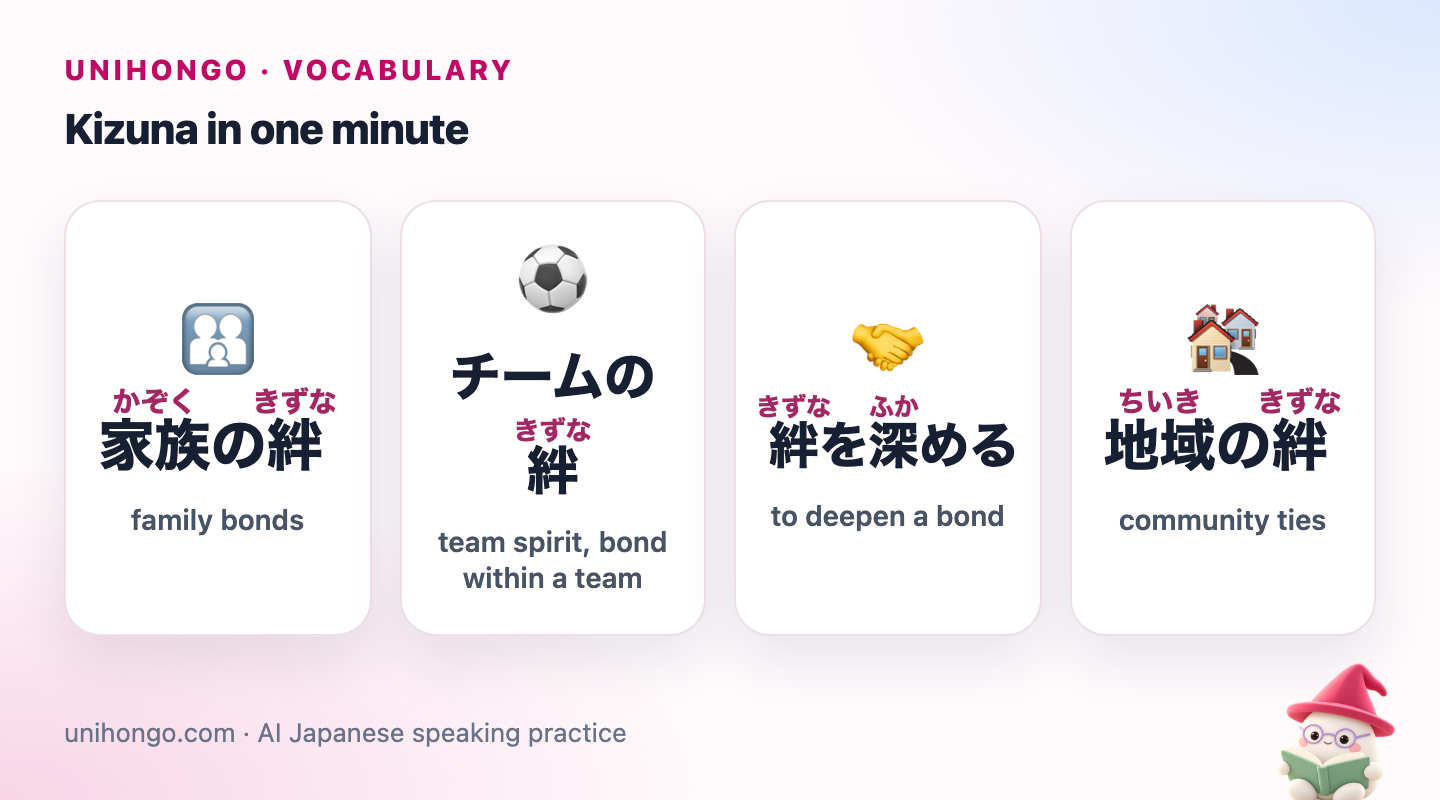
| Japanese | Romaji | Meaning |
|---|---|---|
| 家族の絆 | kazoku no kizuna | family bonds |
| チームの絆 | chīmu no kizuna | team spirit, bond within a team |
| 絆を深める | kizuna o fukameru | to deepen a bond |
| 地域の絆 | chiiki no kizuna | community ties |
The collocations you will actually hear
Kizuna rarely appears alone. It comes with a small set of verbs and adjectives, and learning those is the fastest way to use it naturally. Fukameru (to deepen) and tsuyomeru (to strengthen) are the most common, while kizuku (to build) is used when the relationship is newer.
| Japanese | Romaji | Meaning |
|---|---|---|
| 二人の絆が深まった。 | Futari no kizuna ga fukamatta. | The bond between the two of them grew deeper. |
| 旅行で家族の絆を深めました。 | Ryokō de kazoku no kizuna o fukamemashita. | The trip brought our family closer. |
| チームの絆が強いです。 | Chīmu no kizuna ga tsuyoi desu. | The team has a strong bond. |
| 信頼関係と絆を築きたいです。 | Shinrai kankei to kizuna o kizukitai desu. | I want to build trust and a bond. |
| 強い絆で結ばれています。 | Tsuyoi kizuna de musubarete imasu. | They are tied by a strong bond. |
| みんなの絆を感じました。 | Minna no kizuna o kanjimashita. | I felt the bond between everyone. |
Kizuna also combines with the names of the two sides of the relationship: oyako no kizuna (parent and child), fūfu no kizuna (husband and wife), and shitei no kizuna, the bond between a master and an apprentice or a teacher and a student, which appears mostly in writing. The pattern A to B no kizuna, the bond between A and B, lets you build your own: fan to senshu no kizuna, the bond between fans and players.
Adjectives are limited. Tsuyoi (strong) and fukai (deep) are by far the most common, and katai (firm) appears too. You would not normally say ōkii kizuna (a big bond) or nagai kizuna (a long bond).
Where kizuna sounds natural
Kizuna lives in moments with some emotion or ceremony. You will hear it when a coach thanks the team after a final, when a bride's father gives a toast, when a company president talks about the staff after a hard year, and when a town marks the anniversary of a disaster. It is also a favourite word in song lyrics, film titles and advertising.
In those settings it is perfectly natural, and using it yourself in a speech or a heartfelt message will sound sincere.
| Japanese | Romaji | Meaning |
|---|---|---|
| 親子の絆は一生ものです。 | Oyako no kizuna wa isshōmono desu. | The bond between parent and child lasts a lifetime. |
| このチームの絆は誰にも負けません。 | Kono chīmu no kizuna wa dare ni mo makemasen. | No one can beat this team's bond. |
| 皆さんとの絆を大切にしたいと思います。 | Minasan to no kizuna o taisetsu ni shitai to omoimasu. | I want to treasure my bond with all of you. |
- Family: oyako no kizuna, the bond between parent and child; kyōdai no kizuna, between siblings.
- Sport and clubs: teams that train together for years often speak of kizuna after a big win or loss.
- Work: speeches at year-end parties or farewells, about a team that got through a tough project.
- Communities and disasters: neighbours supporting each other, volunteers, and people far away sending help.
- People and animals: guide dogs, rescued pets and their owners, where the old tethering meaning still echoes.
2011: the year of 絆
On 11 March 2011, the Great East Japan Earthquake and tsunami struck north-eastern Japan. In the months that followed, kizuna became one of the most visible words in the country: on banners, in news reports, in charity campaigns and in messages of support from abroad. It expressed the idea that people were tied together and would help each other recover.
At the end of that year, 絆 was chosen as the Kanji of the Year, the single character that the public votes to sum up the year in an annual poll run by the Japan Kanji Aptitude Testing Foundation. Some people later felt the word had been used so often that it lost some of its weight, and opinions about that vary. Either way, many Japanese speakers still connect the word with that time, so it carries extra emotional weight.
| Japanese | Romaji | Meaning |
|---|---|---|
| 震災の後、絆という言葉をよく聞きました。 | Shinsai no ato, kizuna to iu kotoba o yoku kikimashita. | After the disaster, I often heard the word kizuna. |
| 地域の絆が復興を支えました。 | Chiiki no kizuna ga fukkō o sasaemashita. | Community ties supported the recovery. |
Related words: tsunagari, en, nakama and more
Kizuna sits in a family of connection words. Choosing the right one makes you sound much more natural, especially in casual speech.
| Japanese | Romaji | Meaning |
|---|---|---|
| 人とのつながりを大切にしています。 | Hito to no tsunagari o taisetsu ni shite imasu. | I value my connections with people. |
| これも何かのご縁ですね。 | Kore mo nanika no goen desu ne. | This must be fate bringing us together. |
| 最高の仲間です。 | Saikō no nakama desu. | They're the best companions. |
| 私たち、仲がいいんです。 | Watashitachi, naka ga ii n desu. | We get on really well. (casual and everyday) |
| Word | Meaning | Tone |
|---|---|---|
| Kizuna (絆) | A deep, tested bond | Emotional, a bit formal |
| Tsunagari (つながり) | Connection, link | Neutral, everyday |
| En (縁) | The chance or fate that connects people | Warm, slightly traditional |
| Nakama (仲間) | Companions, people on the same side | Warm, everyday |
| Kessoku (結束) | Unity, solidarity of a group | Formal, news and business |
| Shinrai (信頼) | Trust | Neutral; often with kankei (relationship) |
Saying it in a speech
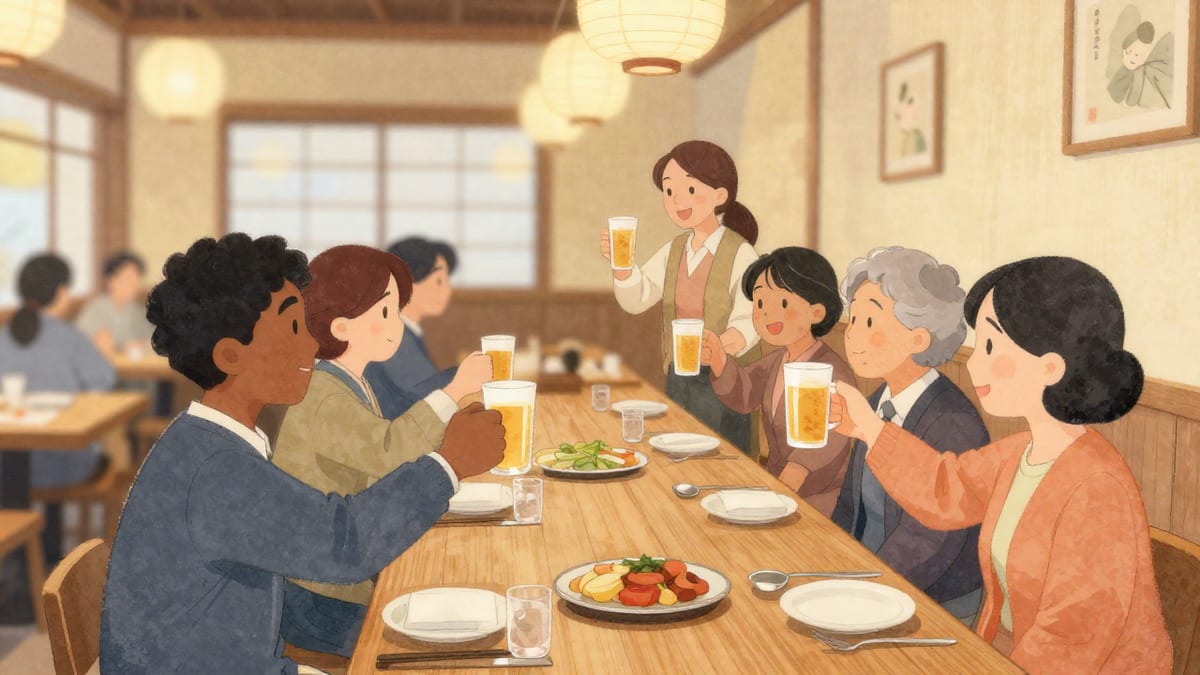
The most natural place for a learner to use kizuna is a short speech: the end of a project, a team dinner, a farewell. Here is a simple model. A team leader thanks everyone at a small party after a long project.
| Japanese | Romaji | Meaning |
|---|---|---|
| 皆さん、本当にお疲れさまでした。 | Minasan, hontō ni otsukaresama deshita. | Leader: Everyone, thank you so much for your hard work. |
| 大変なこともありましたが、 | Taihen na koto mo arimashita ga, | Leader: There were tough times, but |
| このプロジェクトでチームの絆が深まりました。 | Kono purojekuto de chīmu no kizuna ga fukamarimashita. | Leader: this project brought our team closer. |
| これからもよろしくお願いします。 | Korekara mo yoroshiku onegaishimasu. | Leader: I look forward to working with you from here on. |
| 乾杯! | Kanpai! | Everyone: Cheers! |
Common mistakes
| Japanese | Romaji | Meaning |
|---|---|---|
| すぐに仲良くなりました。 | Sugu ni naka yoku narimashita. | We quickly became close. |
| 二人の絆を感じる結婚式でした。 | Futari no kizuna o kanjiru kekkonshiki deshita. | It was a wedding where you could feel the couple's bond. |
- Using kizuna for a casual friendship you made last week. It sounds like a film line; say naka yoku natta (we became close) instead.
- Saying kizuna o tsukuru (to make a bond). It is understood, but kizuna o kizuku or kizuna o fukameru sounds far more natural.
- Mixing up ga and o: kizuna ga fukamaru, but kizuna o fukameru.
- Using kizuna for romantic love. It can describe a couple's bond, but for love itself use ai or suki.