
Taste words and their opposites
Japanese taste words are mostly i-adjectives, so they follow the same grammar as ōkii and takai: present oishii desu, past oishikatta desu, negative oishikunai desu. The five basic pairs are amai sweet, karai spicy or hot, shoppai salty, suppai sour and nigai bitter. Shoppai is the everyday word; you will meet shiokarai in dictionaries and on packaging, but in speech shoppai is what people say when the miso soup is too strong.
The second set describes strength rather than flavour. Koi means rich or strongly seasoned, usui means weak or bland, and both also describe tea and coffee. Assari and kotteri are the words for light and heavy, used constantly for ramen broth: assari is a clear, light soup and kotteri is a thick, fatty one. Amakuchi and karakuchi label mild and hot on curry packets and sweet and dry on sake bottles, so they are worth recognising on a shelf.
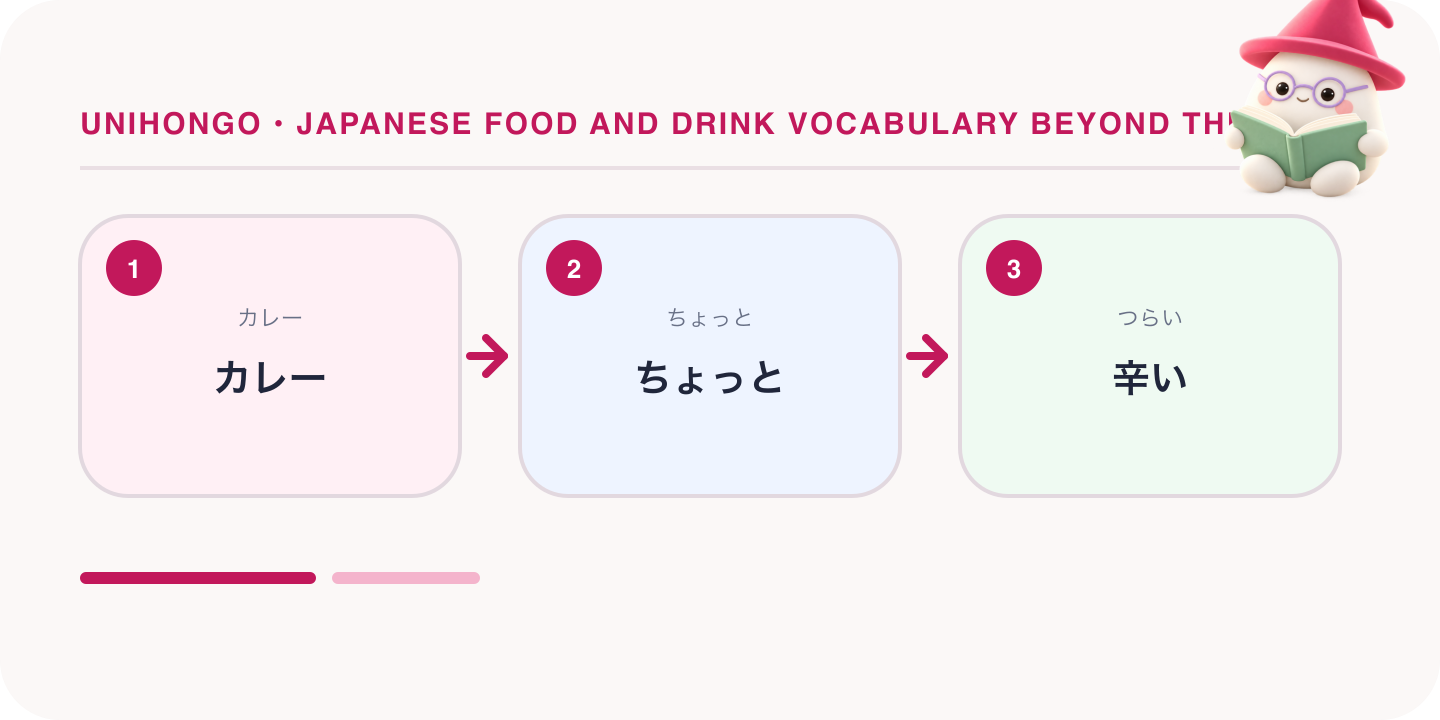
| Japanese | Romaji | Meaning |
|---|---|---|
| このカレーはちょっと辛いです。 | Kono karē wa chotto karai desu. | This curry is a little spicy. |
| 味が薄いですね。 | Aji ga usui desu ne. | The flavour is a bit weak, isn't it? |
| 私は甘いものが好きです。 | Watashi wa amai mono ga suki desu. | I like sweet things. |
| このスープはあっさりしています。 | Kono sūpu wa assari shite imasu. | This soup is light. |
| すっぱいのは苦手です。 | Suppai no wa nigate desu. | I am not keen on sour things. |
Texture words worth knowing
Texture is where Japanese food talk gets colourful. Two ordinary i-adjectives carry the basic contrast: yawarakai means soft or tender, katai means hard, tough or firm. Then come the doubled mimetic words that Japanese speakers use without a second thought: sakusaku for a light crisp bite, karikari for something crunchy and well browned, mochimochi for chewy and springy, torotoro for something melting, and fuwafuwa for light and fluffy. The onomatopoeia guide explains the sound pattern; here you only need the food ones.
Grammar matters. The i-adjectives take desu directly: yawarakai desu. The mimetic words describe a state, so their full form is shite imasu, or they sit before a noun with no: sakusaku no tenpura. In relaxed speech people also put desu straight after them, as in soto wa sakusaku de naka wa mochimochi desu, which is fine with friends. In a review or with a host, mochimochi shite imasu is the safer form.
| Japanese | Romaji | Meaning |
|---|---|---|
| このお肉は柔らかいですね。 | Kono oniku wa yawarakai desu ne. | This meat is tender, isn't it? |
| パンが少し硬いです。 | Pan ga sukoshi katai desu. | The bread is a little hard. |
| 外はさくさくで、中はもちもちです。 | Soto wa sakusaku de, naka wa mochimochi desu. | Crisp on the outside and chewy inside. |
| この卵はとろとろしています。 | Kono tamago wa torotoro shite imasu. | This egg is soft and runny. |
Cooking methods hidden in dish names
Once you know five short words, most dish names explain themselves. Yaki comes from yaku, to grill, roast or pan-fry: yakitori, yakizakana, tamagoyaki and okonomiyaki. Age comes from ageru, to deep-fry: karaage, agedashi dōfu and the age in aburaage. Ni comes from niru, to simmer in seasoned liquid: nimono, nikujaga and nizakana. Mushi comes from musu, to steam: chawanmushi and mushipan. Nama means raw or untreated: nama tamago and nama yasai, though nama bīru is draught beer.
Two more are useful on menus and at home. Itame, from itameru, is stir-fried: yasai itame is the standard vegetable stir-fry in a set meal. Yude, from yuderu, is boiled in plain water: yude tamago is a boiled egg. These verb stems attach before or after the ingredient depending on the dish, so learn the whole name as a word rather than assembling it. The ordering guide covers how to ask for these at a restaurant; this post is about knowing what you will get.
| Japanese | Romaji | Meaning |
|---|---|---|
| 焼き魚は何の魚ですか? | Yakizakana wa nan no sakana desu ka? | What fish is the grilled fish? |
| 鮭です。 | Sake desu. | It is salmon. |
| 唐揚げは揚げ物です。 | Karaage wa agemono desu. | Karaage is a deep-fried dish. |
| 肉じゃがは煮物です。 | Nikujaga wa nimono desu. | Nikujaga is a simmered dish. |
| これは生ですか、焼いてありますか? | Kore wa nama desu ka, yaite arimasu ka? | Is this raw, or has it been cooked? |
| 生ビールを一つお願いします。 | Nama bīru o hitotsu onegai shimasu. | One draught beer, please. |
The fish sake and the drink sake are spelt the same in romaji and differ only in pitch and context; when you mean rice wine, nihonshu is the unambiguous word. The reply to nan no sakana desu ka is usually a single fish name, so learn the common ones: sake salmon, saba mackerel, aji horse mackerel, sanma saury.
Staple ingredients and the supermarket shelf
The first ingredient trap is rice. Kome is the uncooked grain in a bag; gohan is cooked rice and, by extension, a meal, which is why asagohan is breakfast. The meats follow a pattern: gyūniku beef, butaniku pork, toriniku chicken, and simply niku for meat in general. Sakana is fish, yasai vegetables, tamago egg, tōfu tofu. The seasoning shelf is shōyu, miso, shio, satō, su and abura, and gyūnyū is milk, though cartons often just say miruku.
In a supermarket you mainly need location questions and counters. Doko ni arimasu ka finds an aisle, and staff will point and say achira desu. Eggs come in a pakku, milk in a hon, meat by the guramu, and a loaf of bread by the kin. Two words on packaging matter: shōmi kigen is the best-before date, and shōhi kigen is the use-by date, the one you should not pass.
| Japanese | Romaji | Meaning |
|---|---|---|
| 豚肉はどこにありますか? | Butaniku wa doko ni arimasu ka? | Where is the pork? |
| あちらの奥にございます。 | Achira no oku ni gozaimasu. | It is at the back over there. |
| 卵を一パック買いました。 | Tamago o hito pakku kaimashita. | I bought a pack of eggs. |
| 醤油を切らしています。 | Shōyu o kirashite imasu. | We have run out of soy sauce. |
| お米は五キロの袋を買います。 | Okome wa go-kiro no fukuro o kaimasu. | I buy rice in a five-kilo bag. |
Drinks: hot or cold, and what size
Nomimono covers every drink. Ocha means tea and usually green tea; ryokucha is the specific word, mugicha is barley tea, and kōcha is black tea. Kōhī, jūsu, mizu and gyūnyū are coffee, juice, water and milk; at a table ask for omizu. Alcohol is osake in general, nihonshu for Japanese rice wine, bīru for beer and wain for wine. Nama bīru is draught and bin bīru is bottled.
Cafes and convenience stores handle temperature with hotto and aisu, not atsui and tsumetai, because those loanwords are the names of the menu items. Sizes are usually the letters S, M and L read aloud, esu, emu and eru, followed by saizu. The counter question you will hear is saizu wa ikaga nasaimasu ka, and the answer is the letter plus de onegai shimasu. Hot and cold as properties of a drink you already have use atsui and tsumetai.
| Japanese | Romaji | Meaning |
|---|---|---|
| アイスコーヒーのMサイズをお願いします。 | Aisu kōhī no emu saizu o onegai shimasu. | A medium iced coffee, please. |
| ホットとアイス、どちらになさいますか? | Hotto to aisu, dochira ni nasaimasu ka? | Hot or iced, which would you like? |
| ホットでお願いします。 | Hotto de onegai shimasu. | Hot, please. |
| 氷なしでお願いできますか? | Kōri nashi de onegai dekimasu ka? | Could I have it without ice? |
| 温かいお茶はありますか? | Atatakai ocha wa arimasu ka? | Do you have hot tea? |
| お水をもう一杯ください。 | Omizu o mō ippai kudasai. | Another glass of water, please. |
Allergies and dietary needs
This is the section to get exactly right. Arerugī is allergy, and the pattern is ingredient plus arerugī ga arimasu. For anything you cannot eat, use the potential negative taberaremasen; for things you choose not to eat, use tabemasen. The difference is not cosmetic: staff treat taberaremasen as a safety issue and will check with the kitchen, while tabemasen is treated as a preference. Nomemasen is the drink equivalent.
To ask whether a dish contains something, use kore ni X wa haitte imasu ka. Haitte imasu is the te-form state of hairu, to be in, and it is the phrase in every label conversation. Japanese packaging lists specified allergens such as ebi, kani, komugi, soba, tamago, nyū and rakkasei, so learn those readings even if you cannot read the rest. For vegetarian eating, ask about dashi, because fish stock hides in soups, sauces and simmered dishes.
| Japanese | Romaji | Meaning |
|---|---|---|
| 卵アレルギーがあります。 | Tamago arerugī ga arimasu. | I have an egg allergy. |
| 小麦が食べられません。 | Komugi ga taberaremasen. | I cannot eat wheat. |
| これに乳製品は入っていますか? | Kore ni nyūseihin wa haitte imasu ka? | Does this contain dairy? |
| 確認してまいります。 | Kakunin shite mairimasu. | I will go and check. |
| 肉と魚は食べません。 | Niku to sakana wa tabemasen. | I do not eat meat or fish. |
| だしは魚ですか? | Dashi wa sakana desu ka? | Is the stock fish-based? |
| えび抜きでできますか? | Ebi nuki de dekimasu ka? | Can you make it without shrimp? |
| お酒は飲めません。 | Osake wa nomemasen. | I cannot drink alcohol. |
Nuki de, without, attaches to the ingredient and works for preferences as well as allergies: negi nuki de is a normal request at a ramen counter. If the answer to haitte imasu ka is sukoshi haitte imasu, a small amount is in it, take that as a yes and choose something else.
Describing a dish you liked
After a meal the host or friend will ask dō deshita ka, and the reply needs the past tense of an i-adjective: oishikatta desu, not oishii deshita. Name the best part with ga ichiban plus the adjective, and comment on seasoning with ajitsuke, seasoning, and chōdo ii, just right. Too much of anything is the adjective stem plus sugiru: karasugimashita, too spicy; amasugimashita, too sweet. Soften a complaint with chotto and watashi ni wa, for me.
Two phrases make you sound like a regular. X ni aimasu, goes well with X, describes a pairing: gohan ni aimasu, bīru ni aimasu. Kuchi ni au, to suit one's palate, is what a host hopes for, and their question okuchi ni aimashita ka means did it suit your taste. The simplest strong compliment remains mata tabetai desu, I want to eat this again.
| Japanese | Romaji | Meaning |
|---|---|---|
| どうでしたか? | Dō deshita ka? | How was it? |
| とてもおいしかったです。 | Totemo oishikatta desu. | It was very good. |
| 天ぷらが一番おいしかったです。 | Tenpura ga ichiban oishikatta desu. | The tempura was the best. |
| 味付けがちょうどよかったです。 | Ajitsuke ga chōdo yokatta desu. | The seasoning was just right. |
| 私にはちょっと辛すぎました。 | Watashi ni wa chotto karasugimashita. | It was a bit too spicy for me. |
| これはご飯に合いますね。 | Kore wa gohan ni aimasu ne. | This goes well with rice. |
| お口に合いましたか? | Okuchi ni aimashita ka? | Did it suit your taste? |
| はい、また食べたいです。 | Hai, mata tabetai desu. | Yes, I would like to eat it again. |
Cooking verbs for what you make at home
Ryōri o shimasu is to cook, and jisui shimasu means to cook for yourself rather than eating out, a word that comes up whenever people ask about your routine. The verbs match the dish-name stems: yaku grill or fry, ageru deep-fry, niru simmer, musu steam, itameru stir-fry, yuderu boil. Add kiru cut, mazeru mix, atatameru heat up, and taku, which is the verb for cooking rice specifically: gohan o taku. Tsukuru, to make, covers any dish.
To describe a recipe in order, chain the te-form: yasai o kitte, itamete, shōyu o iremasu. To say what you can make, use the potential form: tsukuremasu. The question tokui ryōri wa nan desu ka, what is your signature dish, is a favourite at work lunches, and kantan na mono nara tsukuremasu, I can make simple things, is the modest reply most people give.
| Japanese | Romaji | Meaning |
|---|---|---|
| 週末はよく自炊します。 | Shūmatsu wa yoku jisui shimasu. | I often cook for myself at the weekend. |
| 昨日カレーを作りました。 | Kinō karē o tsukurimashita. | I made curry yesterday. |
| 野菜を切って、炒めて、醤油を入れます。 | Yasai o kitte, itamete, shōyu o iremasu. | Cut the vegetables, stir-fry them and add soy sauce. |
| 毎朝ご飯を炊きます。 | Maiasa gohan o takimasu. | I cook rice every morning. |
| 得意料理は何ですか? | Tokui ryōri wa nan desu ka? | What is your signature dish? |
| 簡単なものなら作れます。 | Kantan na mono nara tsukuremasu. | I can make simple things. |
| 残り物を温めて食べました。 | Nokorimono o atatamete tabemashita. | I heated up leftovers and ate them. |
Reference table by taste, texture, method and ingredient
| Group | Japanese | Romaji | English |
|---|---|---|---|
| Taste | 甘い | amai | sweet |
| Taste | 辛い | karai | spicy, hot |
| Taste | しょっぱい | shoppai | salty |
| Taste | 酸っぱい | suppai | sour |
| Taste | 苦い | nigai | bitter |
| Taste | 渋い | shibui | astringent |
| Taste | 濃い | koi | rich, strong |
| Taste | 薄い | usui | weak, bland |
| Taste | あっさり | assari | light |
| Taste | こってり | kotteri | rich, heavy |
| Texture | 柔らかい | yawarakai | soft, tender |
| Texture | 硬い | katai | hard, tough |
| Texture | さくさく | sakusaku | crisp |
| Texture | かりかり | karikari | crunchy |
| Texture | もちもち | mochimochi | chewy, springy |
| Texture | とろとろ | torotoro | melting, runny |
| Texture | ふわふわ | fuwafuwa | fluffy |
| Method | 焼き | yaki | grilled, pan-fried |
| Method | 揚げ | age | deep-fried |
| Method | 煮 | ni | simmered |
| Method | 蒸し | mushi | steamed |
| Method | 生 | nama | raw, draught |
| Method | 炒め | itame | stir-fried |
| Method | 茹で | yude | boiled |
| Ingredient | 米 | kome | uncooked rice |
| Ingredient | ご飯 | gohan | cooked rice, meal |
| Ingredient | 牛肉 | gyūniku | beef |
| Ingredient | 豚肉 | butaniku | pork |
| Ingredient | 鶏肉 | toriniku | chicken |
| Ingredient | 魚 | sakana | fish |
| Ingredient | 卵 | tamago | egg |
| Ingredient | 野菜 | yasai | vegetables |
| Ingredient | 豆腐 | tōfu | tofu |
| Ingredient | 醤油 | shōyu | soy sauce |
| Ingredient | 味噌 | miso | miso |
| Ingredient | 塩 | shio | salt |
| Ingredient | 砂糖 | satō | sugar |
| Ingredient | 牛乳 | gyūnyū | milk |
A routine for making the words stick
- Pick one taste pair a day, such as koi and usui, and say it about three things you actually ate.
- Read the dish names on a menu photo and split each into method plus ingredient aloud.
- Write your own allergy or diet line once, then say it until it comes out in under three seconds.
- After every meal, produce one past-tense sentence with an i-adjective and one with sugimashita.
- Narrate one recipe in te-form chains while you cook, even if it is only toast.