
A noun made from fun
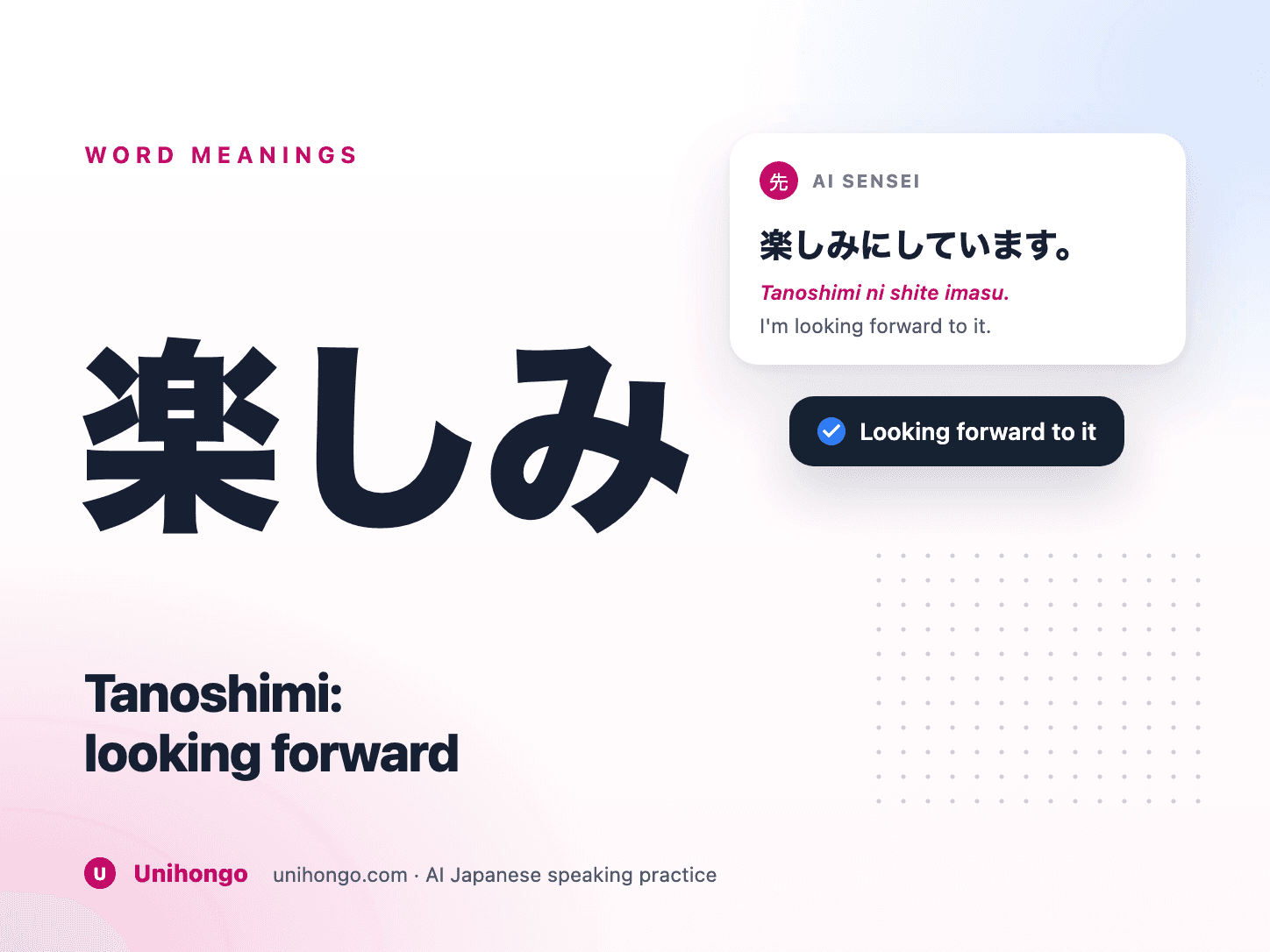
Tanoshimi, written 楽しみ, is the noun form of tanoshimu, to enjoy. It means a pleasure, and especially a pleasure that is still ahead of you.
That makes it the natural word for anticipation. Where English says I look forward to the trip, Japanese says the trip is a tanoshimi.
| Japanese | Romaji | Meaning |
|---|---|---|
| 楽しみ | tanoshimi | A pleasure, something to look forward to |
| 旅行が楽しみです。 | Ryokō ga tanoshimi desu. | I'm looking forward to the trip. |
| 明日が楽しみ! | Ashita ga tanoshimi! | I can't wait for tomorrow! (casual) |
Tanoshimi ni shite imasu
The full phrase means I am treating it as something to look forward to. It is polite, warm and appropriate almost everywhere, from a friend's invitation to a meeting with a new client.
For business writing, the humble orimasu version is standard at the end of an email before a meeting or visit.
| Japanese | Romaji | Meaning |
|---|---|---|
| 楽しみにしています。 | Tanoshimi ni shite imasu. | I'm looking forward to it. |
| お会いできるのを楽しみにしています。 | O-ai dekiru no o tanoshimi ni shite imasu. | I'm looking forward to meeting you. |
| 当日を楽しみにしております。 | Tōjitsu o tanoshimi ni shite orimasu. | We look forward to the day. (business) |
| 楽しみにしてるね。 | Tanoshimi ni shiteru ne. | Can't wait! (casual) |
Tanoshimi desu and the casual tanoshimi!
Tanoshimi desu is shorter and a little more immediate than tanoshimi ni shite imasu. It states the feeling rather than describing your attitude.
Among friends, the bare tanoshimi! with a bright tone is the everyday reaction to plans, and tanoshimi da ne shares the excitement.
| Japanese | Romaji | Meaning |
|---|---|---|
| 週末が楽しみです。 | Shūmatsu ga tanoshimi desu. | I'm looking forward to the weekend. |
| 楽しみだね! | Tanoshimi da ne! | It's going to be great, right? (casual) |
| 楽しみ〜! | Tanoshimi! | So excited! (casual, drawn out) |
O-tanoshimi ni: saving a surprise
When someone asks what is inside a present or what happens next, o-tanoshimi ni means you will have to wait and see. It is playful and friendly.
You will also hear it at the end of TV programmes and announcements, promising something good to come.
| Japanese | Romaji | Meaning |
|---|---|---|
| 中身は? | Nakami wa? | What's inside? |
| お楽しみに。 | O-tanoshimi ni. | Wait and see. |
| 来週もお楽しみに! | Raishū mo o-tanoshimi ni! | Stay tuned for next week! |
Tanoshimi, tanoshii and tanoshimu
The three words share a root but do different grammatical jobs, and mixing them up is one of the most common beginner errors.
| Japanese | Romaji | Meaning |
|---|---|---|
| パーティーは楽しかったです。 | Pātī wa tanoshikatta desu. | The party was fun. |
| 旅行を楽しんでください。 | Ryokō o tanoshinde kudasai. | Enjoy your trip. |
| パーティーが楽しみです。 | Pātī ga tanoshimi desu. | I'm looking forward to the party. |
| Word | Type | Meaning |
|---|---|---|
| Tanoshii | Adjective | Fun, enjoyable |
| Tanoshimu | Verb | To enjoy |
| Tanoshimi | Noun | A pleasure, something to look forward to |
Talking about your small pleasures
Tanoshimi also covers ongoing pleasures, which makes it a gentle way to talk about your life. Saikin no tanoshimi wa nan desu ka is a friendly small-talk question.
Answering it well means naming something specific and adding when or why, which turns a one-word answer into a conversation.
| Japanese | Romaji | Meaning |
|---|---|---|
| 最近の楽しみは何ですか。 | Saikin no tanoshimi wa nan desu ka. | What are you enjoying lately? |
| 毎朝のコーヒーが楽しみです。 | Maiasa no kōhī ga tanoshimi desu. | My morning coffee is my little pleasure. |
| 週末に映画を見るのが楽しみです。 | Shūmatsu ni eiga o miru no ga tanoshimi desu. | Watching films at the weekend is my treat. |
Making it a habit
Every invitation you accept is a chance to say tanoshimi ni shite imasu, so the phrase becomes natural quickly once you start attaching it to real plans.
Unihongo's Find a Friend at a Festival roleplay mission and ordinary conversations about plans with an AI Sensei give you repeated, natural places to use it, and the corrections in the session report can catch a tanoshii that should have been tanoshimi.
- End every accepted invitation with tanoshimi ni shite imasu.
- Use tanoshimi for the future, tanoshii for the past.
- Say o-tanoshimi ni when keeping a surprise.
- Ask saikin no tanoshimi wa? in small talk.